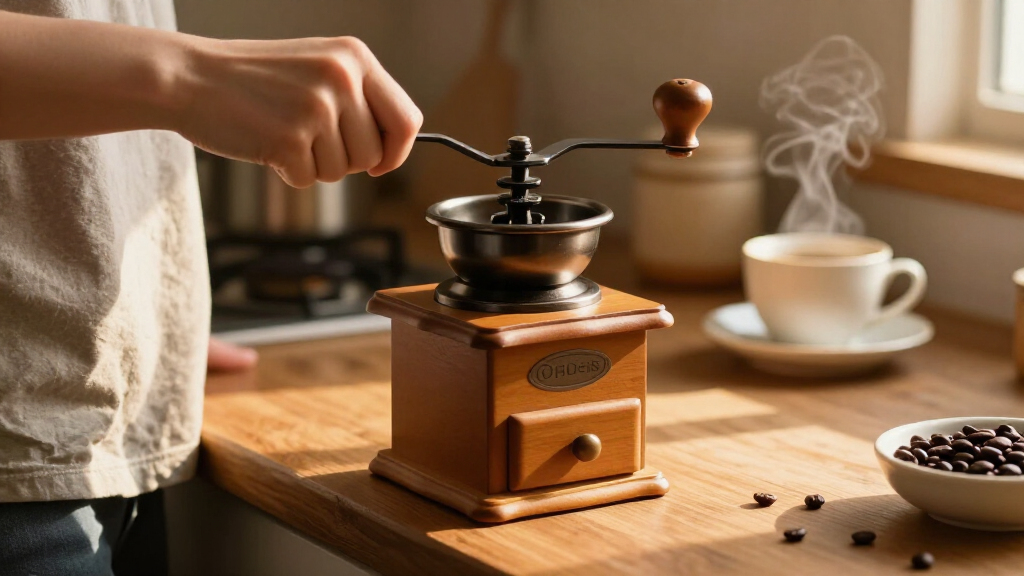

Manual coffee grinders range from budget ceramic-burr models under $25 to precision stainless steel burr grinders that rival electric machines for grind consistency. After comparing 13 popular options, the TIMEMORE Chestnut C3S Pro stands out as the best overall pick for its stainless steel conical burr, foldable handle, and consistent performance across brew methods. The KINGrinder K6 makes more sense for serious espresso drinkers who need fine, repeatable grinding, while the JavaPresse remains the go-to budget pick for campers and travelers. The main tradeoffs in this category come down to grind speed versus consistency, capacity versus portability, and whether you need external click-adjustment for espresso or simple stepped settings for French press. Keep reading for the full breakdown, including who each grinder is for and who should skip it.

Get coffee and tea gear delivered free with Prime
- Fast, free delivery on millions of items
- Prime Video, Amazon Music and more included
- Member-only deals all year
Complete the kit


Key Takeaways
- Stainless steel burrs clearly outperformed ceramic burrs in this lineup for grind consistency and espresso-range capability; every ceramic-burr pick (PARACITY, CIRCLE JOY ceramic, JavaPresse) is better suited to French press, pour-over, and cold brew than espresso.
- External click-adjustment systems, found on the Martens G-01 PRO, both CEVING 40-setting models, CIRCLE JOY, and KINGrinder K6, make dialing in espresso far easier than internal-twist adjustment, which requires disassembling the grinder to change settings.
- The CEVING 60g large-capacity models solve the biggest practical complaint about hand grinding — grinding enough for two or more cups in one session — but they sacrifice the pocket-friendly portability that defines the category.
- The TIMEMORE Chestnut C3S and C3S Pro are near-identical, and the Pro’s foldable handle and small upgrades only justify the price difference for frequent travelers; everyone else should save money on the standard C3S.
- A higher number of grind settings doesn’t guarantee better coffee: the JavaPresse’s 18 settings produce coarser, less repeatable results than grinders with fewer but better-machined adjustments.
| Martens G-01 PRO Manual Coffee Grinder |  | Best Overall | Adjustment: External numbered dial | Burr: Stainless steel 7-star precision-cut | Capacity: 28–35 grams | VIEW LATEST PRICE | See Our Full Breakdown |
| CEVING Mini Manual Coffee Grinder with 40 Adjustable Settings | 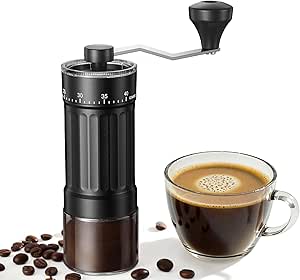 | Best for Travel | Adjustable Settings: 40 external | Burr: Conical ceramic | Capacity: 30 grams | VIEW LATEST PRICE | See Our Full Breakdown |
| PARACITY Manual Coffee Grinder with Ceramic Burr and Glass Jars |  | Best for Beginners | Burr: Ceramic conical | Jars: 2 glass jars, 11 oz each | Handle: Stainless steel crank | VIEW LATEST PRICE | See Our Full Breakdown |
| CEVING World’s First 60g Large Capacity Manual Coffee Grinder |  | Best for Multi-Cup Brewing | Capacity: 60 grams | Settings: 40 external click-ring | Burr: Ceramic conical | VIEW LATEST PRICE | See Our Full Breakdown |
| Manual Coffee Grinder with Adjustable Settings and Stainless Steel Burrs | 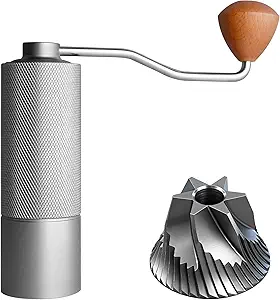 | Best Budget Pick | Burr: Stainless steel, 38mm | Body: Aluminum alloy | Handle: ABS | VIEW LATEST PRICE | See Our Full Breakdown |
| CEVING Large Capacity Manual Coffee Grinder, 60g, Green |  | Best for Camping Groups | Capacity: 60g | Settings: 40 external click-ring | Burr Type: Ceramic conical | VIEW LATEST PRICE | See Our Full Breakdown |
| KINGrinder K6 Manual Coffee Grinder Stainless Burr with Straight Handle |  | Best Precision Build | Adjustment Range: 16 microns per click | Rotation Clicks: 60 clicks per rotation | Burr Material: Stainless steel | VIEW LATEST PRICE | See Our Full Breakdown |
| CEVING World’s First 60g Large Capacity Manual Coffee Grinder, Black |  | Best for Batch Brewing | Capacity: 60g | Settings: 40 external settings | Material: Stainless steel burr | VIEW LATEST PRICE | See Our Full Breakdown |
| CIRCLE JOY Manual Coffee Grinder with 40 External Adjustable Settings, Stainless Steel Burr |  | Best Pocket Traveler | Number of Grind Settings: 40 | Material: Stainless steel | Burr Type: Conical burr | VIEW LATEST PRICE | See Our Full Breakdown |
| CIRCLE JOY Manual Coffee Grinder, Ceramic Conical Burr, 40 Adjustable Settings |  | Best Quiet Value | Number of Settings: 40 external adjustable | Burr Type: Ceramic conical | Body Material: Stainless steel | VIEW LATEST PRICE | See Our Full Breakdown |
| TIMEMORE Chestnut C3S Pro Manual Coffee Grinder |  | Best Premium Portable Pick | Body Material: Aluminum alloy | Burr Type: S2C660 patent conical burr | Handle: Foldable | VIEW LATEST PRICE | See Our Full Breakdown |
| TIMEMORE Chestnut C3S Manual Coffee Grinder |  | Best Value Burr Upgrade | Body Material: All-metal aluminum alloy | Burr Type: S2C660 patent hexagonal conical burr | Burr Hardness: 55-58 HRC | VIEW LATEST PRICE | See Our Full Breakdown |
| JavaPresse Manual Stainless Steel Coffee Grinder |  | Best Budget Starter Grinder | Material: Stainless steel body, ceramic burr | Adjustable Settings: 18 | Power Source: Manual (hand crank) | VIEW LATEST PRICE | See Our Full Breakdown |
More Details on Our Top Picks
Martens G-01 PRO Manual Coffee Grinder
The G-01 PRO earns the top spot because it solves the problems its budget rivals ignore: you get a numbered external adjustment dial, so returning to a repeatable grind size doesn’t involve guesswork or removing the burr, and the triple bearing shaft support keeps the crank from wobbling under load — a common frustration on cheaper ceramic-burr models like the PARACITY. The magnetic catch cup detaches with a twist instead of a fight, and the foldable handle packs flatter than the PARACITY’s fixed steel crank.
The tradeoffs are real. At 28–35 grams, capacity trails the CEVING 60g by nearly double, so multi-cup mornings mean a second grind session. And dialing into espresso range still demands patience and forearm effort — no manual grinder escapes that entirely. Compared with the KINGrinder K6 elsewhere in this guide, the Martens feels more travel-ready; the K6 counters with a heftier burr for finer espresso work.
Pros:- Numbered external dial makes grind settings repeatable without disassembly
- Triple bearing support keeps the shaft stable and consistent during grinding
- Magnetic catch cup and foldable handle make it genuinely travel-friendly
- Stainless steel 7-star burr produces uniform grounds across grind sizes
Cons:- 28–35g capacity is small compared with 60g rivals like the CEVING MEGA-60
- Fine espresso grinds still require significant manual effort
Best for: Coffee drinkers who brew one or two cups daily and want repeatability, portability, and a grinder that survives a backpack
Not ideal for: Households brewing four or more cups at once — the ~35g capacity forces multiple grinding sessions
- Adjustment:External numbered dial
- Burr:Stainless steel 7-star precision-cut
- Capacity:28–35 grams
- Handle:Foldable
- Shaft Support:Triple bearing
- Body Material:Stainless steel
Our verdict“The best-balanced pick for single-cup brewers who want precision and portability without stepping into premium price territory.”
CEVING Mini Manual Coffee Grinder with 40 Adjustable Settings
This is the grinder I’d point commuters and campers toward first. At 325 grams and slim enough to slip into a tote, it undercuts the Martens G-01 PRO on packed size while matching it on flexibility with 40 external click settings. The ceramic conical burr runs cool and won’t impart metal flavors — a genuine benefit if you brew delicate light roasts — though ceramic is less forgiving than the Martens’ steel if you drop it on a campsite rock.
Where it trails the field is raw capability. The 30g capacity is the smallest in this lineup, and the plastic-heavy body won’t age as gracefully as the aluminum-alloy grinder from the entry pick below. Still, for its price and footprint, nothing here packs this much adjustability into a smaller footprint. Compared with the CEVING 60g model, think of this as the single-serving sibling: same grind logic, half the payload.
Pros:- 40 external click settings cover espresso through French press ranges
- Featherweight 325g build with slim dimensions for packing
- Ceramic conical burr grinds cool and preserves delicate flavors
- Disassembles fully for easy cleaning on the road
Cons:- 30g capacity is the smallest in this roundup
- Plastic construction is less durable than steel or aluminum rivals
Best for: Travelers, campers, and office brewers who grind one cup at a time and count every ounce of pack weight
Not ideal for: Anyone grinding for two or more people — the 30g capacity and plastic build aren’t built for daily multi-cup duty
- Adjustable Settings:40 external
- Burr:Conical ceramic
- Capacity:30 grams
- Weight:325g
- Dimensions:6.7 x 2.3 x 7.4 inches
- Materials:Plastic and ceramic
Our verdict“The pick for one-cup-on-the-go brewers who prioritize packability over capacity.”
PARACITY Manual Coffee Grinder with Ceramic Burr and Glass Jars
Most hand grinders hand you grounds and leave storage as your problem. The PARACITY flips that by including two 11 oz glass jars that screw directly onto the grinder — grind into one, store beans in the other, and your counter stays tidy. That all-in-one workflow makes this the easiest entry point for someone moving from pre-ground coffee to fresh grinding, because it removes the accessory-buying step entirely.
It’s also the quietest, most kitchen-friendly option here; the non-slip silicone base keeps it planted on a countertop where the travel-focused CEVING Mini would rather live in a bag. The compromises: there’s no numbered grind dial, so repeatable settings take trial and error — a step behind the 40-click CEVING models — and the fixed steel crank never packs flat. Glass jars also demand careful handling in shipping and storage.
Pros:- Two included 11 oz glass jars handle both bean storage and grounds catching
- Ceramic burr delivers uniform, low-heat grinding that protects flavor
- Non-slip silicone base keeps the grinder stable during cranking
- Quiet, electricity-free operation suits early mornings
Cons:- Grind adjustment lacks indexed settings, making repeatability harder than click-dial rivals
- Glass jars are fragile in shipping and daily handling
- Fixed handle won’t pack down for travel
Best for: First-time manual-grinder buyers who want a complete kitchen setup with built-in bean and grounds storage
Not ideal for: Travelers and precision chasers — no click-indexed settings, no folding handle, and glass jars don’t belong in a backpack
- Burr:Ceramic conical
- Jars:2 glass jars, 11 oz each
- Handle:Stainless steel crank
- Base:Non-slip silicone
- Adjustment:Adjustable grind setting
- Power:Manual — no electricity required
Our verdict“A forgiving, everything-included starter kit for countertop brewers who value convenience over precision indexing.”
CEVING World’s First 60g Large Capacity Manual Coffee Grinder
If one grinder had to cover a household’s morning pour-over, this is it. The 60g capacity doubles the CEVING Mini and nearly doubles the Martens G-01 PRO, meaning a full French press or a two-person brew happens in a single session instead of two. At 346g total weight, CEVING has kept it remarkably close to its smaller sibling — the size gain shows up in the grind chamber, not the luggage scale.
The 40 external click-ring settings give it the same adjustability language as the rest of the CEVING range, but don’t mistake it for an espresso grinder: the fine end of the range is serviceable rather than exceptional, and espresso-focused buyers will be happier with the KINGrinder K6’s steel burr. The ceramic conical burr grinds cool for pour-over and French press, which is exactly where this model’s strengths lie. Plastic components are the durability question mark compared with the Martens’ full steel build.
Pros:- 60g capacity grinds enough for multiple cups or a full French press in one go
- 40 external click-ring settings allow repeatable grind changes
- Ceramic conical burr stays cool and preserves flavor on longer grinds
- Still lightweight at 346g despite doubled capacity
Cons:- Fine grind performance is weaker than steel-burr rivals like the Martens G-01 PRO
- Plastic components raise long-term durability concerns
Best for: Pour-over and French press drinkers who brew two to four cups at once and want one grinding session to cover it
Not ideal for: Espresso enthusiasts — the grind range and ceramic burr favor coarse-to-medium brewing over true espresso finesse
- Capacity:60 grams
- Settings:40 external click-ring
- Burr:Ceramic conical
- Weight:346g
- Dimensions:2.7 x 7.8 x 5.3 inches
- Model:MCG-MEGA-60
- Warranty:1 year
Our verdict“The manual grinder for batch brewers who refuse to crank twice before their morning coffee.”
Manual Coffee Grinder with Adjustable Settings and Stainless Steel Burrs
For shoppers who want the core upgrade — a real 38mm stainless steel burr in an aluminum alloy body — without paying for click-counted dials or magnetic cups, this is the value play. The steel burr is the standout at this price: it’s tougher than the ceramic burrs on both CEVING models and produces noticeably more uniform grounds than blade-style or budget ceramic competitors. The aluminum body also gives it a more premium in-hand feel than the PARACITY’s mixed-material build.
The savings show up in the details. Grind adjustment is stepless rather than indexed, so you’re turning and testing rather than counting clicks — repeatable, but slower to dial in than the Martens G-01 PRO’s numbered dial. Maintenance is fussier too: no water washing, brush cleaning only, and full disassembly required. For a methodical brewer on a budget, those are acceptable tradeoffs; for an impatient one, they compound.
Pros:- 38mm stainless steel burr delivers consistent, uniform grounds at a budget price
- Aluminum alloy body feels sturdier than plastic-bodied rivals
- Covers the full range from espresso to French press
- Compact and portable for travel and small kitchens
Cons:- Stepless adjustment lacks indexed settings, slowing repeatable dial-in
- Cleaning requires disassembly and dry brushing only — not washable
Best for: Budget-conscious brewers who want steel-burr grind quality for espresso through French press and don’t mind manual dialing-in
Not ideal for: Anyone who wants quick, repeatable settings or easy cleanup — stepless adjustment and brush-only cleaning add daily friction
- Burr:Stainless steel, 38mm
- Body:Aluminum alloy
- Handle:ABS
- Adjustment:Adjustable, stepless
- Cleaning:Disassemble and brush clean — no water washing
- Use Cases:Espresso, drip, French press, moka pot, pour-over
Our verdict“The most grind quality per dollar here, provided you accept a slower dial-in process and fussy maintenance.”
CEVING Large Capacity Manual Coffee Grinder, 60g, Green
Most hand grinders force a choice: grind one cup at a time or lug around extra gear. This CEVING sidesteps that tradeoff with a 60g capacity, enough for a full camp kettle of coffee in a single session. The 40-click external adjustment ring means dialing in a setting doesn’t require emptying the burr chamber first — a real advantage over the KINGrinder K6 when switching between methods mid-trip. The ceramic conical burr runs cooler and resists corrosion, which matters if it lives in a backpack. Compared to the smaller CIRCLE JOY stainless model, this one trades pocketability for batch size, and the click-ring takes a session or two to learn.
Pros:- 60g capacity covers multiple servings in one grind session
- External 40-click adjustment without disassembling the grinder
- Ceramic burr stays cool and won’t rust in humid outdoor conditions
- At 462g it still packs easily for travel
Cons:- External dial has a learning curve compared to simpler numbered dials
- Only available in green, which limits options
Best for: Campers and van-lifers brewing coffee for two or more people away from power
Not ideal for: Espresso-focused brewers — the ceramic burr and click spacing favor filter and press methods over fine, repeatable espresso dialing
- Capacity:60g
- Settings:40 external click-ring
- Burr Type:Ceramic conical
- Weight:462g
- Dimensions:2.7 x 7.8 x 5.3 inches
- Material:Ceramic burr
Our verdict“Buy this if you regularly make coffee for a group outdoors and want one grind session instead of three.”
KINGrinder K6 Manual Coffee Grinder Stainless Burr with Straight Handle
The K6 is the grinder in this batch for people who care about grind consistency above all else. Its 16-micron-per-click adjustment is far finer-grained than the 40-setting systems on the CEVING models, giving espresso drinkers the ability to nudge extraction in tiny increments rather than leaps. The full aluminum body and stainless steel burr feel like they belong to a more expensive tier — closer in spirit to the TIMEMORE Chestnut C3S Pro than anything else here. The tradeoff is capacity: at 25-35g per fill, it can’t match the CEVING 60g grinders for batch brewing, and the straight handle demands more wrist effort on fine settings. Compared with the CIRCLE JOY stainless model, you give up smartphone-sized portability for genuine grind quality.
Pros:- 16-micron click adjustment enables true espresso-level dialing
- All-metal aluminum body built to outlast plastic competitors
- Disassembles easily for cleaning on the road
- 60 clicks per rotation gives a wide total adjustment range
Cons:- 25-35g hopper capacity limits batch grinding
- Fine grinding by hand is genuinely tiring
- Adjustment mechanism takes practice to internalize
Best for: Espresso and pour-over enthusiasts who want repeatable micro-adjustments and metal construction
Not ideal for: French press drinkers making big batches — the small hopper means refilling two or three times for one carafe
- Adjustment Range:16 microns per click
- Rotation Clicks:60 clicks per rotation
- Burr Material:Stainless steel
- Body Material:Aluminum
- Hopper Capacity:25-35g
- Handle Type:Straight
Our verdict“This is the pick for brewers who treat grind size as a variable worth obsessing over — skip it if you just want quick morning coffee.”
CEVING World’s First 60g Large Capacity Manual Coffee Grinder, Black
Where the green CEVING leans into outdoor use, this black version earns its place as the home batch-brewing workhorse. The pairing of a 60g capacity with a stainless steel burr means you can grind enough for a full French press or cold brew tower in one pass, with the metal burr holding consistency better than ceramic under that load. The 40 external settings match its sibling, so switching from pour-over to press is a quick twist rather than a teardown. At 416g it’s lighter than the green ceramic model despite the steel burr. The honest tradeoffs: grinding 60g by hand is a workout, and static cling can scatter grounds on the counter unless you mist the beans first. A one-year warranty softens the risk.
Pros:- 60g capacity handles full French press or cold brew batches in one session
- Stainless steel burr maintains consistency under larger loads
- Lighter than the ceramic CEVING at 416g
- External adjustment allows method switching without disassembly
Cons:- Static buildup scatters grounds unless beans are lightly misted
- Grinding full loads manually is physically demanding
- No electric option for mornings when speed matters
Best for: French press and cold brew drinkers at home who grind larger amounts and skip electric grinders on principle or budget
Not ideal for: Anyone with wrist or hand issues — hand-grinding 60g at coarse settings still takes real effort
- Capacity:60g
- Settings:40 external settings
- Material:Stainless steel burr
- Weight:416g
- Dimensions:2.7 x 7.8 x 5.3 inches
- Model Number:MCG-02
- Warranty:1 year
Our verdict“The strongest choice here for big-batch home brewing, provided your arm is up to the work.”
CIRCLE JOY Manual Coffee Grinder with 40 External Adjustable Settings, Stainless Steel Burr
Sized roughly like a smartphone, this CIRCLE JOY grinder is the most genuinely portable option in this batch — it slips into a bag pocket where the CEVING 60g models and the aluminum KINGrinder K6 simply can’t go. The 40 external settings cover the full range from espresso-fine to cold-brew-coarse, and the stainless steel conical burr delivers consistency the cheaper JavaPresse-style 18-setting grinders can’t match. It ships with a storage pouch, a small touch that matters for protecting the burr in transit. The obvious cost of the small footprint is capacity: this is a one-or-two-cup grinder, full stop. Compared to its ceramic-bur sibling, the steel burr here grinds faster and handles fine settings better, at the expense of a little more heat at espresso fineness.
Pros:- Smartphone-sized footprint with included storage pouch
- 40 external settings span espresso through cold brew
- Stainless steel conical burr outperforms basic 18-setting grinders
- Quiet enough to use in shared spaces like offices
Cons:- Small capacity caps output at one or two cups
- Hand-cranking fine grinds still takes sustained effort
Best for: Commuters, business travelers, and office coffee drinkers who need one or two cups and minimal bag space
Not ideal for: Households or groups — the compact chamber means grinding in multiple slow passes for anything beyond two cups
- Number of Grind Settings:40
- Material:Stainless steel
- Burr Type:Conical burr
- Dimensions:Approximately the size of a smartphone
- Type:Manual coffee grinder
- Included Components:User manual, storage pouch
Our verdict“The clear choice when packability outranks capacity — a daily-carry grinder for solo coffee drinkers.”
CIRCLE JOY Manual Coffee Grinder, Ceramic Conical Burr, 40 Adjustable Settings
This ceramic-burr CIRCLE JOY occupies the value sweet spot in this group: 40 external settings, a steel body, and smartphone-scale portability at a price below the KINGrinder K6 and most TIMEMORE options. The ceramic conical burr is the defining choice — it runs cool, never rusts, and suits medium and coarse brewing like pour-over and French press especially well. An extended handle makes cranking noticeably easier than short-handled budget grinders, and quiet operation means early-morning grinding won’t wake the house. Against its stainless sibling, you trade fine-grind speed and espresso precision for a more forgiving, corrosion-proof burr. There are no digital frills — no timer, no electronics — but that’s the point of a grinder at this price.
Pros:- Ceramic conical burr stays cool and rust-free for flavor preservation
- Extended handle reduces cranking fatigue
- 40 external settings cover most non-espresso methods
- Very quiet operation suitable for shared living spaces
Cons:- Fine grinding is slower than stainless steel burr alternatives
- Small capacity limits output per session
- No advanced features like a timer or dose markings
Best for: Budget-conscious pour-over and French press brewers who want adjustable, quiet grinding without premium pricing
Not ideal for: Espresso chasers — ceramic burrs grind fine settings slowly and less consistently than the K6’s steel burr
- Number of Settings:40 external adjustable
- Burr Type:Ceramic conical
- Body Material:Stainless steel
- Dimensions:Approximately smartphone-sized
- Color:Black
- Handle:Extended handle for easier cranking
Our verdict“A sensible, low-risk buy for filter-method drinkers who want adjustability and quiet at an entry price.”
TIMEMORE Chestnut C3S Pro Manual Coffee Grinder
The C3S Pro sits at the top of TIMEMORE’s travel-friendly line, and the gap between it and the standard C3S is smaller than the price suggests — which is exactly why I’d call this the premium portable choice rather than a blanket best-buy. Its S2C660 patent conical burr produces noticeably more uniform particles than budget ceramic-burr options like the JavaPresse, and that uniformity is what separates a sweet, balanced pour-over from a bitter, over-extracted one. The aluminum body doubles as a heat sink, keeping grind temperature stable during longer sessions.
Compared with the KINGrinder K6, the C3S Pro trades some grinding speed for a slimmer, more packable form factor. The tradeoff is real, though: 36 stepped settings give repeatable results but feel coarse-grained against the CEVING’s 40-step external adjustment, and cranking through very coarse cold-brew doses takes genuine effort.
Pros:- S2C660 patent conical burr delivers notably consistent particle size for the price class
- All-metal aluminum construction dissipates heat and survives travel abuse
- Foldable handle and slim 52 mm profile slip easily into a bag
- 36 adjustable grind levels cover most brewing methods with repeatable results
Cons:- Very coarse grinding requires noticeably more cranking effort
- Stepped adjustment is less precise than external-adjustment rivals for dialing in espresso
Best for: Frequent travelers and pour-over enthusiasts who want café-grade grind consistency in a packable all-metal body
Not ideal for: Espresso-focused buyers or anyone grinding large daily batches — the small capacity and stepped adjustment will feel limiting
- Body Material:Aluminum alloy
- Burr Type:S2C660 patent conical burr
- Handle:Foldable
- Grind Levels:36 levels
- Diameter:52 mm
- Construction:All-metal with heat dissipation
Our verdict“If grind consistency on the road matters more than raw speed or espresso precision, this is the portable grinder I’d point you to first.”
TIMEMORE Chestnut C3S Manual Coffee Grinder
This is the pick I’d hand anyone graduating from a blade grinder or a cheap ceramic unit who doesn’t want to overspend. The standard C3S shares the same hexagonal S2C660 conical burr and 36-step adjustment as its Pro sibling — you’re mostly giving up nothing in the cup, just accepting a slightly less refined overall package. That makes it arguably the best value steel-burr grinder in this lineup, undercutting the KINGrinder K6 while matching its core grinding performance.
Against the JavaPresse, the difference is burr material: hardened steel at 55-58 HRC cuts faster and more evenly than ceramic, so your morning crank takes less time and produces fewer fines. The compromises are capacity — batch sizes are small compared with the CEVING 60g large-capacity models — and a foldable handle mechanism that can work loose after months of daily folding, so treat it gently.
Pros:- Hardened steel burr (55-58 HRC) grinds faster and more evenly than ceramic rivals at this price
- 36 adjustable settings are repeatable across brew methods
- Disassembles easily for cleaning without tools
- Compact all-metal body holds up to travel and camping use
Cons:- Limited bean capacity makes multi-cup sessions tedious
- Handle folding mechanism may loosen with repeated use over time
Best for: Home brewers upgrading from blade or ceramic-burr grinders who want steel-burr consistency at a mid-range price
Not ideal for: Households grinding for a crowd or cold brew — the small hopper means multiple refills per session
- Body Material:All-metal aluminum alloy
- Burr Type:S2C660 patent hexagonal conical burr
- Burr Hardness:55-58 HRC
- Grind Settings:Approx. 36 levels
- Handle:Foldable, lightweight
- Diameter:52 mm
- Suitable For:Travel, camping, home use
Our verdict“The smartest spend in this batch for brewers who want real burr quality without paying Pro or KINGrinder prices.”
JavaPresse Manual Stainless Steel Coffee Grinder
The JavaPresse earns its spot as the entry point of this roundup — it’s the grinder I’d suggest to someone testing whether manual brewing is worth the morning effort at all. Its ceramic burr is the key differentiator from the TIMEMORE C3S pair: ceramic never rusts and outlives most steel in humid kitchens, but it grinds slower and less uniformly, so expect more fines in a French press and a muddier cup than the C3S delivers.
Where it wins is accessibility. At a fraction of the C3S Pro’s price, you still get 18 click-adjustable settings, a fully battery-free and quiet hand crank, and a body small enough for a backpack. Compared with the CEVING Mini, the JavaPresse offers fewer settings but a more proven track record and broader brewing range, from espresso-fine to press-coarse. Fine espresso grinds demand real patience, though, and single-dose capacity means you’re cranking repeatedly for company.
Pros:- 18 click settings cover espresso through French press for beginners experimenting with brew methods
- Ceramic burr won’t rust and is built for long-term durability
- Silent, cordless operation suits early mornings, offices, and campsites
- Lowest barrier to entry for trying manual burr grinding
Cons:- Ceramic burr grinds slower and less consistently than the steel burrs on the TIMEMORE models
- Fine espresso settings require substantial cranking effort
- Single-dose capacity means multiple grinds for anything beyond one or two cups
Best for: Beginners and casual drinkers who want to try burr grinding for under the cost of a steel-burr model
Not ideal for: Espresso shooters or anyone grinding for more than two people — the slow ceramic burr and tiny capacity become a chore fast
- Material:Stainless steel body, ceramic burr
- Adjustable Settings:18
- Power Source:Manual (hand crank)
- Noise Level:Quiet operation, no motor
- Use Cases:Camping, travel, espresso, French press, drip coffee
Our verdict“A low-risk way to discover whether hand grinding fits your routine — just know a TIMEMORE C3S is the likely upgrade waiting down the road.”

How We Picked
I evaluated each grinder against the criteria that actually determine whether a hand grinder is worth owning: grind consistency (how evenly particles distribute at espresso, pour-over, and French press settings), adjustment mechanism (external click systems ranked higher than internal twist adjustment because they’re repeatable and don’t require disassembly), build quality and materials (stainless steel burrs and metal drive shafts scored above ceramic burrs and plastic housings), and ergonomics (handle design, grip stability, and how much effort a full grind takes).
Beyond raw performance, I weighed capacity, portability, and value. A 60g canister is a genuine advantage for multi-cup households, while a compact body matters more for travelers and campers. Price was judged relative to the nearest comparable grinder rather than in absolute terms — the KINGrinder K6 costs more than the JavaPresse, but it competes with grinders twice its price. The ranking reflects this balance: versatile, consistent grinders with smart adjustment systems sit at the top, and budget models earn their positions by excelling at narrower jobs rather than pretending to do everything.
Factors to Consider When Choosing Manual Coffee Grinders
Choosing a manual grinder comes down to matching the grinder’s strengths to how you actually brew. Below are the factors that separate a satisfying purchase from a dusty drawer gadget.Burr Material: The Single Biggest Differentiator
Stainless steel burrs cut coffee beans cleanly, hold their edge longer, and can grind fine enough for true espresso — that’s why they anchor the top picks in this roundup. Ceramic burrs are cheaper, generate no metal heat transfer, and won’t rust, but they grind slower and their coarse-end performance suits immersion methods far better than pressurized espresso baskets. A common mistake is buying a ceramic-burr grinder expecting café-quality espresso; the particles are simply too inconsistent at fine settings, causing channeling and sour shots. If you brew espresso even occasionally, steel is the safer investment. If you live entirely in the French press, cold brew, and pour-over world, ceramic’s weaknesses barely matter and its price advantage is real.
Adjustment Mechanism and Why It Matters More Than Setting Count
There’s a big usability gap between external click adjustment, where you rotate a dial on the handle shaft and feel each step, and internal twist adjustment, where you lock the burr by feel after taking the grinder apart. External systems like those on the KINGrinder K6, CIRCLE JOY, and both 40-setting CEVING models let you return to a known setting after cleaning — a small thing that becomes daily friction relief. Marketing a large number of settings matters less than how repeatable and well-machined those steps are; a grinder with 20 crisp, distinct clicks beats one with 40 vague ones. Before buying, check whether adjustment happens from outside the grinder. That single design choice predicts your long-term satisfaction better than almost any other spec.
Capacity Versus Portability: You Can’t Maximize Both
Most compact hand grinders hold 20–30g of beans, roughly one to two cups, and their slim bodies slide into a travel bag or backpack pocket. The CEVING 60g large-capacity models double that, which sounds appealing until you’re holding a cylinder too wide to grip comfortably for the longer grinding session a full load requires. Think honestly about your routine: a solo drinker making one V60 each morning gets no benefit from a 60g canister, while a couple making a full French press will resent refilling a 25g hopper twice. Travelers should also weigh the handle — foldable designs like the Martens G-01 PRO and TIMEMORE C3S Pro pack flatter than fixed handles that snag on everything in a bag.
Grinding Effort and Ergonomics
Hand grinding espresso doses demands real force, and grinder design determines whether that effort feels manageable or punishing. Longer straight handles, like the KINGrinder K6’s, provide more torque and speed up fine grinding; short folding handles trade some leverage for packability. Base stability matters too — a grinder you have to pin between your knees while cranking gets old fast, so look for non-slip grips or bodies shaped for a closed hand. Ball-bearing drive shafts reduce wobble and make the crank feel smoother, which is a genuine quality signal at mid-range prices. If you have wrist or hand issues, be honest that manual grinding at espresso fineness may not be for you regardless of which model you buy.
Static, Mess, and Maintenance
Cheap grinders often produce heavy static, throwing fine grounds onto the counter when you open the catch cup — a daily annoyance that reviews frequently bury. Metal catch cups with magnetic attachments, like the Martens G-01 PRO’s, and grounds cups that double as storage jars, like the PARACITY’s glass jars, reduce mess and add convenience. Disassembly for cleaning is another overlooked factor: burrs should come apart and reassemble without tools, and the adjustment setting should survive the process. Plan on a deep clean every few weeks, since coffee oils build up on burr faces and quietly degrade grind quality. Grinders with fewer plastic internal parts typically survive this routine for years longer.
When to Pay More — and When Not To
The honest price-performance curve in hand grinders rises steeply from about $20 to $70 and then flattens. Moving from a JavaPresse to a TIMEMORE C3S buys a meaningful jump in burr quality and consistency; moving from a C3S to a premium $150+ grinder buys incremental refinement most palates won’t detect in a French press. Pay more when you grind espresso daily, brew for multiple people, or want the grinder to survive a decade. Save money if you brew coarser methods, grind occasionally, or primarily need something for camping trips. Matching spend to habit is the whole game — overbuying is the most common mistake in this category.
Frequently Asked Questions
Can a manual grinder actually make good espresso, or do I need electric?
Yes, but only certain models. Espresso requires very fine, very consistent grounds, and that’s where stainless steel burrs with external click adjustment — the KINGrinder K6, Martens G-01 PRO, and TIMEMORE C3S Pro — pull ahead. Ceramic-burr models like the JavaPresse and PARACITY can technically reach fine settings, but their particle distribution causes uneven extraction and channeling in the portafilter. The physical effort is the other cost: grinding 18g at espresso fineness takes real forearm work compared to a few effortless seconds in an electric grinder. If you pull one or two shots a day, a quality hand grinder is a legitimate and much cheaper alternative. If you’re making milk drinks for a household every morning, electric becomes the practical choice.
Is the TIMEMORE C3S Pro worth the extra money over the regular C3S?
Only if portability matters to you. The Pro’s headline upgrade is the foldable handle, which makes the grinder genuinely pocketable for travel, plus some refinements to the burr and finish. In daily kitchen use, the two produce nearly identical grind quality, and most owners would struggle to taste a difference in the cup. If your grinder lives on the counter next to your kettle, the standard C3S delivers the same performance for less money. Frequent travelers, campers, and commuters who pack a grinder several times a week will appreciate the Pro’s slim profile every single time they use it. This is one of the clearest lifestyle-based upgrades in the entire roundup rather than a performance one.
Do I really need a 60g capacity grinder like the CEVING large models?
It depends entirely on how many cups you brew per session. A 60g capacity covers a full French press or enough grounds for three to four people in one grinding session, which is genuinely useful for couples and small households. The tradeoff is size and comfort: the larger cylinder is harder to grip steadily, takes longer to grind through, and won’t disappear into a bag the way a slim 25g grinder will. Solo drinkers making one pour-over each morning gain nothing from the extra capacity and give up ergonomics for it. Also note the grind-for-later problem: coffee tastes best ground right before brewing, so filling a 60g hopper to store grounds defeats the purpose of grinding fresh. Choose capacity based on your actual household, not the spec sheet.
What’s the real difference between the CIRCLE JOY stainless steel and ceramic models?
They share the same body, 40 external click settings, and portability, but the burr material changes what each is good at. The stainless steel version grinds faster, handles espresso range more credibly, and will hold its edge through years of daily use. The ceramic version runs quieter, costs less, and performs best at coarse settings for French press and cold brew, where its slower grind is less noticeable. If your brewing spans multiple methods including moka pot or espresso, the steel version is the safer single purchase. If you’re strictly a coarse-brew drinker, the ceramic model’s lower price makes it the smarter value. Both represent a solid mid-tier step up from basic twist-adjustment grinders.
How long does hand grinding actually take, and will I get tired of it?
Expect roughly 30–60 seconds for a 20g pour-over dose on a quality steel-burr grinder, and 60–90 seconds or more for espresso fineness or a full 60g load. Steel burrs, longer handles, and smooth bearings all cut grinding time, which is why the KINGrinder K6 and TIMEMORE models feel quicker than budget ceramic grinders despite similar hand-cranking motion. The honest answer about fatigue: coarse grinding never bothers most people, but daily espresso grinding by hand is a habit some love and others abandon within a month. If you brew one cup a day, the ritual tends to feel satisfying rather than tedious. If you brew multiple times daily for several people, budget for an electric grinder or a large-capacity model and accept the longer sessions.
Conclusion
For best overall, the TIMEMORE Chestnut C3S Pro balances grind quality, build, portability, and price better than anything else in this lineup — and the standard C3S is the obvious swap if you never travel with it. The KINGrinder K6 earns the best premium slot for espresso-focused buyers who need fine, repeatable grinding that competes with grinders costing far more. For best value, the JavaPresse delivers dependable coarse and medium grinding at a price that makes it easy to recommend to campers, travelers, and first-time fresh-grinders alike. Beginners who want a taste of quality grinding without commitment should start with the CIRCLE JOY ceramic or PARACITY, whose simple operation and jar storage make the daily habit easy to build. For specific needs: multi-cup households should look at the CEVING 60g large-capacity models, espresso-and-travel hybrid users get the most from the Martens G-01 PRO with its magnetic cup and foldable handle, and brew-method switchers will appreciate the CEVING or CIRCLE JOY 40-click adjustment systems. Match the grinder to your brew method and routine, and any of these picks will outperform pre-ground coffee from day one.
Evergreen bestsellers Picks
bestsellers
As an affiliate, we earn on qualifying purchases.