TL;DR

Get coffee and tea gear delivered free with Prime
- Fast, free delivery on millions of items
- Prime Video, Amazon Music and more included
- Member-only deals all year
A recent first-person report from The Kitchn describes a slow-cooker beef dish made with just beef and Stubb’s Soy, Garlic & Red Pepper Beef Marinade. The writer says chuck roast became tender after about seven hours on low, but the account is a personal product review, not a controlled recipe test.
The Kitchn has published a contributor’s report on a two-ingredient slow-cooker beef made with beef and Stubb’s Soy, Garlic & Red Pepper Beef Marinade. The writer says chuck roast cooked on low for about seven hours became tender and absorbed the marinade’s flavors, offering a low-preparation dinner idea rather than a tested finding that the dish will suit every cook or cut of meat.
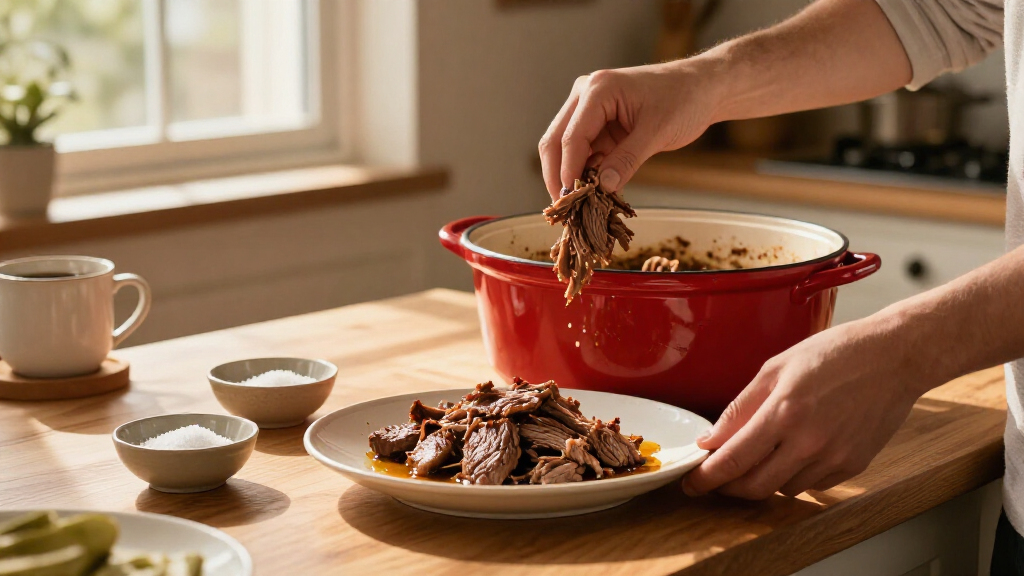
The contributor describes putting sliced chuck roast and a bottle of the marinade into a slow cooker, setting it to low and leaving it to cook, a method that raises questions addressed in slow-cooker safety guidance. In the account, dinner was ready after roughly seven hours. The writer says the beef was very tender and flavorful, and serves it with simple sides such as steamed green beans and white rice, with scallions or toasted sesame seeds as optional garnishes.
The article characterizes the marinade as a blend of savory, sweet and spicy flavors. It cites garlic, onion, ginger and tamari for savory depth, crushed red pepper for heat, and cane sugar and apple juice concentrate for sweetness. Vinegar, tangerine, tamarind and grapefruit peel are also listed as sources of acidity and tartness. The report says the marinade is labeled gluten-free; readers with allergies or dietary restrictions should check the product’s current packaging and ingredient statement.
The writer says they also tried the marinade with sirloin tips, skirt steak and flank steak, and found them suitable for slow cooking. Top round and shoulder roast are described as leaner options that may dry out more readily. The suggested timings are not presented as a universal recipe: the contributor advises checking skirt and flank steak after about four hours, while saying chuck roast can cook for seven or eight hours or longer. The source does not provide a full recipe with meat weight, marinade quantity, appliance model or internal-temperature guidance.
A Shortcut for Weeknight Beef
The appeal of the report is practical: it presents a meal built around two main ingredients and little hands-on preparation. For readers balancing work and family responsibilities, the writer’s account offers one possible way to use a store-bought marinade to add flavor without measuring a separate list of seasonings.
It is still a personal review, not evidence of a guaranteed result. Slow cookers and cuts of beef vary, and the article does not report a formal comparison with other marinades or cooking methods. Its value is as a specific experience and set of suggestions, with timing cautions for leaner or thinner cuts.
Products Worth Considering

Instant Pot Vortex Plus 10-Quart 7-in-1 Air Fryer Oven

Instant Pot InstantChill Ice Cream Maker with Rolled Ice Cream, 2-Pint

KitchenAid Classic Series 4.5-Quart Tilt-Head Stand Mixer, Onyx Black
As an affiliate, we earn on qualifying purchases.
How the Writer Tested the Marinade
The source is a product review and cooking report from The Kitchn, not a restaurant announcement, food-safety notice or formal recipe test. The contributor frames the meal as a response to limited time and energy for elaborate dinners, describing a grocery-store bottle as the shortcut that prompted the experiment.
The first attempt used sliced chuck roast and the marinade on the slow cooker’s low setting. The writer reports serving it about seven hours later, then trying other beef cuts. The article does not specify the amount of beef or marinade used, so readers cannot reproduce exact proportions from the supplied material alone.
“One of our favorite dinners these days only calls for two ingredients.”
— The Kitchn contributor
Recipe Details Still Missing
The supplied report does not give a meat weight, marinade quantity or exact slow-cooker model, making it difficult to match the contributor’s results precisely. It also does not provide internal temperature readings or a complete food-safety procedure. Cooking time alone cannot confirm that a piece of beef has reached a safe temperature; readers should follow current food-safety guidance and use a food thermometer where appropriate.
The writer says top round and shoulder roast can become drier, but does not provide measured comparisons. A possible use of the marinade with ground beef for lettuce wraps is described as an idea the contributor has not personally tested. The article’s product assessment and taste descriptions remain the writer’s opinion.
Readers Can Adjust by Cut
The report offers no announced follow-up test or additional product data. For readers trying the approach, its clearest practical distinction is to allow more time for chuck roast and to check skirt or flank steak earlier, around the four-hour mark suggested by the contributor. Slow-cooker instructions and food-safety advice should take precedence over treating those times as fixed rules.
The writer suggests serving the beef with rice and vegetables or using it in a beef-and-broccoli dish with lo-mein noodles. No amounts, step-by-step recipe or tested ground-beef version are included in the source, so those adaptations remain suggestions rather than verified recipes.
Key Questions
What are the two ingredients?
The report uses beef and Stubb’s Soy, Garlic & Red Pepper Beef Marinade. It does not specify how much of either ingredient to use.
How long did the chuck roast cook?
The contributor says the first batch cooked on low for about seven hours. The article does not establish that this timing applies to every slow cooker or roast size.
Which beef cuts does the report mention?
The writer reports using chuck roast, sirloin tips, skirt steak and flank steak. Top round and shoulder roast are described as leaner choices that may dry out more readily.
Is the ground-beef version tested?
No. The contributor says ground beef might work as a lettuce-wrap filling but explicitly describes that idea as untested.
Does the article provide complete food-safety instructions?
No. It gives cooking-time suggestions but no internal temperature readings or full safety directions. Follow current food-safety guidance, including safe handling and temperature recommendations, rather than relying on time alone.
Source: thekitchn.com