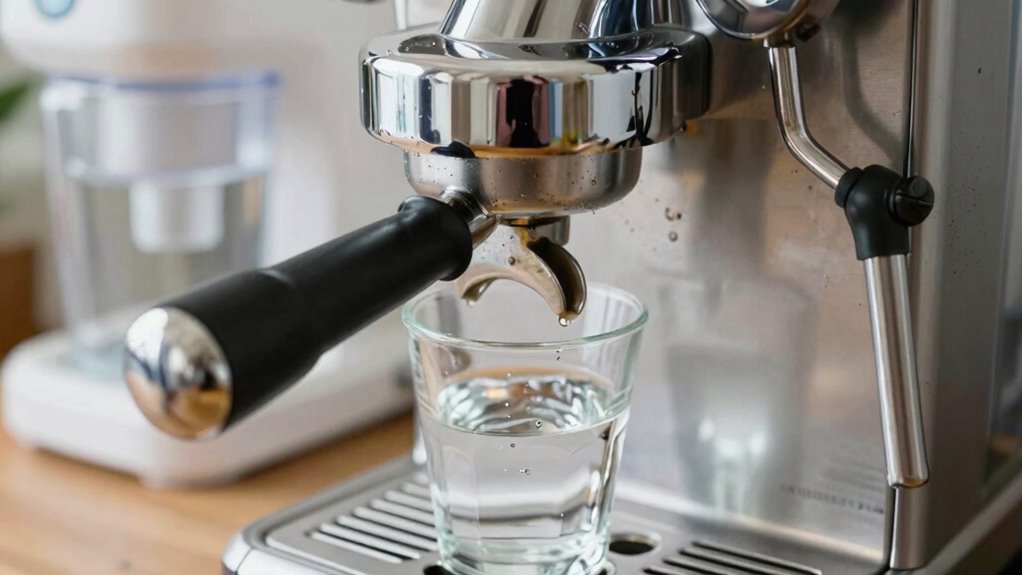
Using poor-quality water shortens your espresso machine’s lifespan by causing mineral buildup and corrosion inside its components. Hard water with high mineral content can clog pipes, reduce heating efficiency, and force the machine to work harder, leading to early failure. Water with impurities or improper pH levels accelerates corrosion, weakening metal parts and increasing leaks. Ensuring good water quality through filtration or softening helps protect your machine and keep it running smoothly far longer. Keep exploring to learn how to optimize your water care.

Get coffee and tea gear delivered free with Prime
- Fast, free delivery on millions of items
- Prime Video, Amazon Music and more included
- Member-only deals all year
Key Takeaways
- Poor water quality causes mineral buildup, clogging pipes and reducing machine efficiency.
- High mineral content accelerates scale formation, leading to early component failure.
- Impurities and acidity increase corrosion risks, damaging internal parts over time.
- Using filtered or softened water maintains optimal performance and extends machine lifespan.
- Regular water testing and treatment prevent damage and ensure consistent espresso quality.
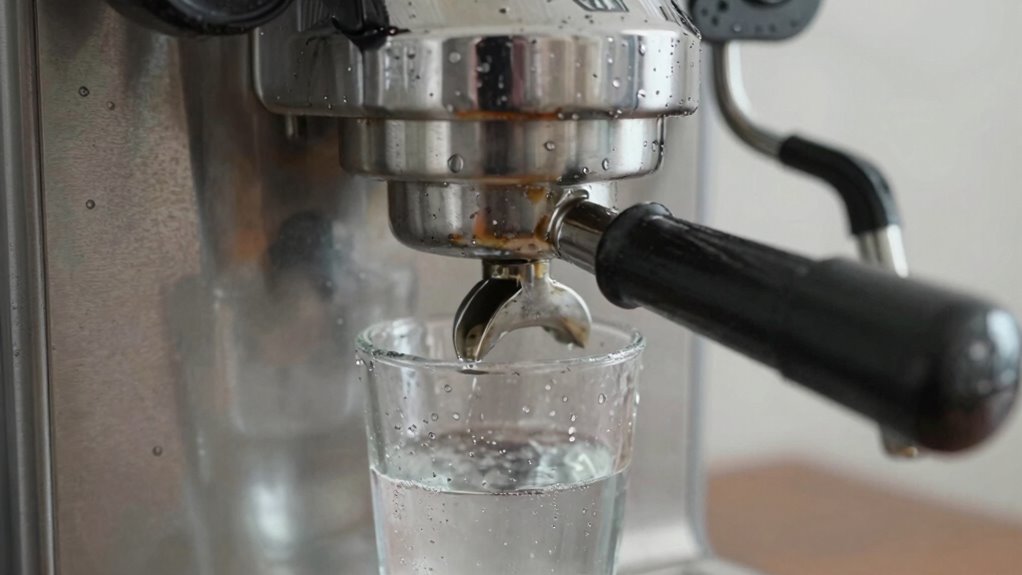
Water quality plays an essential role in maintaining your espresso machine’s performance and lifespan. When you use water that’s high in minerals, it’s more likely to lead to mineral buildup inside your machine’s boiler and internal components. Over time, this accumulation can clog pipes, reduce heating efficiency, and cause your machine to work harder than it should. This not only impacts the quality of your espresso but also puts unnecessary strain on the machine’s parts, potentially leading to early failure. Regular descaling can help, but the best way to prevent mineral buildup is to start with good-quality water. Using filtered or softened water can markedly cut down on minerals, keeping your machine cleaner and running smoothly for longer.
Another critical aspect influenced by water quality is corrosion resistance. Poor-quality water, especially water with high acidity or impurities, can accelerate corrosion inside your espresso machine. When corrosion occurs, it weakens metal parts, jeopardizing the integrity of the boiler, pipes, and other internal components. This deterioration can cause leaks, malfunctions, or even complete breakdowns. You might notice rust-colored deposits or unusual noises as signs of corrosion. To combat this, you should use water with a balanced pH level and low impurities, which helps maintain the corrosion resistance of your machine’s metal parts. Proper water quality minimizes the risk of rust and corrosion, extending the overall lifespan of your espresso machine. Additionally, understanding the role of minerals in water can help you better evaluate your water source and choose appropriate filtration systems for optimal maintenance. Maintaining the right water chemistry is crucial for preventing damage and ensuring longevity. Using water testing kits regularly can also help you monitor and adjust your water quality more effectively. Ensuring the water has the proper mineral composition can significantly reduce the likelihood of scale buildup, further prolonging your machine’s operational life. Moreover, being aware of how water composition affects your machine can guide you in selecting the best filtration and treatment options.
water filtration system for espresso machine
As an affiliate, we earn on qualifying purchases.
As an affiliate, we earn on qualifying purchases.
Frequently Asked Questions
Can Mineral Buildup Damage My Espresso Machine Over Time?
Yes, mineral deposits can damage your espresso machine over time. As minerals build up, they clog internal components, reduce efficiency, and cause overheating. Regular descaling routines help prevent this buildup, keeping your machine functioning smoothly. You should monitor your water quality and perform descaling as recommended by the manufacturer. By doing so, you prolong your machine’s lifespan and ensure consistently great espresso shots.
How Often Should I Replace My Water Filter?
You’ll want to replace your water filter every two to three months to keep your espresso machine running smoothly. Coincidentally, this timeframe aligns with typical water filter lifespan recommendations. To guarantee peak performance, follow filter replacement tips like checking for changes in water taste or flow rate. Regular replacements prevent mineral buildup and extend your machine’s life, so mark your calendar for those routine changes.
What’s the Best Water Temperature for Espresso Machines?
The best water temperature for espresso machines is around 195-205°F (90-96°C). You want to guarantee proper temperature regulation for ideal extraction. Water purification is vital, so use filtered water to prevent mineral buildup that can affect machine longevity. Maintaining consistent temperature helps your espresso taste better and keeps your machine running smoothly longer. Always monitor and adjust your machine’s temperature settings for the best brewing results.
Does Water Hardness Affect Machine Maintenance Frequency?
Yes, water hardness definitely influences your machine’s maintenance frequency. Hard water, rich in water mineralization like calcium, promotes calcium scaling, which clogs components and complicates cleaning. When calcium builds up, you’ll need to descale more often, increasing maintenance needs. Using soft water can ease this process, reduce mineralization, and prolong your espresso machine’s lifespan, saving time and money while ensuring consistently perfect espresso shots.
Are There Specific Water Treatment Methods for Optimal Machine Performance?
Yes, you should use water filtration systems to remove impurities and improve water quality, which helps protect your espresso machine. Additionally, pH balancing treatments guarantee the water isn’t too acidic or alkaline, preventing corrosion and scale buildup. These methods optimize machine performance, reduce maintenance costs, and extend the lifespan of your equipment. Regularly maintaining and monitoring your water treatment processes guarantees consistently high-quality espresso and machine durability.
Conclusion
Poor water quality can considerably shorten your espresso machine’s lifespan. For example, if you use hard water, mineral buildup may clog components and cause costly damage over time. Imagine a barista noticing their machine slowing down after months of brewing with tap water—it’s likely mineral deposits. To avoid this, use filtered or softened water, ensuring your machine runs smoothly and lasts longer. Taking care of your water quality means savoring great coffee and protecting your investment.
Halloween Picks
halloween
As an affiliate, we earn on qualifying purchases.