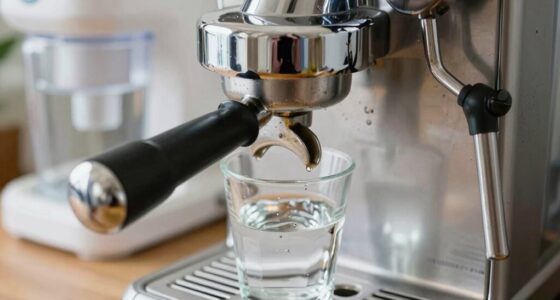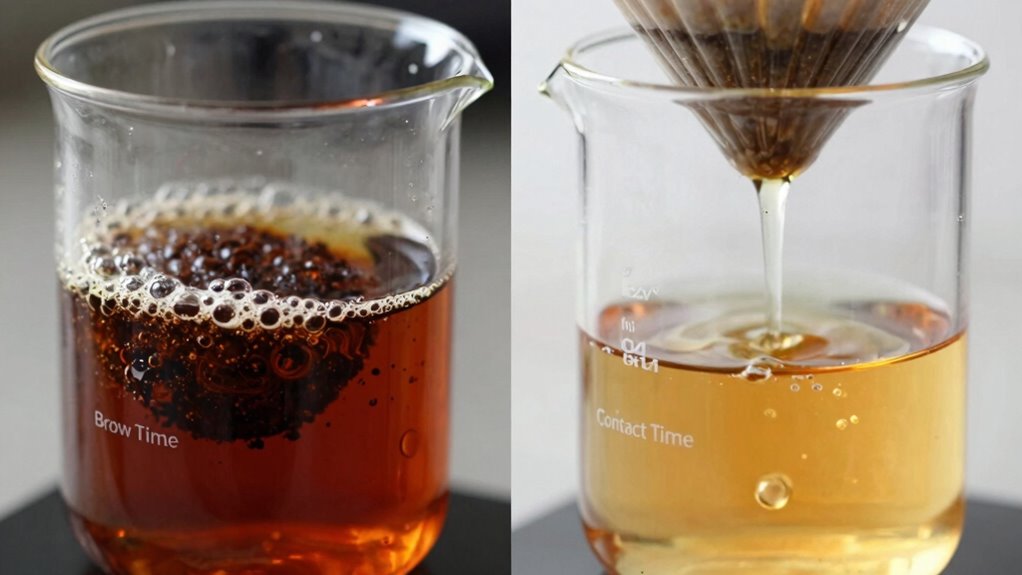

Brew time is the total duration from start to finish of your coffee brewing process, including grinding, pouring, and steeping. Contact time specifically refers to how long water stays in contact with the coffee grounds during extraction, directly affecting flavor and strength. While brew time encompasses everything, contact time focuses on extraction quality. Understanding how these two interact helps you control taste precisely. Explore further to discover how adjusting each can elevate your coffee experience.

Get coffee and tea gear delivered free with Prime
- Fast, free delivery on millions of items
- Prime Video, Amazon Music and more included
- Member-only deals all year
Key Takeaways
- Brew time encompasses the entire process, including grinding, brewing, and pouring, while contact time is the specific duration water contacts coffee grounds.
- Contact time directly influences flavor extraction, determining whether the coffee is under- or over-extracted.
- Brew time is affected by multiple variables like brewing method and water temperature, whereas contact time mainly depends on grind size and method.
- Proper contact time ensures optimal flavor extraction without bitterness, while overall brew time ensures process efficiency.
- Understanding both timings allows precise control over flavor profile and consistency in coffee brewing.
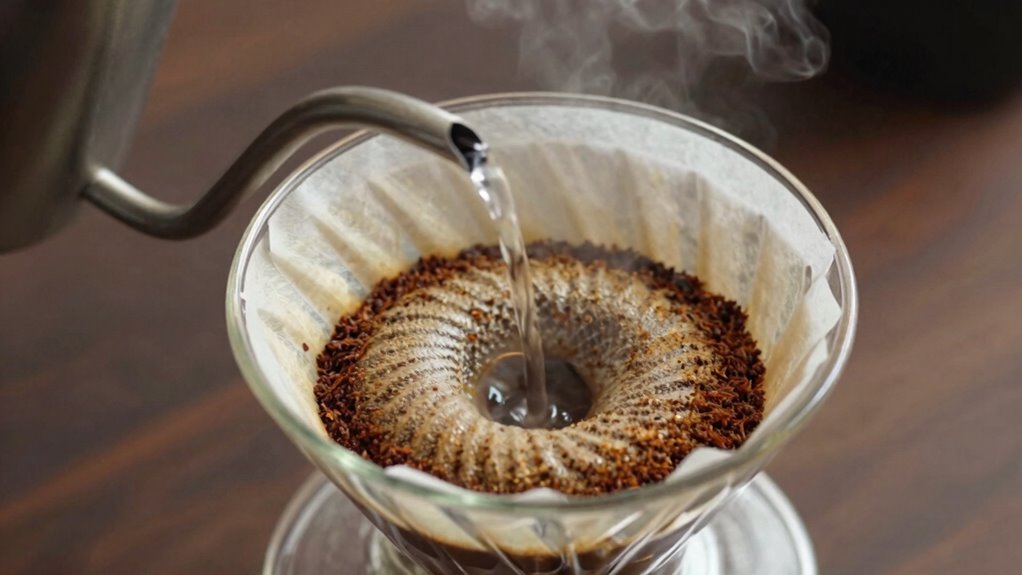
Ever wondered how brew time and contact time differ when making your coffee? These two terms often get used interchangeably, but they actually refer to distinct parts of the brewing process that considerably influence your final cup. Brew time typically describes the overall duration from when you start brewing until it’s ready to drink. Contact time, on the other hand, specifies how long water stays in contact with the coffee grounds during extraction. Understanding the difference is key to controlling the extraction rate and, ultimately, shaping the flavor profile of your coffee.
When you think about contact time, you’re focusing on how long the water interacts directly with the coffee grounds. If the contact time is too short, the water might not extract enough flavors, resulting in a weak or underwhelming taste. Conversely, if it’s too long, you risk over-extraction, which can lead to bitterness and a loss of nuance. The extraction rate—the speed at which solubles dissolve from the grounds into the water—is closely tied to contact time. A balanced contact time allows for a proper extraction rate, drawing out the complex flavors without turning the coffee bitter or flat. By controlling contact time, you fine-tune the flavor profile, highlighting desirable notes like fruity brightness or rich body, while minimizing undesirable flavors. This precise control also helps prevent over-extraction, which can ruin the delicate balance of flavors in your cup.
Brew time encompasses the entire process, from grinding your beans to pouring your final cup. It includes factors like the brewing method, grind size, water temperature, and even how quickly you pour or press. While contact time is a component of brew time, it’s not the whole picture. For example, a French press might have a longer contact time—usually several minutes—yet the total brew time can be shorter or longer depending on how you prepare it. The total duration of brewing influences the overall extraction and flavor development, making it essential to consider both contact time and brew time together. Additionally, adjusting variables such as water temperature can significantly impact both contact and brew times, further influencing flavor extraction. The key is that longer brew times don’t necessarily mean better flavor; it’s about finding the right balance where the extraction rate hits that sweet spot, allowing your coffee’s true character to shine. Additionally, using consistent brewing techniques can help you better control both contact time and brew time for more predictable results.
In the end, understanding the difference between brew time and contact time empowers you to control the extraction process precisely. By adjusting contact time, you influence the extraction rate directly, shaping the flavor profile to your liking. Meanwhile, managing the overall brew time ensures that the process remains efficient and consistent. Mastering both helps you craft a cup that’s perfectly tailored to your tastes—rich, balanced, and full of complexity.
As an affiliate, we earn on qualifying purchases.
Frequently Asked Questions
How Does Grind Size Affect Brew and Contact Times?
You’ll notice that grind size directly impacts brew and contact times. Finer grinds increase extraction efficiency but require shorter contact times to prevent over-extraction, while coarser grinds need longer contact times for proper extraction. Consistent grind size guarantees even extraction, helping you control brew time effectively. Adjusting grind consistency allows you to fine-tune your brewing process, balancing contact time and extraction for a richer, more balanced cup.
Can Adjusting Water Temperature Change the Importance of Contact Time?
Adjusting water temperature can indeed change the importance of contact time, as higher temperatures accelerate extraction, making it easier to reach desired flavor profiles quickly. Lower temperatures slow extraction, so you might need longer contact times. Water chemistry influences this process too—alkaline or mineral-rich water can enhance extraction, affecting the extraction balance. By fine-tuning temperature, you optimize flavor without over- or under-extracting, giving you more control over your brew.
Are There Specific Brew Methods That Emphasize One Over the Other?
Did you know that espresso, with its short brew time of around 25-30 seconds, emphasizes contact time for ideal flavor extraction? This method prioritizes contact time to achieve a rich, balanced extraction, while pour-over emphasizes brew time to control flavor extraction delicately. Different methods highlight one over the other based on desired extraction balance, allowing you to tailor your brewing for richer aroma or cleaner taste.
How Do Brew Time and Contact Time Impact Coffee Flavor Profiles?
Brew time and contact time considerably impact your coffee’s flavor profile. Longer brew and contact times allow for more flavor extraction, resulting in a richer, fuller taste. They also enhance aroma development, making your coffee more fragrant. If either is too short, you might get under-extraction, leading to sourness or sour flavors. Adjusting these times helps you fine-tune flavor extraction and aroma development to match your preferred taste.
What Tools Can Help Measure Contact Time Accurately?
Think of measuring contact time like tuning a fine instrument. You can use calibration tools to guarantee your grinder and pour-over setup are consistent, but for precise timing, a good timing device is essential. Digital timers or stopwatch apps help you track contact time accurately, ensuring each brew remains consistent. These tools turn a messy symphony into a harmonious brew, letting you craft coffee with perfect balance every time.
Conclusion
Understanding the difference between brew time and contact time helps you perfect your coffee. While brew time is how long water and coffee interact, contact time is the duration water stays in contact with the grounds. Did you know that a longer contact time can boost extraction, but too long might cause bitterness? Mastering these details lets you customize your brew for the perfect cup, elevating your coffee experience every time.
Fall Picks
fall essentials
As an affiliate, we earn on qualifying purchases.