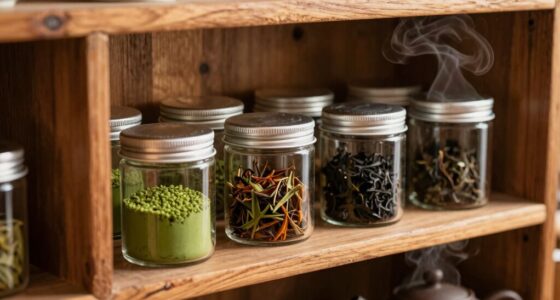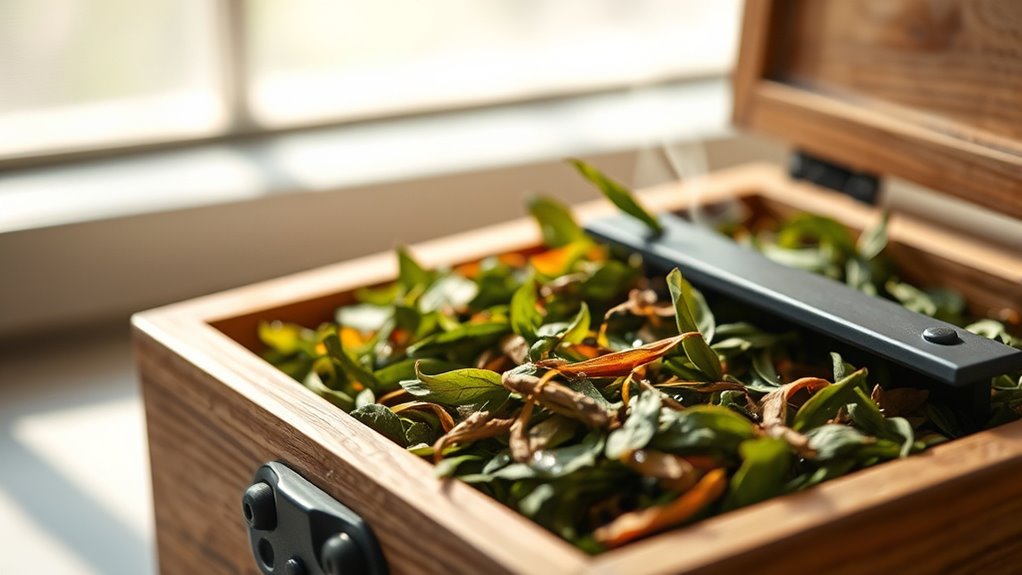

To keep your tea fresh, store it in a cool, dark place away from light, heat, and strong odors. Use airtight containers to limit air exposure and prevent oxidation, and keep your tea protected from moisture to avoid mold. Avoid storing near spices or cleaning products to prevent odor absorption. Properly sealed, dry storage helps preserve flavor and aroma over time. If you want to learn more about ideal tea storage tips, keep exploring these essential guidelines.

Get coffee and tea gear delivered free with Prime
- Fast, free delivery on millions of items
- Prime Video, Amazon Music and more included
- Member-only deals all year
Key Takeaways
- Store tea in opaque, airtight containers to protect against light, air, and odor contamination.
- Keep tea in a cool, stable environment between 60-70°F to prevent heat-related flavor loss.
- Avoid storing tea near strong-smelling items to prevent odor absorption.
- Maintain dry storage conditions, away from humidity and moisture sources, to prevent mold.
- Protect tea from direct sunlight and fluctuating temperatures for maximum freshness.

Have you ever wondered if your tea stays fresh longer when stored properly? The way you store your tea substantially impacts its flavor, aroma, and overall quality. Using effective tea storage methods ensures that each cup you brew tastes as vibrant as when you first opened the package. But many people fall into common tea storage mistakes that can diminish their tea’s freshness over time. Understanding what to do—and what to avoid—can make a big difference in keeping your tea at its best.
Proper tea storage preserves freshness, flavor, and aroma—avoid light, heat, air, and odors for the best brewing experience.
First, consider light. Exposure to direct sunlight or bright artificial light can degrade tea leaves, causing them to lose their delicate flavors. That’s why opaque containers are your best bet for storage. If your tea is in a transparent bag or jar, it’s best to keep it in a dark cupboard or drawer. Light can accelerate oxidation, which dulls the tea’s aroma and taste. Along with light, temperature plays an essential role. Store your tea in a cool, consistent environment—ideally between 60-70°F. Fluctuations in heat can cause moisture build-up or accelerate deterioration, so avoid storing tea near heat sources like stoves, ovens, or direct sunlight.
Air exposure is another common mistake. Many people leave tea in its original packaging or in open containers, which allows oxygen to interact with the leaves. Over time, this oxygen exposure causes oxidation, leading to stale flavors. The best tea storage methods involve airtight containers that seal out air, preserving the freshness and aroma. Be sure to close containers tightly after each use, and consider transferring loose tea to small, airtight tins or jars to minimize oxygen contact.
Odor contamination is often overlooked but can ruin your tea’s flavor profile. Tea readily absorbs strong smells from its surroundings—think spices, cleaning products, or even nearby food. Store your tea away from fragrant items and in a dedicated container to prevent odor absorption. Also, keep your storage area clean and dry; moisture is another enemy, promoting mold and spoilage. Avoid storing tea in humid places like bathrooms or above sinks.
As an affiliate, we earn on qualifying purchases.
Frequently Asked Questions
Can Metal Containers Affect Tea Flavor Over Time?
Yes, metal containers can affect your tea flavor over time. Metal corrosion can occur, especially if the container isn’t high quality, leading to flavor contamination. This can cause your tea to taste metallic or off, diminishing its quality. To prevent this, use airtight, non-reactive metal containers or switch to glass or ceramic. Proper storage guarantees your tea stays fresh and retains its original flavor longer.
Is It Safe to Store Tea in the Refrigerator?
You might think storing tea in the refrigerator is a bright idea, but it’s a slippery slope. Refrigerator humidity can cause tea condensation, leading to mold or spoilage. Plus, the cool environment can trap odors, affecting flavor. If you do store tea there, keep it in an airtight container and avoid frequent opening. Otherwise, a cool, dark pantry is a safer bet to keep your tea fresh and flavorful.
How Does Humidity Impact Tea Storage?
Humidity impacts tea storage by causing moisture absorption, which can spoil your tea. When humidity is high, you should prioritize humidity control to keep tea dry and fresh. Too much moisture can lead to mold or loss of flavor. Store your tea in a cool, dry place, and consider an airtight container to prevent moisture from entering. Keeping humidity low helps maintain tea quality and preserves its aroma.
What Types of Odors Are Most Likely to Contaminate Tea?
Imagine a gentle breeze carrying smoke or kitchen smells into your tea container, tainting its delicate aroma. You’re most likely to encounter odors like smoke, spices, or strong kitchen smells that can cling to tea leaves. These scents seep into the tea’s porous surface, overpowering its natural flavor. To keep your tea pure, store it away from strong odors, sealing it tightly and avoiding areas with lingering kitchen or smoky smells.
Can I Reuse Tea Packaging for Storage?
Yes, you can reuse tea packaging for storage, but make sure it’s clean and free of any lingering odors. Reusable packaging offers eco-friendly storage options, helping reduce waste. Use airtight containers to protect your tea from light, heat, air, and odors. Properly cleaned and sealed containers keep your tea fresh and flavorful, making reuse both practical and sustainable. Just verify the packaging is suitable for long-term storage to maintain tea quality.
Conclusion
Remember, the way you care for your tea reflects your appreciation for its subtle nuances. By shielding it from the gentle influences of light, heat, air, and odors, you create a sanctuary where its flavors can quietly flourish. Treat it with respect, and it will reward you with moments of true serenity in every sip. In nurturing your tea, you nurture a small but meaningful part of your daily ritual, turning simple moments into cherished memories.
Halloween Picks
halloween
As an affiliate, we earn on qualifying purchases.