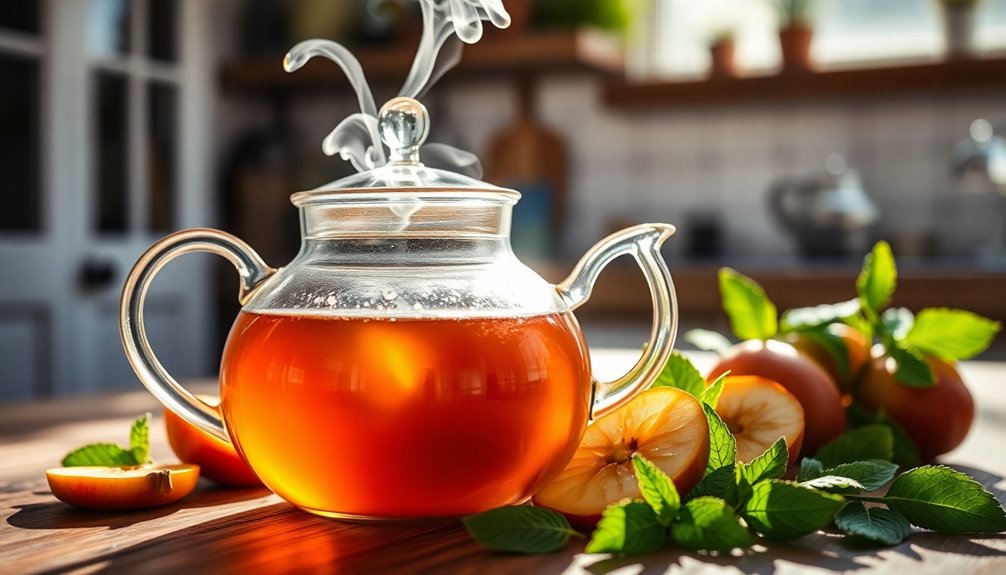
To enjoy Moroccan mint tea, you’ll follow a cherished ritual that begins with preparing high-quality green tea and rinsing it to remove bitterness. Add generous sprigs of fresh mint and plenty of sugar, then pour the tea into glasses from a height to create a frothy, aerated drink. The pouring technique and presentation are key symbols of hospitality and respect that make the experience special. Keep exploring to discover the full artistry behind this cultural tradition.

Get coffee and tea gear delivered free — and shop member deals
- Fast, free delivery on millions of items
- Access to Prime Big Deal Days deals on October 6–7
- Prime Video, Amazon Music and more included
Key Takeaways
- The preparation begins with rinsing high-quality green tea to remove bitterness and enhance aroma.
- Fresh mint leaves are added after steeping, symbolizing freshness and hospitality.
- Sugar is generously added, emphasizing warmth, generosity, and social bonding.
- Tea is poured from a height to aerate, create froth, and showcase skillful craftsmanship.
- Serving the tea reflects respect and hospitality, making guests feel honored and welcomed.

Moroccan Mint Tea is more than just a beverage; it’s a symbol of hospitality and tradition in Morocco. When you prepare this tea, you’re engaging in a ritual that has been passed down through generations, embodying the country’s rich cultural significance. The process of tea preparation isn’t just about mixing ingredients; it’s a ceremony that reflects respect, social bonds, and a welcoming spirit. You start by selecting high-quality green tea, typically Chinese gunpowder tea, which forms the foundation. Boil fresh water and pour a small amount over the tea leaves in a teapot, allowing them to steep briefly and release their aroma. This initial step, often called “rinsing,” helps remove any bitterness and prepares the leaves for a fuller infusion. As you pour the hot water, you’re not just making tea—you’re setting the stage for an experience that emphasizes patience and social connection.
Once the tea leaves have steeped, you add fresh sprigs of mint, a key element that defines Moroccan mint tea. The mint isn’t just a flavor; it’s embedded with cultural significance, symbolizing freshness, hospitality, and good health. The amount of mint varies, but it’s always generous, filling the air with a fragrant aroma that invites conversation. You then sweeten the tea with a generous helping of sugar, which is added while pouring or directly into the teapot, depending on regional customs. The act of adding sugar isn’t just about taste—it’s a gesture of warmth and generosity. Afterward, you pour the tea into glasses from a height, a pouring technique that aerates the drink and creates a slight froth on top. This pouring style is essential, as it’s believed to enhance the flavor and showcase your skill, making the tea more than just a drink but a performance.
The cultural significance of Moroccan mint tea extends beyond its ingredients and preparation. Serving and pouring the tea is a display of respect and hospitality, especially when hosting guests. You might pour from a height to create a foam that symbolizes generosity and good fortune. This act also demonstrates your mastery and respect for tradition, making visitors feel honored. Every step, from choosing the right tea leaves to pouring with care, underscores the importance of community and sharing in Moroccan culture. When you serve this tea, you’re not just offering a beverage—you’re sharing a piece of Morocco’s soul, brewed through years of tradition, ritual, and heartfelt hospitality.
As an affiliate, we earn on qualifying purchases.
Frequently Asked Questions
What Types of Mint Are Traditionally Used in Moroccan Tea?
You’ll typically find spearmint and pennyroyal in traditional Moroccan mint tea. These mint varieties are favored for their invigorating aroma and unique flavor, making them essential herbs in the tea ritual. Using the right combination of spearmint’s sweet notes and pennyroyal’s slightly bitter undertones enhances the tea’s taste. Incorporate these traditional herbs carefully, and you’ll create a fragrant, authentic Moroccan tea experience that’s both revitalizing and culturally rich.
How Do I Choose the Best Quality Green Tea for Moroccan Mint Tea?
Imagine vibrant markets filled with aromatic teas—you’re searching for the best green tea for Moroccan mint. Focus on tea sourcing; look for fresh, whole leaves with a grassy, slightly sweet flavor profile. Opt for high-quality teas that are minimally processed, ensuring a rich, clean taste. The right green tea balances boldness without overpowering the mint, creating a harmonious blend that elevates your Moroccan mint tea experience.
Can Moroccan Mint Tea Be Made With Herbal or Non-Traditional Teas?
Yes, you can make Moroccan mint tea with herbal substitutions or non-traditional teas. Using herbal options like chamomile or lemon balm creates unique flavor variations, perfect for those avoiding caffeine or seeking different tastes. Keep in mind, herbal teas may require adjustments in steeping time and sweetness, but they still capture the invigorating essence of Moroccan mint tea while offering exciting flavor alternatives.
What Are the Health Benefits of Drinking Moroccan Mint Tea Regularly?
Drinking Moroccan mint tea regularly can boost your digestive health by soothing stomach issues and reducing bloating. It also supports your immune system with antioxidants and antimicrobial properties from mint and green tea. The warm beverage helps you stay hydrated, which is essential for overall health. Plus, the calming ritual can reduce stress, contributing to better well-being. Incorporate it into your routine for these natural health benefits.
How Do Cultural Variations Influence the Serving and Drinking of Moroccan Mint Tea?
You’ll notice that cultural variations greatly influence how you serve and drink Moroccan mint tea. In Morocco, tea etiquette emphasizes hospitality, with specific serving customs like pouring from a height to create foam. In other regions, traditions may be more relaxed or differ in presentation. Your approach to serving and drinking the tea reflects local customs, shaping your experience and deepening your appreciation of this cherished social ritual.
Conclusion
As you master the pouring technique, you’ll find that every cup of Moroccan mint tea becomes a delightful ritual, almost like destiny guiding your hand. The aroma and flavor seem to align perfectly, creating a moment that feels just right—like a coincidence worth savoring. So, embrace each pour with confidence, knowing that this simple act connects you to centuries of tradition. Enjoy the magic in every sip, and let the ritual become a cherished part of your day.
Halloween Picks
halloween
As an affiliate, we earn on qualifying purchases.