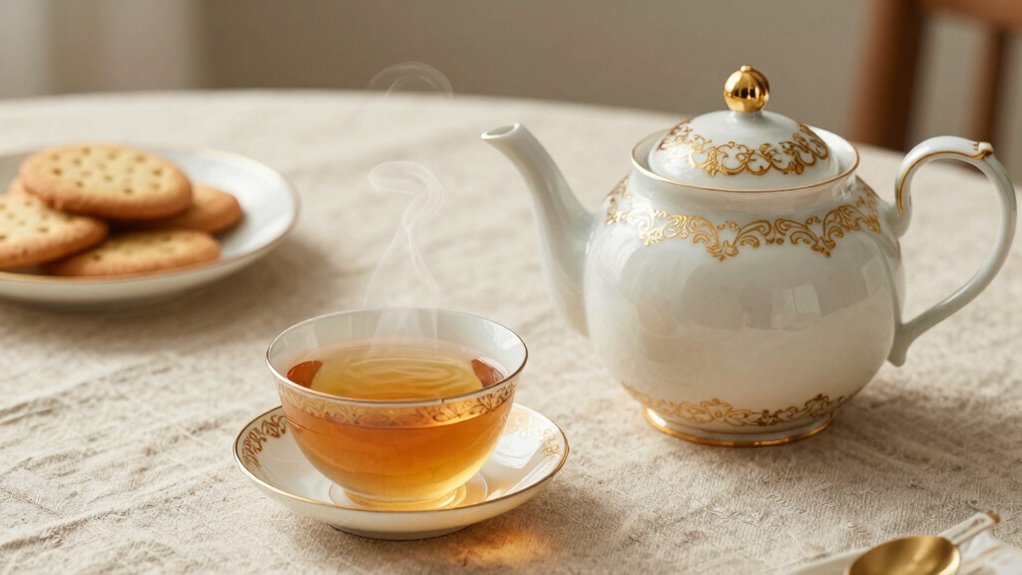

Everyday tea is all about convenience and consistency, so you can quickly enjoy a familiar flavor with minimal effort. It involves simple preparation techniques and often uses readily available tools, perfect for busy mornings. In contrast, special-occasion tea involves rituals, cultural traditions, and precise methods that turn brewing into a meaningful experience. If you want to discover how these differences influence your tea moments, keep exploring to learn more.

Get coffee and tea gear delivered free with Prime
- Fast, free delivery on millions of items
- Prime Video, Amazon Music and more included
- Member-only deals all year
Key Takeaways
- Everyday tea emphasizes convenience, quick preparation, and consistency for daily routines, while special-occasion tea involves ceremonial techniques and cultural rituals.
- Preparation of everyday tea uses simple methods with minimal tools, contrasting with the intricate procedures of special-occasion tea.
- Everyday tea focuses on practicality and personal preference, whereas special-occasion tea highlights tradition, etiquette, and sensory experience.
- Serving everyday tea is casual and fast, while special-occasion tea is served mindfully with regional flavors and ceremonial gestures.
- The intent behind everyday tea is comfort and routine, whereas special-occasion tea aims to elevate moments into meaningful social or spiritual experiences.
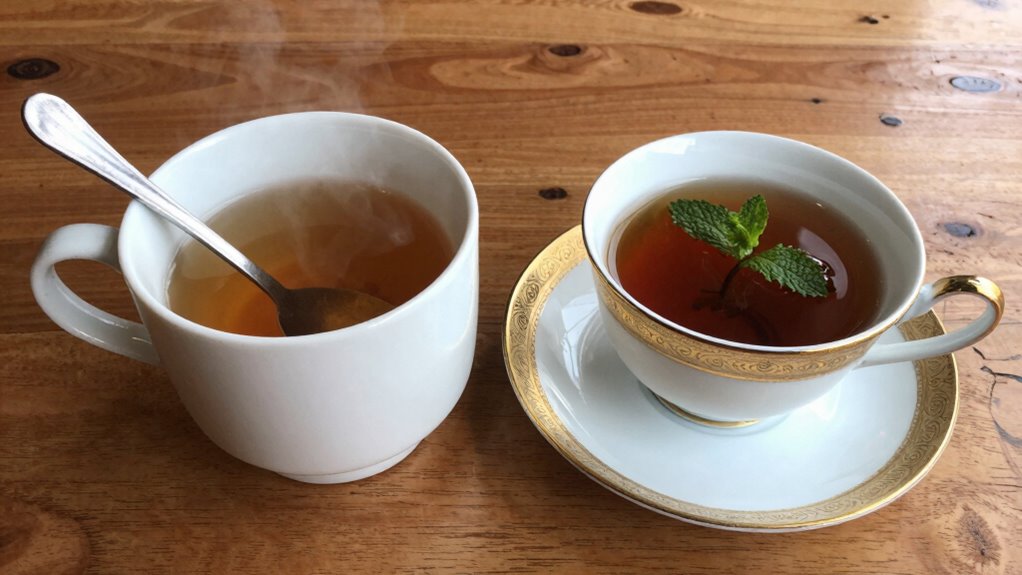
Tea is more than just a beverage; it’s a reflection of the moment and the intention behind each sip. When you think about everyday tea versus special-occasion tea, the differences often go beyond taste—they’re rooted in how you prepare and what the tea represents. For everyday tea, the focus is on convenience and consistency. You likely follow straightforward tea brewing techniques, using quick steeping methods that deliver a satisfying drink without much fuss. This approach suits busy mornings or casual afternoons when you want a comforting cup without dedicating too much time. The emphasis isn’t on ceremony but on practicality, making it an accessible part of your daily routine.
On the other hand, special-occasion teas are often prepared with a deeper appreciation for tradition and ceremony. The way you brew these teas reflects their cultural significance. You might use specific tools, such as a gaiwan or a traditional teapot, and pay close attention to water temperature, steeping time, and even the order in which you add ingredients. These meticulous tea brewing techniques elevate the experience and show respect for the tradition behind each blend. For many cultures, preparing a special-occasion tea is an art form—an act that connects you to centuries of history and shared rituals. It’s not just about drinking tea but about honoring the moment and the people you’re sharing it with.
Preparing special-occasion teas with careful tools and techniques honors tradition and connects us to centuries of shared rituals.
The cultural significance of special-occasion teas often influences how they’re served and enjoyed. For example, a ceremonial matcha might be prepared with specific movements and etiquette, emphasizing mindfulness and respect. Similarly, a Chinese gongfu tea session involves multiple infusions, each revealing different layers of flavor, as part of a social and spiritual experience. These rituals transform tea-drinking from a simple act into a meaningful gesture that celebrates heritage, community, and tradition. Additionally, the art of tea preparation often plays a crucial role in elevating these moments into memorable experiences. Incorporating the precise temperature control helps ensure the optimal flavor extraction and enhances the overall sensory experience. Understanding regional flavors can also deepen appreciation for the unique characteristics of each tea during these special moments.
In contrast, everyday tea is about comfort and familiarity. You don’t need elaborate techniques or ceremonies. It’s about quickly satisfying your craving or providing a moment of pause in your day. While it may lack the ritualistic depth of special-occasion tea, it still offers a personal connection—an expression of your daily life and preferences. Developing a basic understanding of tea varieties can help you make better choices for your everyday routines and enhance your appreciation of different flavors.
Ultimately, what makes everyday tea different from special-occasion tea isn’t just the quality or complexity but the intent behind it. Whether you’re rushing through a busy morning or savoring a carefully prepared brew with friends, each experience reflects your relationship with tea—whether casual or ceremonial—shaped by technique, tradition, and the moment’s significance.
As an affiliate, we earn on qualifying purchases.
Frequently Asked Questions
How Do Storage Methods Affect Tea Quality?
You can preserve tea freshness by storing it properly. Use airtight storage containers to protect your tea from exposure to air, moisture, and odors, which can degrade quality. Keep your tea away from direct sunlight and heat sources, as these can cause flavor loss. Proper storage methods guarantee your tea stays fresh longer, maintaining its aroma and taste for everyday enjoyment or special occasions.
Are Certain Tea Types Better for Special Occasions?
Certain tea types, like aged Pu-erh or rare oolong, are better for special occasions because they offer unique tea flavors that impress guests. You’ll notice their complex taste profiles and exquisite tea presentation elevate the experience. These teas often require careful brewing, making the moment feel more special. When you serve these, your guests appreciate the thoughtfulness behind choosing a tea that stands out, enhancing the event’s elegance.
Can Everyday Teas Be Upgraded for Celebrations?
Absolutely, you can upgrade everyday teas for celebrations. Enhance the tea flavor by choosing high-quality leaves or adding natural ingredients like dried fruits or herbs. Serve it with a ceremonial presentation—use elegant cups, a beautiful teapot, and perhaps a tea tray—to elevate the experience. These small touches create a festive atmosphere, transforming your ordinary tea into a special occasion, making it feel more luxurious and memorable.
Do Brewing Techniques Differ for Daily and Special Teas?
Think of your tea ritual as a delicate dance—your brewing techniques do differ for daily and special teas. For everyday teas, you might keep it simple, focusing on a quick, comforting brew. But for special teas, you’ll want to gently enhance the flavor, perhaps adjusting steeping time or temperature. These subtle changes elevate the experience, making each sip memorable and truly a celebration of taste.
How Do Tea Origins Influence Their Suitability?
Tea origins greatly influence their suitability for different occasions because tea terroir, including soil, climate, and elevation, shapes flavor profiles unique to each region. You’ll notice that teas from specific areas have distinct tastes—like the earthy richness of a Chinese oolong or the bright citrus notes of a Kenyan black tea. These flavor profiles help you choose teas that match your mood or event, making each tea experience special.
Conclusion
So, next time you reach for that fancy, special-occasion tea, remember—it’s probably just as ordinary as your everyday brew. The irony? The fancy stuff often costs more, but it’s your daily cup that truly fuels your day. Whether simple or extravagant, it’s the ritual, not the price tag, that makes your tea special. After all, isn’t it amusing how we chase after rarity when comfort’s right in our own cups?
Halloween Picks
halloween
As an affiliate, we earn on qualifying purchases.