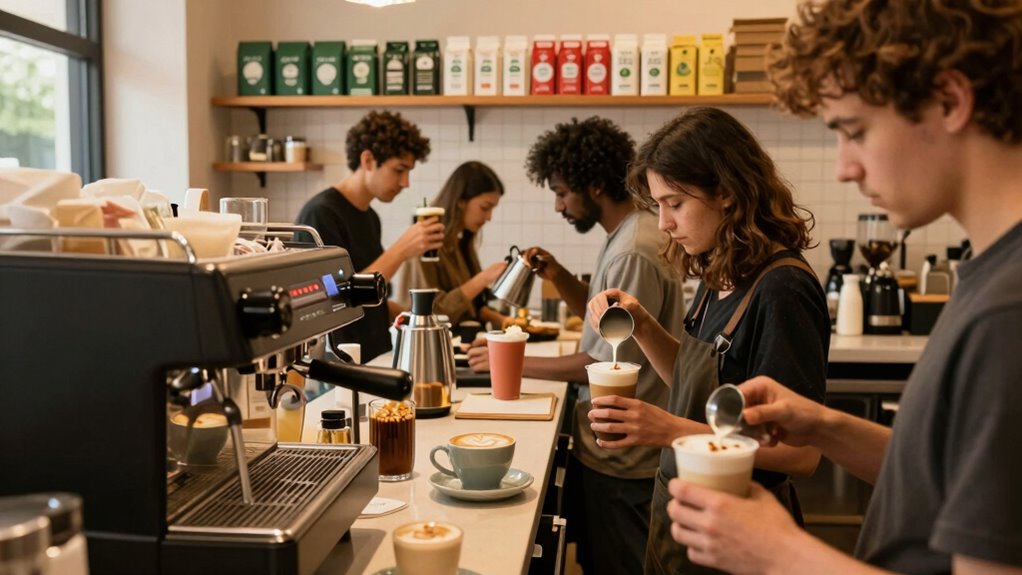

Alternative milks have transformed your local cafés by offering more dairy-free options, appealing to health-conscious and eco-minded customers. Baristas now master new techniques for frothing and steaming plant-based varieties like oat and almond milk, improving drink quality and presentation. Menus highlight these choices to stand out in a competitive market, and ongoing innovations focus on taste and texture. Sustainable packaging also emphasizes eco-friendly values. To discover how these changes shape your coffee experience, keep exploring what’s behind this dairy-free revolution.

Get coffee and tea gear delivered free with Prime
- Fast, free delivery on millions of items
- Prime Video, Amazon Music and more included
- Member-only deals all year
Key Takeaways
- Increased menu variety by offering diverse plant-based milk options to cater to health-conscious and eco-aware customers.
- Changed barista techniques due to different steaming and frothing behaviors of plant-based milks.
- Enhanced café differentiation through dedicated dairy-free sections and highlighting plant-based beverage choices.
- Driven innovation in developing plant milks that mimic dairy’s creamy texture and improve flavor profiles.
- Promoted sustainability with eco-friendly packaging, aligning cafés with environmental responsibility goals.
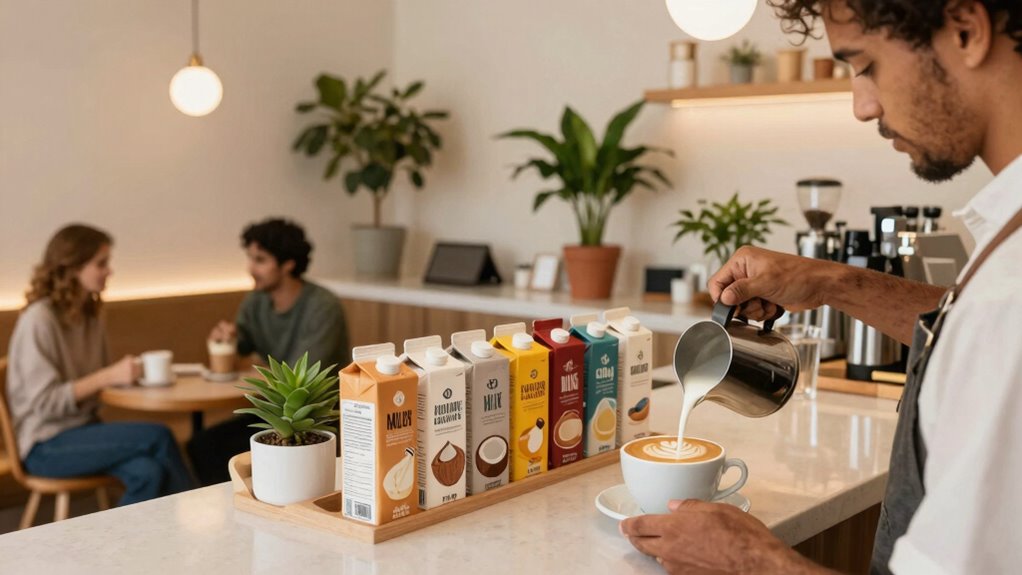
Have you noticed how coffee shops are increasingly offering a variety of plant-based milks? This shift isn’t just a passing trend; it reflects a broader movement driven by plant based trends and dairy free innovations. Customers today are more health-conscious and environmentally aware, prompting cafes to diversify their offerings beyond traditional cow’s milk. As a result, your favorite spot might now serve almond, oat, soy, coconut, or cashew milk—each bringing a unique flavor and texture to your coffee experience.
Many coffee shops now offer diverse plant-based milks, enhancing flavor and catering to health-conscious and eco-friendly customers.
This rise in alternative milks has fundamentally changed the café industry. Baristas now need to master new techniques for steaming and frothing these plant-based options, which often behave differently from dairy milk. For example, oat milk has gained popularity because of its creamy consistency and ability to create latte art, making it a favorite for both baristas and customers alike. Meanwhile, almond milk, with its nutty taste, offers a lighter option for those seeking dairy free innovations. These options appeal to a wider audience, including vegans, lactose intolerant individuals, and environmentally conscious consumers who want to reduce their carbon footprint.
The influence of plant based trends is evident in how cafes design their menus. Many now feature dedicated sections for dairy free beverages, highlighting the variety of plant-based milks available. This not only caters to dietary needs but also helps cafes stand out in a competitive market. The demand for dairy free innovations has pushed producers to develop better, more versatile plant milks that mimic the creamy texture of dairy. Innovations like barista blends of almond or oat milk now froth better and offer richer flavors, elevating the quality of dairy free drinks. Additionally, the development of plant-based milk innovations continues to evolve, making these alternatives more comparable to traditional dairy in taste and texture. This ongoing innovation is driven by consumer demand for dairy free options that do not compromise on quality or flavor.
Furthermore, the rise of sustainable packaging has played a significant role in promoting environmentally friendly choices among consumers and cafes alike.
barista oat milk frothing pitcher
As an affiliate, we earn on qualifying purchases.
As an affiliate, we earn on qualifying purchases.
Frequently Asked Questions
How Do Alternative Milks Affect the Taste of Coffee Beverages?
Alternative milks influence the taste of your coffee beverages by offering diverse flavor profiles that can complement or enhance the drink. Their ingredient versatility allows you to customize your coffee experience, whether you prefer the creaminess of oat milk or the subtle sweetness of almond milk. You’ll notice subtle differences in texture and flavor, making each cup unique. This variety encourages experimentation, letting you craft beverages tailored to your taste preferences.
Are Alternative Milks More Sustainable Than Dairy?
You’ll find that alternative milks are generally more sustainable than dairy, with some producing up to 80% fewer greenhouse gases. Their environmental impact is lower because they require less water and land, thanks to different agricultural practices. Choosing almond, oat, or soy milk helps reduce your carbon footprint and supports eco-friendly farming. So, by opting for plant-based options, you’re making a positive difference for the planet.
What Are the Cost Differences Between Dairy and Alternative Milks?
You’ll notice that pricing disparities between dairy and alternative milks vary, but generally, alternative milks like almond or oat can be more expensive due to higher production costs. While dairy benefits from established supply chains and economies of scale, producing alternative milks often involves more processing, which raises costs. As a result, cafes might charge more for plant-based options, reflecting these production cost differences, though prices can fluctuate based on demand and sourcing.
How Do Alternative Milks Influence Customer Preferences?
Did you know that 39% of consumers now prefer plant-based options? Alternative milks greatly influence your customer preferences by appealing to diverse dietary needs and health concerns. As consumer diversity grows, cafes that offer a variety of plant-based milks attract a broader audience, encouraging loyalty and satisfaction. This shift helps you cater to evolving tastes and demonstrates your commitment to inclusivity, making your café more appealing in a competitive market.
Are There Any Health Concerns Related to Alternative Milks?
Yes, there are health concerns with alternative milks. You should consider their nutritional content, as some may lack essential nutrients found in dairy, like calcium and vitamin D. Additionally, allergen risks are important—certain plant-based milks contain soy, nuts, or gluten, which could trigger allergies. Always check labels and choose options that align with your dietary needs to guarantee you’re making safe, healthy choices.
Conclusion
Just as the phoenix rises anew from its ashes, your café can reinvent itself through the embrace of alternative milks. By catering to diverse tastes and values, you’re not just serving drinks—you’re shaping a more inclusive, sustainable future. As the industry’s transformation echoes like a timeless myth, your willingness to adapt guarantees your café remains vibrant and relevant. Embrace this change, and watch your establishment soar, echoing the enduring spirit of innovation and renewal.
Halloween Picks
halloween
As an affiliate, we earn on qualifying purchases.