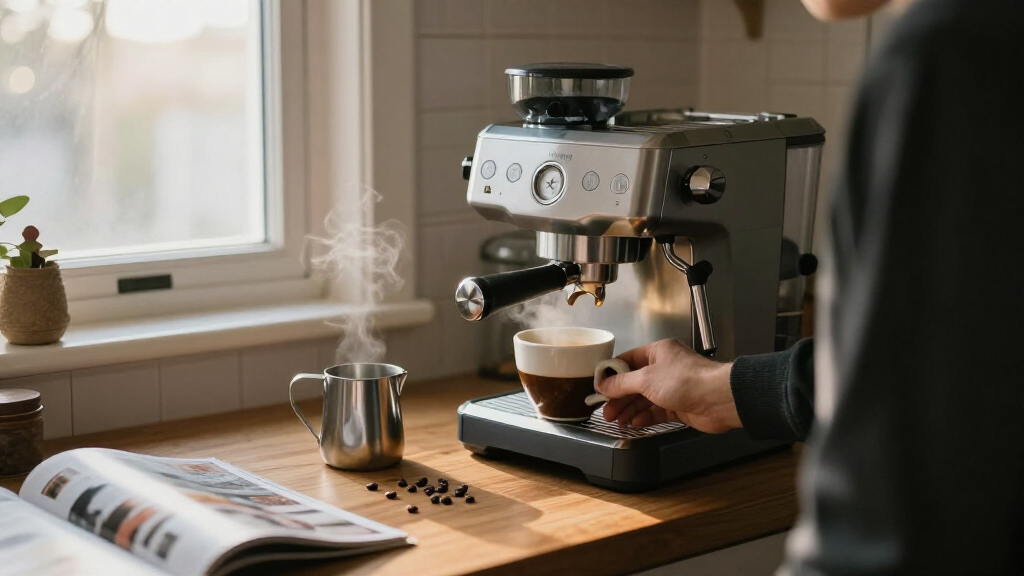
The Breville Bambino is a compact, semi-automatic espresso machine aimed at people who want espresso and milk drinks without giving up much counter space. Its fast ThermoJet heat-up and manual steam wand give it more hands-on capability than a basic pod machine, while keeping the overall setup relatively approachable. The main tradeoff is that it asks you to manage the espresso and milk-making steps yourself, and its 47-fluid-ounce capacity is modest for serving several people. It is worth buying for a home barista who values quick startup, a small footprint, and control over milk texture; it is a weaker fit for anyone seeking a mostly automated or high-volume routine.

Get coffee and tea gear delivered free with Prime
- Fast, free delivery on millions of items
- Prime Video, Amazon Music and more included
- Member-only deals all year

Breville Bambino Espresso Machine
- ✔ Wattage: 1560 watts
- ✔ Voltage: 120 volts
- ✔ Capacity: 47 fluid ounces
Why This Product Stands Out
The Bambino’s case is not that it replaces a full café setup or removes the craft from espresso. Its appeal is the combination of quick heat-up and a narrow, compact body. In a category where machines can take up a large stretch of counter and ask for a longer setup routine, those traits make it easier to keep espresso within reach instead of treating it as a weekend project. That practical convenience matters most to someone making a drink before work or fitting a machine into a small apartment kitchen.
It also sits between very simple coffee appliances and more involved home espresso stations. The manual steam wand gives the owner a way to texture milk, while the semi-automatic controls preserve some involvement in making espresso. That is a meaningful step up for a curious beginner, but it is not the same as automatic milk preparation or a grinder-and-machine package. Compared with the Breville Barista Express, the Bambino is the more compact, less all-in-one choice; shoppers who want a broader espresso station and are willing to allocate more counter space should compare that model. The Bambino’s distinction is a smaller, faster-starting route into manual espresso, not maximum capacity or maximum automation.
Key Features and What They Mean
ThermoJet heating matters most to people who want espresso to fit into a short morning routine: the machine is designed to reach operating temperature quickly, reducing the wait before a drink. That can make a single cup easier to work into a busy day and help a manual machine feel convenient rather than like a project. The benefit is speed to readiness, not an entirely quick or automated drink; grinding, dosing, pulling the shot, and steaming milk still take hands-on effort.
The manual steam wand gives buyers control over how milk is heated and textured, so they can make lattes and cappuccinos and adjust the result to their taste. It is especially useful for people who enjoy learning a coffee skill or want more flexibility than a preset frother provides. That control comes with a tradeoff: steaming requires attention and practice, so buyers who want reliable milk drinks at the touch of a button may prefer an automatic system.
Temperature control gives the Bambino a platform for exploring how brewing conditions affect espresso. For a curious beginner, that can support learning and make it easier to work toward repeatable shots, rather than leaving every brewing condition outside the user’s control. It does not guarantee café-quality results: coffee freshness, grind, dose, and technique still matter, so this feature benefits buyers willing to experiment more than those looking for a machine to compensate for every variable.
The 6.3-inch width helps the Bambino fit on narrow counters and in small apartment kitchens where a wider espresso machine might not have a practical home. Its listed dimensions are 13.7 inches deep by 6.3 inches wide by 12 inches high, so shoppers should also check depth and overhead clearance. At 10.9 pounds, it is easier to reposition than a particularly heavy setup, which may be useful for renters or anyone who sometimes needs to clear counter space. The compact body makes storage and placement easier, but users still need a stable spot and room to prepare coffee and handle the wand. The 47-fluid-ounce reservoir supports occasional or modest daily use; buyers making drinks throughout the day should expect more frequent refills than with a larger machine.
The reusable filter lets users make espresso with ground coffee instead of relying on disposable pods. That means more choice over the coffee they use and no ongoing need to buy capsules, an advantage for buyers who value flexibility and a hands-on routine. The tradeoff is extra dosing and cleanup, so it is less suited to someone whose main goal is minimizing steps.
Performance and Real-World Use
In day-to-day use, the Bambino’s strongest convenience advantage is that it is designed to become ready quickly. That supports short, single-drink routines and can make a manual machine feel less burdensome at the beginning of the day. Its compact body is another practical plus for small kitchens, but the narrow footprint does not remove the need for working room: users still need space to handle coffee grounds, place a cup, and move the steam wand safely.
The main usability question is how much of the process the buyer wants to manage. Semi-automatic operation gives the user a role in preparing espresso, and the wand requires attention while milk is being steamed. New users should expect a learning period before they can repeat the drinks they prefer. That learning curve is part of the appeal for someone interested in improving their technique; for someone who simply wants a quick latte with no extra steps, it is a daily friction point. Buyers should also plan for routine cleanup of the reusable filter and milk-contact surfaces.
Capacity matters more as household demand grows. The 47-fluid-ounce reservoir can work well for occasional cups or a modest daily routine, but frequent back-to-back drinks mean more monitoring and refilling than a larger machine may require. The stated 1560-watt power rating describes its electrical draw while operating; it is not enough on its own to predict an energy bill, which depends on how often and how long the appliance runs. Overall, the Bambino makes most sense as a compact personal machine, not as a high-throughput solution for a busy household.
Who Should Buy This
Buy the Breville Bambino if you want a compact home espresso machine, usually prepare one or two drinks at a time, and are willing to take an active role in brewing and steaming milk. It is particularly suited to an apartment dweller or a first-time espresso buyer who wants a manageable way to learn manual milk texture without dedicating a large counter area to an all-in-one machine. It also fits experienced coffee drinkers who already have a grinder or a preferred coffee-preparation routine and want a machine centered on espresso and milk steaming. The strongest match is someone who values fast startup and hands-on control more than serving capacity or automation.
Who Should Skip This
Skip it if your priority is push-button convenience, especially if you expect the machine to handle milk automatically or make a finished drink with minimal attention. It is also a poor match for a household that often prepares several lattes in succession: the modest reservoir and manual steaming process can turn a group coffee round into repeated preparation and refilling. If you want a more complete machine setup with a grinder integrated into the appliance and do not mind giving it more counter space, compare the Breville BES870XL Barista Express. If your main goal is a lower-commitment compact machine, compare the Casabrews 3700 Essential or Chulux Slim, while checking their own features and tradeoffs against your needs.
Value for Money
The Bambino’s value comes from combining quick heating, compact dimensions, and a manual steam wand in a machine aimed at home espresso rather than pod convenience. That is a persuasive mix for buyers who will make regular use of its hands-on capabilities. The value is weaker if you will not steam milk, do not want to learn manual preparation, or need to serve several people at once; in those cases, you may be paying for control that adds work rather than enjoyment. The Barista Express is worth comparing when an integrated, more complete workstation matters more than a small footprint. The Casabrews 3700 Essential and Chulux Slim are alternative comparison points for shoppers focused on a different balance of compactness and entry-level features. The Bambino earns its place when its quick startup and small width solve real kitchen constraints—not simply because it carries the Breville name.
Breville Bambino Espresso Machine
The Bambino’s case is not that it replaces a full café setup or removes the craft from espresso. Its appeal is the combination of quick heat-up and a narrow, compact body .
Pros:
- ThermoJet heating supports a quick start, so making a single espresso does not have to involve a long warm-up wait.
- At 6.3 inches wide, the machine can fit on counters where larger espresso setups would be awkward or impractical.
- The manual steam wand gives users control over milk texture, making it possible to prepare cappuccinos and lattes rather than being limited to straight espresso.
- Semi-automatic operation offers a manageable entry point for beginners who want to learn espresso preparation without choosing a bulky, more involved setup.
- Reusable filters avoid the ongoing need for disposable pods and leave room for a more hands-on coffee routine.
Cons:
- Manual espresso preparation and milk steaming require practice; buyers wanting consistent drinks with little technique involved may find the workflow frustrating.
- The 47-fluid-ounce capacity is limiting for households making several drinks back-to-back and can mean more frequent refilling.
- The machine’s compact format gives it less room for water and workflow convenience than a larger home espresso setup.
- Its 1560-watt rating is relatively substantial for a small appliance, so energy use may matter to buyers who run it often, though wattage alone does not establish actual electricity costs.
Best for: Space-conscious beginners and espresso drinkers who want to learn manual milk steaming and make one or two drinks at a time.
Not ideal for: Households that regularly make many drinks in a row, or buyers who want automated milk frothing and minimal hands-on preparation.
Bottom line: The Breville Bambino is worth buying for a space-conscious espresso drinker who wants quick readiness and is prepared to learn a manual workflow.
Frequently Asked Questions
Is the Breville Bambino suitable for a beginner?
Yes, for a beginner who wants to learn. Its compact design and quick heat-up make it approachable, and the semi-automatic format provides a route into espresso preparation. The manual steam wand still takes practice, so it is not the best beginner choice for someone who wants milk drinks without learning a technique.
Can the Bambino make lattes and cappuccinos?
Yes. The manual steam wand is designed to texture milk for drinks such as lattes and cappuccinos. The user controls the steaming process, so results depend on technique; this is a hands-on feature, not an automatic milk system.
Is the 47-fluid-ounce capacity enough for a household?
It can suit a person or a household making a modest number of drinks, but it is less convenient for frequent, back-to-back preparation. If several people routinely want espresso drinks at once, a larger-capacity setup may reduce interruptions for refilling and repeated manual work.
Should I choose the Bambino or the Barista Express?
Choose the Bambino if compactness, quick readiness, and a simpler machine footprint are your priorities, particularly if you already have a grinder. Compare the Barista Express if you want an integrated grinder and a more all-in-one workstation and can accommodate its larger setup.
Does the Bambino make espresso with no learning curve?
No. It is approachable for a semi-automatic machine, but preparing espresso and steaming milk remain manual tasks. Buyers who enjoy tuning their routine are likely to see that as a useful part of the experience; those who want consistent drinks with minimal involvement should look at a more automated option.
Final Thoughts
The Breville Bambino is worth buying for a space-conscious espresso drinker who wants quick readiness and is prepared to learn a manual workflow. It brings useful milk-steaming capability and a smaller footprint to a category that often demands more counter space, making it a strong fit for solo drinkers and modest household use. Its limits are equally clear: the small reservoir and hands-on operation make it less appealing for large rounds of drinks or buyers seeking convenience above control. Choose it if compactness and participation are the point; choose a more automated or higher-capacity alternative if you want less effort or more output.
Halloween Picks
halloween
As an affiliate, we earn on qualifying purchases.