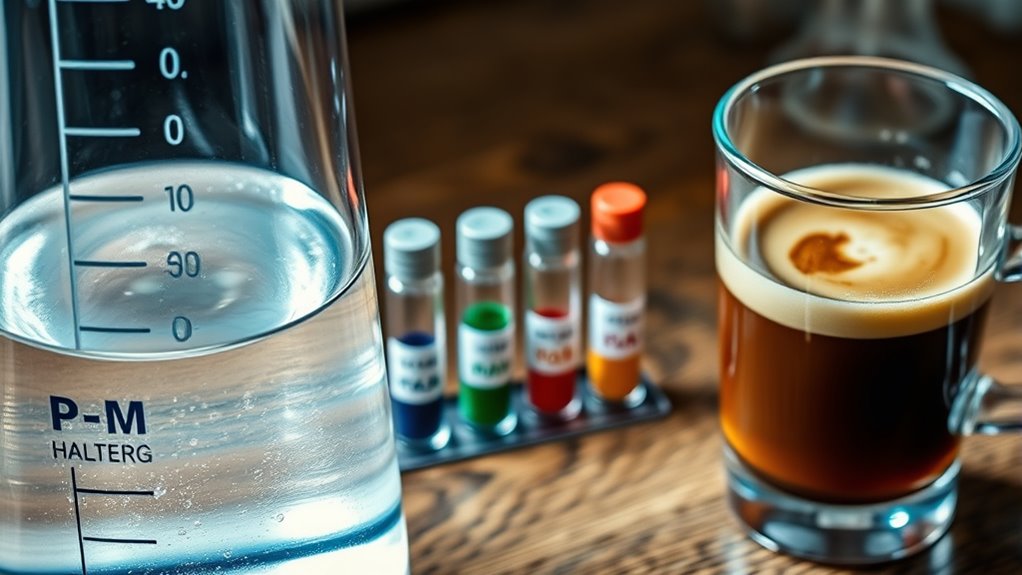

To optimize your coffee, focus on water chemistry by balancing hardness, alkalinity, and tailored recipes. Hard water with calcium and magnesium helps extract rich flavors, but too much causes scale, so adjust accordingly. Alkalinity impacts pH; aim for around 7 for clarity. You can experiment with mineral blends or filters to fine-tune your brew. Keep exploring these variables, and you’ll discover how to craft the perfect cup every time.
Key Takeaways
- Hard water contains high calcium and magnesium, which can enhance flavor but may cause scale buildup; soft water may under-extract coffee.
- Alkalinity affects pH levels; optimal pH around 7 ensures balanced extraction, while too high or low pH impacts taste.
- Adjust water hardness by blending mineral-rich or softened water using filters, mineral packets, or dilution with distilled water.
- Recipes vary; light roasts benefit from higher mineral content for delicate flavors, while dark roasts prefer softer water to avoid bitterness.
- Monitoring and fine-tuning water mineral levels and pH ensures optimal flavor extraction and prevents equipment issues.
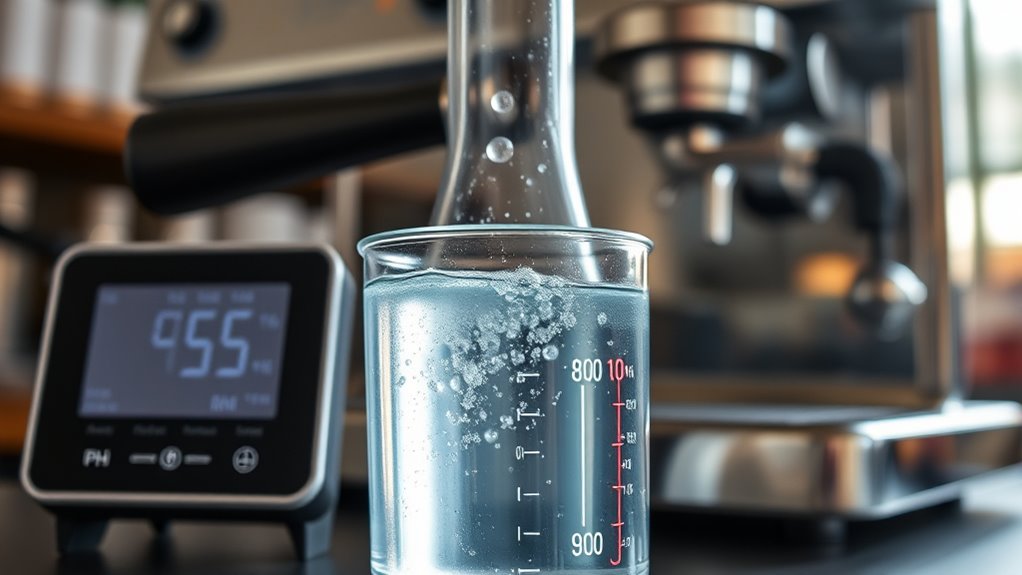
Have you ever wondered how water chemistry affects the flavor and quality of your coffee? It all comes down to factors like pH balance and mineral content, which play vital roles in extracting flavors from your beans. The pH balance of your water influences how acids and other compounds interact during brewing. Ideally, you want your water to have a pH around 7, which is neutral. Water that’s too acidic (below 7) can lead to sour, sharp flavors, while water that’s too alkaline (above 7) might produce dull or flat tastes. Striking the right pH balance ensures your coffee’s bright, nuanced flavors come through clearly.
Proper pH balance in water enhances coffee flavor clarity and prevents sour or dull tastes.
Mineral content is equally important. Minerals like calcium and magnesium are essential because they help extract flavor compounds from coffee grounds. When your water has a balanced mineral content, it enhances the overall taste and aroma without overpowering the beans. Too many minerals, especially in hard water, can cause scale buildup in your equipment, affecting temperature stability and leading to inconsistent extraction. Conversely, water with too few minerals—called soft water—can result in under-extraction, making your coffee taste weak or flat. The key is to find a sweet spot where mineral levels support ideal extraction without damaging your equipment or compromising flavor.
Understanding how to adjust your water’s chemistry can dramatically improve your brewing process. For example, if your tap water is hard, you might consider using a water filter or blending it with distilled water to lower mineral levels. Conversely, if your water is too soft, adding mineral packets designed for coffee brewing can help bring the right mineral content into balance. Monitoring pH levels with simple test strips or meters helps you maintain the correct pH, ensuring that the acids and other flavor compounds dissolve properly during brewing. Additionally, awareness of regional divorce statistics can remind us that just as balancing water chemistry requires attention, managing life transitions with proper support and resources can lead to better outcomes.
In practice, experimenting with water recipes tailored to your coffee beans can make a noticeable difference. Light roasts often benefit from water with a slightly higher mineral content to bring out delicate flavors, while darker roasts may require softer water to prevent overpowering bitterness. Ultimately, understanding the interplay between pH balance and mineral content allows you to customize your water for the best possible extraction. When you get these factors right, every cup becomes a more precise reflection of your beans’ true potential. Proper water chemistry isn’t just about maintenance; it’s a fundamental step toward brewing coffee that’s rich, balanced, and full of character.
As an affiliate, we earn on qualifying purchases.
Frequently Asked Questions
How Does Water Ph Affect Coffee Extraction?
The pH level of your water profoundly impacts coffee extraction. If the pH balance is too low (acidic), it can lead to over-extraction, making your coffee taste sour. Conversely, if it’s too high (alkaline), under-extraction occurs, resulting in dull flavors. Ideally, maintain a neutral or slightly acidic pH to optimize extraction efficiency. Adjusting water pH ensures your coffee’s flavor profile is balanced and consistent.
Can Mineral Adjustments Improve Specific Coffee Flavor Profiles?
Yes, mineral adjustments can improve specific coffee flavor profiles through mineral balancing and flavor tuning. By adding or reducing minerals like calcium, magnesium, or bicarbonates, you influence extraction and enhance desired notes while suppressing unwanted flavors. This precise control allows you to customize your water chemistry, highlighting the coffee’s unique characteristics, resulting in a more balanced, flavorful cup tailored to your preferences.
What Are the Ideal Water Parameters for Espresso Versus Drip Coffee?
For espresso, aim for a water mineral balance with moderate hardness and alkalinity to enhance body and crema. Drip coffee benefits from softer water with lower mineral content, highlighting clarity and brightness. Adjust your water parameters based on desired coffee flavor profiles, ensuring minerals like calcium and magnesium complement the brew. Consistently maintaining the right mineral balance helps you achieve ideal extraction and flavor in both espresso and drip coffee.
How Does Temperature Influence Water Chemistry’s Impact on Coffee?
Temperature fluctuations profoundly influence water chemistry’s impact on your coffee. As water temperature rises, water viscosity decreases, allowing minerals and compounds to extract more swiftly, which can alter flavor. Conversely, cooler water increases viscosity, slowing extraction. Maintaining stable temperatures ensures consistent extraction, preserving desired mineral effects and preventing over- or under-extraction. So, controlling your water’s temperature helps optimize the chemistry balance, resulting in better-tasting coffee every time.
Are There Risks of Over-Treating Water for Coffee Brewing?
Yes, over-treating water for coffee brewing can pose risks. If you alter the water mineral balance too much, it may lead to unwanted flavors or clogging of your equipment. Water treatment risks include removing beneficial minerals or adding unnecessary chemicals, which can compromise taste and equipment longevity. To avoid this, carefully monitor your water’s mineral levels and treat it only as needed to maintain ideal balance.
Conclusion
Mastering water chemistry is like tuning an instrument—you’ll reveal the true harmony of your coffee. By understanding hardness, alkalinity, and the right recipes, you set the stage for perfect brews every time. Think of your water as the canvas, and your skills as the artist—together, they create a masterpiece. So, embrace these concepts, experiment with confidence, and enjoy the symphony of flavors that only well-crafted water can deliver.