
To master gongfu brewing, select small, thin-walled teapots like yixing or porcelain to guarantee even heat and better aroma extraction. Control the timing of short infusions, typically 10-30 seconds, to maximize flavor without overstepping. Pay close attention to the aroma during each step, as it guides you in adjusting brewing and tasting. Focusing on these elements sharpens your skills—if you keep exploring, you’ll reveal even deeper nuances in your tea.
Key Takeaways
- Use small, thin-walled teapots like Yixing or porcelain for even heat and better extraction.
- Pre-warm teaware with hot water to maintain consistent brewing temperature.
- Brew multiple short infusions (10-30 seconds) to gradually extract aroma and flavor.
- Observe and assess aroma after each infusion to adjust timing and improve subsequent brews.
- Taste each infusion to refine technique, focusing on how aroma influences flavor perception.
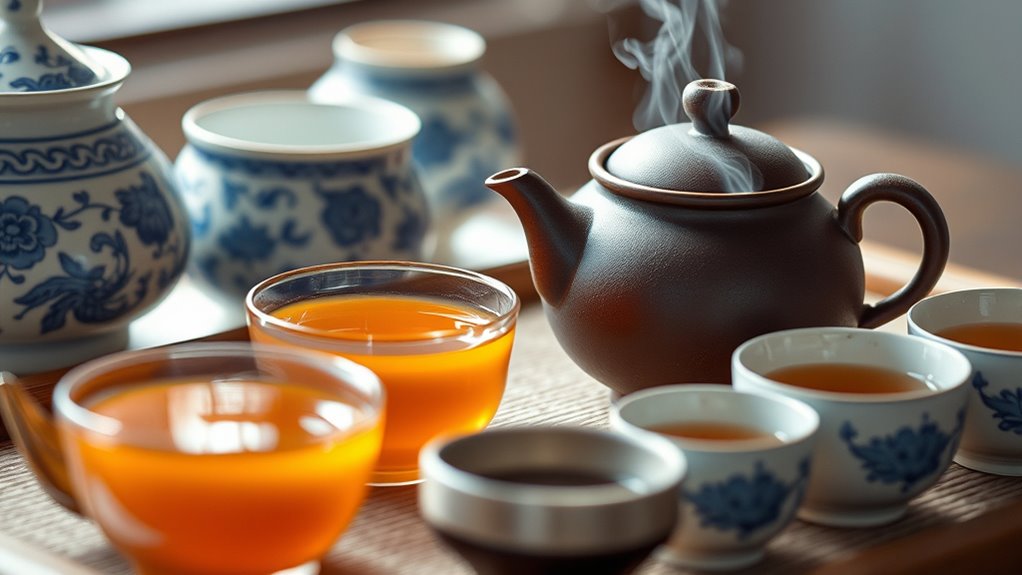
Gongfu brewing is a traditional Chinese tea preparation method that emphasizes precision, patience, and craftsmanship. When you start, you’ll notice that every step is designed to bring out the best in your tea, especially in terms of aroma and flavor. One of the key aspects is controlling the brewing temperature, which directly influences the tea aroma. If the temperature is too high, you risk over-extracting and losing delicate floral or fruity notes. Too low, and the aroma might remain muted. Finding the right brewing temperature depends on the type of tea you’re using, but generally, around 80-85°C (176-185°F) for green and white teas, and slightly higher for oolongs and blacks, will help disclose their full aroma potential.
Controlling brewing temperature enhances tea aroma and flavor, with ideal ranges depending on tea type.
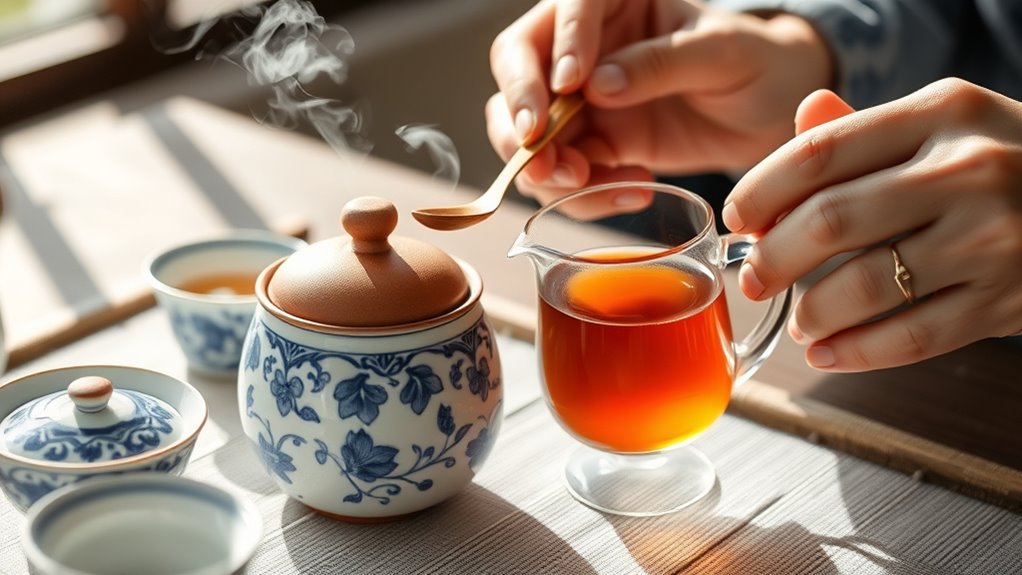
As you prepare, pay close attention to your teaware. Small, thin-walled teapots, often made of yixing clay or porcelain, are preferred because they heat evenly and retain heat well, which is essential for maintaining consistent brewing temperature. Pre-warming your teapot with hot water ensures the temperature stays steady during brewing, helping to extract the tea’s aroma without sudden temperature drops. When you pour hot water over your tea leaves, the initial infusion releases a burst of aroma. This is your moment to observe how the tea aroma begins to develop—an indicator of the quality and freshness of your leaves. The aroma will waft up, filling your senses, and giving you clues about how to adjust your brewing process for subsequent infusions.
Timing is equally important. Gongfu brewing involves multiple short infusions, usually lasting between 10 and 30 seconds for each steep. As you become more experienced, you’ll learn to judge the right timing to maximize aroma and flavor. The first infusion often highlights the most delicate aromas, while later infusions reveal richer, deeper notes. Remember, over-steeping can dull the tea’s aroma and muddle its taste, so precision in timing guarantees you get the most nuanced experience from each brew.
Throughout the process, tasting plays a significant role in understanding your tea. As you sip, pay attention to how the aroma influences your perception of flavor. The initial aroma sets the stage, while the subsequent taste confirms the complexity of your brew. With practice, you’ll develop an intuitive sense of brewing temperature and timing, enabling you to craft each cup with the finesse that gongfu brewing demands. Embrace patience and attention to detail, and you’ll discover a rich, aromatic tea experience that truly honors this traditional art.
Frequently Asked Questions
What Are the Best Materials for Gongfu Teaware?
You should choose teaware made from materials like Yixing clay or porcelain. Yixing clay offers excellent durability and has a porous nature that enhances flavor over time. Porcelain, on the other hand, is admired for its smooth surface and low porosity, which makes it easy to clean and preserves the purity of tea. Both materials are ideal for gongfu brewing, helping you control brewing time and taste your tea perfectly.
How Can I Tell if My Tea Is Oversteeped?
You can tell if your tea is oversteeped by paying attention to its tea aroma and color change. If the aroma becomes overly strong, dull, or bitter, it’s a sign of oversteeping. Additionally, watch for a darker, muddier color in your brew, indicating the tea has steeped too long. Trust your senses—if it tastes flat or overly bitter, it’s likely oversteeped and needs a shorter infusion next time.
What Are Common Mistakes Beginners Make in Gongfu Brewing?
Many beginners fall into common brewing errors, like oversteeping or using the wrong teaware. Don’t worry if your first attempts aren’t perfect; it’s part of learning. You might rush the process or ignore timing, but paying attention to steeping times and using proper teaware helps. Remember, these beginner pitfalls are normal—practice patience, and you’ll improve your gongfu brewing skills over time.
How Does Water Temperature Affect Tea Flavor?
Water temperature greatly impacts tea flavor extraction. If you use water that’s too hot, it can make your tea bitter and astringent, overpowering delicate notes. Conversely, water that’s too cool won’t extract enough flavor, resulting in a weak brew. To get the best taste, you should adjust the water temperature based on the type of tea you’re brewing. Proper temperature control helps you achieve a balanced, flavorful cup every time.
Can Gongfu Brewing Be Adapted for Different Types of Tea?
Think of gongfu brewing as a chameleon, adapting seamlessly to different tea leaf varieties and brewing vessel options. You can tweak steeping times, water temperatures, and vessel sizes to bring out each tea’s unique character. Whether you’re working with delicate green teas or robust oolongs, this method flexes to enhance flavor, aroma, and clarity. So, yes, gongfu brewing can be finely tuned for every tea type you explore.
Conclusion
In gongfu brewing, your teaware shapes the experience, your timing perfects each infusion, and your tasting deepens your appreciation. Embrace the precision, cherish the patience, and savor the moment. Let each step guide you, each pour inspire you, and each sip remind you. Through careful attention and mindful practice, you transform simple tea into a mindful ritual. Remember, it’s about the process, the connection, and the joy — in every pour, in every sip, in every moment.

Noah, the Editor-in-Chief at Cappuccino Oracle, plays a pivotal role in shaping the voice and vision of our renowned platform. With an unwavering passion for coffee, coffee alternatives, and tea, Noah leads Cappuccino Oracle towards new horizons in the realm of coffee journalism.
Noah’s upbringing immersed him in the distinct aromas of artisanal coffee roasters, sparking a fascination that continues to fuel his professional journey. He joined Cappuccino Oracle as a senior editor and later assumed the position of Editor-in-Chief. Under his guidance, our platform has flourished into a trusted source for coffee, coffee alternatives, and tea lovers worldwide.