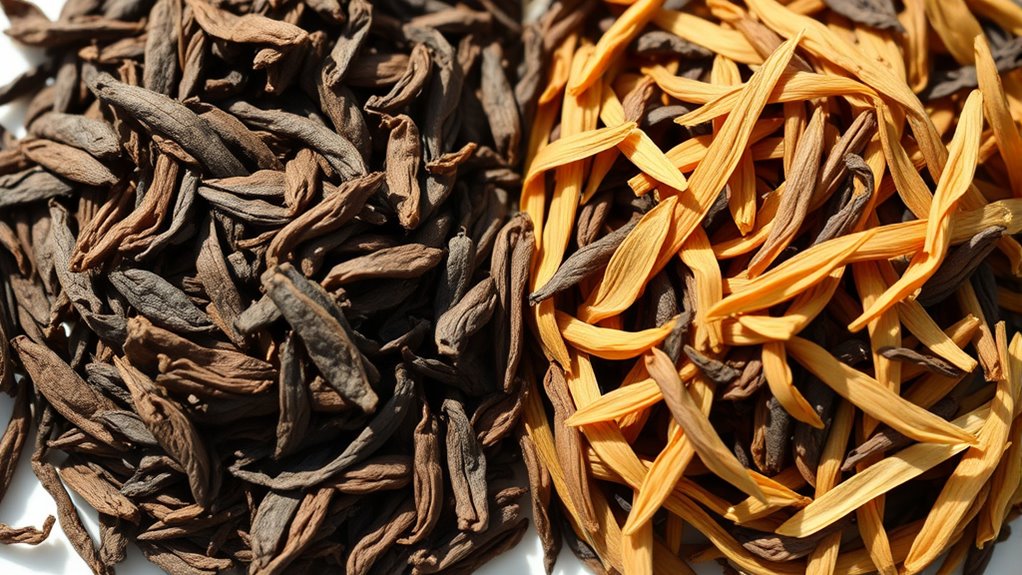

Keemun and Dianhong are two lively examples of Chinese black teas, each coming from distinct regions—Anhui and Yunnan—giving them unique flavors. Keemun boasts a fragrant, smooth, and mellow taste with floral and fruity notes, while Dianhong offers a bold, malty, and robust profile. Their differences stem from varying processing techniques and climate conditions. If you want to explore more about what makes each one special, keep exploring their fascinating stories and details.

Get coffee and tea gear delivered free with Prime
- Fast, free delivery on millions of items
- Prime Video, Amazon Music and more included
- Member-only deals all year
Key Takeaways
- Keemun and Dianhong originate from different Chinese provinces, Anhui and Yunnan respectively, reflecting distinct regional cultivation practices.
- Keemun offers a fragrant, smooth, and floral flavor, while Dianhong provides a bold, malty, and complex taste profile.
- Keemun uses young, tender leaves with specific processing to develop its mellow aroma, whereas Dianhong uses mature leaves with deeper oxidation.
- Processing involves oxidation and firing but varies in extent, shaping each tea’s unique flavor and appearance.
- Brew Keemun at 200°F for 3–4 minutes, while Dianhong is best at 212°F for 3–5 minutes to maximize their flavors.

Chinese black teas are renowned for their rich flavors and unique processing methods, making them a popular choice for tea lovers worldwide. When exploring Keemun and Dianhong, you’re diving into two distinctive styles that showcase the diversity of Chinese black tea. Each type reflects specific tea cultivation practices and brewing techniques that bring out their best qualities. As you prepare these teas, knowing how they’re cultivated and brewed will enhance your tasting experience.
Keemun, originating from Anhui Province, is celebrated for its fragrant aroma and smooth, mellow taste. The tea cultivation here benefits from the region’s favorable climate, with well-drained soils and high-altitude plantations that produce high-quality leaves. When harvesting Keemun, pickers select tender, young leaves to guarantee the best flavor. The processing involves withering, rolling, oxidation, and slow firing, which develops its characteristic floral and fruity notes. To brew Keemun, you should use water that’s just off the boil—around 200°F (93°C)—and steep the leaves for 3 to 4 minutes. This allows the delicate aroma and nuanced flavors to unfold fully. Using a higher water temperature or over-steeping can overpower its subtlety, so precision in brewing techniques is key.
Keemun tea from Anhui offers a fragrant aroma and smooth, mellow flavor, best brewed at 200°F for 3–4 minutes.
Dianhong, from Yunnan Province, offers a bold, malty profile that appeals to those who enjoy a more robust black tea. The tea cultivation in Yunnan benefits from the region’s rich volcanic soil and high elevation, which contribute to the tea’s richness and depth. The leaves are typically plucked from mature bushes, sometimes with a bit more leaf stem, giving Dianhong its distinctive look and flavor. Its processing involves withering, rolling, oxidation, and firing, but the emphasis on oxidation depth results in a darker, more complex brew. When brewing Dianhong, you’ll find that boiling water—around 212°F (100°C)—is ideal to extract its full-bodied flavor. Steep it for about 3 to 5 minutes, depending on how strong you like your tea. Because of its strength, you might prefer multiple infusions, adjusting brewing times to emphasize different notes with each steep.
Both Keemun and Dianhong showcase how tea cultivation influences flavor profiles, and mastering their brewing techniques allows you to appreciate their unique qualities. Whether you prefer the floral elegance of Keemun or the maltiness of Dianhong, understanding how each is cultivated and brewed will help you enjoy every sip to its fullest. By paying attention to water temperature, steeping time, and leaf quality, you unleash the full potential of these exceptional Chinese black teas. Additionally, proper processing methods like oxidation and firing play a crucial role in defining their distinct taste characteristics.
As an affiliate, we earn on qualifying purchases.
Frequently Asked Questions
How Do Keemun and Dianhong Differ in Brewing Methods?
You should brew Keemun with water around 90–95°C and steep it for 3–4 minutes to bring out its delicate, smoky flavor. For Dianhong, use slightly hotter water at about 95–100°C and steep for 4–5 minutes to maximize its rich, malty sweetness. Adjust water temperature and steeping time based on your taste preference, but these guidelines help highlight each tea’s unique characteristics.
Are There Health Benefits Specific to Keemun or Dianhong?
You’ll find both Keemun and Dianhong offer health benefits, especially through their antioxidant properties. These antioxidants help combat free radicals, potentially reducing the risk of chronic diseases. Drinking either tea can support cardiovascular health by improving blood circulation and lowering bad cholesterol levels. While their distinct flavors are well-known, don’t forget that regularly enjoying these teas can also provide you with these specific health perks.
Which Tea Pairs Best With Desserts: Keemun or Dianhong?
Keemun pairs best with desserts, like a maestro conducting a symphony of flavors. Its tea aroma and rich, malty flavor profile complement sweet treats beautifully. The mellow, fruity undertones enhance pastries and chocolates, creating a harmonious balance. Dianhong, though delightful, tends to be more robust and less delicate for dessert pairing. So, for a sweeter ending, opt for Keemun’s nuanced aroma and layered flavors to elevate your dessert experience.
Can Keemun or Dianhong Be Blended With Other Teas?
Yes, you can blend Keemun or Dianhong with other teas to create unique flavors. When doing tea blending, focus on achieving flavor harmony so the combined teas complement each other rather than clash. Keemun’s smoky, fruity notes blend well with lighter teas like green or white, while Dianhong’s sweet, malty profile pairs nicely with other black teas. Experimenting with blends lets you develop personalized, delightful tea experiences.
What Are Traditional Ceremonies Associated With Keemun or Dianhong?
Imagine you’re participating in a traditional Chinese tea ceremony. You’ll observe how Keemun is used in tea art to emphasize aroma and elegance, while Dianhong plays a role in ceremonial rituals celebrating harvests. These teas are central to cultural practices, showcasing respect and harmony. During such ceremonies, you actively engage in precise brewing, appreciate nuanced flavors, and honor centuries-old customs, making each sip a meaningful connection to Chinese heritage.
Conclusion
So, whether you prefer the smoky richness of Keemun or the bold, malty notes of Dianhong, both teas showcase China’s rich black tea heritage. It’s almost as if they’re two sides of the same coin—each offering a unique story brewed into every cup. By exploring their differences and similarities, you might find that your taste buds are the true winners. Ultimately, embracing both lets you enjoy the full spectrum of Chinese black tea’s artistry.
Halloween Picks
halloween
As an affiliate, we earn on qualifying purchases.