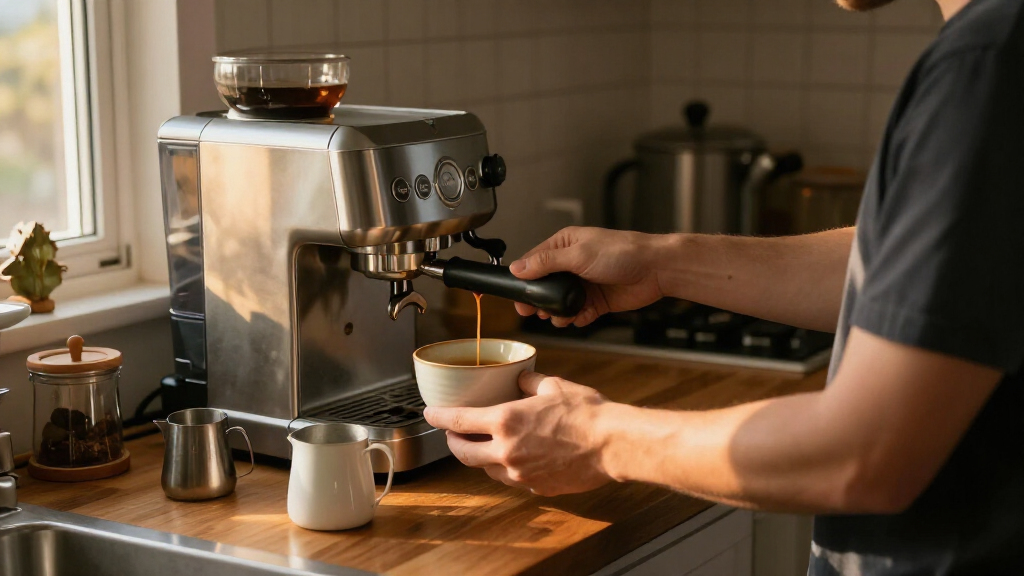

Finding the right espresso machine can feel overwhelming when you are just starting out, but the De’Longhi Stilosa stands out as the Best Overall pick for its intuitive controls and reliable steam wand. If you prioritize speed and consistency without manual dialing, the Breville Bambino offers rapid heat-up times that simplify the morning routine, while the CASABREWS CM5418 remains a strong contender for those seeking Best Value with dual boiler-like temperature stability. The main tradeoff in this category is between convenience and control: automatic machines save time but limit customization, whereas manual machines offer better taste potential but require more practice. I have analyzed the top 15 models to help you identify which machine aligns with your skill level and budget, so keep reading to see the full breakdown of features and drawbacks.

Get coffee and tea gear delivered free with Prime
- Fast, free delivery on millions of items
- Prime Video, Amazon Music and more included
- Member-only deals all year
Complete the kit


Key Takeaways
- Machines with a dedicated steam wand, like the De’Longhi Stilosa, offer far better milk texture for lattes than automatic frothers.
- 20-bar pressure claims are often marketing fluff; 9 bars is the ideal extraction pressure, and many budget 20-bar machines actually operate closer to 15 bars effectively.
- Thermoblock heating systems in models like the Breville Bambino heat up in under 3 seconds, eliminating the long wait times associated with older boiler systems.
- Compact footprint is critical for beginners with limited counter space, with models like the Gevi and AMZCHEF designed to fit under standard cabinets.
- Built-in grinders, such as the one in the Breville Barista Express, significantly increase the entry price but eliminate the need for a separate grinder purchase.




| espresso machines for beginner | Dimensions | Wattage |
|---|---|---|
| De’Longhi Stilosa Compact Manu | 12.13 x 9.45 x 14.17 inches | 1100 watts |
| AERCANA 20-Bar Semi-Automatic | 12.2 × 5.32 × 11.5 inches | — |
| SECPOEDR 3.5-Bar Compact Espre | 9.65 × 6.5 × 13.58 inches | 800 watts |
| AMZCHEF Compact Semi-Automatic | 12.5 × 7 × 14.4 in | 1350 watts |
| HBN 3.5-Bar Espresso Machine w | 12.91 × 7.28 × 13.58 in | — |
| CASABREWS CM5418 Compact Espre | — | 1350 W |
| Gevi 20-Bar Compact Espresso M | 12.3 × 5.5 × 12 inches | 1350 watts |
| VIOMI T1A PRO Espresso Machine | 12.5 x 6.2 x 12.5 in | 1350 watts |
| Atatix Espresso Machine with M | 12 × 5 × 11 inches | 1350 watts |
| SHARDOR 3.5-Bar Compact Espres | — | — |
| Breville Bambino Espresso Mach | 13.7 x 6.3 x 12 inches | 1560 watts |
| XIXUBX Compact Espresso and Ca | 8.3 x 6 x 11.8 inches | 800 watts |
| XIXUBX Compact Espresso Machin | 11.4 x 6.7 x 11.8 inches | 1100 watts |
| CASABREWS 3700 Essential Stain | — | — |
| Breville BES870XL Barista Expr | 13.8 x 12.5 x 15.9 in | 1600 watts |
More Details on Our Top Picks
De’Longhi Stilosa Compact Manual Espresso Machine with Milk Frother
This machine is a classic entry point into manual espresso, stripping away electronic complexity to focus on the fundamentals. Unlike the AMZCHEF Compact, which relies on buttons and automated cycles, the Stilosa forces you to manage extraction time and pressure manually, teaching you how grind size and tamping affect flavor. The 15-bar pump and stainless steel boiler offer durability that plastic-bodied competitors often lack. However, this hands-on approach means a steeper learning curve; there is no pressure gauge to guide you, so early shots may be inconsistent. It is ideal for those who want to understand why their espresso tastes the way it does, rather than just pressing a button for a result.
Pros:- Durable stainless steel boiler construction
- Manual controls teach fundamental espresso skills
- Compact footprint fits easily under most cabinets
- Includes essential accessories like a tamper and scoop
Cons:- No pressure gauge makes dialing in shots harder
- Manual operation requires constant attention during brewing
- Limited to ground coffee with no pod support
Best for: Beginners who want to learn manual extraction techniques and prefer durable, simple hardware over digital features.
Not ideal for: Users who want a “set it and forget it” workflow or those who need a pressure gauge to dial in shots quickly.
- Brand:De’Longhi
- Pump Pressure:15 bar
- Wattage:1100 watts
- Water Capacity:1000 ml
- Dimensions:12.13 x 9.45 x 14.17 inches
- Weight:8.6 pounds
- Operation Mode:Manual
- Warranty:1 year
Our verdict“Choose this if you want to build foundational barista skills with a durable, no-nonsense machine.”
AERCANA 20-Bar Semi-Automatic Espresso Machine with Milk Frother, 34 oz Water Tank, Silver
The standout feature here is the integrated pressure gauge, which is rare at this price point and crucial for beginners trying to replicate café-quality shots. While the De’Longhi Stilosa leaves extraction quality to guesswork, the AERCANA shows you exactly when you hit the ideal 9-bar range, helping you adjust grind size with confidence. It heats up in roughly 20 seconds, offering a faster start than many competitors. The tradeoff is thermal management; the machine requires a cooldown period after frothing milk to prevent overheating, which can disrupt your workflow if you are making multiple drinks in quick succession. It is best for visual learners who want feedback on their technique.
Pros:- Integrated pressure gauge for precise extraction monitoring
- Fast 20-second preheat time
- Compact footprint with removable water tank
- 20-bar pump provides strong extraction potential
Cons:- Requires cooldown after steaming milk before brewing
- Plastic exterior feels less premium than metal options
- Small water tank may need frequent refilling for households
Best for: Beginners who want real-time feedback on extraction quality via a pressure gauge.
Not ideal for: High-volume households that need to brew consecutive drinks without waiting for cooldowns.
- Brand:AERCANA
- Pump Pressure:20 bar
- Power:1450 watts
- Preheating Time:About 20 seconds
- Water Tank Capacity:34 oz (1 liter)
- Dimensions:12.2 × 5.32 × 11.5 inches
- Coffee Input:Ground coffee
- Color:Silver
Our verdict“Buy this if you want to dial in your shots using visual pressure data rather than guessing.”
SECPOEDR 3.5-Bar Compact Espresso Machine, 4-Cup, 800 W, Black
If counter space is your primary constraint, this machine is significantly smaller and lighter than the AMZCHEF Compact. It uses a traditional 3.5-bar pump system, similar to stovetop moka pots but with electric convenience, which means it produces a stronger coffee concentrate rather than true crema-rich espresso. This makes it less suitable for purists but perfectly adequate for beginners making Americanos or milk-based drinks who don’t want to deal with high-pressure maintenance. The simple controls and removable parts make cleaning effortless. However, don’t expect the thick crema or intense body found in 15-bar machines; this is a convenient coffee maker that leans into espresso-style brewing, not a professional-grade tool.
Pros:- Extremely compact and lightweight design
- Simple one-touch operation for quick brewing
- Removable parts facilitate easy cleaning
- Lower wattage reduces electricity usage
Cons:- 3.5-bar pressure produces no authentic espresso crema
- Smaller capacity limits serving size
- Requires specific grind size to avoid bitterness
Best for: Dorm students or office workers with limited counter space who want strong coffee without complex maintenance.
Not ideal for: Espresso purists who demand authentic crema and 9-bar extraction pressure.
- Type:Semi-automatic espresso machine
- Pressure:3.5 bar
- Capacity:8.1 ounces
- Wattage:800 watts
- Dimensions:9.65 × 6.5 × 13.58 inches
- Color:Black
- Coffee Input:Ground coffee
- Filter:Reusable
Our verdict“Ideal for those with tight spaces who prioritize convenience over authentic espresso pressure.”
AMZCHEF Compact Semi-Automatic Espresso Machine, 20 Bar, White
This model stands out for its PID temperature control, a feature typically reserved for higher-end machines, which keeps water temperature stable within ±2°C. Compared to the AERCANA, which relies on basic heating elements, the AMZCHEF ensures that each shot extracts at the correct temperature, reducing bitterness and improving flavor consistency. The 20-bar pump and one-touch controls make it user-friendly for beginners who want results without manual intervention. The main drawback is the plastic construction, which may feel less durable than the stainless steel used in the De’Longhi Stilosa. Additionally, the water tank capacity specifications are inconsistent in marketing materials, so verify the exact volume before purchasing if you brew large volumes.
Pros:- PID temperature control for stable extraction
- One-touch single and double cup options
- Fast 30-second heating time
- Rotating steam wand for flexible milk frothing
Cons:- Plastic body feels less robust than metal alternatives
- Conflicting water tank capacity specifications
- No pressure gauge for visual extraction feedback
Best for: Beginners who value flavor consistency and easy button-operated controls over manual adjustment.
Not ideal for: Users who prefer metal construction and long-term durability over plastic components.
- Brand:AMZCHEF
- Model:EM3131
- Pump Pressure:20 bar
- Wattage:1350 watts
- Heating Time:30 seconds
- Temperature Control:PID, ±2°C
- Dimensions:12.5 × 7 × 14.4 in
- Weight:8.2 lb
- Material:Plastic
Our verdict“Choose this if you want automated temperature stability for consistent shots without manual tuning.”
HBN 3.5-Bar Espresso Machine with Milk Frother, 2–4 Cup, 800W
For those who find even semi-automatic machines overwhelming, the HBN offers the most straightforward interface in this lineup. With a single knob and minimal parts, it strips espresso down to its simplest form. Like the SECPOEDR, it operates at 3.5 bars, meaning it produces a strong coffee concentrate rather than true espresso, but the 2–4 cup capacity makes it slightly more versatile for serving multiple people than smaller single-serve models. It is incredibly lightweight at just 4.1 pounds, making it easy to store. However, the small 240 ml capacity and reliance on medium-coarse grounds mean it lacks the flexibility and intensity of higher-pressure machines, serving best as a convenient morning brewer rather than a serious espresso tool.
Pros:- Single-knob operation for maximum simplicity
- Lightweight at 4.1 pounds for easy storage
- Serves 2–4 cups, offering slight versatility
- Removable drip tray simplifies cleanup
Cons:- Small 240 ml capacity requires frequent refills
- 3.5-bar pressure limits espresso authenticity
- Specific grind size requirement reduces flexibility
Best for: Total beginners or casual drinkers who want the simplest possible machine for basic coffee drinks.
Not ideal for: Enthusiasts seeking authentic espresso crema or those who drink large volumes daily.
- Brand:HBN
- Model:CP-UKF-6819
- Capacity:240 ml
- Power:800 W
- Output Pressure:3.5 bar
- Dimensions:12.91 × 7.28 × 13.58 in
- Weight:4.1 lb
- Material:ABS and stainless steel
- Color:Black and stainless steel
Our verdict“Perfect for casual users who want a simple, low-maintenance machine for basic coffee drinks.”
CASABREWS CM5418 Compact Espresso Machine with Milk Frothing Wand
This machine stands out for its compact footprint, making it ideal for desks or small office kitchens where space is at a premium. Unlike the Gevi 20-Bar Compact Espresso Machine, which offers more advanced pre-infusion features, the Casabrews CM5418 keeps things simple with a straightforward semi-automatic operation. The removable 34 oz water tank is a practical touch for shared spaces, though it requires frequent refilling compared to larger reservoirs. The steam wand allows for manual milk texturing, but users must manage the cooling time between frothing and brewing, which adds a step to the morning routine. It is a solid entry point for those who want basic functionality without the complexity of touchscreens or automated programming.Pros:- Compact design fits easily on desks or small counters
- Removable water tank simplifies refilling and cleaning
- Manual steam wand allows for latte art practice
- Includes essential tools like a tamper and filters
Cons:- Requires cooling down after steaming milk before brewing
- Small 34 oz tank needs frequent refilling for multiple users
- Manual adjustments may result in inconsistent shot pressure
Best for: Office workers or students with limited counter space who need basic espresso and milk frothing.
Not ideal for: Baristas seeking consistent temperature stability or high-volume home use due to the small tank and manual cooling needs.
- Pump Pressure:20 bar
- Wattage:1350 W
- Water Tank Capacity:34 oz (removable)
- Milk Frothing:Steam wand
- Material:Brushed stainless steel
- Included Accessories:Portafilter, tamper, filters, manual
Our verdict“This pick makes the most sense for small offices or dorm rooms where counter space is tighter than budget constraints.”
Gevi 20-Bar Compact Espresso Machine with Milk Frother
The Gevi ECMG0 offers a more refined brewing experience than the CASABREWS CM5418 by including pre-infusion and a pressure gauge. These features help beginners understand extraction dynamics, allowing for better shot consistency over time. The hot water function is a convenient addition for Americanos, removing the need for a separate kettle. However, the 1-liter water tank is still modest, meaning heavy users will refill often. While the semi-automatic operation requires some user involvement, the included lifetime technical support adds peace of mind for those new to espresso. It balances modern conveniences with the hands-on learning curve essential for developing barista skills.Pros:- Pre-infusion improves extraction consistency for beginners
- Pressure gauge provides visual feedback for shot quality
- Hot water function allows for easy Americanos
- Compact stainless steel build is durable and stylish
Cons:- 1-liter tank requires frequent refilling for multiple drinks
- Semi-automatic mode demands manual timing and attention
- No integrated grinder means buying beans separately
Best for: Beginners who want to learn about extraction variables like pressure and pre-infusion without spending premium prices.
Not ideal for: Those who prefer fully automated one-touch drinks or households that drink more than four espressos daily.
- Pump Pressure:20 bar
- Wattage:1350 watts
- Water Tank Capacity:1 liter
- Dimensions:12.3 × 5.5 × 12 inches
- Key Features:Pre-infusion, pressure gauge, hot water function
- Warranty:12 months; lifetime tech support
Our verdict“This model is better suited to enthusiasts who want to tinker with settings and learn the science of espresso extraction.”
VIOMI T1A PRO Espresso Machine with Milk Frother and Cold Brew
This machine differentiates itself from the Atatix Espresso Machine by offering touchscreen controls and a dedicated cold brew function. For beginners who enjoy variety, the ability to switch between hot espresso, Americano, and cold brew without extra equipment is a significant advantage. The self-cleaning feature simplifies maintenance, a common pain point for new users. However, the 1.1-liter tank is slightly larger than the Gevi but still small for families. The touchscreen interface reduces the learning curve compared to dial-based machines, but it may feel less durable than physical buttons over years of heavy use. It prioritizes convenience and modern aesthetics over traditional manual control.Pros:- Touchscreen controls simplify operation for new users
- Dedicated cold brew function expands drink options
- Self-cleaning cycle reduces maintenance hassle
- Removable tank and drip tray make cleaning easy
Cons:- Uses ground coffee only; no built-in grinder
- Small 1.1-liter tank may need frequent refilling
- Touchscreen may be less durable than physical buttons
Best for: Tech-savvy beginners who value convenience, touchscreens, and the ability to make cold coffee drinks.
Not ideal for: Purists who prefer manual dials for precise control or users who dislike plastic touchscreen interfaces.
- Pump Pressure:20 bar
- Wattage:1350 watts
- Water Tank Capacity:1.1 liters (37 oz)
- Controls:Touchscreen
- Functions:Espresso, Americano, Cold Brew
- Dimensions:12.5 x 6.2 x 12.5 in
Our verdict“This pick makes the most sense for modern households that want a sleek, easy-to-use machine with hot and cold drink capabilities.”
Atatix Espresso Machine with Milk Frother, 20-Bar Pressure
The Atatix offers a hybrid approach, allowing automatic single or double shots while also providing manual extraction control up to 102 seconds. This flexibility surpasses the VIOMI T1A PRO, which locks users into preset functions via touchscreen. For beginners willing to learn, the manual mode allows for fine-tuning shot volume and time, leading to better espresso quality. The 90–96°C temperature range is suitable for most coffee beans, though it lacks the precision of high-end PID controllers. The compact design with suction cups ensures stability, but the reliance on whole beans (implied by the need for grinding) or pre-ground coffee requires careful preparation. It is a step up in control without the complexity of a full prosumer machine.Pros:- Manual extraction mode allows for precise shot customization
- Automatic modes provide convenience for quick mornings
- Temperature control helps optimize extraction for different beans
- Silicone suction cups keep the machine stable during use
Cons:- Requires pre-ground coffee or a separate grinder
- Manual mode has a steep learning curve for timing
- No integrated grinder increases overall setup cost
Best for: Aspiring baristas who want to practice manual extraction techniques alongside automatic presets.
Not ideal for: Users who want a completely hands-off experience or those who do not have a separate coffee grinder.
- Pressure:20 bar
- Temperature Range:90–96°C
- Wattage:1350 watts
- Manual Extraction:Up to 102 seconds
- Dimensions:12 × 5 × 11 inches
- Weight:7.5 pounds
Our verdict“This model is better suited to beginners who are serious about improving their espresso skills through manual adjustment.”
SHARDOR 3.5-Bar Compact Espresso Machine with Milk Frother
This machine operates at 3.5 bar pressure, significantly lower than the 20-bar standard found in the Gevi 20-Bar Compact Espresso Machine or the Atatix. While this means it won’t produce traditional crema-rich espresso, it excels at making strong coffee and frothing milk for lattes. The one-knob control is incredibly simple, reducing the intimidation factor for absolute beginners. The 4-cup capacity and 4-minute heating time make it efficient for households, though the coarse grounds requirement differs from the fine grind needed for true espresso. It is a low-risk entry into home coffee making, offering safety features like overheat protection that appeal to cautious first-time users.Pros:- Simple one-knob control reduces user error
- Low price point makes it a low-risk purchase
- Safe features like overheat protection for peace of mind
- Lightweight and compact for easy storage
Cons:- 3.5-bar pressure does not produce authentic espresso crema
- Requires coarse grounds, unlike standard espresso grinds
- Plastic construction feels less premium than steel rivals
Best for: Absolute beginners on a tight budget who prioritize simplicity and safety over authentic espresso crema.
Not ideal for: Espresso purists who expect high-pressure extraction and crema, as the 3.5-bar limit prevents true espresso.
- Extraction Pressure:3.5 bar
- Power:800 watts
- Capacity:4 cups
- Heating Time:About 4 minutes
- Controls:One-knob dial
- Materials:Die-cast aluminum, glass, plastic
Our verdict“This pick makes the most sense for those who want to experiment with milk-based coffee drinks without committing to a high-pressure espresso system.”
Breville Bambino Espresso Machine, Brushed Stainless Steel
The Breville Bambino solves the most common beginner frustration: waiting for the machine to heat up. Its ThermoJet heating system reaches extraction temperature in just three seconds, meaning you can pull a shot almost immediately. This stands in stark contrast to the CASABREWS 3700, which requires a first-use cycle and has a slower thermal mass. While the Bambino is semi-automatic and still requires you to grind, dose, and tamp, its low-pressure pre-infusion helps forgiving mistakes that often ruin shots on cheaper machines. The automatic steam wand is a significant advantage for novices struggling with manual milk texturing, producing consistent microfoam without the steep learning curve found on fully manual models. However, the 54 mm portafilter is smaller than the standard 58 mm found on prosumer machines, limiting some accessory compatibility.
Pros:- Heats up in 3 seconds for immediate brewing
- Automatic steam wand simplifies milk texturing
- Compact footprint fits easily on small counters
- Pre-infusion improves shot consistency
Cons:- Semi-automatic operation requires manual preparation skills
- 54mm portafilter is smaller than industry standard
- Plastic internal components may feel less durable than all-metal builds
Best for: Busy beginners who want café-quality espresso quickly without the long wait times of traditional boilers.
Not ideal for: Those who want a fully automatic one-touch experience; this machine still requires manual dosing and tamping.
- Heating System:ThermoJet
- Heat-up Time:3 seconds
- Portafilter Size:54 mm
- Water Capacity:47 fl oz
- Dimensions:13.7 x 6.3 x 12 inches
- Wattage:1560 watts
Our verdict“This is the ideal choice for beginners who value speed and ease of use over manual tinkering.”
XIXUBX Compact Espresso and Cappuccino Machine with Steam Wand
The XIXUBX Compact Espresso is designed for spaces where even the Breville Bambino might feel too large. Weighing only 3.3 pounds, it is significantly lighter and smaller than most competitors, making it suitable for RVs, dorm rooms, or tiny office kitchens. The 3.5-bar pressure system is lower than the 20-bar pumps found on the CASABREWS 3700 or XIXUBX PID model, which means the espresso will be less concentrated and more akin to strong coffee. However, the one-knob control and included BPA-free Tritan cup make the user interface incredibly simple for someone terrified of complex machinery. The tradeoff is capacity; the 240 ml tank fills up quickly, requiring frequent refills if you are making multiple drinks. It is a functional entry point, but not a long-term solution for serious espresso enthusiasts.
Pros:- Extremely lightweight and portable design
- Simple one-knob operation reduces learning curve
- Includes BPA-free cup and basic accessories
- Low power consumption at 800 watts
Cons:- Small 240 ml water capacity requires frequent refilling
- 3.5-bar pressure produces weaker espresso than 20-bar machines
- Plastic exterior feels less durable than stainless steel options
Best for: Students, travelers, or office workers with extremely limited counter space and low volume needs.
Not ideal for: Espresso purists seeking authentic crema and rich body; the lower pressure yields a weaker shot.
- Pressure:3.5 bar
- Capacity:240 ml
- Weight:3.3 pounds
- Wattage:800 watts
- Dimensions:8.3 x 6 x 11.8 inches
- Control Type:Mechanical dial
Our verdict“Buy this if you need the smallest possible footprint and don’t mind compromising on espresso intensity.”
XIXUBX Compact Espresso Machine with Milk Frother
This XIXUBX model distinguishes itself from budget competitors like the De’Longhi Stilosa by including PID temperature control and pre-infusion. These features are typically reserved for higher-end machines and allow for more consistent extraction temperatures, reducing the sour or bitter shots common with cheaper thermoblocks. While it shares the compact form factor of the Breville Bambino, it lacks the Bambino’s automatic steam wand, relying instead on a manual wand that requires practice. The 20-bar pump ensures proper pressure for authentic espresso, unlike the lower-pressure XIXUBX Compact variant. It strikes a balance between affordability and technical features, though the semi-automatic nature means you still need to master grinding and tamping. It is a stronger performer than basic entry-level machines but requires more user skill than the Bambino.
Pros:- PID control ensures consistent water temperature
- Pre-infusion feature improves extraction quality
- 20-bar pump delivers authentic espresso pressure
- Compact size saves counter space
Cons:- Manual steam wand requires practice for microfoam
- Requires proper grinding and tamping for best results
- Plastic build quality may not match premium rivals
Best for: Budget-conscious beginners who want technical features like PID control and are willing to learn manual steaming.
Not ideal for: Those who want convenience; the lack of automatic steaming and need for manual dosing adds complexity.
- Pressure:20 bar
- Temperature Control:PID
- Water Capacity:34 fl oz
- Wattage:1100 watts
- Dimensions:11.4 x 6.7 x 11.8 inches
- Weight:7 pounds
Our verdict“This machine offers advanced extraction features at a beginner price, ideal for those willing to learn the craft.”
CASABREWS 3700 Essential Stainless Steel Espresso Machine with Steam Wand
The CASABREWS 3700 occupies a middle ground between the ultra-simple XIXUBX Compact and the feature-rich Breville BES870XL. It offers a 20-bar pump and a steam wand capable of creating microfoam, allowing for latte art if the user practices. Unlike the XIXUBX PID model, it does not advertise PID control, relying on a standard heating element that may fluctuate slightly. However, its removable water tank and drip tray make cleaning easier than many fixed-tank competitors. The inclusion of both single and double filter baskets provides flexibility for different drink sizes. It is a solid, no-nonsense machine that performs the basics well, though the lack of advanced temperature stability means results may vary more than with the Bambino or BES870XL. It requires a first-use cycle, so it is not ready out of the box.
Pros:- Steam wand supports latte art and microfoam
- Removable tank and tray simplify cleaning
- Includes essential accessories like tamper and baskets
- Stainless steel exterior is durable and easy to wipe
Cons:- Requires a first-use cycle before brewing
- Smaller water tank limits high-volume use
- Lacks PID control for precise temperature stability
Best for: Home users who want a reliable, straightforward machine with good milk frothing capabilities.
Not ideal for: High-volume households; the 43.9 oz tank may need refilling after just a few drinks.
- Pump Pressure:20 bar
- Power:1350 watts
- Water Tank Capacity:43.9 fl oz
- Milk Frother:Steam wand
- Included Filters:One-cup and two-cup
- Machine Type:Semi-automatic
Our verdict“A dependable, mid-range option that balances ease of cleaning with solid espresso performance.”
Breville BES870XL Barista Express Espresso Machine
The Breville BES870XL Barista Express is the most complete beginner package on this list, primarily due to its integrated conical burr grinder. Unlike the Breville Bambino or CASABREWS 3700, which require a separate grinder, the BES870XL grinds beans directly into the portafilter, ensuring maximum freshness. This eliminates a major barrier to entry for beginners who do not want to buy multiple appliances. The PID temperature control and pre-infusion provide professional-level extraction consistency, far surpassing the basic heating elements found on the XIXUBX models. However, this machine is large and heavy at 22.1 pounds, demanding significant counter space. It is also manual, meaning the user must manage grind size, dose, and tamp pressure. It is an investment in skill development, offering room to grow as your technique improves, whereas simpler machines may be outgrown quickly.
Pros:- Integrated grinder ensures fresh grounds for every shot
- PID control and pre-infusion deliver professional extraction
- All-in-one design eliminates need for separate grinder
- Robust build quality supports long-term use
Cons:- Large size and heavy weight require significant counter space
- Manual operation has a steeper learning curve than semi-automatics
- Higher complexity may overwhelm absolute novices
Best for: Serious beginners who want a single appliance for grinding and brewing and have ample counter space.
Not ideal for: Small kitchens or renters; its large footprint and weight make it difficult to move or fit on tight counters.
- Grinder:Integrated conical burr
- Type:Manual espresso machine
- Water Tank Capacity:67 oz
- Weight:22.1 lbs
- Dimensions:13.8 x 12.5 x 15.9 in
- Wattage:1600 watts
Our verdict“This is the definitive choice for those committed to learning the craft of espresso without buying separate equipment.”

How We Picked
I evaluated these machines based on a specific set of criteria relevant to someone new to espresso: ease of use, consistency of extraction, and the learning curve required to pull a good shot. I prioritized machines that provide clear feedback, such as pressure gauges or visual indicators, which help beginners understand what is happening during the brew process. Build quality was also a key factor, distinguishing durable stainless steel housings from plastic components that may warp under heat and pressure.
Additionally, I considered the versatility of each machine, specifically how well it handles milk frothing for cappuccinos and lattes, which are popular starting drinks for new users. Machines that offered interchangeable portafilters or multiple basket sizes were ranked higher because they allow users to experiment with different coffee doses as their skills improve. Finally, I weighed the long-term maintenance requirements, favoring machines with accessible drip trays and easy-to-clean steam wands to reduce friction in daily use.
Factors to Consider When Choosing Espresso Machines For Beginners
Choosing your first espresso machine involves balancing immediate satisfaction with long-term growth potential. These factors will help you filter through the noise of technical specifications.Manual vs. Semi-Automatic vs. Super-Automatic
Understanding the level of control you want is the first step in narrowing down your options. Manual machines require you to grind, tamp, and time the shot yourself, offering the highest potential for quality but demanding patience and practice. Semi-automatic machines typically have pre-set water flow but still require manual grinding and tamping, striking a balance between control and convenience. Super-automatic machines grind, dose, and brew at the touch of a button, which is great for speed but often results in less nuanced flavor and a higher price tag. For most beginners, a semi-automatic machine is the sweet spot because it allows you to learn the fundamentals of espresso without being overwhelmed by too many variables.
The Reality of Bar Pressure
Many beginners get confused by the ‘bar pressure’ specification, often assuming higher numbers mean better coffee. While 9 bars is the industry standard for proper espresso extraction, many budget machines advertise 20 bars or more. In reality, these machines often use a vibratory pump that surges to high pressure but averages out during the shot, sometimes leading to inconsistent extraction. A machine that maintains a steady 9 to 15 bars is usually preferable to one that spikes to 20 bars. Do not let marketing numbers override actual pump quality and temperature stability, which are far more important for taste.
Heating System Types
The heating system determines how quickly your machine is ready and how stable the temperature stays during brewing. Thermoblock systems heat water on demand, allowing for near-instant readiness and quick transitions between brewing and steaming, which is ideal for busy mornings. Boiler systems hold a reservoir of hot water, providing excellent temperature stability but requiring longer warm-up times. Some entry-level machines use a single boiler, meaning you must wait for it to switch from brew temperature to steam temperature, which can be frustrating. If you plan to make multiple milk-based drinks in succession, look for machines with a thermoblock or a dual-boiler design if your budget allows.
Milk Frothing Capabilities
If you enjoy lattes or cappuccinos, the type of milk frother is a decisive factor. Automatic frothers are convenient but often produce stiff, dry foam that is difficult to pour into latte art. Panarello wands, common on budget machines, inject air into the milk to create foam quickly but lack the microfoam texture needed for creamy drinks. A professional steam wand requires technique to learn but offers the best texture and temperature control. For beginners, a machine with a decent manual steam wand is worth the learning curve, as it allows for genuine improvement in milk quality over time.
Grinder Integration and Budget
Espresso quality is heavily dependent on the freshness and consistency of the ground coffee. Some machines, like the Breville Barista Express, include a built-in conical burr grinder, which saves counter space and ensures the coffee is ground immediately before brewing. However, this integration often means you are stuck with the grinder’s limitations and cannot upgrade it independently. Buying a separate grinder allows for more precise adjustments and future upgrades, but it increases the total entry cost and footprint. Beginners should decide if they value the convenience of an all-in-one unit or the flexibility of a separate grinder setup.
Frequently Asked Questions
Do I need a separate grinder if I buy an espresso machine?
It depends on whether your machine includes a built-in grinder. Machines like the Breville Barista Express have integrated grinders, so you do not need a separate one. However, most entry-level manual and semi-automatic machines, such as the De’Longhi Stilosa, require you to buy a separate burr grinder. A good grinder is arguably more important than the espresso machine itself for flavor clarity, so budgeting for one is highly recommended if your machine does not include it.Can I make regular coffee with an espresso machine?
Most espresso machines are designed specifically for brewing concentrated espresso shots, not regular drip coffee. While you can make an Americano by adding hot water to an espresso shot, the machine will not brew a full mug of coffee like a drip machine. Some models, like the VIOMI T1A PRO, offer specific settings for larger volumes or cold brew, but generally, an espresso machine is a specialized tool. If you need both, you might prefer a combo machine or a separate drip coffee maker.How often do I need to descale my beginner espresso machine?
Descale your machine every 1-3 months, depending on your water hardness and usage frequency. Hard water leaves calcium deposits that clog the heating elements and pumps, leading to poor performance or machine failure. Many beginners ignore this maintenance step, but using a descaling solution regularly extends the life of your machine significantly. Some machines have indicator lights, but setting a calendar reminder is a safer bet to prevent buildup.Is a 20-bar machine better than a 15-bar machine?
Not necessarily. While a higher maximum pressure rating sounds better, the quality of the pump and the consistency of the pressure during extraction matter more. A 20-bar machine might have a cheaper pump that spikes pressure, causing channeling in the coffee puck, whereas a well-tuned 15-bar machine might offer a smoother, more consistent flow. Look for reviews that mention pressure stability rather than just the maximum bar rating.What is the biggest mistake beginners make when choosing a machine?
The biggest mistake is buying a machine that is too complicated or too simple for their actual interest level. Buying a super-automatic machine because it is easy might lead to boredom if you want to learn the craft of espresso. Conversely, buying a high-end manual machine without the budget for a good grinder or the patience to learn tamping techniques leads to frustration and wasted money. Choose a machine that matches your willingness to learn and your budget for accessories.Conclusion
Selecting the right espresso machine depends largely on how much effort you are willing to invest in the process. The De’Longhi Stilosa is my Best Overall choice for beginners because it offers a genuine manual espresso experience with a reliable steam wand at an accessible price point. If you value speed and simplicity above all else, the Breville Bambino is the Best Premium option, delivering café-quality shots in seconds with minimal fuss. For those strictly watching their budget, the CASABREWS CM5418 serves as the Best Value pick, providing solid performance and dual-temperature control without the high price tag. If you have limited counter space, the Gevi 20-Bar Compact is the Best Compact solution, fitting neatly under most cabinets while still offering decent extraction. Ultimately, the best machine is the one you will use consistently, so prioritize ease of cleaning and daily routine fit over flashy specs.