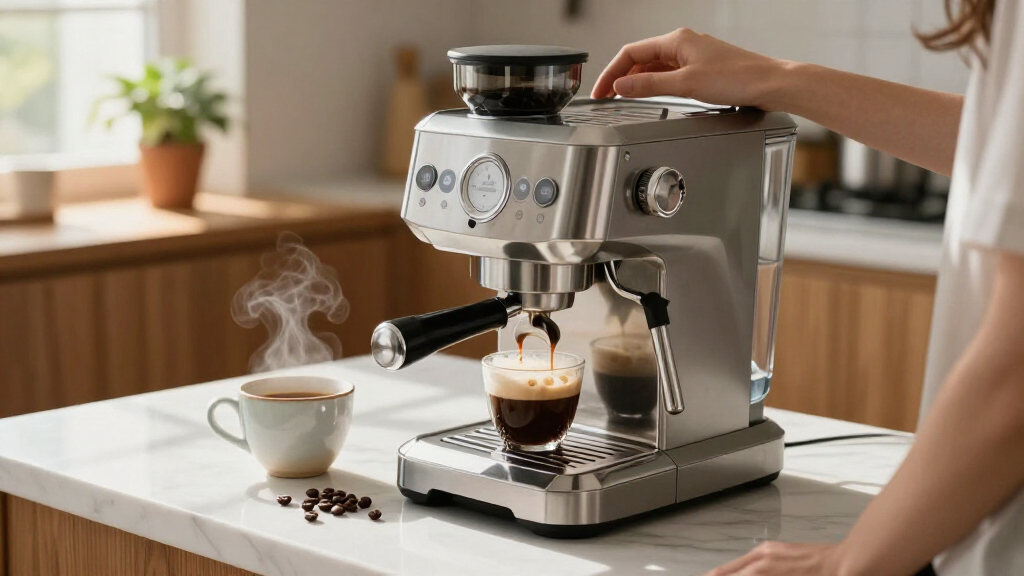

Automatic espresso machines promise café-quality coffee at the push of a button, but the real decision comes down to how automated you want the milk side to be and how much cleanup you’re willing to tolerate. The Philips 5500 Series with LatteGo stands out as my best overall pick, thanks to its one-touch milk drinks and dishwasher-safe LatteGo system. The De’Longhi Magnifica Duo makes sense for households that mostly drink straight espresso or cappuccino made the traditional way, while the Ninja Luxe Café Premier suits buyers who want espresso, drip coffee, and cold brew in one footprint. Cheaper models like the Philips 2200 Series keep the price low by limiting drink variety and using manual steam wands instead of automatic milk carafes. Read on for the full breakdown of all 15 machines and which one fits your kitchen, budget, and morning routine.

Get coffee and tea gear delivered free with Prime
- Fast, free delivery on millions of items
- Prime Video, Amazon Music and more included
- Member-only deals all year
Complete the kit


Key Takeaways
- Philips‘ LatteGo milk system (5500, 4400, 3300, 2300 Series) dominated the milk-drink rankings because it has no milk tubes to clean — a deciding factor if you drink lattes daily.
- The De’Longhi Magnifica line (Duo, Evo, Start) trades one-touch milk convenience for a lower price and a more traditional steam wand or manual frother, making it the better fit for straight espresso drinkers.
- The Breville Barista Express is only semi-automatic, so it landed lower for pure convenience seekers — but it delivers the best grind control and shot quality of anything under $800 in this lineup.
- Budget machines like the EUHOMY, AMZCHEF, and unnamed generic models cut corners on grinder consistency and build quality, which shows up as inconsistent shots within weeks of ownership.
- The Ninja Luxe Café Premier is the only machine here that covers espresso, drip, and cold brew — a genuine three-in-one value if your household splits between coffee styles.




More Details on Our Top Picks
De’Longhi Magnifica Duo Automatic Espresso Machine, Milk Frother, Silver
Most automatic espresso machines stop at hot drinks, but the Magnifica Duo earns its spot with 20 recipes spanning hot, iced, and cold brew — something the Philips 2200 Series simply can’t touch with its three hot-only presets. The Cold Extraction Technology matters because it produces genuine cold brew without diluting the shot over ice, and hot or cold milk foam rounds out the menu.
Compared with the Philips 3300, the De’Longhi trades some ease of cleaning — its milk frother isn’t as dishwasher-simple as the LatteGo system — for a far broader drink range. The tradeoffs are real: expect a steeper learning curve during setup and a footprint that crowds smaller counters. This pick makes the most sense for households where iced lattes and cold brew are daily staples, not occasional treats.
Pros:- 20 hot and iced presets including true cold brew
- Hot and cold milk foam from a single system
- Built-in conical burr grinder for fresh grounds
- Dishwasher-safe removable parts
Cons:- Setup and menu navigation take time to learn
- Higher price point within the category
- Bulky footprint for compact counters
Best for: Iced coffee and cold brew drinkers who want one machine for every temperature of drink
Not ideal for: Small-kitchen buyers — the footprint is large and setup takes patience on day one
- Color:Silver
- Number of Recipes:20 hot and iced
- Brewing Options:Espresso, drip coffee, cold brew
- Milk Frothing:Hot and cold foam
- Grinder:Built-in conical burr
- Maintenance:Removable dishwasher-safe parts
Our verdict“Buy this if iced and cold drinks are half your routine; skip it if you only drink hot espresso.”
Philips 2200 Series Fully Automatic Espresso Machine, Classic Milk Frother, 2 Coffee Varieties, Touch Display, Ceramic Grinder, AquaClean Filter, Black
The Philips 2200 Series proves you don’t need a 20-preset menu to make excellent coffee at home. Its ceramic grinder is the standout at this price — ceramic holds its edge far longer than steel, so your grind stays consistent years in, and that consistency is what actually determines flavor more than a long drink list would.
Compared with the Philips 3300, you give up the LatteGo automatic milk system for a manual classic frother, which means learning to steam milk yourself. Some buyers will prefer that control; latte-only households won’t. The 2200 also offers fewer presets than the De’Longhi Magnifica Duo, but it counters with simpler operation and the removable brew group, which rinses under the tap — a maintenance advantage many rivals lack. Ongoing AquaClean filter costs are the hidden expense to budget for.
Pros:- Ceramic grinder stays consistent over years of use
- Removable brew group rinses clean under the tap
- Intuitive touch display with adjustable strength and volume
- AquaClean filter simplifies maintenance
Cons:- Only two coffee varieties plus hot water
- Manual milk frothing has a learning curve
- Ongoing AquaClean filter replacement costs
Best for: Espresso and black coffee drinkers who want reliability and easy maintenance at the lowest Philips price
Not ideal for: Cappuccino and latte lovers — the manual frother demands more skill than LatteGo models
- Presets:3
- Coffee Varieties:Espresso, coffee, hot water
- Grinder:100% ceramic
- Milk System:Classic milk frother
- Display:Touch screen
- Pressure:15 bar
- Filter:AquaClean
- Removable Brew Group:Yes
Our verdict“The smartest spend for purists who drink their espresso straight and want low-fuss ownership.”
Philips 5500 Series Fully Automatic Espresso Machine with LatteGo Milk System
This is the machine I’d point most households toward, because it combines the two things people actually pay extra for: 20 one-touch presets and the LatteGo milk system that froths automatically and cleans up in seconds. The De’Longhi Magnifica Duo matches the recipe count, but its milk system demands more hands-on cleaning — LatteGo’s two dishwasher-safe parts are the difference between a chore and a rinse.
Another differentiator is speed: SilentBrew technology with Quiet Mark certification and a three-second heat-up mean an early-morning latte won’t wake the house, something the generic fully automatic models in this roundup can’t claim. The tradeoff is price — it sits well above the Philips 2200 — and only two user profiles, which limits saved settings in larger households. Compared with the Philips 3300, you’re paying for breadth: twelve more presets and faster starts. For milk-drink variety, nothing here beats it.
Pros:- 20 one-touch presets from espresso to iced coffee
- LatteGo milk system froths automatically and cleans in seconds
- Quiet Mark certified brewing with 3-second heat-up
- AquaClean filter rated for up to 5,000 cups
Cons:- Premium price well above entry-level models
- Only two user profiles for saved settings
- Initial setup takes some study
Best for: Busy households that want maximum drink variety, automatic milk drinks, and quiet morning brewing
Not ideal for: Budget-limited buyers or households needing more than two saved user profiles
- Presets:20
- Milk System:LatteGo
- Display:Color display
- Brewing Time:Ready in 3 seconds
- Noise:SilentBrew, Quiet Mark certified
- Grinder:Built-in
- Pressure:15 bar
- Filter:AquaClean, up to 5,000 cups
Our verdict“The best all-around choice if your household drinks everything from straight espresso to iced lattes.”
Fully Automatic Espresso Machine with Milk Frother & Grinder
Without a big brand name behind it, this machine competes on raw features: 15 grind settings, a 20-bar pressure system, one-touch brewing, and a self-cleaning cycle — a spec sheet that undercuts the Philips 2200 while adding an automatic milk frother the 2200 lacks.
Those numbers need context, though. Fifteen grind settings is genuinely useful for dialing in flavor, but the 20-bar pump is marketing more than substance — 15 bars like Philips uses is already beyond what extraction requires, so don’t buy on pressure alone. Where the savings show is in refinement: the touchscreen and menus feel less polished than the Philips 2200’s display, and first-time owners may spend extra time with the manual during setup. Compared with the Philips 3300, you lose AquaClean’s long maintenance intervals but gain automatic milk frothing at a lower price. This model makes sense when budget leads the decision.
Pros:- 15 adjustable grind settings for dialing in flavor
- Automatic milk frother at a budget price
- One-touch operation with customizable settings
- Self-cleaning system reduces upkeep
Cons:- No established brand support or service network
- Interface and setup less refined than name-brand rivals
- Large footprint relative to its capacity
Best for: First-time automatic machine buyers who want grinder, frother, and one-touch brewing for the lowest possible spend
Not ideal for: Buyers who value long-term support and polished interfaces — an unbranded machine carries risk on both
- Grind Settings:15
- Pressure System:20-bar
- Water Tank Capacity:1.5L
- Bean Hopper Capacity:200g
- Milk Frother:Automatic
- Controls:Touchscreen, one-touch brewing
- Cleaning:Self-cleaning system
Our verdict“A reasonable gamble for spend-limited buyers, provided they accept the tradeoffs of an unbranded machine.”
Philips 3300 Series Fully Automatic Espresso Machine with LatteGo Milk System
The Philips 3300 hits a sweet spot between the basic 2200 and the decked-out 5500: you get the LatteGo milk system — the same automatic frothing found on the flagship — paired with just six presets that cover everything most people actually drink, including cappuccino, latte macchiato, and iced coffee.
Compared with the 2200, the upgrade is obvious: milk drinks become one-touch instead of a manual steaming skill. Compared with the 5500, you trade fourteen presets and the fastest heat-up for a meaningfully lower price, and six drinks is plenty unless your household orders like a café menu. Maintenance is the quiet strength here — AquaClean means no descaling for up to 5,000 cups, and the LatteGo parts go straight in the dishwasher. The cost of that convenience is ongoing filter purchases, and strength/volume customization requires a few menu dives rather than physical dials.
Pros:- LatteGo automatic milk system with dishwasher-safe parts
- No descaling needed for up to 5,000 cups with AquaClean
- Six presets covering espresso through iced coffee
- Customizable strength, volume, and milk levels
Cons:- Higher initial cost than entry-level models
- Only six presets limits drink variety
- Requires ongoing AquaClean filter replacements
Best for: Latte and cappuccino drinkers upgrading from a manual machine who want automatic milk without flagship pricing
Not ideal for: Tinkerers who want extensive presets and multiple profiles — the 5500 serves them better
- Presets:6
- Milk System:LatteGo
- Display:Full color
- Beverages:Espresso, coffee, iced coffee, cappuccino, latte macchiato, hot water
- Maintenance:AquaClean filter, no descaling up to 5,000 cups
- Cleaning:Dishwasher-safe milk system parts
Our verdict“The easiest path into one-touch milk drinks if you don’t need a twenty-drink menu.”
EUHOMY Automatic Espresso Machine with Built-in Grinder and Milk Frother
For buyers who want the grinder-plus-frother combo without the premium-brand price tag, this EUHOMY undercuts machines like the De’Longhi Magnifica Evo while still covering the fundamentals: 15 grind levels, automatic milk frothing, and a self-cleaning cycle. The 20-bar pressure pump and adjustable spout height mean it can handle everything from a double espresso to a tall latte mug, something the Philips 2300 Series handles with fewer presets but more polish. The tradeoff is refinement — the 200g bean hopper is roughly half the capacity of bigger-name rivals, so heavy coffee drinkers will refill often, and the touch controls feel less intuitive than De’Longhi’s or Philips’ interfaces. This pick makes the most sense for budget-conscious buyers who prioritize features per dollar over brand support and long-term durability.
Pros:- All-in-one design with grinder and automatic frother at a budget price
- 15 adjustable grind levels offer real control over flavor
- Self-cleaning system reduces daily maintenance effort
- Adjustable spout height fits tall mugs and travel cups
Cons:- Smaller bean hopper and water tank than comparable De’Longhi and Philips models
- Interface and build quality lag behind premium brands
- Footprint is large relative to its capacity
Best for: First-time espresso machine buyers on a tight budget who want grinding, brewing, and milk frothing in one affordable package
Not ideal for: Daily multi-cup households — the small 200g bean hopper and 1.5L tank demand frequent refilling
- Water Tank Capacity:1.5L
- Bean Hopper Capacity:200g
- Extraction Pressure:20-bar
- Grind Levels:15 adjustable
- Frothing System:Automatic milk frother
- Spout Height:Adjustable
Our verdict“A feature-dense starter machine for cost-conscious buyers, as long as you accept smaller capacity and less-refined controls than the big brands.”
De’Longhi Magnifica Evo Automatic Espresso Machine, Milk Frother, Silver
What separates the Magnifica Evo from nearly everything else in this roundup — including the Philips 4400 Series — is its dedicated iced coffee preset, a rare one-touch option that actually extracts properly for cold drinks rather than just diluting hot coffee. Combined with seven beverage profiles and the LatteCrema System, it delivers the kind of drink variety that the simpler Philips 2300 Series (four presets, no iced option) simply can’t match. Compared with the EUHOMY, the conical burr grinder here produces more consistent grounds, which shows directly in cup quality. The compromises are real, though: it sits at a premium price point, the control scheme takes a few sessions to learn, and buyers wanting a quieter machine should look at Philips’ SilentBrew models instead. This option stands out for households where one person drinks cappuccinos and another wants iced coffee year-round.
Pros:- Genuine one-touch iced coffee preset, rare in this category
- LatteCrema System produces consistently silky milk foam
- Conical burr grinder with 13 settings for fresh, even grounds
- Removable, dishwasher-safe brew unit makes cleanup simple
Cons:- Premium price typical of the De’Longhi lineup
- Menu and settings take time for newcomers to learn
- Louder than Philips models with SilentBrew technology
Best for: Households that split between hot milk drinks and iced coffee and want both at the touch of a button
Not ideal for: Tight budgets or minimalists — the seven-drink menu and premium price are wasted if you only make straight espresso
- Beverage Options:7 one-touch drinks including espresso, cappuccino, latte macchiato, iced coffee, hot water, and My Latte
- Grind Settings:13
- Grinder Type:Conical burr
- Milk Frothing System:LatteCrema System
- Cleaning:Auto-clean, dishwasher-safe parts
- Color:Silver
Our verdict“The strongest pick for iced coffee lovers who still want full automatic cappuccino capability at home.”
Philips 4400 Series Fully Automatic Espresso Machine Black Chrome Bundle
The Philips 4400 Series hits a sweet spot between the entry-level Philips 2300 Series and the larger 5500 Series: 12 hot and iced recipes, silent operation, and the standout LatteGo milk system that rinses clean in under 10 seconds — a genuine advantage over the EUHOMY, whose cleaning cycle is more involved. Where the De’Longhi Magnifica Evo counters with richer foam texture via LatteCrema, Philips wins on hygiene and speed: LatteGo has no tubes to scrub, which matters if you make milk drinks daily. The AquaClean filter stretching up to 5,000 cups before descaling is another practical win, cutting a chore that owners of most rivals still perform regularly. The tradeoff is that the machine leans on you to stay on top of filter replacements and cleaning steps, and the HomeID app features feel thin compared with the promise. This model is better suited to busy households that value drink variety and low-effort maintenance over hands-on barista control.
Pros:- 12 recipes covering hot and iced drinks from one menu
- LatteGo system cleans in under 10 seconds with no tubes
- SilentBrew runs noticeably quieter than De’Longhi and EUHOMY machines
- AquaClean filter can delay descaling for up to 5,000 cups
Cons:- Ongoing AquaClean filter replacement costs add to ownership price
- Automatic cleaning still requires occasional manual steps
- App connectivity is limited and easy to ignore
Best for: Busy multi-drinker households that want wide drink variety and the fastest milk-system cleanup in the category
Not ideal for: Buyers who want manual control or steam-wand texture — LatteGo prioritizes convenience over microfoam quality
- Number of Recipes:12 hot and iced
- Milk System:LatteGo
- Grinder:Ceramic, 12 settings
- Noise Level:40% quieter than earlier models
- Water Filter:AquaClean, up to 5,000 cups without descaling
- Cleaning Time:Under 10 seconds for LatteGo
- Temperature Range:195°F to 210°F
- Connectivity:HomeID app support
Our verdict“The best balance of drink variety, quiet operation, and easy maintenance for families that don’t want to think about their coffee machine.”
Philips 2300 Series Fully Automatic Espresso Machine with LatteGo Milk System
Not everyone needs twelve recipes. The Philips 2300 Series strips the automatic espresso machine down to four presets — espresso, coffee, latte, hot water — and in doing so becomes the easiest machine in this batch to actually live with. Where the 4400 Series rewards explorers with iced drinks and app customization, the 2300 rewards people who make the same drink every morning and want it in one press. It shares the same LatteGo milk system as its pricier sibling, so frothing quality and the sub-10-second rinse are identical, and the AquaClean filter carries the same up-to-5,000-cup descaling interval. The compromises come down to flexibility: no iced coffee, fewer strength and temperature adjustments, and an ongoing filter cost that makes it pricier to own than its simple menu suggests. Compared with the EUHOMY, you give up grind control but gain a cleaner, more reliable daily experience.
Pros:- Genuinely simple interface with just four one-touch presets
- LatteGo milk system is fast, hygienic, and tube-free
- AquaClean filter stretches descaling to 5,000 cups
- Strength and volume remain customizable despite the simple menu
Cons:- Only four presets and no iced coffee option
- Requires ongoing AquaClean filter purchases for best performance
Best for: Coffee drinkers who make one or two favorite drinks daily and value foolproof one-touch operation over menus
Not ideal for: Variety seekers — four presets with no iced option feel restrictive next to the Philips 4400 or Magnifica Evo
- Presets:4 — espresso, coffee, latte, hot water
- Milk System:LatteGo
- Filter:AquaClean
- Maintenance:Descale up to 5,000 cups
- Customization:Adjustable strength and volume
- Connectivity:HomeID app
Our verdict“The right pick if you want push-button consistency for a small set of drinks and find bigger menus more burden than benefit.”
Breville BES870XL Barista Express Espresso Machine, Brushed Stainless Steel
The Breville Barista Express is the outlier in this lineup: it’s semi-automatic, which means you grind, dose, tamp, and steam yourself. That’s exactly the point — compared with the Philips 2300 or the Magnifica Evo, which prioritize repeatable convenience, the BES870XL hands you a manual steam wand for true microfoam and direct control over grind and dose, opening the door to latte art and shot-tuning that fully automatic machines can’t offer. The digital temperature control (PID) keeps extraction stable in a way budget machines like the EUHOMY don’t attempt. The cost of that control is time and skill: expect a real learning curve and a daily tamping-and-cleaning ritual. It also costs more than entry-level fully automatic rivals. This model makes the most sense for someone who sees espresso as a craft to learn rather than a button to press.
Pros:- Built-in conical burr grinder with adjustable grind size and dose
- PID digital temperature control for stable, repeatable extraction
- Manual steam wand produces microfoam suitable for latte art
- Excellent accessory bundle including portafilter, tamper, jug, and filters
Cons:- Steep learning curve compared with one-touch automatic machines
- Requires hands-on cleaning and maintenance after each session
- Higher price than entry-level fully automatic options
Best for: Hobbyists who want to develop barista skills, dial in shots manually, and texture their own microfoam
Not ideal for: Anyone wanting push-button morning coffee — every drink requires manual grinding, tamping, and steaming
- Machine Type:Semi-automatic
- Bean Hopper Capacity:1/2 lb
- Water Tank Capacity:67 oz
- Power:1600 Watts
- Voltage:120 Volts
- Portafilter:54mm stainless steel
- Warranty:1 Year Limited
Our verdict“The clear choice if you’d rather learn the craft of espresso than press a button — everyone else in this roundup should stay fully automatic.”
Ninja Luxe Café Premier 3-in-1 Espresso Machine, Drip Coffee & Cold Brew
Most machines in this roundup do one thing — espresso — very well. The Ninja Luxe Café Premier takes the opposite bet: it covers espresso, drip coffee, and cold brew in a single footprint, which explains why it landed here instead of a purist option like the Breville BES870XL. For a household where one person wants a latte and another wants a pot of drip, this flexibility is the whole point, and the 25-setting built-in grinder plus automatic frothing mean the espresso side isn’t an afterthought.
The tradeoff is complexity and size. Setup involves real learning compared with the one-touch simplicity of the Philips 4400 Series, and it demands serious countertop real estate. Buyers who only drink espresso will pay for capabilities they never touch.
Pros:- Genuine 3-in-1 versatility: espresso, drip coffee, and cold brew in one machine
- Barista-guided technology keeps drinks consistent even for inexperienced users
- Built-in grinder with 25 settings covers both espresso fineness and drip coarseness
- Automatic frothing produces microfoam without practice
Cons:- Setup and menu system are overwhelming for beginners compared with simpler one-touch rivals
- Large footprint eats substantial countertop space
- Priced above basic machines while duplicating functions you may already own
Best for: Households split between espresso drinkers and drip-coffee loyalists who want one machine instead of three
Not ideal for: Espresso-only buyers with small kitchens — it’s oversized for a single-purpose role and the Breville Barista Express does that job more directly
- Machine Type:3-in-1 espresso, drip coffee, cold brew
- Water Reservoir Capacity:70 oz
- Grinder Settings:25
- Brew Sizes:6–18 oz
- Frothing System:Dual: automatic and manual
- Included Accessories:Portafilter, milk jug, double basket, Luxe basket, tamper, cleaning tools
Our verdict“Buy this if your kitchen serves multiple coffee styles daily; skip it if espresso is your only habit.”
De’Longhi Magnifica Start Automatic Espresso Machine, Milk Frother, Black
Against flashier picks like the Philips 4400 Series with its 12 presets, the De’Longhi Magnifica Start wins on a different axis: it’s the most affordable path to bean-to-cup espresso from a major brand in this lineup. You still get the essentials that matter most — a built-in conical burr grinder, PID temperature control for stable shots, and removable dishwasher-safe parts that make daily upkeep painless.
What you give up is automation depth. Three pre-set recipes feels thin next to the Philips 2300’s or 3300’s milk-integrated one-touch drinks, and the manual frother demands some practice before your cappuccino foam stops being bubbly. For a first automatic machine, though, that hands-on frothing is arguably a feature: you learn what milk texture should look like before paying for a system that does it for you.
Pros:- Built-in conical burr grinder delivers fresh-ground espresso at an entry price
- PID temperature control keeps shots consistent, a rarity at this tier
- Removable, dishwasher-safe parts simplify cleaning
- One-touch operation keeps the learning curve shallow
Cons:- Only three pre-set recipes limits drink variety
- Manual frother takes practice to produce quality microfoam
- No built-in water filter, so water quality and descaling fall on you
Best for: First-time automatic espresso buyers who want fresh-ground shots on a budget and don’t mind frothing milk themselves
Not ideal for: Buyers who want fully hands-off lattes at the press of one button — the manual steam wand and limited presets will frustrate them
- Bar Pressure:15 Bar
- Conical Burr Grinder:Yes
- PID Temperature Control:Yes
- Brew Strength:Adjustable
- Auto Shut-Off:Yes
- Milk Frothing:Manual steam wand
- Drink Types:Americano, cappuccino, latte, mocha, iced
Our verdict“The smartest low-risk entry into automatic espresso, as long as you accept manual milk work.”
AMZCHEF Espresso Machine With Grinder, Temp Control, 44 Grind Settings
Where the De’Longhi Magnifica Start simplifies, the AMZCHEF hands you the controls. Its 44 grind settings dwarf anything else in this roundup — the Ninja Luxe offers 25 — and the adjustable brew temperature range of 190°F to 201°F lets you chase the sweet spot for different roasts, something preset-driven machines like the Bosch 300 Series simply don’t expose. The smart touch screen makes those adjustments approachable rather than intimidating.
The catch is that all this tunability assumes you want to tune. Complete beginners can drown in 44 grind options before pulling a decent shot, and the machine’s footprint is larger than its capacity really justifies. This pick makes the most sense for someone who has outgrown presets and wants to treat espresso as a hobby, not a routine.
Pros:- 44 grind settings offer far finer adjustment than anything else in this lineup
- Precise temperature control from 190°F to 201°F for roast-specific extraction
- Cold brew mode and milk frothing add genuine versatility
- Touch screen interface keeps complex settings organized
Cons:- Steep learning curve for beginners — the controls assume prior knowledge
- Bulky footprint relative to its 60oz tank and feature set
Best for: Enthusiasts who already understand espresso basics and want granular control over grind and temperature
Not ideal for: Set-and-forget drinkers — dialing in 44 grind settings is wasted effort if you just want a button that works
- Temperature Range:190°F–201°F
- Grind Settings:44
- Water Tank Capacity:60 oz
- Power:1350W
- Steam Wand:Stainless steel, 8mm
- Special Modes:Cold brew, milk frothing
- Interface:Smart touch screen
Our verdict“A control-freak’s machine that rewards experimentation and punishes indifference.”
Philips 4400 Series Fully Automatic Espresso Machine with LatteGo Milk System
This is the machine most buyers in this roundup should probably end up with. The Philips 4400 Series hits the sweet spot the Philips 5500 Series overshoots and the Philips 2200 Series undershoots: 12 one-touch presets, the LatteGo milk system that froths automatically with only two parts to rinse, and user profiles that remember each household member’s drink. Compared with the De’Longhi Magnifica Start’s three recipes and manual wand, milk drinks here require zero skill.
The details are what justify the premium: 3-second QuickStart, quiet SilentBrew operation, and an AquaClean filter rated for up to 5,000 cups before descaling. Real tradeoffs exist — setup takes patience, the price sits well above entry machines, and AquaClean reduces rather than eliminates maintenance. But for drink variety per dollar at the push of a button, nothing else here matches it.
Pros:- 12 presets covering espresso through iced coffee, more variety than any comparably priced rival
- LatteGo milk system froths automatically and cleans in seconds with just two parts
- 3-second QuickStart and quiet SilentBrew operation suit early mornings
- Saveable profiles remember individual drink preferences
Cons:- Setup and menu customization take real patience out of the box
- Higher price than entry-level machines like the Magnifica Start
- Still requires periodic descaling despite the AquaClean filter
Best for: Busy households that want café-quality milk drinks for multiple people with zero technique required
Not ideal for: Tight budgets or tinkerers — the presets prioritize convenience over the manual control the AMZCHEF provides
- Model:EP4444/90
- Type:Fully automatic espresso machine
- Number of Presets:12
- Milk System:LatteGo automatic frothing
- Pressure:15 Bar
- Filter:AquaClean
- Cup Capacity:Up to 5,000 cups without descaling
- Features:Integrated grinder, QuickStart, SilentBrew, adjustable strength/volume/milk, save profiles
Our verdict“The best all-around balance of drink variety, automation, and cleanup for most households.”
Bosch 300 Series Fully Auto Espresso Machine with Grinder and Steam Wand
The Bosch 300 Series takes a quieter approach than the spec-sheet arms race around it. Where the Philips 4400 Series leads with 12 presets, Bosch bets on doing three drinks — espresso, cappuccino, latte macchiato — reliably from whole beans at one touch. Its ceramic grinder is the standout differentiator: unlike steel burrs, ceramic won’t heat the beans or impart flavor over years of use, which matters if this machine is a decade-long purchase.
Cleaning is genuinely simple thanks to the removable brew unit and Calc’n Clean program — less fussy than the Ninja Luxe’s multi-system upkeep. The adjustable milk frother sits between the Philips LatteGo’s full automation and De’Longhi’s manual wand, requiring some involvement without demanding barista skills. First-timers may find initial setup fiddly, and heavy daily users should expect regular cleaning cycles, but as a straightforward daily driver it earns its place.
Pros:- One-touch bean-to-cup brewing for the three drinks most people actually make
- Ceramic grinder preserves aroma and outlasts steel burrs over time
- Removable brew unit and Calc’n Clean program make maintenance straightforward
- Adjustable milk frother balances convenience with control
Cons:- Initial setup can confuse first-time fully-automatic owners
- Frequent daily use demands regular cleaning cycles to stay in shape
Best for: Settle-for-nothing-fancy espresso and cappuccino drinkers who want durable, consistent daily brewing
Not ideal for: Drink explorers — the limited drink menu and lack of preset variety fall short of the Philips 4400’s range
- Grinder:Ceramic
- Brewing Method:Bean to cup, one-touch
- Drinks:Espresso, cappuccino, latte macchiato
- Milk Frother:Adjustable
- Cleaning:Removable brew unit, Calc’n Clean program
Our verdict“A dependable, low-drama daily espresso machine for drinkers who’ve settled their routine.”
How We Picked
I evaluated these 15 machines against the criteria that actually separate good automatic espresso machines from frustrating ones: drink quality and consistency (grinder type, brew temperature stability, pressure), milk system design (automatic carafe vs. manual frother vs. steam wand, plus cleaning effort), ease of daily use (interface clarity, one-touch drink count, customization), and long-term ownership costs (descaling frequency, filter availability, removable brew group access). Machines that make great coffee but demand ten minutes of daily cleaning ranked below machines with slightly simpler drinks and near-zero maintenance.
Ranking also reflected versatility and value. Models offering wider drink menus, adjustable grind and temperature, and user profiles scored higher for multi-person households, while compact or budget models were judged against their own price class rather than punished for missing premium features. Where two machines felt close on paper, I gave the edge to the one with better-documented reliability and cheaper consumables over time — because a machine that saves $100 upfront but costs double in filters and repairs is not the better deal.
Factors to Consider When Choosing Automatic Espresso Machines
Before zeroing in on a specific model, it helps to understand the bigger tradeoffs in this category. The differences between a $400 and a $1,000 automatic espresso machine are real, but they show up in places most first-time buyers don’t think to check.Milk System Type Is the Biggest Decision
The single biggest divide in this category is between automatic milk carafes (like Philips’ LatteGo), manual frothers, and traditional steam wands. Automatic carafes make a latte with one button press and rinse in seconds, but they produce a fixed texture that some cappuccino purists find flat. Steam wands give you full control over microfoam and cost less, but they add a learning curve and a cleaning step to every drink. A common mistake is buying a steam wand machine for the ‘authenticity’ and then abandoning milk drinks entirely because of the daily hassle. Be honest about your routine: if you drink milk-based coffee every morning, the carafe pays for itself in convenience within a month.
Grinder Quality Beats Feature Count
The grinder does more for shot quality than any other component, and it’s where budget machines quietly cut costs. Ceramic burr grinders (standard on Philips machines) run cooler, don’t impart metal flavors, and stay consistent for years. Steel burrs on cheaper machines can produce uneven particle sizes, which leads to simultaneous over- and under-extraction — the reason a shot tastes bitter and sour at once. A machine with a great grinder and a modest feature list will outperform a feature-packed machine with a mediocre one every single day. Also check the number of grind settings: more settings give you room to dial in when beans change, which happens more often than new buyers expect.
Maintenance Reality Check
Every machine here needs descaling, brew group cleaning, and filter changes, but the effort varies enormously. Machines with a removable brew group (all the De’Longhi Magnifica models) let you rinse the heart of the machine under the tap in thirty seconds — a genuine advantage over sealed systems that require service cycles. Milk systems are the other maintenance hotspot: tube-based systems need flushed after every use, while two-piece carafes like LatteGo can go straight into the dishwasher. Factor in consumable costs too, since proprietary filters and cleaning tablets can add $50–100 per year. Buyers who ignore maintenance requirements are the most likely to leave a five-star machine sitting unused within six months.
True Automatic vs. Semi-Automatic vs. Hybrid
This roundup intentionally includes a few machines that aren’t strictly automatic, because many shoppers blur these categories. The Breville Barista Express is semi-automatic: it grinds and doses for you, but you control the extraction, which rewards skill and attention. The Ninja Luxe Café is a hybrid that covers multiple brewing styles at the cost of excelling at none of them. Fully automatic machines grind, dose, brew, and (sometimes) froth with one or two button presses. If your goal is genuinely push-button mornings, a semi-automatic machine will feel like work no matter how good the coffee is. Choose based on whether you want a hobby or an appliance.
Drink Menu and User Profiles
Cheaper machines offer two to four preset drinks; premium models offer a dozen or more with customizable strength, volume, temperature, and milk ratio. The question is whether you’ll actually use that range. A two-drink household needs far less menu depth than a family where one person drinks flat whites, another wants iced lattes, and a third wants plain long blacks. User profiles matter more than drink count for shared households, since they save everyone’s custom settings separately. Also check iced drink support — machines with specific cold coffee programs handle melt compensation far better than simply brewing a hot shot over ice.
When to Pay More (and When Not To)
Stepping up from roughly $500 to $900–1,200 buys you better milk automation, more drink options, stronger construction, and quieter grinders. Beyond that, returns diminish for most home users. Paying up makes sense when multiple people use the machine daily, you drink milk-based coffee, or you plan to keep it for a decade. Saving makes sense for a single daily-espresso drinker or a weekend-only household. One overlooked middle path: buying a previous-generation premium model rather than a current-generation midrange one often gets you better internals at the same price. Also confirm warranty terms and parts availability before buying, since automatic machines are expensive to repair out of pocket.
Frequently Asked Questions
Is Philips’ LatteGo milk system really easier than De’Longhi’s manual frother?
Yes, and the difference is bigger than most product pages suggest. LatteGo stores milk in a two-piece carafe with no tubes, so cleaning means rinsing two parts or putting them in the dishwasher — under a minute of effort. De’Longhi’s frother and steam wand options require purging and wiping after every milk drink, and milk residue builds up fast if you skip this step. The tradeoff is texture: a practiced hand on a steam wand produces silkier microfoam for latte art, while LatteGo delivers consistent but less refined foam. If you drink milk coffee daily and value speed, LatteGo wins; if you enjoy the ritual and drink mostly straight espresso, De’Longhi’s approach costs less and gives you more control.
Why is the Breville Barista Express in an automatic espresso machine roundup?
Because many buyers searching for automatic machines actually land on semi-automatic ones and are often happier for it. The Barista Express automates grinding and dosing but leaves extraction to you, which means it teaches you espresso rather than doing it for you. Its 44-setting steel grinder and precise pressure gauge produce shots that most fully automatic machines under $1,000 can’t match in body and flavor clarity. The catch is time and effort: expect a learning curve of a few weeks and five minutes per drink instead of one. It belongs here because it’s the right answer for people who think they want automation but would actually enjoy the craft — and it’s the wrong answer for anyone who wants to press one button before work.
Are cheap automatic espresso machines under $400 worth buying?
Sometimes, but set expectations carefully. Machines like the Philips 2200 and 2300 Series are genuinely good because they use the same ceramic grinders and core brewing hardware as Philips’ pricier models — you mostly give up drink variety and milk automation. The risk zone is unbranded or ultra-budget machines (like some generic models in this comparison) where grinder consistency, temperature stability, and parts availability are all sacrificed. Inconsistent grind means inconsistent shots, and there’s little you can do to fix it. A safe rule: stick with a known brand’s entry model rather than an unknown brand’s feature-loaded one, because the internals matter far more than the button count.
How much counter space and clearance do these machines need?
More than the listed footprint suggests, and this trips up a lot of buyers. Automatic machines are tall — most run 14 to 18 inches high — and nearly all of them need several inches of overhead clearance to refill the bean hopper, which is a problem under standard upper cabinets. You’ll also want side access for the water tank on some models, since a few have tanks that pull out sideways rather than from the front or back. Depth matters too, because the drip tray and grounds container need room to slide out fully. Measure your space including cabinet overhang before ordering, and check whether the tank and bean hopper are accessible in your planned position — a machine that needs to be dragged forward every morning becomes annoying fast.
Do I need to use filtered water and brand-name cleaning products?
Filtered water, yes — brand-name products, not necessarily. Scale is the number one killer of automatic espresso machines, and even ‘soft’ tap water deposits minerals over months of daily brewing. Built-in filters like Philips’ AquaClean genuinely extend descaling intervals, though third-party compatible filters often cost half as much and work fine. For cleaning tablets and descaler, generic versions meet the same chemical requirements; just follow the machine’s cycle schedule exactly, because skipping cycles can void warranties. The one place I wouldn’t economize is skipping maintenance altogether — a $15 annual descaling routine is far cheaper than a $300 pump or boiler repair.
Conclusion
The right pick here depends less on specs and more on how you drink coffee. For best overall, the Philips 5500 Series with LatteGo earns the top spot with its one-touch milk drinks, easy cleaning, and enough customization for a full household. The Philips 3300 Series takes best value, carrying the same LatteGo convenience and ceramic grinder at a meaningfully lower price. For beginners, the De’Longhi Magnifica Start keeps the interface simple and forgiving without a confusing feature list. On the premium end, the Philips 4400 Series (either configuration) justifies its price with a broader drink menu and stronger build for daily multi-user households.
For specific needs: espresso purists and aspiring home baristas should choose the Breville Barista Express and accept the hands-on workflow in exchange for superior shots. Multi-style households splitting between espresso, drip, and cold brew get the most from the Ninja Luxe Café Premier. Tight counters point to the compact De’Longhi Magnifica Start or Philips 2300 Series, while steam wand traditionalists will prefer the Bosch 300 Series. Whatever you choose, match the milk system to your actual daily routine — that single factor drives satisfaction with automatic espresso machines more than any other.
Fall Picks
fall essentials
As an affiliate, we earn on qualifying purchases.