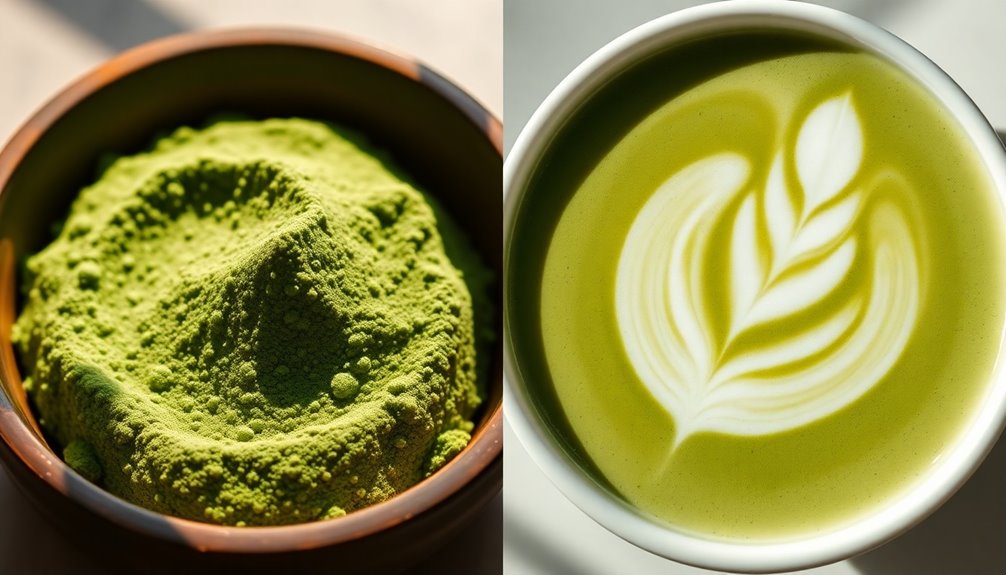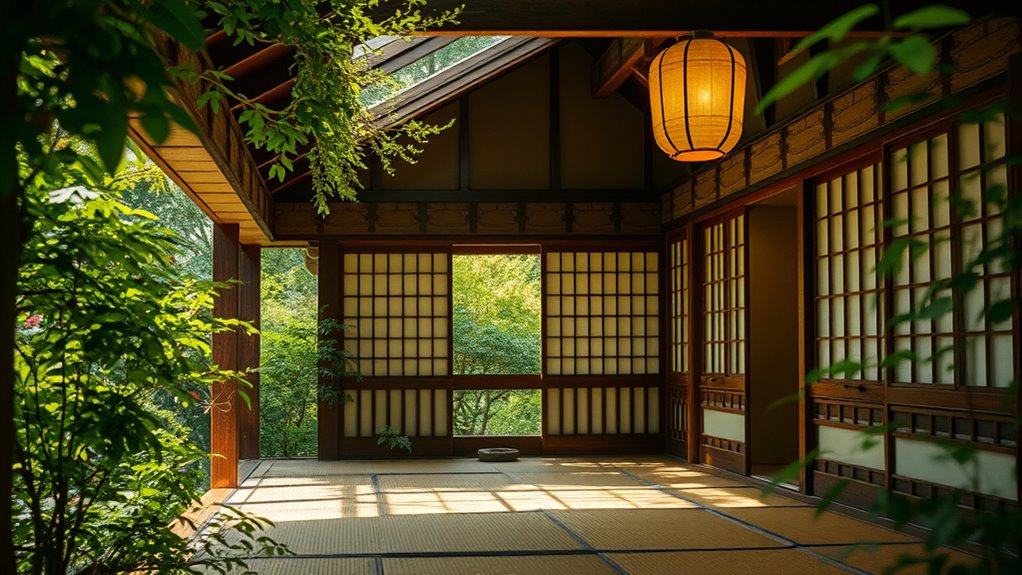

Teahouse architecture is designed to help you slow down and connect with nature. You’ll notice calm, simple spaces that invite mindfulness, featuring natural materials like wood and stone. Traditional elements such as sliding screens and open verandas create a seamless flow from outside to inside, encouraging reflection. Soft light and minimalist design foster tranquility, making these spaces perfect for mindful tea rituals. To discover how every detail supports your sense of calm, keep exploring.
Key Takeaways
- Natural materials like wood, stone, and bamboo create authentic, textured environments that promote tranquility.
- Architectural elements such as sliding shoji screens and curved roofs foster seamless connection with nature.
- Soft natural lighting and minimal ornamentation cultivate a calm, meditative atmosphere.
- Layout design encourages slow movement and mindfulness through intimate, harmonious spaces.
- Spaces serve as retreats for reflection, disconnecting from busy life and embracing gentle tea rituals.
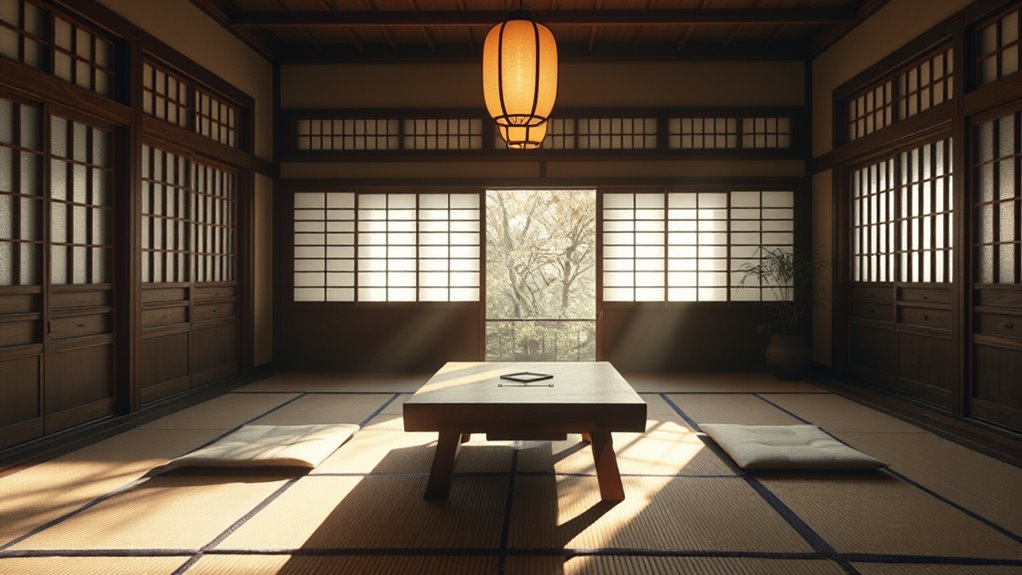
Have you ever wondered what makes teahouse architecture so inviting and harmonious? It’s the way these spaces are designed to foster a sense of calm, encouraging you to slow down and savor each moment. Central to this feeling is the emphasis on the tea ceremony—a ritual that values mindfulness and connection. The architecture itself becomes part of this experience, seamlessly blending into the natural surroundings and creating a sanctuary from the busy world outside. When you step into a traditional teahouse, you’re often greeted by simple, elegant structures that reflect a deep respect for natural materials. Wood, stone, bamboo, and clay dominate the design, their textures and tones enhancing the organic atmosphere. These materials aren’t just aesthetic choices; they’re integral to cultivating a sense of authenticity and tranquility. The use of natural materials allows the building to age gracefully, developing a patina that tells a story and deepens your connection to the space. It’s as if the teahouse itself has been woven into the landscape, rather than imposed upon it. Additionally, the incorporation of traditional architectural elements, such as gently curved rooflines and open verandas, further enhances the harmony with nature.
The architecture encourages a smooth transition from the outside world into a private retreat. Sliding shoji screens, with their delicate paper panels, softly filter the light, creating gentle shadows that dance across the floor. These screens can be easily moved aside, inviting you to participate actively in the space’s transformation—whether it’s opening up to the garden or closing in for intimacy. The layout often features a small, intimate room where the tea ceremony takes place, typically surrounded by windows that frame views of nature. This design keeps you connected to the natural environment, making every sip of tea a shared experience with the landscape. Low wooden tables and tatami mats promote a sense of groundedness and humility, encouraging you to sit comfortably and focus on the present moment. The careful placement of natural light sources also enhances the tranquil atmosphere, emphasizing the importance of natural materials in creating a calming environment.
Lighting plays an essential role as well. Soft, natural light filters through paper lanterns or carefully placed openings, creating a peaceful ambiance that invites reflection. The architecture’s simplicity is deliberate, stripping away unnecessary ornamentation to highlight the beauty of natural materials and craftsmanship. This minimalism fosters a meditative atmosphere—an ideal setting for the slow, deliberate act of tea preparation and drinking. Ultimately, teahouse architecture isn’t just about shelter; it’s about crafting a space where time slows down, where every element—from the materials to the layout—works in harmony to support mindful living. It’s a place where you can disconnect from haste and reconnect with yourself through the gentle ritual of tea.
Top picks for "teahouse architecture spac"
Open Amazon search results for this keyword.
As an affiliate, we earn on qualifying purchases.
Frequently Asked Questions
How Do Teahouse Designs Vary Across Different Cultures?
You’ll notice teahouse designs vary across cultures due to regional influences and architectural symbolism. In Japan, they emphasize simplicity, natural materials, and harmony with nature, reflecting Zen ideals. Chinese teahouses often feature intricate woodwork and symbolic motifs that represent peace and prosperity. In Korea, they incorporate traditional hanok elements, blending indoor and outdoor spaces. These variations highlight each culture’s values, history, and connection to nature, creating unique spaces for slow, mindful tea experiences.
What Sustainable Practices Are Used in Teahouse Architecture?
You can incorporate sustainable practices into teahouse architecture by using eco-friendly construction materials like bamboo or reclaimed wood, which reduce environmental impact. Additionally, integrating renewable energy sources such as solar panels or wind turbines helps power the teahouse sustainably. These practices not only minimize your carbon footprint but also create a harmonious space that aligns with the calming, slow-paced experience of tea ceremonies, fostering a deeper connection with nature.
How Do Teahouse Spaces Promote Social Interaction?
You find yourself immersed in a teahouse where the tea ceremony and communal seating foster genuine social bonds. These spaces encourage slow conversations amid tranquil surroundings, contrasting busy city life. Shared rituals and close seating invite participation, making interactions more intimate. As you sip tea together, the environment naturally promotes bonding, turning strangers into friends, and transforming a simple gathering into a meaningful communal experience rooted in tradition and mindful connection.
What Role Does Natural Lighting Play in Teahouse Design?
Natural lighting plays a crucial role in teahouse design by creating a warm, inviting atmosphere. You’ll notice that natural illumination enhances the space’s tranquility, making it easier to relax and enjoy your tea. Architects often incorporate features like large windows and skylights to maximize daylight enhancement, ensuring ample sunlight filters through, which not only boosts mood but also connects you more deeply with nature, fostering a serene environment for slow time.
How Are Modern Materials Integrated Into Traditional Teahouse Architecture?
You integrate modern materials into traditional teahouse architecture through innovative materials like steel, glass, and bamboo composites, creating a seamless architectural integration. These materials enhance the structure’s durability, transparency, and aesthetic appeal while respecting traditional design principles. By blending old and new, you craft spaces that honor cultural heritage while embracing contemporary functionality, allowing the teahouse to adapt to modern needs without losing its tranquil, slow-time atmosphere.
Conclusion
As you step into a teahouse, you’re invited to slow down and embrace each moment. The architecture isn’t just about structure; it’s about creating a space where time feels gentler, more deliberate. Can you feel the calm seep in as you settle in? By designing spaces that encourage mindfulness, teahouses remind us that sometimes, slowing down is the greatest act of self-care. Isn’t it time we all find a little more of that quiet grace?