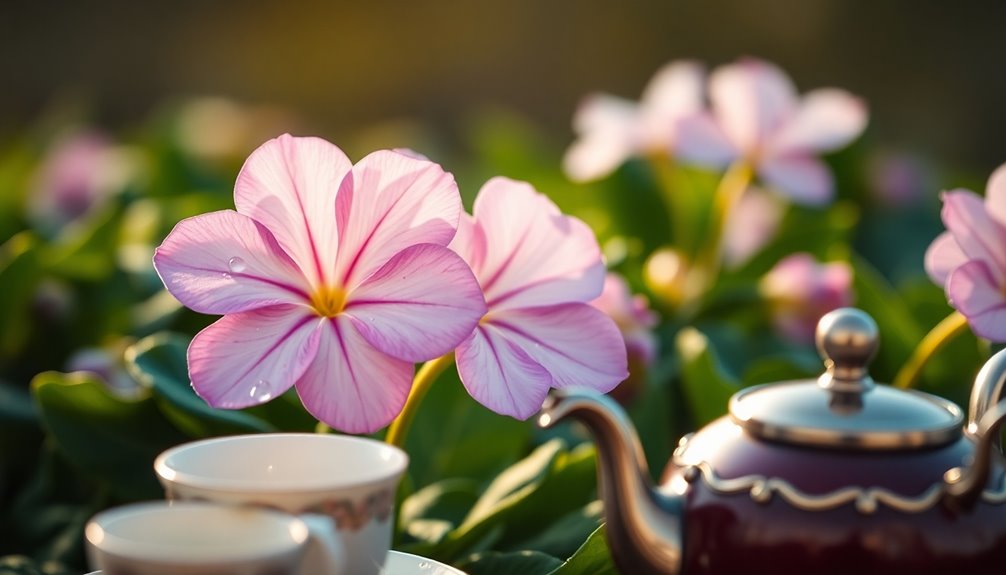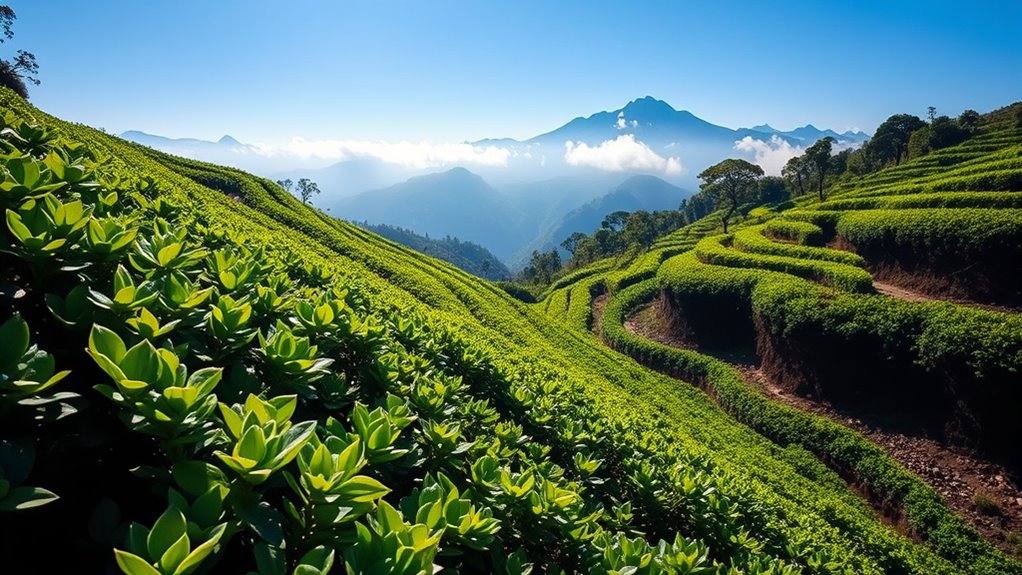

Your understanding of tea terroir revolves around how altitude, soil, and microclimate shape its unique flavors. Higher elevations often bring cooler temperatures and slower growth, creating complex taste profiles. Rich, well-draining soils support healthy plants, while microclimates influence humidity and sunlight, impacting flavor depth. When these natural factors combine with cultivation practices, they produce distinct regional profiles. To uncover how these elements create such remarkable teas, keep exploring the fascinating world of tea terroir.

Get coffee and tea gear delivered free with Prime
- Fast, free delivery on millions of items
- Prime Video, Amazon Music and more included
- Member-only deals all year
Key Takeaways
- Altitude influences tea flavor by affecting temperature, growth rate, and leaf composition, creating unique regional profiles.
- Soil composition, including nutrients and drainage, impacts plant health and enhances flavor complexity.
- Microclimate factors such as humidity, sunlight, and temperature shape the tea’s aroma and taste characteristics.
- Higher altitudes typically produce slower-growing, more nuanced teas with delicate flavors.
- The interplay of altitude, soil, and microclimate forms each region’s distinctive tea terroir.
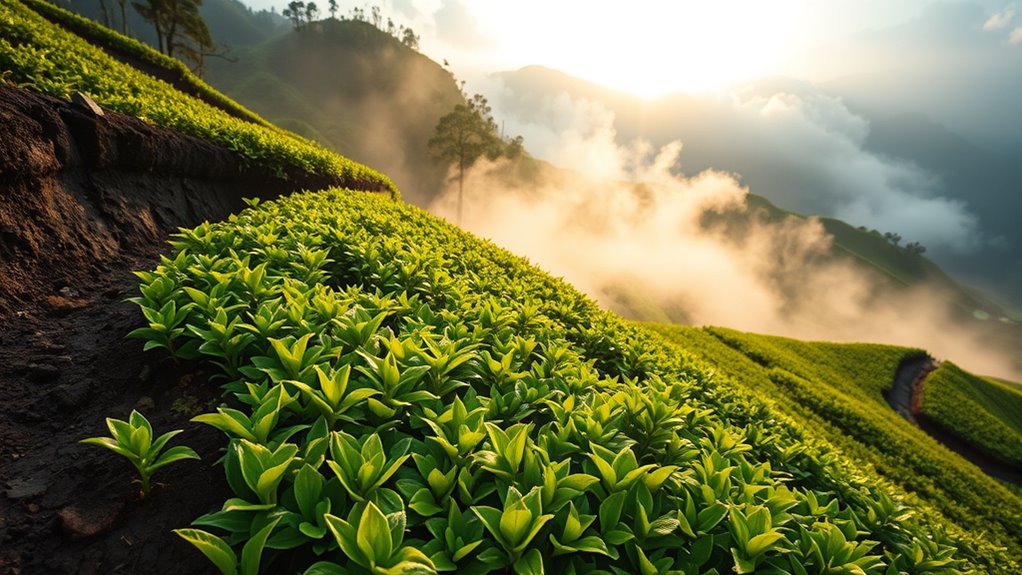
Have you ever wondered why tea from one region tastes so different from another? The answer lies in a complex interplay of factors that define the tea’s terroir, including altitude, soil, and microclimate. But equally significant are the practices behind plant cultivation and harvesting techniques, which influence the final flavor profile you experience in every cup. When you think about plant cultivation, you’re considering how tea plants are grown—what varieties are chosen, how they’re maintained, and how their environment shapes their growth. Different regions have unique traditions and methods for nurturing tea, which deeply impact the plant’s health and flavor potential. For instance, high-altitude tea gardens often utilize specific cultivation practices to cope with cooler temperatures and thinner air, resulting in slower growth and more concentrated flavors in the leaves. In these areas, plants might be pruned carefully to promote new growth, and shade might be used strategically to protect delicate leaves from harsh sunlight, preserving nuanced aromas. Additionally, the soil quality and microclimate conditions work together to influence the plant’s development and the tea’s final taste. Harvesting techniques are just as essential, as they determine the quality and characteristics of the tea leaves collected. Skilled harvesters choose the right time to pluck the leaves, often based on the season and the plant’s maturity, to guarantee maximum flavor and aroma. For example, some regions prefer hand-picking only the top two leaves and a bud, which yields a finer, more refined tea. Others might harvest larger quantities for different types of teas, resulting in varying flavor intensities. The method of harvest directly influences how the flavors develop during processing, but it also depends heavily on the plant’s cultivation conditions. Well-cultivated plants produce more tender, flavorful leaves that respond better to precise harvesting, giving you a richer taste experience. The microclimate, which encompasses temperature, humidity, and sunlight, interacts with plant cultivation and harvesting techniques to shape the tea’s unique profile. In cooler, misty mountain regions, plants grow slowly, developing complex flavors that can’t be replicated elsewhere. Conversely, in warmer, sunnier climates, faster growth might lead to a bolder, more robust tea. The soil composition also plays a significant role—nutrient-rich, well-draining soils foster healthy plant growth, which translates into more vibrant and layered flavors. When all these elements—altitude, soil, microclimate, cultivation, and harvesting—align, they create a terroir that makes each tea truly one of a kind. Understanding the significance of soil and microclimate helps appreciate how these natural factors contribute to the unique flavor of each tea. So, next time you sip your favorite brew, remember that its distinctive taste reflects a meticulous blend of natural conditions and human expertise, working together to produce the perfect cup.
As an affiliate, we earn on qualifying purchases.
Frequently Asked Questions
How Does Altitude Influence Tea Flavor Development?
Altitude effects your tea’s flavor profile by enhancing its complexity and brightness. When you grow tea at higher altitudes, the cooler temperatures slow down leaf maturation, leading to more nuanced, delicate flavors. You’ll notice a crisp, vibrant taste with floral and fruity notes. The elevation also encourages slower growth, which concentrates flavors, making your tea more aromatic and refined—altitude truly elevates the tea’s overall character.
What Soil Minerals Most Affect Tea Taste?
You’ll find soil mineral content substantially impacts tea taste, especially minerals like calcium, magnesium, and potassium. Calcium adds a smooth, rounded flavor, while magnesium enhances bitterness and body. Potassium boosts sweetness and brightness. When these minerals are balanced, they create a nuanced flavor profile. So, the soil’s mineral richness directly influences your tea’s aroma, body, and overall taste, making each sip uniquely expressive of its terroir.
How Does Microclimate Vary Within Tea-Growing Regions?
You’ll notice that microclimates within tea-growing regions vary mainly due to differences in moisture levels and shade effects. Some areas retain more moisture, enhancing leaf growth and flavor, while shaded spots protect leaves from harsh sun, creating a cooler environment. These microclimate variations influence tea’s taste, aroma, and quality, making each estate unique. By understanding these subtle differences, you can better appreciate the nuanced flavors of your favorite teas.
Can Terroir Impact Tea Health Benefits?
Think of terroir as nature’s secret recipe, subtly shaping your tea’s health benefits. Yes, terroir impacts tea antioxidants, which are key to its health benefits. When the microclimate, soil, and altitude align harmoniously, they enhance the tea’s nutrient profile, giving you a more potent boost. So, your tea’s origin isn’t just about flavor—it’s about revealing a richer, healthier experience with every sip.
How Do Farmers Adapt to Changing Terroir Conditions?
You adapt to changing terroir conditions by implementing strategies like shade-grown teas, which help regulate temperature and humidity. You also use pest management techniques that reduce chemical use and protect the environment. These methods allow you to maintain tea quality despite shifts in altitude, soil, or microclimate. By staying flexible and innovative, you can guarantee your teas thrive and preserve their unique flavors and health benefits.
Conclusion
So, next time you sip that cup of tea, remember it’s more than just leaves—it’s a story of altitude, soil, and microclimate, much like the secrets of alchemy kept by old alchemists. Your perfect brew is crafted by nature’s own wizardry, blending elements in a way that’s been perfected over centuries. Embrace the terroir, because every sip transports you to a mystical land where geography and climate work their magic, just like in the days of legend.
Halloween Picks
halloween
As an affiliate, we earn on qualifying purchases.