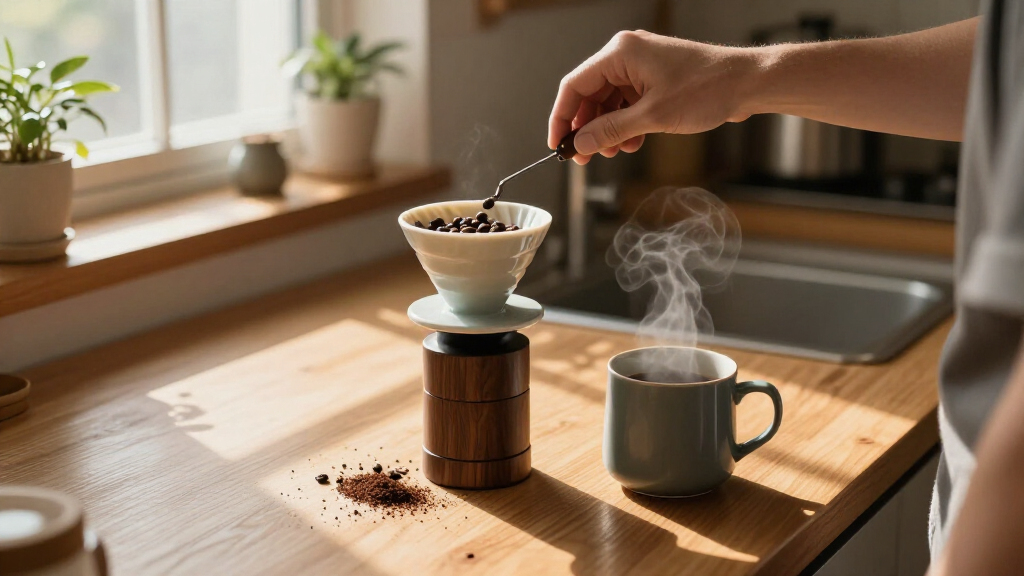
Among these coffee bean grinders, the OXO Brew Conical Burr Electric Coffee Grinder is my best overall pick for its burr design and generous 12-ounce hopper, while the Aromaster Conical Grinder with 48 Settings stands out for brew-method flexibility and the KRUPS Precision suits shoppers who want a compact, simple blade grinder. The main tradeoff is control: burr grinders offer more repeatable grind adjustment, while blade grinders are generally simpler and better suited to occasional use or spice grinding. Capacity, counter space, noise, and cleanup also separate these options. Read on for the full breakdown, buying advice, and picks for different brewing routines.

Get coffee and tea gear delivered free with Prime
- Fast, free delivery on millions of items
- Prime Video, Amazon Music and more included
- Member-only deals all year
Complete the kit


Key Takeaways
- The OXO Brew leads this lineup as the most balanced burr option, pairing a larger bean hopper with adjustable grinding for regular home brewing.
- The two 48-setting Aromaster and AMZCHEF burr models offer finer grind control than the 16-setting SHARDOR Electric Burr, but more settings do not automatically make a grinder easier to use.
- Blade grinders dominate the simpler, compact end of the selection; they suit occasional coffee or spice grinding better than buyers seeking repeatable grounds for demanding brew methods.
- The AAOBOSI’s 45 settings and timed operation target espresso-oriented use, while a broad setting range alone cannot confirm that a grinder will suit every espresso machine or basket.
- This roundup includes several similar-looking grinders but few details about burr geometry, adjustment increments, or repairability, so buyers should check those points when grind precision is a priority.


| coffee bean grinder | Dimensions | Capacity | Model |
|---|---|---|---|
| OXO Brew Conical Burr Electric | 7.5 x 5.3 x 12.9 inches | — | — |
| Aromaster Conical Coffee Bean | 8 x 5 x 16 inches | 3.9 ounces | CG204 |
| KRUPS Precision Electric Coffe | — | 3 oz (85 g) | — |
| AMZCHEF Burr Coffee Grinder wi | 7.4 x 5.1 x 13.4 inches | — | CG209-SV |
| Cuisinart Supreme Grind Electr | — | — | DBM-8P1 |
| Wancle Electric Coffee Grinder | 3.5 × 3.5 × 6.6 in | 20 g | — |
| SHARDOR Electric Super Silent | 4.7 × 4.4 × 8.3 in | 2.5 oz | — |
| Amazon Basics Electric Coffee | 3.72 × 3.5 × 6.9 in | 30 g (1 oz) | CG9402-UL |
| MAVO Phantox Pro Manual Coffee | — | 30 g | PPC-01 |
| Aromaster Burr Coffee Grinder | 9 × 6 × 13 in | — | CG223 |
| Cuisinart Coffee Bar Electric | 7 in high × 4.25 in long × 3.5 in wide | 2.5 oz (70 g) of whole beans; up to 12 cups | — |
| BLACK+DECKER One Touch Coffee | 3.5 in L × 3.4 in W × 7.28 in H | 56.6 g (approximately 2/3 cup) | — |
| SHARDOR Electric Burr Coffee G | 7.48 in L × 5.16 in W × 9.76 in H | — | — |
| AAOBOSI Espresso Coffee Grinde | 7.28 in L × 4.72 in W × 14.17 in H | — | CG223A |
| Hamilton Beach Fresh Grind Ele | — | Enough grounds for up to 12 cups | 80335R |
More Details on Our Top Picks
OXO Brew Conical Burr Electric Coffee Grinder, 12 oz, Silver
The OXO Brew is my all-rounder pick for households switching among drip, French press, and other brew styles. Its 15 settings plus 43 micro-adjustments offer more control between grind sizes than the Cuisinart Supreme Grind’s 18 broader settings, while the remembered one-touch timer makes repeat batches less fiddly. The removable, UV-blocking 12-ounce hopper also holds more beans than the Aromaster’s 3.9-ounce capacity, though it is not the largest option in this group.
The tradeoff is that this is a coffee-only grinder, so it cannot double as a spice mill like the KRUPS. Its hopper may also need refilling in busy kitchens. I’d choose it for flexible daily brewing and straightforward repeatability, not for grinding ingredients beyond coffee or minimizing countertop height.
Pros:- Fine adjustment range supports dialing in several brewing methods.
- One-touch timer remembers the previous setting for repeat batches.
- Removable, UV-blocking hopper stores up to 12 ounces of beans.
- Stainless steel conical burrs are designed for uniform grounds.
Cons:- Coffee-only design does not handle spices, herbs, or nuts.
- The 12-ounce hopper may need frequent refilling in high-volume households.
Best for: Home coffee drinkers who alternate between brewing methods and want repeatable settings without manual timing.
Not ideal for: Buyers who want one appliance for coffee and spices, or households that need a very large bean hopper.
- Burr type:40 mm stainless steel conical burrs
- Grind settings:15 settings with 43 micro-adjustments
- Hopper capacity:12 oz (0.34 kg)
- Power:100 watts
- Voltage:120 volts
- Weight:4.5 pounds
- Dimensions:7.5 x 5.3 x 12.9 inches
- Warranty:Two years
Our verdict“Choose the OXO Brew for versatile, repeatable coffee grinding; choose the KRUPS instead if ingredient versatility matters more than burr grinding.”
Aromaster Conical Coffee Bean Grinder with 48 Settings and Anti-Static Technology
The Aromaster CG204 earns its place for people who want broad grind choice without grounds scattering around the counter. Its 48 settings and anti-static technology give it a different emphasis from the OXO Brew: more numbered choices and a stated focus on reducing cling, rather than the OXO’s remembered one-touch timer and larger 12-ounce hopper. Stainless steel conical burrs and an adjustable 40-second timer suit users who want to tailor a batch across brewing styles.
Capacity is the key compromise. At 3.9 ounces, it holds substantially less than the OXO or AMZCHEF, so frequent brewers may refill it often. The 120V, 60Hz requirement also limits where it can be used, and the burr must be completely dry before reassembly. I’d pick it for cleaner grinding and setting range, not for large batches or international travel.
Pros:- 48 grind settings cover a broad range of brewing methods.
- Anti-static technology is designed to reduce cling and stray grounds.
- Adjustable timer provides up to 40 seconds of grinding time.
- Removable burr and included brush support cleaning and clearing blockages.
Cons:- 3.9-ounce capacity is smaller than the OXO Brew and AMZCHEF hoppers.
- The burr must be fully dry before reassembly.
- 120V, 60Hz power specification limits international use.
Best for: Home brewers who switch between grind sizes and want to limit static mess during small or moderate batches.
Not ideal for: Large households that grind frequently, or buyers outside 120V, 60Hz regions who need a broadly compatible appliance.
- Model:CG204
- Burr type:Stainless steel conical burrs
- Grind settings:48
- Capacity:3.9 ounces
- Timer:Adjustable, up to 40 seconds
- Power source:Electric, 120V, 60Hz
- Dimensions:8 x 5 x 16 inches
- Warranty:12-month repair service
Our verdict“Pick the Aromaster for many grind choices and a tidier counter, but choose the OXO or AMZCHEF for a larger bean supply between refills.”
KRUPS Precision Electric Coffee Grinder, 3 oz Capacity, 200W Motor, Stainless Steel Blades, Black
The KRUPS Precision is the practical choice when a grinder needs to handle more than coffee. Its stainless steel blades and press-and-hold control can process coffee, spices, herbs, and nuts, unlike the burr-based OXO Brew and Cuisinart, which are designed around coffee grinding. The compact body and 3-ounce capacity suit occasional use or small batches, while the lid-activated safety mechanism prevents operation without the lid in place.
That versatility comes with less grind control: unlike the AMZCHEF’s 48 settings, this blade grinder relies on how long the user holds the button. That makes repeatable coffee grounds harder to achieve, especially when brewing methods call for a specific consistency. Its small capacity can also mean multiple rounds for a household. I’d choose it for a compact, shared-use appliance, not for buyers prioritizing precise coffee grind adjustment.
Pros:- Can grind coffee, spices, herbs, and nuts.
- Compact design takes up less counter space than the larger burr grinders.
- Press-and-hold operation lets users adjust grinding duration.
- Lid-activated safety mechanism helps prevent accidental operation.
Cons:- Blade grinding offers less consistency than the conical and flat burr models.
- Manual timing requires attention and makes repeatable results harder.
- 3-ounce capacity may require multiple batches for larger households.
Best for: Small-kitchen users who want one compact appliance for occasional coffee grinding and small amounts of spices or herbs.
Not ideal for: Coffee-focused brewers who need repeatable grind settings for espresso, drip, or French press.
- Grinder type:Electric blade grinder
- Blade material:Stainless steel
- Power:200 watts
- Capacity:3 oz (85 g)
- Grind control:One-touch, press and hold
- Suitable ingredients:Coffee, spices, herbs, and nuts
- Safety:Lid-activated mechanism
- Color:Black
Our verdict“Choose the KRUPS if ingredient versatility and compact size outweigh the more controlled coffee grinding offered by the OXO or AMZCHEF.”
AMZCHEF Burr Coffee Grinder with 48 Settings and Anti-Static Technology
The AMZCHEF CG209-SV is the most control-focused pick here for espresso-oriented users. Its 48 grind settings, portafilter compatibility for 51–54 mm and 58 mm sizes, and LED touchscreen make it more directly suited to espresso routines than the OXO Brew, whose appeal is broader everyday use and a simpler one-touch timer. A half-second timing increment and cup selection can help users make repeatable adjustments, while the 10.6-ounce UV-blocking hopper holds more beans than the Aromaster CG204.
Those controls add complexity, and the hopper’s plastic components may not feel as durable as an all-metal construction. It is also a 120V appliance, limiting use in other electrical regions. I’d favor it over the Cuisinart when adjustment range and portafilter support matter, but not if straightforward operation or international compatibility is the priority.
Pros:- 48 settings offer a broad range from fine espresso to coarse French press.
- Portafilter compatibility covers 51–54 mm and 58 mm sizes.
- LED touchscreen provides cup selection and 0.5-second timing increments.
- 10.6-ounce UV-blocking hopper helps shield beans from light.
Cons:- Fixed 120V power limits use in regions with different voltage.
- Plastic hopper components may be less durable than all-metal alternatives.
- Touchscreen controls may be more involved than the OXO Brew’s one-touch timer.
Best for: Home espresso makers who want many grind settings, portafilter support, and touchscreen-based timing.
Not ideal for: Buyers who prefer simple controls, need international voltage compatibility, or want a hopper made without plastic components.
- Model:CG209-SV
- Burr type:40 mm stainless steel conical burrs
- Grind settings:48
- Hopper capacity:10.6 ounces
- Power:150 watts
- Voltage:120V
- Portafilter compatibility:51–54 mm and 58 mm
- Dimensions:7.4 x 5.1 x 13.4 inches
Our verdict“Choose the AMZCHEF for espresso-oriented adjustment and portafilter support; the OXO is a simpler fit for mixed-method daily brewing.”
Cuisinart Supreme Grind Electric Burr Coffee Grinder, 18 Settings, DBM-8P1
The Cuisinart Supreme Grind is built around preparing larger amounts at once. Its removable 8-ounce bean hopper, grounds chamber sized for up to 32 cups, and 4–18-cup selector make it a better batch-brewing fit than the compact KRUPS or the 3.9-ounce Aromaster. Stainless steel flat burrs and 18 settings offer a straightforward range for different brewing methods, while automatic shutoff reduces the need to monitor a cycle.
It is less finely adjustable than the OXO Brew’s 15 settings with 43 micro-adjustments, and its large grounds chamber may be excessive for someone making a single cup. The safety interlock also means the parts must be assembled properly before it runs. I’d choose this Cuisinart for households that regularly brew several cups, but the OXO is a more flexible match for smaller, varied batches.
Pros:- Grounds chamber holds enough for up to 32 cups.
- 4–18-cup selector supports different batch sizes.
- Removable hopper and grounds chamber simplify emptying and cleaning.
- Automatic shutoff and assembly interlock support convenient operation.
Cons:- Large grounds capacity may be unnecessary for small-batch brewing.
- 18 settings offer less fine adjustment than the OXO Brew’s micro-adjustments.
- The grinder will not operate unless properly assembled.
Best for: Households that regularly grind enough coffee for several cups and value a large grounds chamber with a cup selector.
Not ideal for: Single-cup drinkers or users who want finer grind adjustments and a smaller countertop footprint.
- Model:DBM-8P1
- Grinder type:Electric flat burr
- Burr material:Stainless steel
- Grind settings:18
- Bean hopper capacity:8 oz
- Grounds chamber capacity:Up to 32 cups
- Cup selector:4–18 cups
- Warranty:Limited 18-month warranty
Our verdict“Pick the Cuisinart for larger household batches and a cup selector; choose the OXO Brew for more nuanced grind adjustment and smaller daily quantities.”
Wancle Electric Coffee Grinder with One-Touch Operation and Cleaning Brush, Black
The Wancle is a space-saving choice for someone who wants a simple blade grinder for a small daily brew. Its one-button operation and transparent lid make it easy to watch the beans and stop when the grind looks right, though blade grinding offers less repeatable particle size than the Aromaster burr grinder with its 45 settings. At just 3.5 inches wide, it takes up less counter space than the larger SHARDOR, but its 20 g capacity is the main compromise: a larger pot means grinding in several batches. The stainless steel blade and copper motor are also suited to dry spices and seeds, making this more flexible than a coffee-only appliance. I’d choose it for compactness and straightforward use, not for precision or batch grinding.
Pros:- Compact footprint suits crowded counters and small kitchens.
- One-button control keeps operation straightforward.
- Transparent lid lets users monitor the grind as it runs.
- Can also grind dry spices, seeds, nuts, and herbs.
Cons:- The 20 g capacity requires multiple batches for larger brews.
- Blade grinding offers less precise grind-size control than the Aromaster burr grinder.
- No timed setting is listed, so repeatability depends on manually judging the grind.
Best for: Coffee drinkers with limited counter space who make one small serving at a time and want a grinder that can also handle dry spices.
Not ideal for: People brewing several cups at once or dialing in espresso, since the 20 g batch limit and blade-based grinding make volume and fine adjustment inconvenient.
- Motor:Pure copper
- Blade:Stainless steel
- Capacity:20 g
- Wattage:150 W
- Voltage:120 V
- Dimensions:3.5 × 3.5 × 6.6 in
- Weight:380 g
Our verdict“Choose the Wancle for compact, uncomplicated single-serving grinding, but pick a burr grinder or a larger-capacity blade model for more control or volume.”
SHARDOR Electric Super Silent Blade Coffee Grinder with Timed Grind Control and Removable Stainless Steel Bowl
The SHARDOR’s strongest case is quieter, more repeatable blade grinding: its 0–30-second timer gives you a consistent starting point when switching between coarser and finer grinds. That is more controlled than the Wancle’s one-button approach, while the removable 2.5 oz bowl makes transferring grounds and hand washing simpler than with a fixed chamber. Its stated average operating noise of about 63 dB may also suit early-morning kitchens. Still, this remains a blade grinder, so the timer controls duration rather than producing the more uniform grounds available from the Aromaster conical burr model. The bowl is not dishwasher safe, and the capacity can feel limiting when preparing coffee for a group. I’d favor it over the Wancle for timed control and cleanup, not for espresso-level consistency.
Pros:- 0–30-second timer helps repeat grind duration.
- Removable stainless steel bowl simplifies filling, pouring, and hand washing.
- Average operating noise is listed at about 63 dB.
- Can process coffee beans and other dry ingredients.
Cons:- Blade grinding is less uniform than the Aromaster conical burr grinder.
- The 2.5 oz bowl may require refilling for larger batches.
- The bowl must be hand washed and the grinder is not designed for wet ingredients.
Best for: Early risers who want a comparatively quiet blade grinder, timed grind control, and a removable bowl for easier pouring and hand washing.
Not ideal for: Espresso-focused brewers seeking consistent fine grounds, or households needing large batches and dishwasher-safe parts.
- Grinder type:Blade
- Bowl:Removable stainless steel
- Capacity:2.5 oz
- Timer range:0–30 seconds
- Average noise:About 63 dB
- Wattage:150 W
- Voltage:120 V
- Dimensions:4.7 × 4.4 × 8.3 in
- Weight:2 lb
Our verdict“Pick the SHARDOR if quiet operation, a removable bowl, and timed blade grinding matter more than burr-level consistency or hands-off cleaning.”
Amazon Basics Electric Coffee and Spice Grinder
The Amazon Basics grinder is a straightforward choice when speed and a slightly larger batch matter more than fine adjustment. It is specified to grind 30 g of beans in about 10 seconds for drip coffee, giving it more capacity than the Wancle’s 20 g chamber and reducing the need to split a small brew into multiple loads. A clear safety lid lets you keep an eye on the contents, and the stainless steel blade can also handle dry herbs, spices, grains, and nuts. Compared with the SHARDOR, it lacks a timed control and removable bowl, so the routine is simpler but less tailored to repeatability and cleanup. As with both blade models, it cannot match the Aromaster burr grinder’s range of settings or grind consistency. It makes the most sense for basic drip coffee and general kitchen use.
Pros:- Processes 30 g of coffee beans in about 10 seconds for drip coffee.
- Capacity exceeds the Wancle’s 20 g limit.
- Clear safety lid makes contents visible during grinding.
- Stainless steel blade supports grinding several types of dry ingredients.
Cons:- Blade design offers less grind-size precision than the Aromaster burr grinder.
- No adjustable timer is listed, making repeatable results harder to control.
- The 30 g capacity remains modest for multiple cups or larger batches.
Best for: Drip-coffee drinkers who want a quick, no-frills grinder for modest batches and occasional dry-ingredient grinding.
Not ideal for: Brewers who need precise grind adjustments, repeatable timing, or large quantities beyond a small 30 g batch.
- Brand:Amazon Basics
- Model:CG9402-UL
- Grinder type:Stainless steel blade
- Capacity:30 g (1 oz)
- Grinding time:About 10 seconds for 30 g of coffee beans
- Voltage:120 V
- Weight:1.5 lb
- Dimensions:3.72 × 3.5 × 6.9 in
- Recommended uses:Coffee beans, herbs, spices, grains, and nuts
Our verdict“Choose this model for quick, basic drip-coffee batches and general dry-ingredient use, not for precise brewing adjustments.”
MAVO Phantox Pro Manual Coffee Grinder
The MAVO stands apart from the electric options here by pairing a 45 mm stainless steel grinding core with 120 adjustment clicks. That fine adjustment range gives brew-method switchers more control than the Wancle or Amazon Basics blade grinders, whose grind size is managed less precisely. Its stated low-fines design and support for espresso through French press make it the most adaptable manual pick in this group. The tradeoff is effort: unlike the timed SHARDOR or the electric Aromaster burr grinder, the MAVO requires hand grinding, which can become tiring when preparing several servings or grinding very fine. Its 30 g capacity suits a modest brew, while dry cleaning rather than water washing adds upkeep. I’d select it for portability and hands-on control, not speed or convenience.
Pros:- 120-click adjustment provides detailed grind-size control.
- 45 mm stainless steel grinding core is designed to reduce fines.
- Supports espresso, pour-over, French press, and cold brew.
- Includes a brush and storage items for portable use and dry cleaning.
Cons:- Manual grinding takes physical effort, unlike the electric Aromaster burr grinder.
- The 30 g capacity may be limiting for multiple servings.
- The grinder should not be cleaned with water.
Best for: Brewers who switch among espresso, pour-over, and French press and want detailed grind adjustment in a portable manual grinder.
Not ideal for: People who routinely grind several servings, want push-button convenience, or prefer to rinse grinder parts with water.
- Model:PPC-01
- Grinding core:45 mm stainless steel
- Adjustment:120 clicks
- Capacity:30 g
- Materials:Aluminum and stainless steel
- Weight:1.02 kg
- Color:Obsidian Black
- Included components:Brush, nonslip ring, pocket, and stainless steel bowl
Our verdict“Choose the MAVO for portable, precise manual grinding across brew methods if you accept the effort and dry-cleaning routine.”
Aromaster Burr Coffee Grinder with 45 Settings, Anti-Static Technology, and Stainless Steel Body
The Aromaster is the most capable electric coffee-focused choice in this batch because its conical burrs and 45 grind settings offer more control across brew methods than the blade grinders from Wancle, SHARDOR, and Amazon Basics. That range is useful when moving between espresso, pour-over, and French press, while anti-static technology is intended to reduce scattered grounds around the grinder. Its 5–40-second timer gives a convenient way to set grinding duration, but it is not weight-based, so exact bean portions still require manual adjustment. The removable upper burr and included brush support upkeep; by contrast, the MAVO offers more adjustment clicks but requires hand grinding. The Aromaster’s 9 × 6 × 13-inch body also needs more counter space than the compact blade options, and its capacity may not suit large batches.
Pros:- Conical burr system and 45 settings offer greater grind control than the blade models in this batch.
- Anti-static technology is designed to reduce scattered grounds and residue.
- 5–40-second timer supports adjustable grinding duration.
- Removable upper burr and included brush aid cleaning.
Cons:- Timer-based operation does not measure bean weight for exact dosing.
- Its footprint is larger than the Wancle and Amazon Basics blade grinders.
- Capacity may be restrictive for grinding large batches at once.
Best for: Home brewers who want electric burr grinding with multiple grind settings for different brewing methods and a cleaner counter routine.
Not ideal for: Buyers with very limited counter space, those grinding large batches regularly, or anyone who needs weight-based dosing rather than a timer.
- Brand:Aromaster
- Model:CG223
- Burr type:Conical
- Grind settings:45
- Timer range:5–40 seconds
- Material:Stainless steel
- Dimensions:9 × 6 × 13 in
- Included components:Cleaning brush and cups
Our verdict“Choose the Aromaster for electric burr control across brewing styles, provided you have counter space and do not need weight-based dosing or large batches.”
Cuisinart Coffee Bar Electric Coffee Grinder, Black, DCG-20BKN
The Cuisinart DCG-20BKN is a practical fit for drip-coffee households that want a simple blade grinder and enough capacity for a full pot. Its 2.5-ounce bowl can handle beans for up to 12 cups, giving it a larger stated batch capacity than the BLACK+DECKER One Touch. The press-and-hold control keeps operation straightforward, while the clear, marked lid lets me check progress and portion beans without opening the grinder.
The tradeoff is that grind size depends on timing rather than selectable settings, so reproducing a preferred texture takes attention. Unlike the burr-based SHARDOR Electric Burr Coffee Grinder 2.0, it offers less control over grind consistency across brew methods. I’d choose it for uncomplicated drip, French press, or Moka pot use, but skip it if espresso-level adjustment or repeatable precision is the priority.
Pros:- 2.5-ounce capacity is sized for batches of up to 12 cups.
- Transparent marked lid helps with portioning and checking grind progress.
- Stainless steel bowl and blades support straightforward cleanup.
- Compact body includes built-in cord storage and a lid safety interlock.
Cons:- Grinding time, rather than preset settings, determines texture.
- Blade grinding offers less grind consistency than the SHARDOR burr grinder.
- Batch capacity may not suit larger brewing needs beyond a 12-cup pot.
Best for: Drip-coffee households that want to grind enough beans for a pot in one batch and value simple controls.
Not ideal for: Espresso-focused brewers or anyone who wants repeatable, selectable grind settings rather than timing a blade grinder by hand.
- Type:Electric blade coffee grinder
- Capacity:2.5 oz (70 g) of whole beans; up to 12 cups
- Blade and bowl:Stainless steel
- Controls:Press-and-hold button; grind texture adjusted by grinding time
- Dimensions:7 in high × 4.25 in long × 3.5 in wide
- Safety:Interlock prevents operation unless the lid is securely closed
- Compatibility:French press, automatic drip, and Moka pot
- Warranty:Limited 18-month warranty
Our verdict“Choose the Cuisinart for convenient, larger drip-coffee batches, but pick a burr grinder if grind consistency matters more than simplicity.”
The BLACK+DECKER One Touch makes the most sense for buyers who want one small appliance for coffee and occasional spice grinding. Its 2/3-cup capacity and push-button operation keep everyday batches simple, while the lid lock helps prevent spills or accidental starts. Compared with the Cuisinart DCG-20BKN, its listed capacity is smaller, so it is a better match for modest brewing amounts than for regularly preparing a full pot.
The stainless steel blades and adjustable grind control offer basic flexibility, but this remains a blade grinder: the button does not provide the same grind precision as the SHARDOR Electric Burr Coffee Grinder 2.0’s selectable burr settings. I’d keep it in the running for a compact, multi-use setup, but skip it if you need larger batches or closely repeatable grounds for espresso. Grinding spices in the same bowl may also leave aromas to manage between uses.
Pros:- Compact footprint suits kitchens with limited counter space.
- Push-button control makes short grinding tasks simple.
- Lid-locking mechanism helps prevent spills and unintended operation.
- Can grind coffee beans, spices, herbs, and grains.
Cons:- 2/3-cup capacity limits batch size for larger households.
- Blade design does not offer the grind consistency of the SHARDOR burr grinder.
- Using the same bowl for spices can make flavor carryover a concern.
Best for: Small households or occasional coffee drinkers who want a compact grinder that can also handle herbs and spices.
Not ideal for: Frequent full-pot brewers or espresso drinkers who need larger capacity and more repeatable grind adjustment.
- Type:Electric blade coffee and spice grinder
- Capacity:56.6 g (approximately 2/3 cup)
- Wattage:130 W
- Voltage:110 V
- Blades and material:Stainless steel
- Dimensions:3.5 in L × 3.4 in W × 7.28 in H
- Weight:0.65 kg
- Controls and safety:One-touch push button with lid-locking mechanism
Our verdict“Pick this for small coffee batches and occasional spice grinding, not for high-volume brewing or precision-focused coffee preparation.”
SHARDOR Electric Burr Coffee Grinder 2.0 – Automatic Bean Grinder with 16 Settings, Glossy Black
The SHARDOR Electric Burr Coffee Grinder 2.0 is the clearest step up from the blade models in this group for buyers who want more control across brewing methods. Its 16 grind settings and flat stainless-steel burr let me select a texture instead of estimating it by grinding time, as with the Cuisinart DCG-20BKN. An automatic timer for 2–14 cups also reduces the need to monitor every batch, making it a more convenient daily option than either blade grinder.
That added control comes with limits: 16 settings provide less range than the AAOBOSI’s 45, and its 8.5-ounce bean capacity means larger-volume users may need to refill it. It is also corded, so placement depends on an outlet. I’d choose it for routine drip, pour-over, or French press brewing; espresso users seeking finer adjustment may prefer the AAOBOSI, while occasional drinkers may find a blade grinder simpler.
Pros:- Flat stainless-steel burr provides more controlled grinding than the blade models.
- 16 settings cover a range of everyday brew methods.
- Automatic timer supports hands-free grinding for 2–14 cups.
- Dual safety interlocks help prevent spills and accidental operation.
Cons:- 16 settings offer less adjustment range than the AAOBOSI’s 45.
- 8.5-ounce bean capacity can require refills for larger batches.
- Corded operation limits placement to locations near an outlet.
Best for: Daily home brewers who switch among common brew methods and want burr grinding with automatic batch timing.
Not ideal for: Espresso enthusiasts who want a wider adjustment range, or high-volume users who need a larger bean hopper.
- Grinder type:Electric flat burr grinder
- Burr material:Stainless steel
- Grind settings:16
- Bean capacity:8.5 oz
- Timer range:Automatic timer for 2–14 cups
- Wattage and voltage:150 W; 120 V
- Dimensions:7.48 in L × 5.16 in W × 9.76 in H
- Weight:2.6 lb
Our verdict“Choose the SHARDOR for straightforward burr-grinder control across everyday brew styles, but look to the AAOBOSI for a broader setting range.”
AAOBOSI Espresso Coffee Grinder with Conical Burr, 45 Grind Settings, Anti-Static Design, and 40s Timer
The AAOBOSI CG223A stands apart from the more basic SHARDOR Electric Burr Coffee Grinder 2.0 with 45 grind settings, giving home brewers more room to tune grounds from espresso through French press. Its stainless steel conical burr and LED display pair adjustment with cup- or time-based control, while the anti-static outlet is designed to reduce grounds clinging and scattering during dosing. Compatibility with 51/53 mm portafilters makes it a more direct fit for some espresso setups than the other grinders in this batch.
The extra range does not make it a universal upgrade: the 40-second timer may need manual adjustment for unusually small or large doses, and the housing includes plastic components that may feel less robust than an all-metal design. At 14.17 inches tall, it also needs more vertical counter clearance than the SHARDOR. I’d shortlist it for espresso-oriented users who want fine adjustment, but skip it if compact height or simpler controls matter more.
Pros:- 45 settings provide a wider adjustment range than the SHARDOR’s 16.
- Stainless steel conical burr is designed for uniform grinding.
- Anti-static outlet helps reduce grounds sticking and scattering.
- LED display supports cup- or time-based grinding control.
Cons:- Fixed 40-second timer may need adjustment for dose sizes at either extreme.
- Plastic housing components may feel less durable than an all-metal build.
- 14.17-inch height can be awkward beneath low cabinets.
Best for: Home espresso brewers using 51 or 53 mm portafilters who want many grind adjustments and cleaner dosing.
Not ideal for: Buyers with low overhead cabinets, or users who prefer a simple, compact grinder with fewer controls.
- Model:CG223A
- Grinder type:Electric conical burr grinder
- Burr material:Stainless steel
- Grind settings:45
- Timer:40 seconds
- Wattage and voltage:200 W; 120 V
- Dimensions:7.28 in L × 4.72 in W × 14.17 in H
- Portafilter compatibility:51 mm and 53 mm
Our verdict“Choose the AAOBOSI if espresso adjustment and portafilter compatibility are priorities, but favor the shorter SHARDOR for a simpler everyday setup.”
Hamilton Beach Fresh Grind Electric Coffee Grinder
The Hamilton Beach Fresh Grind earns its place for buyers who care more about cleanup and multi-use convenience than dialing in a precise grind. Its removable, dishwasher-safe bowl is easier to wash than the fixed grinding chamber on the Cuisinart DCG-20BKN, especially when the grinder also handles herbs, spices, or seeds. Pressing the lid starts the motor and releasing it stops the grind, so the control is direct and familiar rather than menu-driven.
That simplicity has a clear cost: grind texture depends on how long the lid is pressed, and there are no stated preset settings. The capacity is described as enough for up to 12 cups, matching the Cuisinart’s stated brew-batch reach but not removing the need to grind in batches for larger needs. Compared with the burr-based SHARDOR, it gives up more consistent grounds for easier bowl removal and washing. I’d choose it for flexible kitchen use, not precision brewing.
Pros:- Removable grinding bowl is dishwasher safe for easier cleanup.
- Handles coffee beans, herbs, spices, and seeds.
- Can prepare grounds for up to 12 cups.
- Built-in cord storage keeps the cord tucked beneath the base.
Cons:- Press-and-release control leaves grind texture dependent on manual timing.
- Blade grinding is less suited to repeatable results than the SHARDOR burr grinder.
- Capacity is limited to a batch for up to 12 cups.
Best for: Coffee drinkers who also grind spices or seeds and want a removable bowl that can go in the dishwasher.
Not ideal for: Brewers seeking repeatable grind settings, burr-style consistency, or precise espresso adjustment.
- Model:80335R
- Grinder type:Electric blade grinder
- Blade material:Stainless steel
- Capacity:Enough grounds for up to 12 cups
- Grinding bowl:Removable and dishwasher safe
- Uses:Coffee beans, herbs, spices, and seeds
- Cord storage:Built in, under the base
- Warranty:1 year
Our verdict“Pick the Hamilton Beach for easy cleanup and multi-use grinding, but choose the SHARDOR if consistent coffee grind settings matter more.”
How We Picked
I ranked these coffee bean grinders by how well their stated design and controls match common home-brewing needs. I weighed burr versus blade construction, range and clarity of grind adjustment, capacity, timed or one-touch operation, counter footprint, and the likely effort involved in routine cleaning. I also considered versatility: a grinder intended for espresso or multiple brew methods needs more usable control than a compact model aimed at occasional drip coffee or spices.
The ranking favors options that appear to balance grind control, everyday usability, and practical capacity, rather than rewarding a long setting list on its own. Burr grinders generally rank ahead for buyers who want repeatable coffee grounds; blade models remain worthwhile for lower-complexity tasks, but their simpler controls limit consistency. Product details supplied here do not establish measured grind uniformity, noise levels, or long-term durability, so I avoid treating those as proven performance claims.
Factors to Consider When Choosing Coffee Bean Grinders
Before choosing a grinder, match its design to the coffee you actually make and how often you make it. The right decision depends less on the longest feature list and more on whether the grinder fits your brewing routine, counter space, and tolerance for upkeep.
Choose Burr or Blade Based on the Coffee You Brew
Burr grinders crush beans between grinding surfaces and usually provide more purposeful control over grind size than blade models. That difference matters when you want to repeat a recipe or switch between brewing methods, though the word “burr” alone does not tell you how even the grounds will be. Blade grinders chop beans, so particle sizes can vary more; this may be acceptable for occasional drip coffee, but it can make extraction harder to tune. A common mistake is paying for a grinder labeled for several uses without checking whether its adjustment system supports the method you care about. If you mostly brew one straightforward method, simple operation may matter more than a wide range of settings. For frequent espresso or careful manual brewing, prioritize usable adjustment and product-specific compatibility information.
Treat Setting Counts as a Starting Point, Not a Score
A grinder with 48 settings sounds more precise than one with 16, but the number only describes how many labeled positions are available. The spacing between positions, the range covered, and whether adjustments are easy to repeat all affect practical control. A wide range is useful if you move between methods, but it can add complexity for someone who wants one dependable setting. Before buying, check whether the product explains which settings suit your brewer and whether changes are clearly marked. Do not assume that a high setting count proves espresso-grade performance. For espresso, confirm compatibility with your machine and brewing setup rather than relying on the number alone.
Match Hopper and Dose Capacity to Your Routine
Capacity affects how often you refill, but a larger hopper is not automatically better for every kitchen. If you brew several servings a day, a larger bean capacity can reduce repeated loading; if you make one cup at a time, a smaller unit may take up less room and better match your routine. Also distinguish hopper capacity from the amount of ground coffee the grinder can handle in one cycle. Buyers sometimes choose by capacity alone and overlook storage height, footprint, or how easy it is to access the beans. Think about whether you prefer loading beans as needed or keeping a batch in the grinder. Choose the smaller format when space and single servings matter more than fewer refills.
Check Cleaning and Retention Before You Buy
Cleanup affects everyday use, especially if you switch beans or grind spices in the same appliance. Removable bowls can make blade grinders easier to empty and wash, while burr grinders may need brushing around the grinding chamber. Anti-static features can help limit grounds clinging to surfaces, but product claims do not tell you how much retention or mess to expect in your kitchen. Look for parts that can be removed safely and instructions that explain what should stay dry. Avoid rinsing electric components unless the maker explicitly allows it. If you change coffee often, favor easy access and simple cleaning over extra capacity you may not use.
Weigh Noise, Footprint, and Controls Together
Convenience is a combination of counter space, sound, and how much attention a grinding cycle demands. Timed controls can make repeat doses easier, while one-touch operation keeps the process simple but may require more judgment about grind duration. A compact grinder can be easier to store, yet a smaller body may mean a smaller batch capacity. “Silent” or “super silent” in a product name should not replace checking available noise information or considering when you brew. Measure the space under cabinets and allow room to remove parts for cleaning. For a shared or early-morning kitchen, control and placement may matter as much as grind range.
Pay More for Useful Control, Not Just More Features
Spend for a real change in your routine, such as more repeatable grind adjustment, helpful dosing controls, or a build that suits frequent use. A premium-style feature list has less value if you make coffee occasionally and use one basic brewing method. Likewise, a low-complexity blade grinder may be a sensible choice for occasional coffee and spice tasks, but it is a compromise if you want consistent results across different brewers. Consider how often you will use each feature and whether replacement parts or cleaning guidance are available. Compare the total footprint and maintenance demands alongside the purchase decision. The best fit is the grinder whose strengths you will use regularly, not the one with the most specifications.
Frequently Asked Questions
Is a burr grinder worth choosing over a blade grinder for everyday coffee?
For everyday brewing, a burr grinder is usually the stronger choice when you care about repeatable grind size or expect to adjust for different methods. Blade grinders are simpler and can suit occasional use, but their chopping action gives you less direct control over particle size. That difference can make it harder to reproduce a brew you like. If your routine is simple and convenience matters most, a blade model may still fit. If you are refining a recipe or brewing coffee daily, prioritize burr construction and clear adjustment controls.
Can a grinder with 45 or 48 settings handle espresso?
A high setting count indicates many adjustment positions, not verified espresso performance. Espresso often calls for fine, repeatable changes, so adjustment range and spacing matter as much as the number printed in the product name. Compatibility can also depend on your espresso machine, basket, beans, and preferred recipe. Check product details for explicit espresso guidance before relying on a broad setting range. If espresso is your main use, choose based on demonstrated suitability and control rather than the count alone.
Should I choose a grinder with a large hopper if I make coffee one cup at a time?
Not necessarily. A large hopper can reduce refilling for households that make several batches, but it also takes up space and may be more capacity than a single-cup routine needs. Some buyers prefer loading only the beans they plan to grind, which can make a smaller grinder a better fit. Check the grinder’s overall dimensions as well as its bean capacity, since hopper size does not tell you how much ground coffee it processes per cycle. Choose based on your real batch size and kitchen layout rather than capacity alone.
Can I use the same grinder for coffee beans and spices?
Some blade grinders are marketed for both coffee and spices, but switching uses can leave flavors or aromas behind. A removable bowl can make cleaning easier, though it does not remove every trace from internal surfaces. Burr grinders are more often chosen for coffee control, and using spices in one may complicate cleaning or affect later coffee. If you regularly grind both, a dedicated spice grinder or separate grinding parts can prevent flavor carryover. Check the maker’s use and cleaning instructions before mixing tasks.
What matters more for a beginner: simple controls or a wide grind range?
For most beginners, clear controls and a grinder suited to the brewing method they already use are more helpful than a long list of settings. A wide range is useful if you plan to experiment, but it can make choosing a starting point less intuitive. Begin with a model that makes adjustments easy to understand and repeat. Then use a wider range as a benefit only if you expect to switch methods or refine your recipes. The right balance depends on whether exploration or straightforward daily use is your priority.
Conclusion
For most households seeking one adaptable electric grinder, I recommend the OXO Brew Conical Burr as the best overall choice in this lineup. For best value, I would look to the SHARDOR Electric Burr Grinder 2.0 if its 16 settings suit your brewing routine; the Aromaster 48-setting burr grinder is a stronger match for shoppers who want more adjustment positions. Beginners who favor straightforward operation may prefer the KRUPS Precision, with the tradeoff that its blade design offers less grind control. For a premium-oriented, espresso-focused feature set, consider the AAOBOSI, but verify that its adjustment range fits your machine. If compact, occasional coffee and spice grinding is the priority, choose among the blade models based on capacity, bowl design, and cleaning needs.