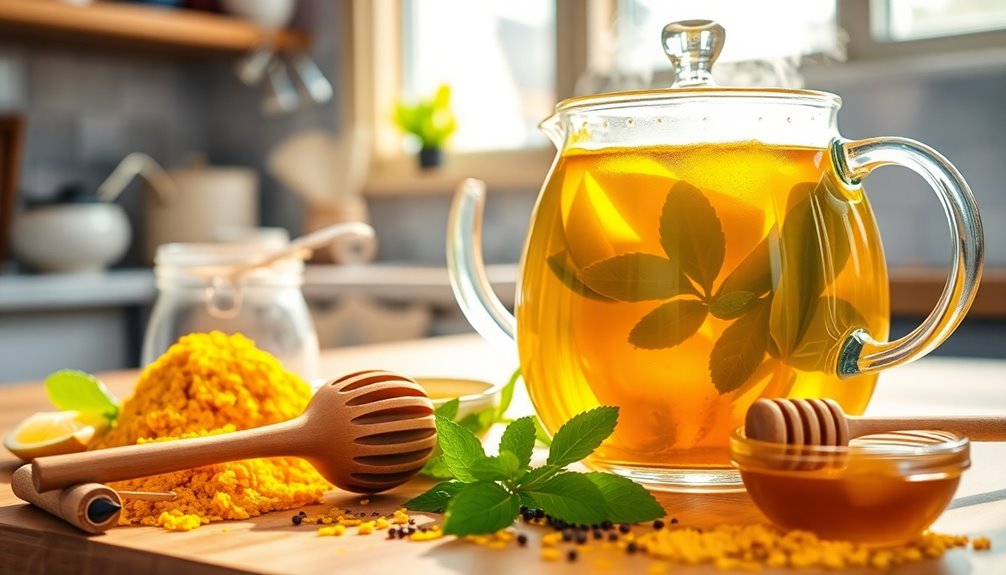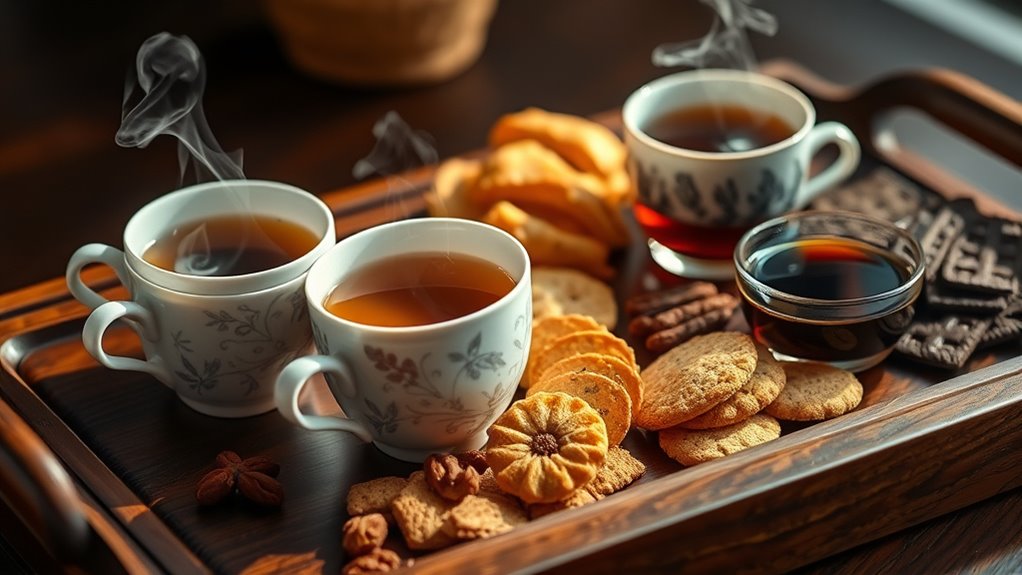

Regional tea and savory snack pairings reflect local traditions, flavors, and environmental factors. For example, Chinese green teas are often enjoyed with warm dim sum, while Indian black teas pair well with spicy snacks like samosas. In the UK, scones with cheese or smoked salmon create elegant contrasts. Attention to presentation and regional ingredients deepens your experience, making each sip and bite meaningful. Curious to discover how these pairings highlight cultural stories? Keep exploring to uncover more.
Key Takeaways
- Regional pairings often match regional teas with local savory snacks, such as Chinese green tea with dim sum.
- Presentation styles reflect cultural traditions, like Japanese tea ceremonies with delicate rice crackers and pickled vegetables.
- Climate influences snack choices, pairing hearty or fresh items with regional tea flavors.
- Specific snacks complement regional teas by enhancing flavors and creating visual harmony.
- Proper plating and regional ingredients deepen the sensory and cultural experience of tea and snack pairings.

Have you ever wondered why tea pairs so perfectly with savory snacks? It’s not just about taste; it’s about the entire experience. When you participate in a traditional tea ceremony, every detail is thoughtfully curated, from the way the tea is brewed to how the snacks are presented. Snack plating plays a critical role here, transforming simple bites into an artful display that complements the flavors of the tea. This careful presentation heightens your senses, making each sip more enjoyable and the snacks more satisfying.
Snack presentation enhances the tea experience, transforming simple bites into a harmonious visual and flavorful journey.
In many cultures, the tea ceremony isn’t just about drinking tea—it’s a ritual that emphasizes mindfulness and harmony. During these ceremonies, snack plating is an integral part of the process. The snacks are usually arranged meticulously, with attention to color, texture, and balance. For example, in Japanese tea ceremonies, you might find small, delicate bites like rice crackers or pickled vegetables artfully placed on a tray. These snacks are chosen not only for their flavor but also for how they look when served, creating a visual harmony that enhances your overall experience. The careful snack plating invites you to slow down and appreciate each component, making the pairing more than just a taste test—it’s a sensory journey.
Regional pairings also influence how snacks are selected to match local teas. In China, green teas are often paired with savory dim sum, like dumplings and buns, which are presented on bamboo steamers. These snack presentations emphasize freshness and warmth, complementing the grassy notes of the tea. Moving to India, spicy snacks like samosas or spiced nuts are served alongside strong black teas, creating a bold flavor contrast that awakens your palate. In the UK, savory scones with cheese or smoked salmon are paired with a robust brew, often served with elegant snack plating that highlights their sophistication. These regional traditions show how snack plating and the type of tea create a cultural dialogue, enriching your experience.
Additionally, understanding the wave and wind can help deepen your appreciation of traditional tea ceremonies, as they influence the climate and environment where regional pairings develop. Ultimately, whether you’re savoring a quiet afternoon tea or participating in a formal ceremony, understanding the importance of snack plating and regional pairings elevates your appreciation. It’s about more than just flavor; it’s about crafting a moment of harmony that engages all your senses. By paying attention to how snacks are presented and how they align with the regional tea traditions, you deepen your connection to the culture and tradition behind each sip and bite. So next time you enjoy tea with savory snacks, remember that every detail—from the way the snacks are arranged to the regional origins of your tea—contributes to a richer, more meaningful experience.

Dujust Japanese Tea Set, Black Porcelain Tea Set with 1 Teapot Set, 6 Tea Cups, 1 Tea Tray, 1 Stainless Infuser, Beautiful Asian Tea Sets for Adults, Tea Lover/Women/Men (Countryside in Golden)
【Beautiful Japanese Countryside in Golden】This tea set is perfect for enjoying your tea time. Classic and exquisite. Each…
As an affiliate, we earn on qualifying purchases.
As an affiliate, we earn on qualifying purchases.
Frequently Asked Questions
How Do Regional Climates Influence Tea and Snack Pairings?
Climate influence plays a big role in tea and snack pairings, as you’ll find that regional weather shapes flavor preferences. In cooler climates, you tend to prefer heartier, warming snacks that complement robust teas. Conversely, warmer regions often feature lighter snacks paired with invigorating teas. Snack adaptation occurs naturally, as you choose flavors and textures suited to the climate, enhancing your overall tasting experience and making each pairing uniquely satisfying.
Are There Traditional Etiquette Rules for Regional Snack and Tea Pairings?
Yes, there are traditional etiquette rules for regional snack and tea pairings. You should respect cultural customs by serving snacks in proper presentation, such as neat plating or traditional bowls. When enjoying tea, follow local presentation etiquette—like using specific teaware or handling it gently. Paying attention to these customs shows appreciation for regional traditions and enhances your experience, helping you connect more deeply with the local culture.
Can Non-Regional Snacks Complement Traditional Regional Teas Effectively?
Yes, non-regional snacks can beautifully complement traditional regional teas through fusion flavors and cross-cultural pairings. You might try combining a spicy, savory snack from one culture with a delicate regional tea to create a unique tasting experience. Don’t be afraid to experiment—these innovative pairings often bring out new flavor profiles, enhancing your appreciation of both the tea and the snack. Just keep balance in mind for a harmonious match.
How Do Regional Festivals Impact Tea and Snack Pairing Choices?
Festivals act like a vibrant tapestry, weaving local ingredient integration into your tea and snack choices. When you attend a regional festival, you’re likely to see festival influence guiding your pairing decisions, emphasizing traditional flavors and fresh, regional ingredients. This creates a deeper connection to the culture, encouraging you to savor authentic combinations that celebrate local produce. Your taste buds will thank you for experiencing the true essence of the region’s culinary heritage.
What Are Emerging Trends in Regional Tea and Savory Snack Pairings?
You’re seeing emerging trends in regional tea and savory snack pairings that focus on fusion pairings and innovative concepts. You might explore combining traditional teas with unexpected savory snacks to create unique flavor profiles. Chefs and tea enthusiasts are experimenting with cross-cultural pairings, blending flavors from different regions. This trend encourages you to think creatively, pushing boundaries beyond classic pairings, and embracing diverse, exciting taste experiences that reflect the dynamic nature of regional culinary influences.

Joyce Chen 2-Tier Bamboo Steamer Baskets, 10-Inch
Time-tested method for creating restaurant-style dishes at home, including dumplings, veggies, and fish
As an affiliate, we earn on qualifying purchases.
As an affiliate, we earn on qualifying purchases.
Conclusion
Remember, variety is the spice of life. By exploring different regional pairings of tea and savory snacks, you’ll discover new flavors and deepen your appreciation for local traditions. Don’t be afraid to experiment and find what suits your taste buds best. After all, as the saying goes, “You are what you eat.” So, embrace these pairings and enjoy every flavorful bite and sip along the way.

Sukhi's Indian Chicken Tikka Masala Samosa Frozen Appetizer Snack with Cilantro Chutney Dipping Sauce 10oz
RESTAURANT EXPERIENCE AT HOME: Handcrafted, golden brown triangles of Indian goodness packed with flavor
As an affiliate, we earn on qualifying purchases.
As an affiliate, we earn on qualifying purchases.

Marble Acacia Charcuterie Board Set – Premium Design (Not Bamboo), Cheese Platter & Serving Tray for Meat and Cheese, Elegant Housewarming Gift for New Home, Wedding & Bridal Shower Gifts for Women
Elegant Party Essential: Transform your table into a stunning display with this cheese platter charcuterie board set; perfect…
As an affiliate, we earn on qualifying purchases.
As an affiliate, we earn on qualifying purchases.