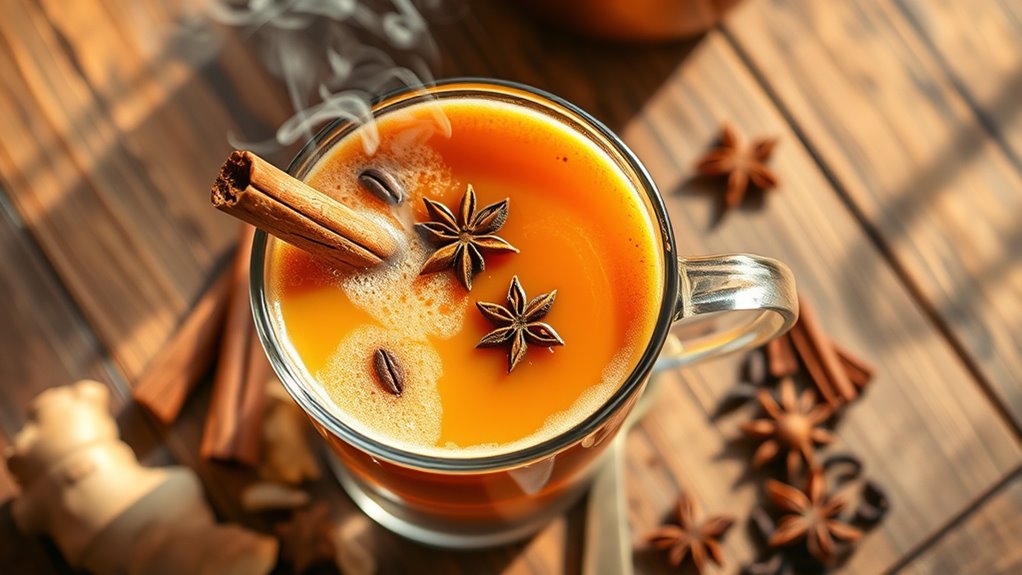

Masala chai is a flavorful, spice-infused tea with roots in ancient trade routes connecting India, Persia, and China. Colonial influence popularized its mix of spices like cinnamon, cardamom, and ginger, creating regional variations across India. Today, you can enjoy modern twists like plant-based milks or herbal infusions, making it a global favorite. If you want to understand how this comforting beverage evolved and what makes it special, there’s more to explore below.
Key Takeaways
- Masala chai is a traditional Indian spiced tea with origins from ancient trade routes and colonial influence.
- Key spices like cinnamon, cardamom, ginger, and cloves define its flavor and regional variations.
- It is prepared by boiling spices, tea leaves, water, and milk, with modern innovations like alternative milks and herbal infusions.
- Globally popular, masala chai is adapted into fusion drinks, including iced, vegan, and herbal versions.
- Rich in antioxidants and digestive benefits, it continues to evolve with new flavor combinations and health-conscious trends.
Origins and Historical Roots of Masala Chai

Masala chai has a rich history rooted in Indian tradition, where it has been enjoyed for centuries. Its origins trace back to ancient trade routes that connected India with Persia, China, and Southeast Asia, spreading spices and tea across regions. The arrival of tea in India was influenced by colonial powers, especially the British, who popularized drinking tea with added spices to suit local tastes. This colonial influence shaped masala chai into the flavorful beverage we recognize today. Over time, Indians blended their own spices and methods, creating a unique tradition that combines trade history and colonial legacy. The development of modern chai also reflects culinary innovations in spice blending and brewing techniques. Additionally, the colonial legacy played a significant role in popularizing tea consumption in India, which later evolved into the beloved masala chai. Today, masala chai stands as a symbol of cultural exchange, blending ancient spice trade with colonial-era adaptations to form a beloved, centuries-old beverage. The regional variations across India highlight how local ingredients and tastes have further personalized this timeless drink.
Key Ingredients and Their Significance
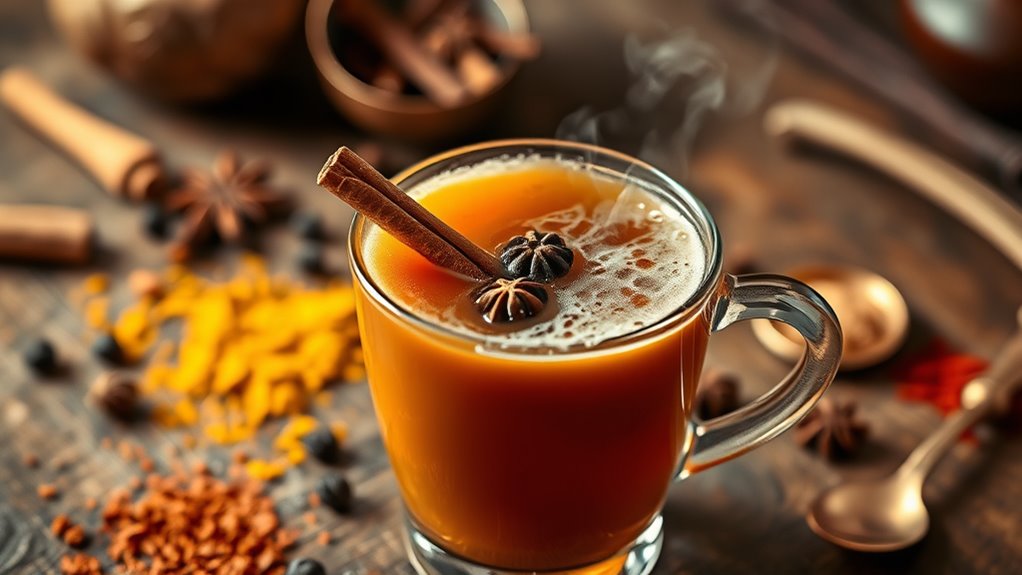
The rich history of masala chai is reflected in its carefully selected ingredients, each contributing unique flavors and cultural significance. The spice combinations, like cinnamon, cardamom, ginger, and cloves, create a complex aroma and taste that define the beverage. Cinnamon adds warmth and sweetness, while cardamom introduces a fragrant, slightly citrusy note. Ginger provides a spicy kick and aids digestion, and cloves bring a pungent depth. Each ingredient holds significance beyond flavor, representing regional traditions and health benefits. For example, pediatric sleep specialists can offer guidance on establishing healthy routines for infants. The traditional methods of preparing chai also highlight regional variations and cultural practices that have been passed down through generations. Additionally, understanding the spice blending techniques used in different regions enhances appreciation of the beverage’s diversity. The aroma of chai is often as important as its taste, contributing to the overall sensory experience. Recognizing the importance of attention in the creative process can deepen your appreciation for crafting a balanced and harmonious chai. Together, these spices form a harmonious blend that balances sweetness, heat, and aroma. Your choice of ingredients shapes the chai’s character, making it a truly personalized and culturally rich beverage. Understanding their significance helps you appreciate the depth behind each sip.
The Traditional Preparation Process

Preparing authentic masala chai involves a careful process that highlights the richness of its spices and flavors. You start by blending spices like cardamom, cinnamon, and ginger to create a balanced mixture. Next, you combine water, milk, tea leaves, and your spice blend in a saucepan. Bring everything to a gentle boil, allowing the flavors to infuse through tea brewing. This step is vital for developing the aromatic profile that makes masala chai unique. Stir occasionally, guaranteeing the spices and tea meld perfectly. Here’s a quick overview of the process:
| Step | Description |
|---|---|
| Spice Blending | Mix spices to enhance aroma and flavor |
| Tea Brewing | Boil with milk and water to extract flavors |
| Straining | Remove solids before serving |
This method guarantees a rich, flavorful cup every time. Understanding the traditional preparation process] can help you craft authentic chai every time.
Cultural Variations and Regional Flavors
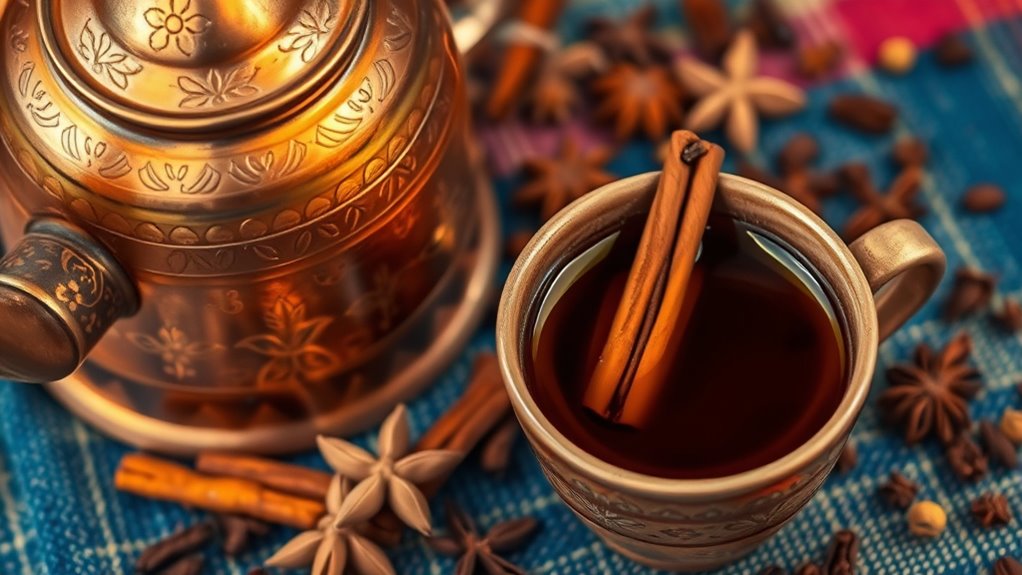
Across India and beyond, regional ingredients and traditions give masala chai distinct flavors that reflect local tastes and cultures. In different areas, you’ll find variations that highlight unique regional spices and cultural customs. For example:
- In northern India, cardamom and ginger dominate, offering a warm, aromatic brew.
- In southern regions, coconut milk and pepper add a tropical twist.
- In Kashmir, saffron and almonds create a luxurious, fragrant chai.
- In parts of Bengal, a hint of cloves and cinnamon showcases local spice blends.
These regional spices and customs influence how you prepare and enjoy masala chai, making each cup a reflection of local heritage and tradition. The diversity highlights how cultural influences shape this beloved beverage uniquely across regions.
Modern Adaptations and Popularity Worldwide
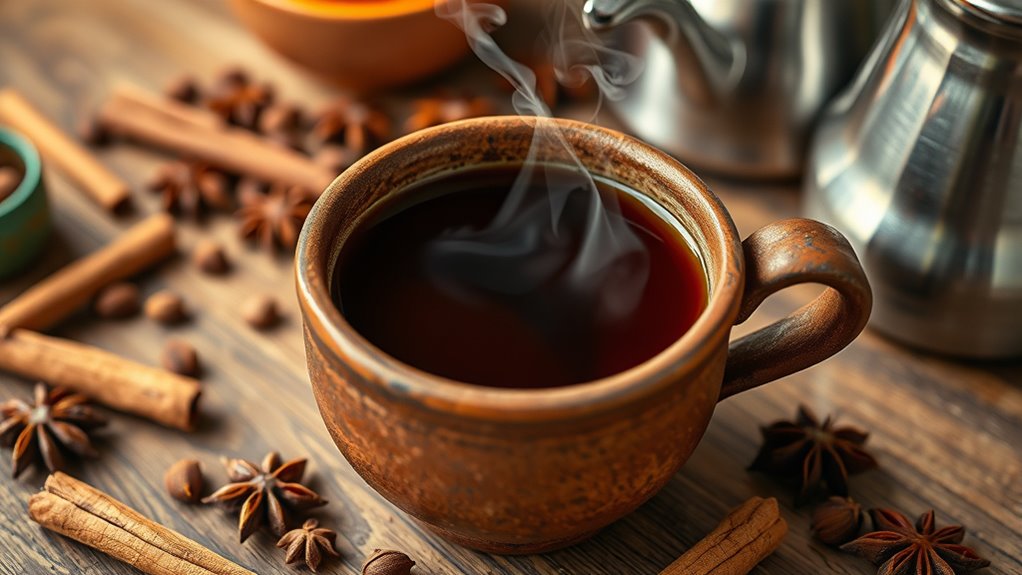
You’ll notice that masala chai has become a favorite in global tea cultures, often adapted to local tastes. Fusion variations, like iced or vegan versions, are gaining popularity everywhere. People also recognize its health benefits, boosting its appeal beyond traditional settings. Additionally, its rich blend of spices has been linked to health benefits, increasing its global appeal.
Global Tea Culture Adoption
As global interest in diverse tea traditions grows, masala chai has gained remarkable popularity beyond India’s borders. You’ll notice cafes and tea shops worldwide serving it with unique twists. People are embracing different tea etiquette, from sipping slowly to pairing it with snacks. Brewing techniques vary, with some using a quick steep, others simmering spices longer for a richer flavor. Additionally, the incorporation of multi-functional furniture and versatile brewing methods reflects the creative adaptations of traditional recipes in modern settings. Furthermore, this tea’s popularity worldwide has inspired innovative presentation styles, blending cultural influences to appeal to a broad audience. For example, contemporary cafes often incorporate modern kitchen appliances to streamline the brewing process and enhance flavor extraction. The adoption of advanced fraud detection techniques in payment systems exemplifies how technology continues to evolve, ensuring secure and efficient transactions. This evolving landscape demonstrates how traditional beverages adapt to modern lifestyles, making them more accessible and appealing globally.
Fusion Variations Emerge
Modern adaptations of masala chai have fueled its global popularity by blending traditional flavors with local ingredients. As a result, you’ll find innovative spice blends that cater to different tastes, from vanilla-infused to citrus-enhanced versions. These fusion variations often utilize unique tea accessories, like specialty teapots or infusers, making brewing more convenient and stylish. Baristas and home brewers experiment with different spice combinations, creating new flavor profiles that appeal to a diverse audience. This adaptability helps masala chai transcend cultural boundaries, making it a versatile beverage worldwide. Whether served at trendy cafes or prepared at home, these fusion variations keep the tradition fresh and exciting, inviting more people to enjoy the rich, aromatic experience of spice-infused tea.
Health Benefits Recognized
The growing popularity of fusion variations has introduced more people to the health benefits associated with masala chai. This flavorful beverage can boost your immune system and provide stress relief. When you sip on masala chai, you’re consuming spices like ginger, cardamom, and cinnamon, known for their antioxidant properties. These ingredients help strengthen your immune system, making it easier to fight off illnesses. Additionally, the warm, aromatic blend can calm your nerves and reduce stress. Here are some key benefits: 1. Immune boost from antioxidants and anti-inflammatory spices 2. Stress relief through the calming aroma and flavors 3. Improved digestion from ginger and cardamom 4. Enhanced alertness with moderate caffeine levels. Incorporating antioxidants through ingredients like cinnamon and ginger can further amplify these health benefits. Understanding home security system costs can help you make informed decisions when choosing safety solutions for your home. Exploring the nutritional profile of masala chai can deepen your appreciation of its health advantages. Furthermore, the cultural significance of masala chai highlights its role in social and traditional settings worldwide. Preparing masala chai with fresh spices can maximize its flavor and health benefits, making each cup both delicious and nourishing. Enjoying masala chai offers both comfort and health perks worldwide.
How Masala Chai Continues to Evolve

You’ll notice that masala chai keeps evolving with new flavor combinations and creative twists. Modern trends bring in ingredients like matcha, turmeric, or even herbal infusions, transforming the classic brew. This ongoing innovation keeps chai exciting and relevant for everyone. Additionally, experimenting with tea storage techniques and understanding health effects can enhance the overall experience of enjoying this beloved beverage. Proper storage methods can preserve flavor profiles and extend the freshness of the spices and tea leaves used. As new flavor profiles develop, enthusiasts continue to explore innovative ways to enjoy chai beyond traditional methods. Incorporating innovative storage solutions can also help maintain the quality of ingredients, ensuring each cup remains flavorful and aromatic. Furthermore, understanding juice cleansing benefits can inspire new ways to enjoy the health-boosting aspects of chai with added functional ingredients.
Fusion of Flavors Over Time
As global influences continue to blend with traditional Indian flavors, masala chai has evolved into a dynamic fusion of tastes. You’ll notice new spice blending techniques and innovative tea pairing options that reflect this evolution. Modern variations often combine traditional spices like cardamom and cinnamon with unexpected ingredients such as vanilla or ginger. This creates a richer, more complex flavor profile. To visualize this, consider:
- Infusing chai with exotic spices like star anise or saffron
- Pairing it with desserts such as spiced cookies or cakes
- Experimenting with alternative milk options like almond or coconut
- Introducing international herbs like mint or lemongrass for a fresh twist
These trends showcase how masala chai continues to adapt, blending new flavors while honoring its roots.
Modern Variations and Trends
Modern variations of masala chai showcase how this traditional beverage continues to adapt to contemporary tastes and global influences. Today, you’ll find innovative tea brewing techniques, like cold brew or using alternative milks, which add new dimensions to the classic drink. Chefs experiment with spice combinations, blending traditional ingredients with unexpected flavors such as vanilla, cardamom, or even turmeric. These trends make masala chai versatile, appealing to a wider audience while respecting its roots. Some cafes serve spiced chai lattes, while others create herbal or fruit-infused versions. This evolution reflects how you, as a tea lover, can personalize your experience—playing with spice blends and brewing methods to craft a cup that suits your preferences. Additionally, Vetted options for high-quality teas and spices ensure that each sip maintains authenticity and flavor integrity. Masala chai continues to evolve, blending tradition with modern creativity.
Frequently Asked Questions
What Are the Health Benefits of Drinking Masala Chai?
When you drink masala chai, you enjoy several health benefits. Its antioxidant properties help protect your cells from damage, boosting your immune system. Additionally, the spices in masala chai support digestive health by reducing inflammation and easing digestion. The warm, soothing nature of the tea can also help relieve stress. Incorporating masala chai into your routine offers a delicious way to enhance your overall wellness naturally.
Can Masala Chai Be Made With Herbal or Non-Caffeinated Ingredients?
You might think masala chai can’t be made without traditional spices or caffeine, but you’re wrong. Herbal substitutions offer a caffeine-free option, letting you enjoy a warm, flavorful beverage without the jitters. You can use herbs like rooibos, chamomile, or peppermint, combined with spices like cinnamon or ginger. So, yes, you can create delicious, caffeine-free, herbal versions of masala chai that suit your taste and health needs.
How Long Does Homemade Masala Chai Stay Fresh?
You wonder how long homemade masala chai stays fresh. Typically, it lasts about 24 to 48 hours if you store it properly. Keep it in an airtight container in the fridge, which helps extend its storage duration. For best flavor, consume within this timeframe and reheat gently before drinking. Refrigeration tips like avoiding exposure to air and keeping it cold guarantee your chai stays fresh and flavorful longer.
Are There Any Traditional Customs Associated With Serving Masala Chai?
When serving masala chai, you follow specific tea etiquette and serving rituals rooted in tradition. You often offer it with both hands, symbolizing respect, and serve it in small cups or glasses. It’s customary to serve it to guests first, emphasizing hospitality. You might also add a pinch of spice as a final touch. These customs enhance the warm, communal experience, honoring the rich cultural heritage behind this beloved spiced tea.
What Are Some Popular Accompaniments or Snacks Served With Masala Chai?
Sure, because what’s more exciting than pairing your fancy chai with snacks that scream “I’m sophisticated”? You might indulge in crispy samosas, buttery biscuits, or sweet gulab jamuns—perfect for snack pairings. For dessert options, think of flaky pastries or rich, syrup-soaked treats. These accompaniments elevate your chai experience, turning a simple cup into a delightful feast, because who said snacks can’t be as spicy and flavorful as the tea itself?
Conclusion
As you sip your masala chai, imagine it as a warm tapestry woven with centuries of tradition and flavor. Its rich spices and comforting aroma invite you into a global circle of tea lovers, each adding their own thread. This beloved beverage continues to evolve, blending history with innovation. Embrace each cup as a journey through time and taste, where every sip connects you to a vibrant world of spice, culture, and shared warmth.