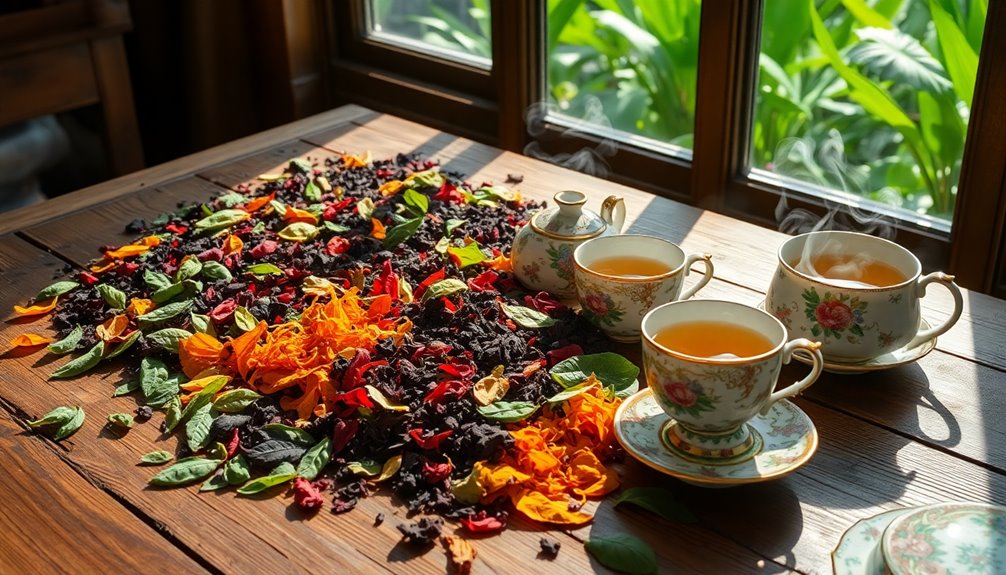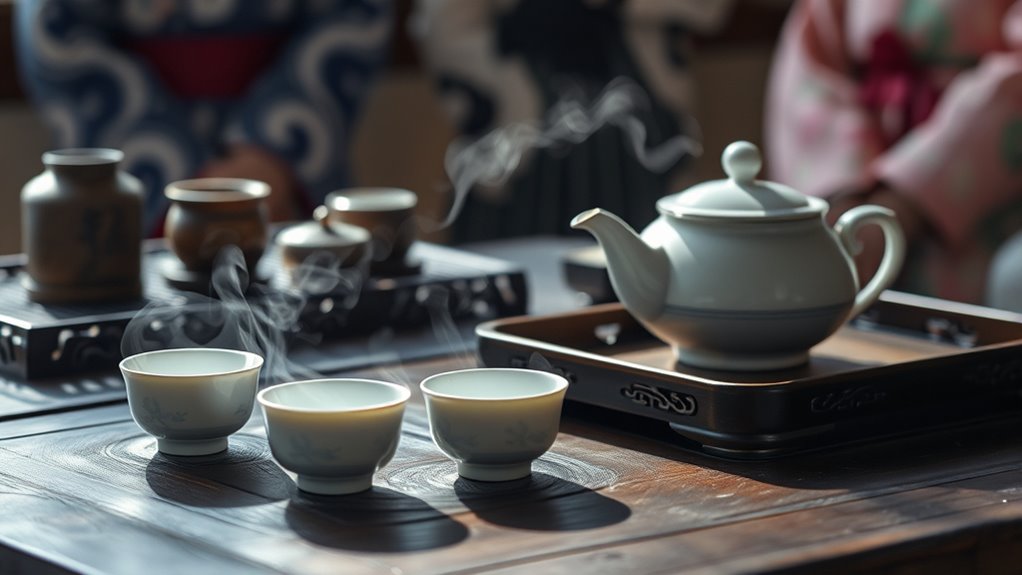

Korean tea traditions, like the gentle Darye ceremony, emphasize mindfulness, respect, and harmony in every step. You’re encouraged to approach tea with patience, care, and awareness, transforming simple brewing into a meditative practice that promotes well-being. Beyond formal rituals, tea is part of daily life, fostering connection and inner peace. If you want to explore how these traditions shape Korea’s holistic view of health and culture, there’s more to discover.
Key Takeaways
- Darye is Korea’s traditional tea ceremony emphasizing mindfulness, respect, and harmony in tea preparation and consumption.
- Beyond Darye, Korean tea culture includes informal daily practices like visiting tea houses and home brewing rituals.
- Herbal infusions are integral, valued for their health benefits and crafted through precise, patient brewing techniques.
- The tradition reflects Korea’s holistic philosophy, promoting inner peace, balance, and respectful appreciation of nature.
- Korean tea rituals embody cultural values of serenity, mindfulness, and connecting with others through shared tea experiences.
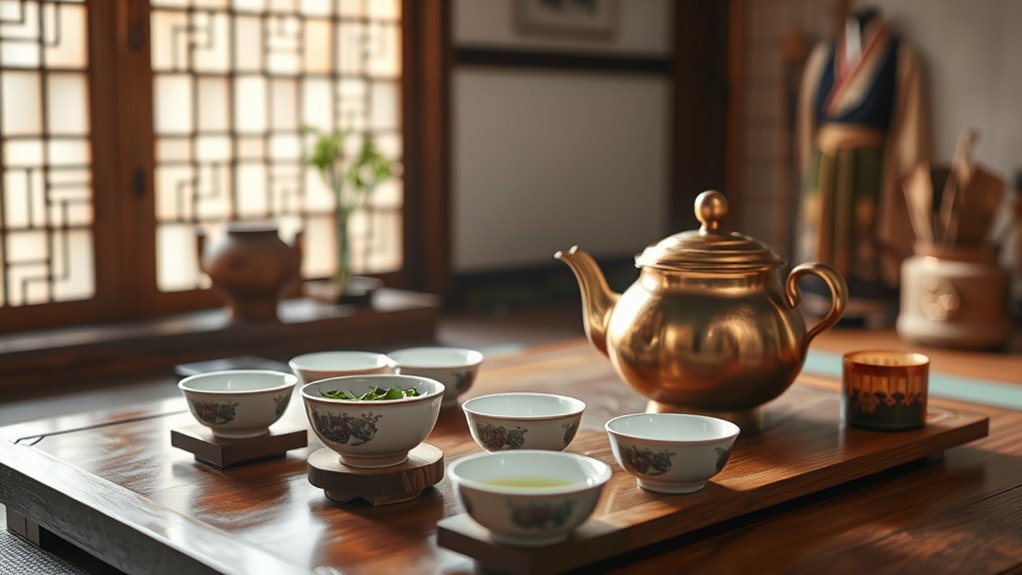
Korean tea traditions have deep roots that reflect the country’s history, philosophy, and appreciation for harmony. When you participate in a traditional tea ceremony, you’re engaging in more than just drinking tea; you’re embracing a cultural ritual that emphasizes mindfulness, respect, and balance. These ceremonies are often simple yet profound, focusing on the process of preparing and drinking tea with deliberate care. In Korea, the tea ceremony isn’t just about taste—it’s about creating a moment of tranquility and connection, whether shared with others or enjoyed in solitude. During the ceremony, you might observe the gentle handling of teaware, the precise steps of brewing, and the slow, mindful sipping that encourages you to be present. Green teas are commonly used, but herbal infusions also hold a special place, offering a variety of flavors and health benefits. You might find yourself sipping calming chamomile, invigorating ginseng, or fragrant, medicinal herbs—each infusion chosen for its harmony with the season or the mood you wish to cultivate. These herbal infusions are believed to promote well-being, aligning with Korea’s holistic approach to health and balance. Additionally, the preparation of herbal infusions often involves precise brewing techniques that maximize their medicinal properties and flavors.
Beyond the formalities of the tea ceremony, Korean tea traditions also include a rich history of herbal infusions that date back centuries. People have long appreciated herbal teas not only for their flavors but for their medicinal properties. You may discover that Koreans often combine herbs to create personalized blends, tailored to soothe digestion, boost energy, or calm the mind. These infusions are typically prepared with patience, allowing the herbs to release their essence fully. Whether enjoyed in a traditional setting or at home, herbal infusions embody the Korean philosophy of harmony between nature and human life. They serve as a reminder to respect the natural world and to find serenity in simple acts.
While tea ceremonies are a significant part of Korea’s cultural heritage, the broader tea culture extends to everyday life. You might find yourself visiting tea houses that celebrate traditional brewing methods, or preparing herbal infusions at home as part of your daily routine. The emphasis remains on mindfulness, appreciation, and creating a moment of peace amidst busy modern life. In all these practices, Korean tea traditions offer you a way to slow down, reflect, and connect—values that continue to resonate deeply within Korean society and beyond.
Frequently Asked Questions
How Did Korean Tea Culture Originate Historically?
You might find that Korean tea culture originated from ancient historical origins influenced by Chinese Buddhism and Confucianism. These cultural influences introduced tea as a ceremonial and social practice, emphasizing harmony, respect, and tranquility. Over time, tea drinking evolved into unique traditions like Darye, reflecting Korea’s rich cultural heritage. Today, you can experience this blend of history and culture through Korean tea ceremonies that honor these longstanding roots.
What Are the Health Benefits of Traditional Korean Teas?
You’ll benefit from traditional Korean teas through their herbal infusions, which promote overall health. These teas are rich in antioxidants, helping boost your immune system and fight free radicals. They can improve digestion, reduce stress, and enhance your skin’s health. Drinking these teas regularly offers natural health benefits, making them a delightful way to support your wellness while enjoying their unique flavors and calming qualities.
How Is Tea Prepared Differently Across Korean Regions?
You’ll notice regional flavors and brewing variations across Korea when preparing tea. In Jeju, you might steep green tea leaves gently to preserve subtle flavors, while in Gyeongju, you could brew barley tea with a longer, slower process for a richer taste. Each region adapts its techniques, reflecting local ingredients and traditions, giving you a unique experience with every cup.
Are There Specific Etiquette Rules for Tea Drinking in Korea?
Imagine you’re offered tea during a Korean social gathering; you should follow specific tea serving etiquette to show respect. For example, always pour tea for others before yourself, and use both hands when holding the cup. These social customs highlight politeness and humility in Korean culture. Paying attention to these etiquette rules helps you connect better and demonstrates your appreciation for Korean traditions.
How Has Modernization Influenced Contemporary Korean Tea Practices?
Modernization has markedly impacted Korean tea practices, leading to new tea consumption trends that blend tradition with innovation. You now see more convenience-focused tea options, such as bottled or powdered teas, alongside traditional ceremonies. This shift encourages a more casual approach, but many still honor the core etiquette. Overall, modernization influences how you enjoy tea by making it more accessible while gradually evolving cultural practices.
Conclusion
As you immerse yourself in Korean tea traditions like darye and beyond, you’ll discover a world where every sip elevates your soul to heights of serenity and grace. These customs aren’t just rituals—they’re gateways to timeless elegance and profound inner peace. Embrace these practices, and you’ll uncover a secret universe where tranquility reigns supreme, transforming your everyday moments into extraordinary celebrations of harmony. Truly, Korean tea traditions are the ultimate key to mastering life’s most exquisite serenity.

Noah, the Editor-in-Chief at Cappuccino Oracle, plays a pivotal role in shaping the voice and vision of our renowned platform. With an unwavering passion for coffee, coffee alternatives, and tea, Noah leads Cappuccino Oracle towards new horizons in the realm of coffee journalism.
Noah’s upbringing immersed him in the distinct aromas of artisanal coffee roasters, sparking a fascination that continues to fuel his professional journey. He joined Cappuccino Oracle as a senior editor and later assumed the position of Editor-in-Chief. Under his guidance, our platform has flourished into a trusted source for coffee, coffee alternatives, and tea lovers worldwide.