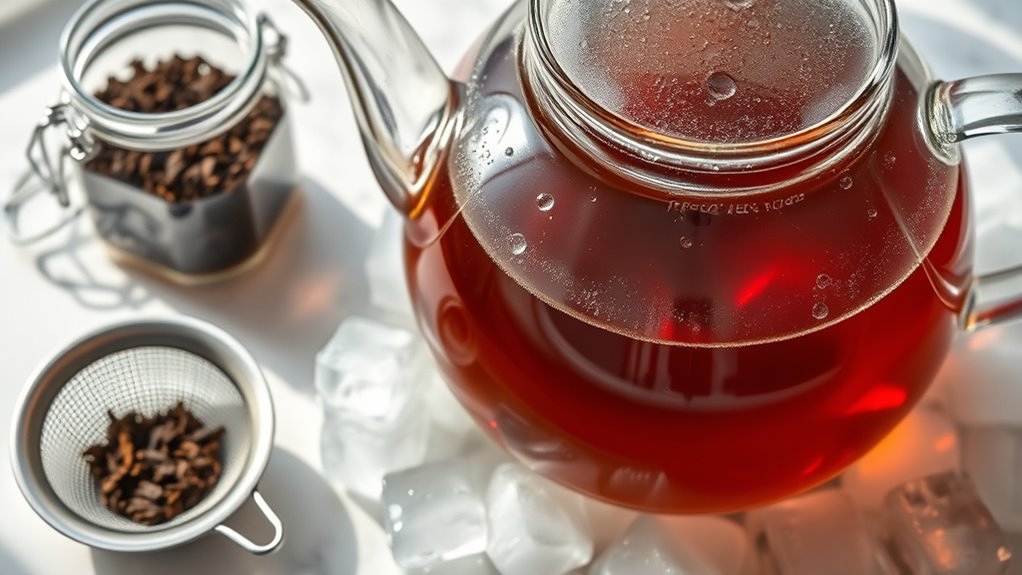
To cold-brew tea, place your tea leaves or bags in a jar or pitcher filled with cold, filtered water, using about one teaspoon per cup. Cover and refrigerate for 8-12 hours, preferably overnight, to extract flavors gradually and reduce bitterness. Make sure to use fresh water, clean containers, and remove the tea after steeping. Brewed tea stays good for 24-48 hours, and exploring different teas can reveal your favorite flavor profiles. Keep reading to discover more tips for safe and flavorful cold-brewing.
Key Takeaways
- Use clean, filtered water and sanitized containers to ensure safety during cold brewing.
- Steep tea in the refrigerator for 4-12 hours, preferably overnight, to prevent bacterial growth.
- Remove tea leaves or bags promptly after steeping to avoid over-extraction and spoilage.
- Consume brewed tea within 24-48 hours and keep refrigerated to maintain freshness and safety.
- Follow proper ratios and equipment guidelines to prevent contamination and ensure optimal flavor.
Have you ever wondered how to enjoy an invigorating cup of tea without the bitterness or strong flavor often associated with traditional brewing? Cold-brewing tea offers a smooth, nuanced alternative, highlighting delicate tea flavor profiles that can be overshadowed by hot water extraction. Instead of steeping hot, you’ll use cold water, which gently extracts flavors over time, resulting in a refreshing beverage with less bitterness and a more subtle taste. To get started, it’s essential to select the right brewing equipment—typically a jar, pitcher, or specialized cold brew tea steeper—that ensures proper infusion and easy filtration. Using the correct equipment helps control the steeping process, prevent contamination, and make cleanup straightforward. Additionally, incorporating AI-powered devices can optimize your brewing process by maintaining precise temperatures and timings for different tea types.
When it comes to tea flavor profiles, cold-brewing really shines. Because the infusion occurs at a lower temperature, it brings out sweeter, fruitier, and more floral notes, rather than the astringency or bitterness often found in hot-brewed tea. This method is particularly effective with green, white, and oolong teas, which tend to develop more nuanced flavors through cold extraction. You might find that your favorite tea tastes softer and more complex, with a natural sweetness that requires no added sugar. The key is to experiment with different types of tea to discover which profiles you prefer when brewed cold, as each variety responds uniquely to this method.
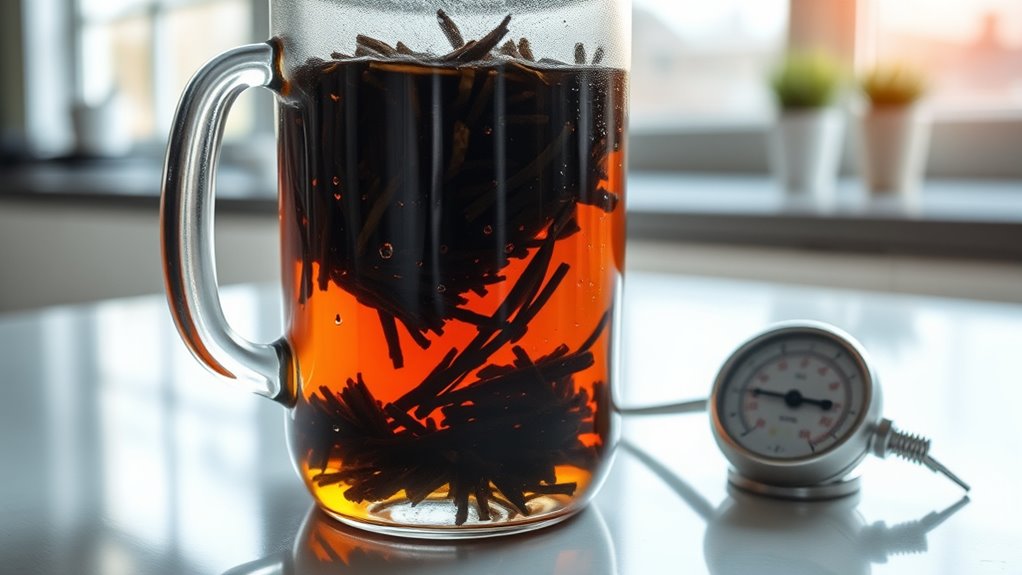
The process is simple but requires some patience. Start by placing your chosen tea leaves or tea bags into your brewing equipment, then add cold, filtered water. The water-to-tea ratio depends on your taste preference, but a common starting point is one teaspoon of loose leaf tea per cup of water. Cover the container and let it steep in the refrigerator for at least four hours, though many prefer to steep overnight—around 8 to 12 hours—for a more developed flavor. During this time, the cold water gradually extracts the tea’s essence, maintaining the integrity of delicate compounds that hot brewing might destroy or overpower.
Safety is also an important consideration. Cold-brewing reduces the risk of over-extraction, which can cause bitterness, but it’s vital to keep your brewing equipment clean to prevent bacterial growth. Use fresh, filtered water and wash all containers thoroughly before use. Once steeped, strain out the tea leaves or remove the tea bags, and refrigerate the brewed tea if not consumed immediately. It’s best to enjoy your cold-brewed tea within 24 to 48 hours to guarantee freshness and safety. Proper storage, combined with good hygiene and quality ingredients, guarantees a delicious, safe, and satisfying cold tea experience every time.
Frequently Asked Questions
Can Cold-Brew Tea Be Stored for Longer Than a Week?
You can store cold-brew tea for longer than a week if you follow proper tea storage and refrigeration tips. Keep it in an airtight container in the fridge, ideally within 3 to 5 days for maximum freshness. If you notice any off smells or signs of spoilage, discard it. Proper storage prevents bacteria growth and preserves flavor, so always check your cold-brew tea before drinking if stored beyond a week.
Does Cold Brewing Affect the Caffeine Content in Tea?
A stitch in time saves nine. Cold brewing does affect caffeine content, but not drastically. Because caffeine extraction depends on brewing temperature, cold brewing extracts less caffeine than hot brewing, making your tea milder. However, over time, some caffeine still dissolves into the brew. So, if you’re watching your caffeine intake, remember that cold brewing results in a gentler, less caffeinated tea, but it’s not caffeine-free.
Are There Any Specific Tea Types Best Suited for Cold Brewing?
You’ll find that herbal varieties and green teas are especially great for cold brewing. Herbal teas, like chamomile or mint, steep well without becoming bitter, offering a invigorating flavor. Green teas also work nicely, but they need a shorter steep time to avoid bitterness. Cold brewing these types enhances their natural flavors and provides a smooth, mellow taste that’s perfect for hot days or anytime you want a cool, flavorful drink.
How Can I Prevent Mold Growth During Cold Brewing?
To prevent mold growth during cold brewing, you should regularly clean your brewing container and avoid leaving tea out for too long. Use a clean, airtight brewing container and store it in the refrigerator to inhibit mold development. Additionally, don’t brew for more than 12-24 hours. These steps help guarantee mold prevention, keeping your cold-brewed tea safe and fresh.
Is Cold-Brewed Tea Suitable for Children or Pregnant Women?
Imagine a gentle, calming breeze—cold-brewed tea can be safe for children and pregnant women when prepared properly. However, you should consider children’s safety and pregnancy considerations carefully. Avoid giving them high-caffeine or herbal teas with unknown effects. Always consult your healthcare provider before introducing cold-brewed tea into their diets. Moderation and vigilance guarantee everyone can enjoy a soothing sip without worry.
Conclusion
Now that you know the basics of cold-brewing tea, you’re ready to create crisp, cool, and flavorful infusions at home. Just follow simple steps, stay safe, and savor the subtle sweetness of your steeped tea. With patience and practice, you’ll perfect your preferred profile. So, start, sip, and enjoy your serene, soothing, and satisfying cold-brewed tea adventure—because delightful drinks are just a cold soak away!

Noah, the Editor-in-Chief at Cappuccino Oracle, plays a pivotal role in shaping the voice and vision of our renowned platform. With an unwavering passion for coffee, coffee alternatives, and tea, Noah leads Cappuccino Oracle towards new horizons in the realm of coffee journalism.
Noah’s upbringing immersed him in the distinct aromas of artisanal coffee roasters, sparking a fascination that continues to fuel his professional journey. He joined Cappuccino Oracle as a senior editor and later assumed the position of Editor-in-Chief. Under his guidance, our platform has flourished into a trusted source for coffee, coffee alternatives, and tea lovers worldwide.