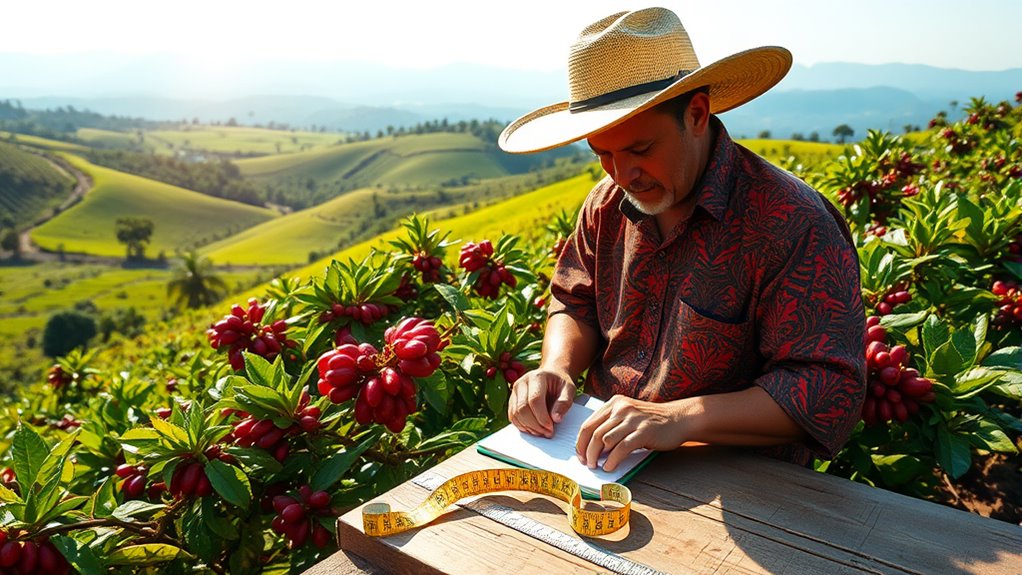

A living income in coffee means farmers earn enough to cover sustainable farming costs, support their families, and live with dignity, not just survive. It’s calculated by considering all farm expenses—labor, inputs, land maintenance—and now also accounts for local living costs. Fair trade certifications help guarantee farmers receive fair prices that meet these needs. To discover how this process works and why it matters, keep exploring how fair practices can shape a better future for farmers.
Key Takeaways
- A living income covers all farming costs, family needs, and land investments, ensuring farmers can sustain their livelihoods.
- It is calculated by assessing total expenses, including labor, inputs, land maintenance, and local living costs.
- Fair trade certification helps ensure farmers receive a price that covers these costs and provides economic stability.
- Traditional market prices often fall short of covering a living income, highlighting the need for fair trade practices.
- Achieving a living income promotes dignity, sustainability, and resilience for coffee farmers and their communities.

Have you ever wondered whether coffee farmers can earn a living income from their work? It’s a common question in the world of coffee, especially as consumers become more conscious about how their favorite brew is produced. The truth is, many farmers struggle to make ends meet, despite the hard work they put into cultivating high-quality beans. Achieving a living income isn’t just about earning enough money to survive; it’s about earning enough to cover the costs of sustainable farming practices, invest in their land, and support their families with dignity. This is where fair trade certification plays a crucial role. Fair trade standards ensure that farmers receive a fair price for their coffee, which helps cover the true costs of production, including sustainable farming practices that protect the environment and improve soil health. When farmers adopt sustainable farming methods, they often incur higher costs upfront, but these practices lead to healthier land and better yields over time. Fair trade certification helps bridge the gap by guaranteeing a minimum price for their coffee, providing a safety net when market prices drop, and ensuring that farmers aren’t exploited by unfair trading practices.
Moreover, a comprehensive approach to cost calculation considers the full scope of expenses involved in farming, helping to determine what constitutes a truly living income. Calculating a living income takes into account many factors beyond just the selling price of coffee. It considers the actual costs farmers face—such as labor, inputs, land maintenance, and community needs—and how much money they need to cover these expenses comfortably. It also factors in the local cost of living, which can vary greatly from one region to another. For many farmers, this calculation reveals that even when they sell their coffee at market prices, they don’t earn enough to meet these basic needs. That’s why fair trade certification and sustainable farming are so vital—they help ensure that the income farmers receive is fair and sufficient to support a decent quality of life.
In essence, a living income in coffee isn’t just about a higher price at the market; it’s about creating a system where farmers are empowered to thrive, not just survive. By promoting sustainable farming methods and ensuring fair trade practices, the industry can move closer to this goal. When consumers choose coffee with fair trade certification, they’re supporting a more equitable and sustainable future for coffee farmers. This helps build resilient communities where farmers can invest in their land, provide for their families, and continue producing the high-quality coffee we all enjoy.
coffee farm sustainability tools
As an affiliate, we earn on qualifying purchases.
As an affiliate, we earn on qualifying purchases.
Frequently Asked Questions
How Does Climate Change Affect Living Income Calculations for Coffee Farmers?
Climate change impacts your coffee farming by making climate adaptation essential for maintaining crop resilience. As weather patterns become unpredictable, you face higher costs for adapting practices, which can lower your income. These challenges reduce your yields and increase expenses, ultimately affecting your ability to earn a living income. To stay afloat, you need strategies that boost crop resilience and help you adapt to changing climate conditions effectively.
What Role Do Government Policies Play in Establishing a Living Income?
Government policies influence your living income by shaping market conditions, providing subsidies, or setting fair trade standards. These policies affect the economic impact on coffee farmers, either boosting income through support programs or hindering it with restrictions. When governments prioritize sustainable practices and fair wages, they help secure your livelihood, ensuring farmers receive a fair income. Your success depends on how effectively policies support equitable economic growth in the coffee sector.
How Can Consumers Support Farmers in Achieving a Living Income?
You can support farmers by choosing Fair Trade coffee, advocating for direct purchase agreements, and spreading awareness about fair practices. When you buy Fair Trade, you guarantee fair wages and better living conditions. Supporting direct purchase connects you directly with farmers, cutting out middlemen and increasing their income. By making these conscious choices, you help farmers achieve a living income, fostering sustainability, fairness, and dignity in coffee production.
Are Living Income Standards Consistent Across Different Coffee-Producing Countries?
You’ll find that living income standards vary across coffee-producing countries due to income disparities and cultural differences. These factors influence what’s considered a decent living, making standards inconsistent. While some regions prioritize certain expenses over others, you should recognize that local economic conditions and cultural norms shape these differences. Supporting fair trade practices helps address these disparities, ensuring farmers receive a living income tailored to their specific context.
What Are the Main Challenges in Accurately Measuring a Living Income?
Think of measuring a living income as trying to capture a flowing river’s true depth. You face challenges like income variability, which shifts with seasons and market prices, making it hard to pin down an accurate figure. Data reliability is another hurdle; inconsistent or incomplete data clouds the picture. These factors make it tough to measure a living income precisely, but understanding them helps you improve data collection and analysis.
Conclusion
Think of a living income in coffee as a sturdy bridge that connects farmers’ hard work to a fair, sustainable future. When you understand how it’s calculated, you help support a system where farmers can thrive, not just survive. It’s about planting seeds of change that grow into better lives for those who nurture our daily brew. Every cup you enjoy can be a step toward closing the gap and strengthening this essential connection.