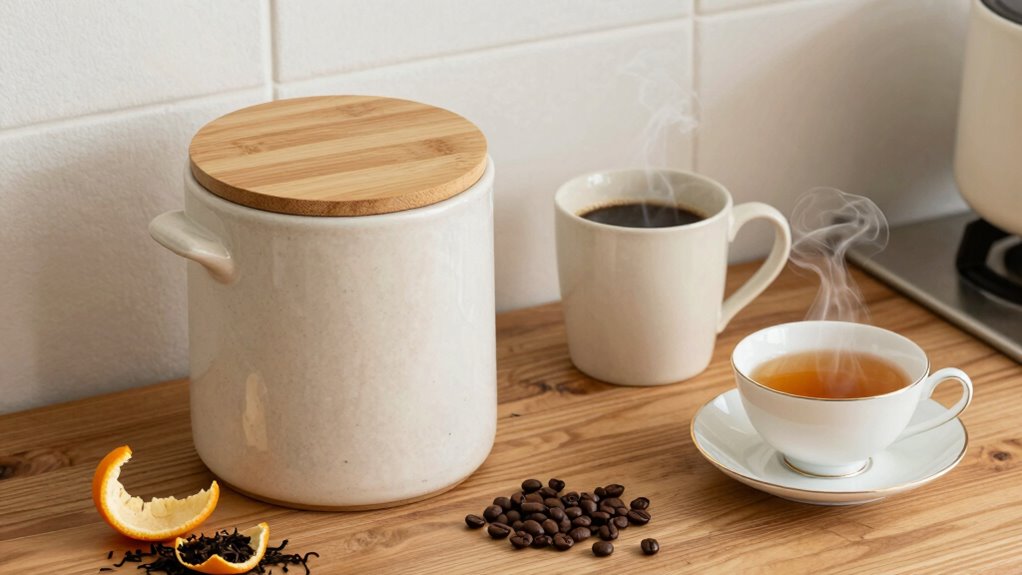

Kitchen composting fits smoothly into your coffee and tea routines by allowing you to easily toss used grounds, leaves, and filters into a dedicated compost bin. This helps you reduce waste, enrich your garden soil, and rely less on synthetic fertilizers. Making composting a daily habit keeps your waste organized and supports eco-friendly living. If you want tips on how to get started and maximize your compost’s benefits, there’s more to discover below.

Get coffee and tea gear delivered free with Prime
- Fast, free delivery on millions of items
- Prime Video, Amazon Music and more included
- Member-only deals all year
Key Takeaways
- Incorporate used coffee grounds and tea leaves directly into a dedicated kitchen compost bin daily.
- Use compostable coffee filters and tea bags to ensure all beverage waste contributes to compost.
- Keep composting as part of the morning routine by scraping scraps into the bin during breakfast prep.
- Balance compost with other kitchen scraps for nutrient-rich soil to support garden or potted plants.
- Regularly monitor and turn compost to maintain microbial activity, integrating it seamlessly into daily beverage habits.
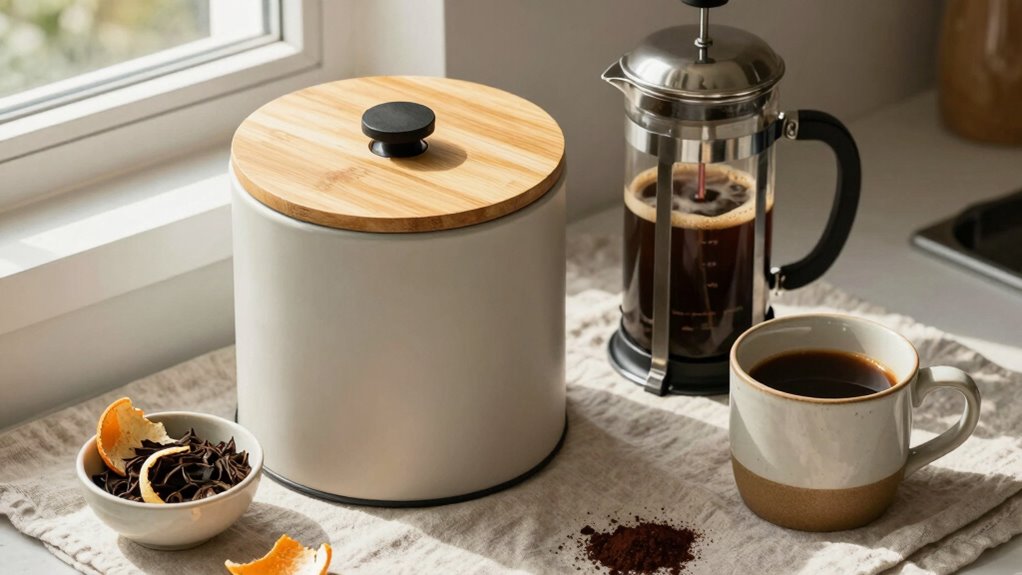
Many people overlook how their daily kitchen routines can contribute to sustainability, especially when it comes to composting and beverage habits. If you’re someone who enjoys coffee or tea regularly, you have a valuable opportunity to reduce waste and enrich your garden simultaneously. Composting kitchen scraps from your coffee and tea routines isn’t just about waste reduction; it’s about transforming what might seem like trash into a resource that benefits your garden’s health. Coffee grounds and tea leaves are rich in nitrogen, making them excellent additions to your compost pile. When you toss these used items into your compost bin, you’re helping to create nutrient-dense soil, which promotes healthy plant growth and reduces the need for synthetic fertilizers. This process turns your daily habits into a sustainable cycle that supports garden enrichment.
You might already be aware that coffee filters, tea bags, and grounds can be composted, but many overlook how simple it is to integrate this into your routine. Instead of throwing away used filters or tea leaves, keep a dedicated compost bin nearby. Every morning, as you brew your coffee or steep your tea, scrape the used grounds and leaves into the bin. Not only does this cut down on waste sent to landfills, but it also minimizes the environmental impact of your beverage habits. Over time, these organic materials decompose and become an essential component of compost, enriching the soil in your garden or potted plants. Incorporating composting fundamentals can help you optimize your compost for healthier plant growth and more efficient decomposition. Additionally, incorporating sustainable gardening practices can further enhance your efforts and create a more eco-friendly outdoor space. Understanding how organic waste breaks down in compost can also empower you to manage your compost bin more effectively.
Using microbial activity as a natural process, composting transforms organic waste into valuable soil amendments, making your efforts even more impactful. Furthermore, you can take your composting efforts further by using the enriched compost in your garden. When combined with kitchen scraps like vegetable peelings and fruit scraps, coffee grounds and tea leaves help create a balanced compost mix. This mixture enhances soil structure, improves moisture retention, and boosts nutrient availability for your plants. By making composting part of your routine, you’re actively contributing to a more sustainable lifestyle, reducing landfill contributions, and cultivating a healthier garden. It’s a simple yet crucial way to make your coffee and tea routines more eco-friendly, turning daily habits into meaningful actions for environmental stewardship. Incorporate this practice consistently, and you’ll see your garden thrive while you enjoy your favorite beverages, knowing every cup helps make your outdoor space more vibrant and sustainable.
kitchen compost bin for coffee grounds
As an affiliate, we earn on qualifying purchases.
As an affiliate, we earn on qualifying purchases.
Frequently Asked Questions
How Often Should I Empty My Kitchen Compost Bin?
You should empty your kitchen compost bin when it’s about three-quarters full to prevent odors and pests. Regular compost bin maintenance is key, so check it weekly. This helps you stay on top of kitchen waste separation and keeps your compost healthy. If you notice any leaks or smells, empty it sooner. Consistent maintenance guarantees your composting process remains efficient and odor-free.
What Are the Best Composting Methods for Small Kitchens?
Small kitchens suit simple, space-saving strategies. Use a compact composting container with a secure lid to contain kitchen scraps. Practice precise waste separation by keeping compost, recyclables, and trash distinct. Opt for countertop bins or collapsible containers that tuck away easily. These methods streamline your process, minimize mess, and maximize space, letting you turn coffee grounds and tea leaves into nourishing soil without clutter.
Can Coffee and Tea Grounds Affect Compost Quality?
Yes, coffee and tea grounds can positively affect compost quality. Coffee grounds are rich in nitrogen, which boosts compost nutrients essential for healthy plant growth. Tea grounds also add nitrogen and can improve moisture retention. However, use grounds in moderation, as too much can imbalance your compost. Incorporate them well-mixed with other organic waste to guarantee your compost remains nutrient-rich and balanced.
How Do I Prevent Odors From Kitchen Composting?
Did you know that improper odor control can make composting unpleasant and discourage regular use? To prevent odors, focus on maintaining a good carbon balance by adding browns like dry leaves or paper, which absorb moisture and odors. Guarantee your compost stays moist but not soggy, and turn it regularly to aerate. Proper balance and airflow are key to odor-free kitchen composting, keeping your space fresh and eco-friendly.
Is There a Way to Compost Coffee Filters and Tea Bags?
Yes, you can compost coffee filters and tea bags, especially if they’re biodegradable. Remove any staples or plastic parts first. Coffee grounds and tea leaves enrich your compost by adding nitrogen. Use compostable coffee filters and tea bags, and make sure they’re free of synthetic materials. This way, your coffee and tea routines contribute to healthy, nutrient-rich compost, reducing waste and supporting your garden’s growth.
Conclusion
By integrating kitchen composting into your coffee and tea routines, you become the steward of your own little eco-renaissance, echoing the timeless dance of nature’s cycles. Just as the alchemist transforms simple elements into gold, your mindful composting turns waste into nourishment, completing the circle of sustainability. Embrace this practice, and you’ll find yourself not just savoring your favorite beverages, but also nurturing the earth’s eternal rebirth—like Demeter’s eternal promise of spring.
Halloween Picks
halloween
As an affiliate, we earn on qualifying purchases.