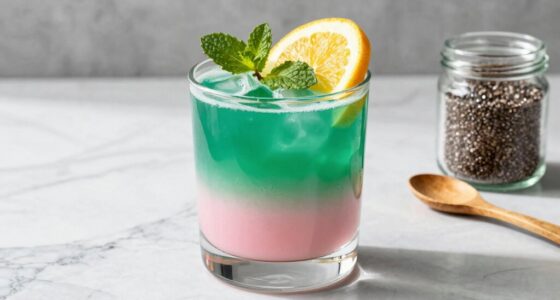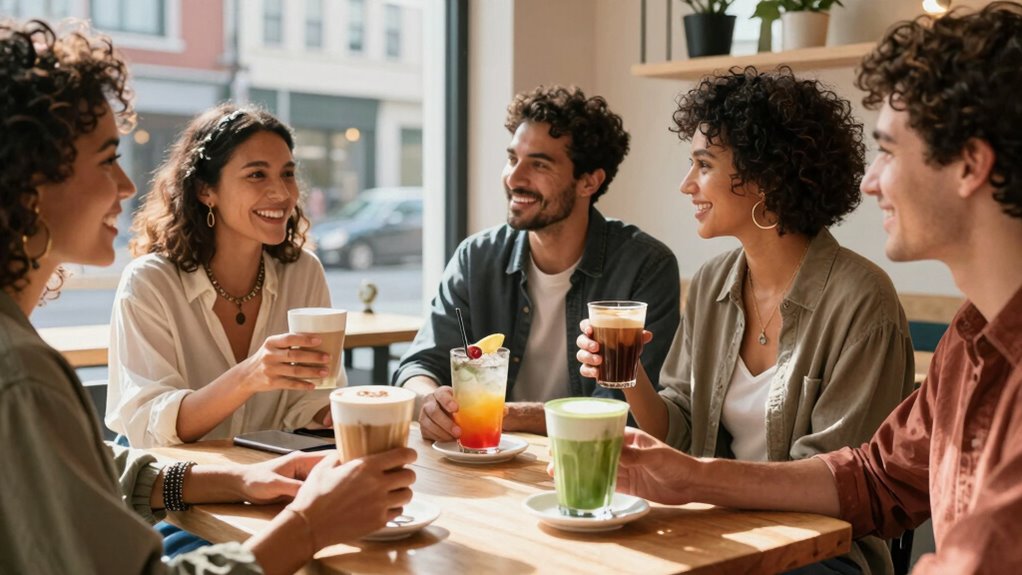

Your beverage choices reveal more about your identity, values, and social connections than you might realize. Trends like matcha lattes or craft beers show your awareness of health, culture, or artisanal quality. Preferences for plant-based drinks or eco-friendly brands reflect your lifestyle and environmental values. These choices act as social signals, expressing curiosity, sophistication, or a commitment to sustainability. If you’re curious about how these trends shape who you are, there’s more to explore ahead.

Get coffee and tea gear delivered free with Prime
- Fast, free delivery on millions of items
- Prime Video, Amazon Music and more included
- Member-only deals all year
Key Takeaways
- Beverage choices serve as symbols of personal values, cultural identity, and lifestyle preferences.
- Trends like matcha or kombucha reflect consumers’ health consciousness and cultural curiosity.
- Preferences for sustainable or artisanal drinks indicate environmental awareness and social responsibility.
- Drinking habits reveal social positioning and openness to diversity or innovation.
- Globalization expands beverage options, enabling consumers to express multicultural identities and personal exploration.

In today’s dynamic beverage landscape, consumer choices are shaping not just what we drink but how we see ourselves. Every sip you take can reflect deeper aspects of your identity, influenced by cultural influences and lifestyle choices. When you opt for a matcha latte, for example, it might signal an appreciation for health trends or a desire to connect with Japanese culture. Similarly, choosing craft beer over mainstream options can reveal your preference for artisanal quality and local craftsmanship. These decisions go beyond taste—they serve as signals of your values, beliefs, and social identity.
Cultural influences play a significant role in shaping your beverage preferences. As cultures blend and globalize, your beverage choices become a reflection of your exposure to different traditions and practices. You might reach for a turmeric latte inspired by Ayurvedic medicine or indulge in kombucha because of its roots in fermented health tonics. These preferences often serve as a way to connect with cultural narratives or showcase your openness to diverse influences. They also act as markers of your belonging to certain social groups or communities that prioritize wellness, sustainability, or innovation. Additionally, the globalization of food and drink has expanded the range of options available, making it easier to explore and adopt new cultural flavors. This cultural exchange continues to influence beverage trends and personal preferences worldwide. Furthermore, increased awareness of sustainable sourcing is shaping consumer choices toward environmentally responsible products. A deeper understanding of water efficiency in household utilities reflects broader efforts to conserve resources and reduce environmental impact.
Lifestyle choices are equally influential in defining your beverage habits. If you’re committed to a plant-based lifestyle, you’re more likely to choose dairy-free alternatives like almond or oat milk in your coffee. If you’re environmentally conscious, you might seek out brands that emphasize sustainable sourcing or eco-friendly packaging. Your beverage choices can also be a reflection of your social and professional identity. For instance, ordering a specialty coffee at a trendy café might project a sense of sophistication or a desire to stay connected with the latest trends. Conversely, opting for a simple, homemade smoothie might suggest practicality and a focus on health.
What you drink often acts as a subtle expression of your personality and social positioning. It can signal your openness to new experiences, your cultural curiosity, or your commitment to health and sustainability. As the beverage industry evolves, it mirrors broader societal shifts—whether toward health consciousness, cultural diversity, or environmental responsibility. Additionally, understanding the contrast ratio in projection technology can help create immersive home cinema experiences that reflect your personal style and preferences. Your beverage choices, then, serve as a mirror of who you are and what you value. They help you communicate aspects of your identity without words, making every drink a small yet meaningful statement about yourself.
As an affiliate, we earn on qualifying purchases.
Frequently Asked Questions
How Do Beverage Trends Influence Social Media Marketing Strategies?
Beverage trends shape your social media marketing strategies by emphasizing interactive branding, which engages audiences directly and fosters brand loyalty. You leverage influencer collaborations to amplify your message, tapping into their followers’ trust and expanding your reach. By aligning your campaigns with trending beverages, you create relevant, shareable content that resonates with consumers’ evolving preferences, making your brand more relatable and boosting engagement across platforms.
What Role Do Sustainability Practices Play in Beverage Brand Loyalty?
Think of sustainability practices as the roots of a strong tree, grounding your loyalty. When you see brands using sustainable packaging and ethical sourcing, you feel connected and trust their commitment to the planet. These actions show they value more than profits—they care about responsibility. This builds your loyalty, as you’re more likely to support brands that align with your values and protect the environment for future generations.
How Do Regional Tastes Shape Global Beverage Trends?
Regional tastes markedly shape global beverage trends by introducing unique flavors and preferences rooted in local cultures. When you explore regional flavors, you notice cultural influences driving innovations and popular products worldwide. These tastes inspire beverage companies to adapt recipes, blending traditional ingredients with modern techniques. As a result, regional preferences influence the global market, making beverages more diverse and culturally rich, helping brands connect authentically with consumers across different regions.
What Psychological Factors Drive Consumers Toward Innovative Drinks?
You’re driven by flavor psychology, seeking drinks that evoke specific emotions or memories, which makes innovative beverages appealing. Emotional branding also plays a key role, as you connect with brands that resonate with your identity or aspirations. These psychological factors influence your desire to try new flavors, pushing you toward innovative drinks that promise unique sensory experiences and emotional fulfillment, aligning with your personal values and lifestyle.
How Do Beverage Choices Reflect Generational Identity?
You embody your generation’s unique vibe through beverage choices that mirror cultural preferences and lifestyle influences. Millennials might mix health-conscious habits with craft cocktails, while Generation Z leans toward lively, liquid labels like colorful smoothies or sustainable sodas. These beverages serve as badges of belonging, showcasing shared values and social signals. Your drink decisions subtly speak about your societal stance, style, and the stories your generation seeks to tell.
Conclusion
So, next time you sip that craft kombucha or organic cold brew, remember—you’re not just drinking a beverage—you’re wielding a secret weapon of identity. Your choice shouts to the world, “I’m eco-conscious, trendy, and unique!” It’s as if your drink becomes a vibrant banner waving your values high. In this beverage revolution, your glass isn’t just a container—it’s a powerful mirror reflecting your true self, loud and clear, for all to see.
Halloween Picks
halloween
As an affiliate, we earn on qualifying purchases.