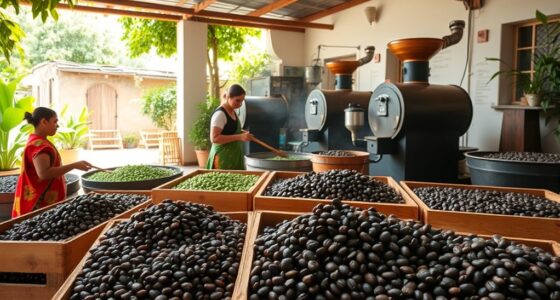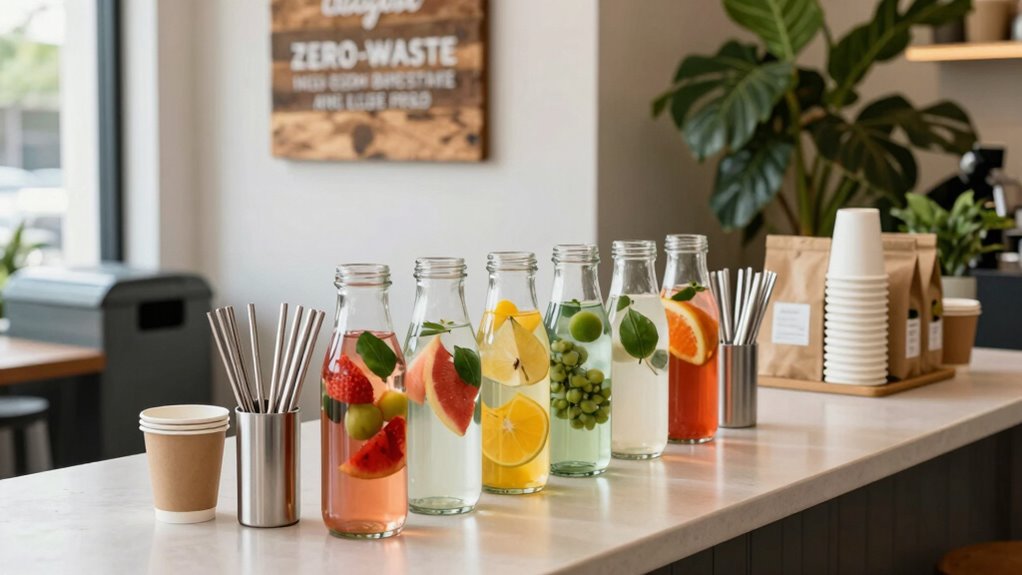

Zero-waste thinking in beverage spaces means you prioritize reducing packaging by using reusable containers, such as stainless steel or silicone, and encourage customers to bring their own. You cut waste through bulk ingredient prep, refill stations, and composting leftovers. Energy efficiency and eco-friendly equipment also play key roles. By educating staff and customers about sustainability, you foster responsibility and resourcefulness. Keep exploring to discover how these practices can transform your beverage space into a model of environmental care.

Get coffee and tea gear delivered free with Prime
- Fast, free delivery on millions of items
- Prime Video, Amazon Music and more included
- Member-only deals all year
Key Takeaways
- Replacing single-use packaging with reusable containers and encouraging customers to bring their own.
- Implementing bulk ingredient preparation and refill stations to minimize packaging waste.
- Using energy-efficient equipment and sustainable energy sources to reduce environmental impact.
- Educating staff and customers about waste reduction practices and fostering responsible consumption.
- Composting organic waste and donating leftovers to eliminate unnecessary disposal.
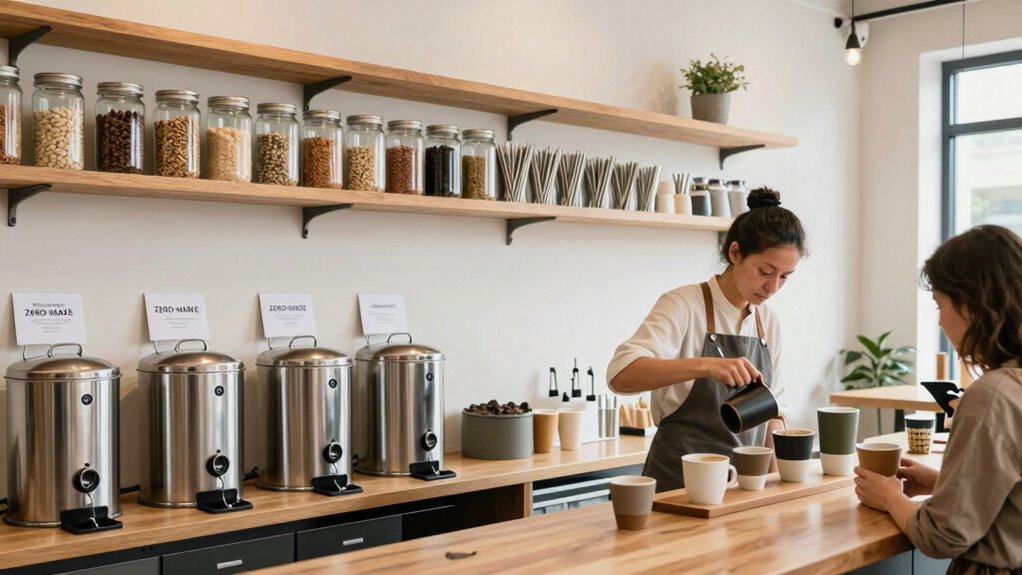
Have you ever wondered how your favorite cafes and bars can reduce their environmental impact? One powerful way is through adopting zero-waste principles, especially when it comes to beverage spaces. A key part of this strategy involves using sustainable packaging. Instead of single-use cups, bottles, and straws that often end up in landfills, cafes and bars are now turning to eco-friendly alternatives that can be reused or recycled easily.
Reusable containers play a crucial role in this shift. When you visit a zero-waste establishment, you might notice that they offer you the chance to bring your own container or glass for your drink, or they provide reusable cups on-site. This not only cuts down on waste but also fosters a culture of responsibility among customers. Some places even go a step further by offering discounts for customers who bring their own containers, incentivizing sustainable choices. These reusable containers are often made from durable, environmentally friendly materials like stainless steel or silicone, ensuring they last longer and reduce the need for disposable options.
Bringing your own reusable container can reduce waste and earn discounts at eco-friendly cafes and bars.
In practice, zero-waste beverage spaces emphasize the importance of reducing packaging waste at every stage. For example, instead of buying pre-packaged syrups or mixers in plastic bottles, establishments might prepare ingredients in bulk and store them in reusable containers, reducing packaging waste and controlling portion sizes. When it comes to serving drinks, many businesses have eliminated disposable straws altogether or replaced plastic ones with reusable or compostable alternatives. They also focus on refilling stations for water or other beverages, encouraging customers to bring their own bottles and refill as needed. Implementing waste reduction strategies like these can significantly decrease the environmental footprint of beverage operations. Additionally, investing in efficient energy use can further reduce the overall impact by lowering energy consumption and emissions. Incorporating educating staff and customers about sustainability practices can further enhance the effectiveness of these initiatives. Moreover, some establishments are exploring innovative solutions like biodegradable packaging to further minimize waste.
This mindset extends beyond just the physical materials. Zero-waste thinking in beverage spaces involves training staff to handle reusable containers properly, ensuring hygiene and safety aren’t compromised. It also means designing processes that prioritize waste reduction, like composting organic waste or donating leftover ingredients. Additionally, understanding the capacity of beverage equipment, such as battery inverter generators, can help cafes run efficiently and sustainably by ensuring reliable energy supply without excess waste or emissions. By making these small but deliberate changes, cafes and bars play a significant role in promoting sustainability.
Ultimately, adopting zero-waste principles in beverage spaces isn’t just about reducing waste; it’s about cultivating a new way of thinking—one that values resourcefulness, responsibility, and environmental stewardship. When you choose to support these efforts, you become part of a movement that proves sustainability can be stylish, practical, and impactful every time you enjoy a drink.
stainless steel reusable water bottles
As an affiliate, we earn on qualifying purchases.
As an affiliate, we earn on qualifying purchases.
Frequently Asked Questions
How Can Small Cafes Implement Zero-Waste Practices Cost-Effectively?
To implement zero-waste practices cost-effectively, you should start by switching to reusable containers for takeout and dine-in orders, reducing single-use waste. Encourage customers to bring their own cups and utensils. You can also set up a composting program for organic waste, which lowers disposal costs and benefits your local environment. These small changes can make a significant impact without breaking the bank, fostering sustainable habits in your cafe.
What Are the Biggest Challenges in Adopting Zero-Waste Beverage Strategies?
You’ll face challenges like sourcing sustainable packaging that’s both eco-friendly and affordable, which can limit options. Waste reduction also requires consistent effort, staff training, and customer buy-in. Supply chain inconsistencies may hinder your zero-waste goals, making it difficult to maintain sustainable practices. Despite these hurdles, staying committed and creatively problem-solving helps you overcome barriers, ultimately leading to more environmentally responsible beverage spaces.
How Do Zero-Waste Policies Impact Beverage Quality and Safety?
Zero-waste policies positively impact beverage quality and safety by encouraging recycling innovations and waste reduction techniques. You’ll find that these practices minimize contamination risks and promote cleaner production environments. By implementing reusable containers and eco-friendly packaging, you reduce waste and guarantee beverages stay fresh and safe for consumers. This sustainable approach not only boosts product integrity but also demonstrates your commitment to environmental responsibility, creating trust with your customers.
Are There Specific Certifications for Zero-Waste Beverage Spaces?
Like a knight from an old fairy tale, you won’t find a single, universal certification for zero-waste beverage spaces. Instead, focus on implementing robust recycling programs and composting initiatives. Certifications such as Zero Waste Certification or B Corporation may help demonstrate your commitment. These standards encourage sustainable practices, ensuring your space minimizes waste and promotes eco-friendly operations, aligning with your zero-waste goals.
How Can Consumers Support Zero-Waste Beverage Initiatives?
You can support zero-waste beverage initiatives by choosing reusable containers whenever possible, reducing single-use waste. Opt for establishments that prioritize waste reduction practices, such as refill stations or compostable packaging. Spread awareness about the importance of zero-waste goals, and encourage friends to join you in making eco-friendly choices. Your support helps drive demand for sustainable practices, ultimately inspiring more businesses to adopt zero-waste thinking in their beverage spaces.
Conclusion
By embracing zero-waste thinking in beverage spaces, you’re not just reducing environmental impact—you’re leading positive change. Did you know that the global beverage industry generates over 1.4 billion tons of packaging waste annually? Imagine cutting that down by adopting reusable cups, composting, and smarter sourcing. Every small step you take helps create a more sustainable future. So, start today, and be part of the movement toward zero waste in every sip.
Fall Picks
fall essentials
As an affiliate, we earn on qualifying purchases.