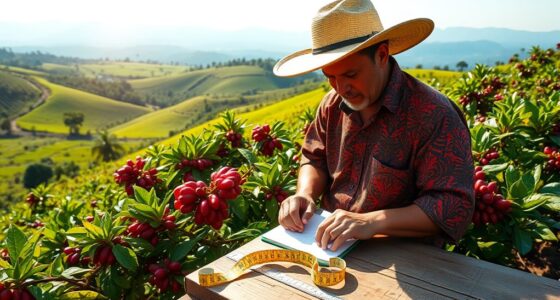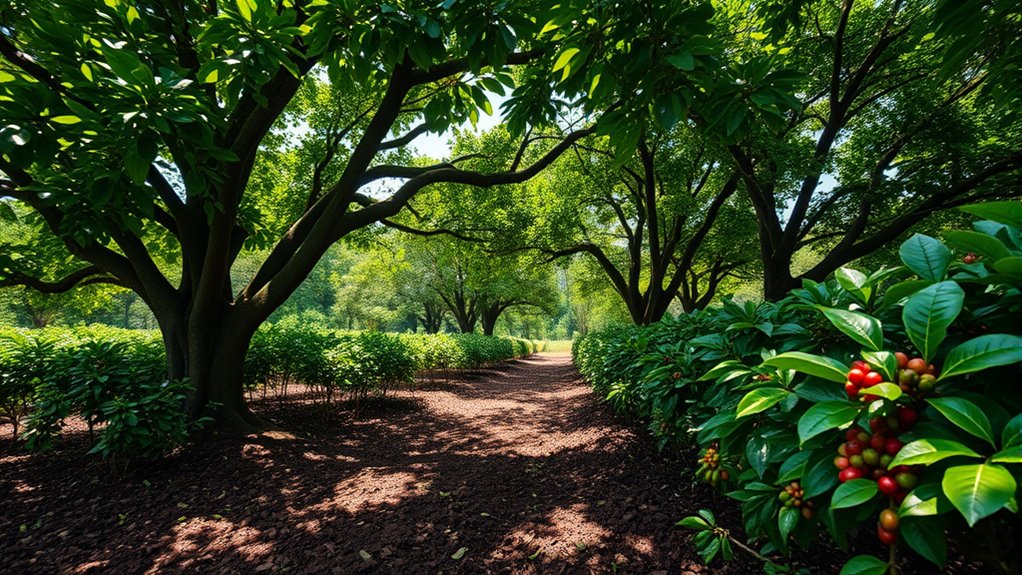

Integrating shade trees into your coffee farm through agroforestry benefits soil health, boosts yields, and promotes sustainability. Shade trees reduce the need for chemicals, control weeds, and prevent soil erosion, leading to healthier and more resilient soil. They also create a microclimate that supports coffee growth and attract beneficial insects for pest control and pollination. By choosing the right trees, you can increase your farm’s productivity while supporting biodiversity efforts—exploring these techniques further can help you maximize your farm’s potential.
Key Takeaways
- Shade trees in coffee agroforestry enhance soil fertility by increasing organic matter and reducing erosion.
- They improve microclimates, moderating temperature and sunlight, which supports healthier coffee yields.
- Agroforestry promotes biodiversity, attracting beneficial insects that aid in pest control and pollination.
- Planting diverse shade trees diversifies income and strengthens ecosystem resilience, boosting long-term productivity.
- The integration of shade trees reduces reliance on chemical inputs, leading to more sustainable and environmentally friendly coffee farming.
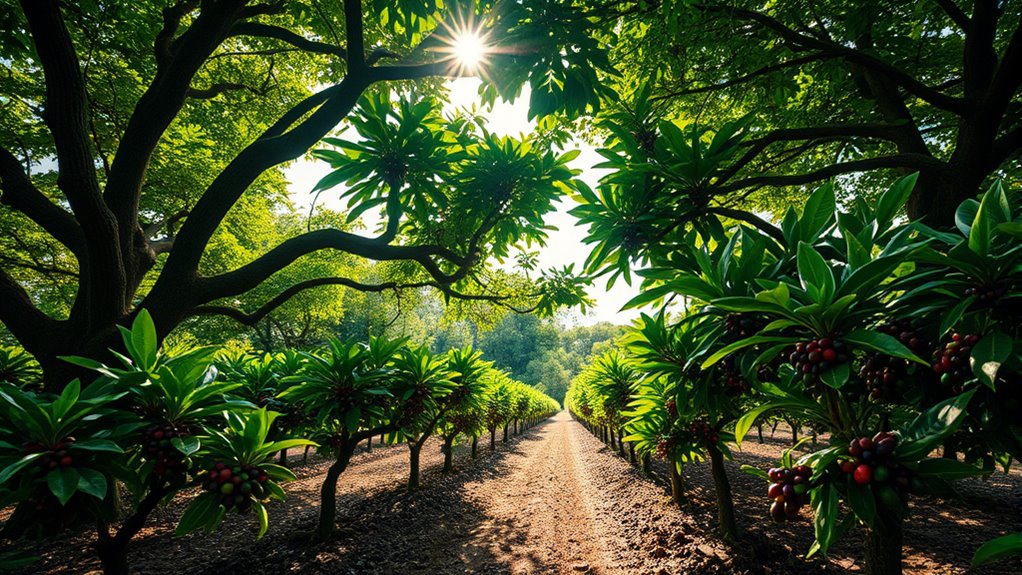
Agroforestry in coffee combines the cultivation of coffee plants with the integration of trees and shrubs on the same land, offering a sustainable approach that benefits both farmers and the environment. This method encourages sustainable practices that not only support long-term productivity but also foster biodiversity conservation. When you adopt agroforestry, you create a diversified landscape that provides multiple benefits: shade for your coffee plants, habitat for wildlife, and improved soil health. By planting native trees alongside your coffee, you help preserve local ecosystems, attract beneficial insects, and promote a balanced environment that sustains your farm’s productivity over time.
Agroforestry in coffee promotes biodiversity, improves soil health, and supports sustainable, resilient farming practices.
Incorporating shade trees into your coffee farm naturally reduces the need for chemical inputs, such as pesticides and fertilizers, making your operation more environmentally friendly. These trees act as natural buffers, controlling weeds and preventing soil erosion, which maintains the integrity of your land. Their root systems improve soil structure and increase organic matter, leading to healthier soil that retains moisture better and supports robust coffee plant growth. With healthier soil, you can expect stronger plants with increased resilience to pests and diseases, ultimately boosting your yields without relying heavily on chemical interventions.
Shade trees also play a vital role in climate adaptation. They moderate temperature fluctuations, provide shelter from harsh sunlight, and reduce heat stress on coffee plants. This creates a more stable microclimate, which can extend your growing season and improve coffee quality. As you integrate trees into your farm, you’ll notice that biodiversity levels rise—birds, insects, and other wildlife find refuge in the shade, creating a vibrant ecosystem that supports pest control and pollination. This harmonious balance reduces your dependence on external inputs and fosters a more resilient farm system.
Furthermore, agroforestry encourages sustainable practices that can lead to economic benefits. The additional products from shade trees, such as fruits, nuts, or timber, diversify your income streams. This diversification not only buffers you against market fluctuations but also enhances the overall sustainability of your farm. Planting trees with high ecological value can further enrich your farm’s environment and contribute to global conservation efforts. By maintaining a diverse landscape, you’re actively contributing to the conservation of biodiversity, ensuring that your land remains productive and ecologically balanced for generations to come.

VINUR Stainless Steel Cups-8 Pack 16 oz Pint Cup Tumbler Stackable Colorful Metal Drinking Glasses for Camping, Restaurant, Bar
18/8 Stainless Steel: Vinur uses only food-grade 304 stainless steel, which is BPA-free, phthalate-free, lead-free, rust-free and odor-free....
As an affiliate, we earn on qualifying purchases.
Frequently Asked Questions
How Does Agroforestry Impact Coffee Bean Flavor Profiles?
Agroforestry enhances coffee bean flavor profiles by adding flavor complexity and amplifying terroir influence. When you incorporate shade trees, you create a microclimate that moderates temperature and humidity, allowing beans to develop deeper, more nuanced flavors. The diverse plant life improves soil health, which also boosts bean quality. As a result, your coffee gains a richer, more vibrant taste, reflecting the unique environment and contributing to a distinctive, high-quality cup.
What Are the Economic Benefits of Integrating Shade Trees in Coffee Farms?
In an era reminiscent of the Renaissance, integrating shade trees boosts your coffee farm’s economic benefits. You’ll see savings through enhanced carbon sequestration, reducing your carbon footprint, and increased biodiversity, which can attract eco-conscious buyers. Shade trees also improve soil health, leading to higher yields and better-quality coffee. Plus, diversified crops minimize risks, ensuring more stable income. Overall, agroforestry makes your farm more resilient and profitable in the long run.
Which Tree Species Are Best Suited for Coffee Agroforestry Systems?
You should choose native species like Inga, Gliricidia, and Leucaena, which thrive in your local environment and support biodiversity. Incorporating fruit trees such as avocado or mango can also provide additional income and shade benefits. These trees improve soil health, attract beneficial insects, and help regulate temperature, creating a sustainable coffee farm. Select a mix of native and fruit trees to maximize ecological and economic benefits for your agroforestry system.
How Does Agroforestry Influence Pest and Disease Management?
Agroforestry helps you manage pests and diseases by creating a balanced environment. While shade trees provide habitat for beneficial insects that reduce pest populations, they also promote disease suppression through improved airflow and soil health. This natural balance minimizes the need for chemical controls, making your coffee farm more sustainable. You’ll notice fewer pest outbreaks and healthier plants, leading to better yields and a more resilient farm ecosystem.
What Are the Challenges of Implementing Agroforestry in Smallholder Coffee Farms?
You might face challenges implementing agroforestry on your smallholder coffee farm due to limited land tenure security, which discourages long-term investments. Additionally, you need farmer training to effectively select and manage shade trees, ensuring benefits like soil health and yields. Lack of access to resources and information can hinder adoption. Overcoming these hurdles requires support from extension services and policies that protect land rights, encouraging sustainable agroforestry practices.
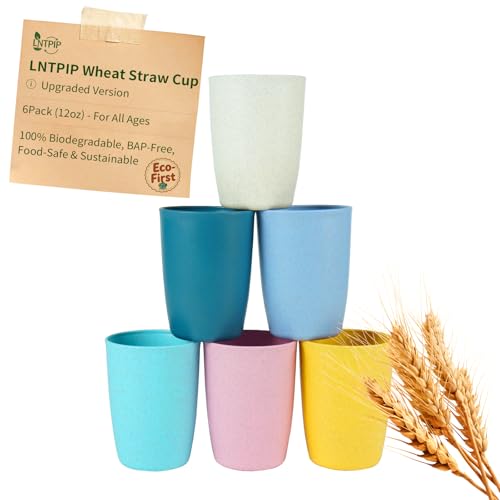
LNTPIP Wheat Straw Cups, 6 Pack, 12oz, Unbreakable Reusable BPA-Free Drinking Cups, Dishwasher Safe, Multicolor, Eco-Friendly Cups for Party Office Outdoor Home
Eco-Friendly & Safe Material: Our 100% biodegradable wheat straw cups are BPA-Free, Lead-Free, food-safe and sustainable—perfect for eco-conscious...
As an affiliate, we earn on qualifying purchases.
Conclusion
By embracing agroforestry, you weave shade trees into your coffee farm like threads in a tapestry, enriching soil health and boosting yields. This practice isn’t just about planting trees; it’s about nurturing a resilient, harmonious ecosystem where coffee thrives naturally. When you integrate shade trees, you’re planting the seeds for a sustainable future—turning your farm into a thriving symphony of life that benefits both your harvest and the environment.

LuckyZone Wheat Straw Unbreakable Cup (12 oz) - Reusable Drinking Glasses Set of 5 - Dishwasher Safe Tumbler - BPA Free & Eco-Friendly (5Pcs)
【Safe & Eco-friendly】 Made of natural wheat straw fiber, starch, and food-safe premium PP material. Extremely safe and...
As an affiliate, we earn on qualifying purchases.

Alohastarttg 20 Pack Reusable Coffee Cups with Lids 16 oz Plastic Tumblers Travel Mug Iced Coffee Cup for Adults and Women Hot and Cold Drinks, Microwaveable(Greens)
Reusability and Sustainability: As an eco-friendly alternative to disposable cups, Alohastarttg's reusable coffee cups are an excellent choice...
As an affiliate, we earn on qualifying purchases.