🔍 Read the full analysis: How Italians Do Breakfast: Cornetto, Cappuccino, And The Morning Bar on Mad Tasting

Get coffee and tea gear delivered free with Prime
- Fast, free delivery on millions of items
- Prime Video, Amazon Music and more included
- Member-only deals all year
TL;DR
A cappuccino and cornetto is a familiar Italian breakfast, often eaten quickly at a café bar, but it is not a national rule. Regional habits, the season and personal routines shape what people eat, while payment and table-service customs vary by café.
A cappuccino and cornetto is a familiar Italian breakfast, often taken at a neighborhood café bar before work or school, according to a guide from Mad Tasting. The guide stresses that the routine is not universal: what people eat and how they eat it can vary by region, season and daily schedule.
In Italy, a bar generally refers to a café serving coffee, pastries and other drinks. Breakfast may happen at home or at the café, where customers can stand at the counter for a quick stop or sit at a table. The guide describes the counter as a common option for people fitting breakfast around a commute or other morning plans.
A cornetto is a crescent-shaped pastry similar to a croissant, though the guide says the two are not always identical. Cornetti may be plain or filled with jam, custard, chocolate or honey. A cappuccino is made with espresso, steamed milk and foam. Some customers choose these together; others have a different pastry, a simpler coffee or no breakfast at a bar.
Ordering and payment procedures are not the same everywhere. Some cafés ask customers to pay at a till and bring a receipt to the counter; others take payment there. The guide advises checking the pastry case, watching how other customers order and asking staff if it is unclear where to pay. Prices and table-service arrangements can vary, so visitors should check the current menu rather than assume one practice applies across Italy.
A morning at the Italian bar · A practical guide
How Italians Do Breakfast: Cornetto, Cappuccino, and the Morning Bar
A cappuccino and cornetto make a familiar café breakfast, often enjoyed quickly before work or school. It is one inviting routine among many, shaped by region, season, personal habits and the café itself.
A quick stop, not one national menu
A neighborhood bar can make breakfast fit around a commute. The counter is often a practical choice when time is short; sitting down may suit a slower morning. Check the café’s own service style.
Cornetto
A crescent-shaped pastry similar to a croissant, though the two are not always identical. It may be plain or filled with jam, custard, chocolate or honey.
Cappuccino
Espresso with steamed milk and foam. Some customers choose it with a cornetto; others prefer a different pastry, a simpler coffee or no bar breakfast.
Morning bar
Order at the counter for a quick stop, sit at a table where available, or eat at home. The right choice depends on your time and the café’s setup.
From cornetto to Sicilian granita
These are examples of variation, not a full regional survey. What you see in the pastry case—and what a pastry is called—can depend on where you are.
Sicily: granita and soft brioche
The guide describes granita with soft brioche as a warm-weather favorite in Sicily. It is a useful seasonal example, not a rule for every person or every morning.
Simple, sweet or familiar
Breakfast may include biscuits, yogurt or bread, or simply espresso. In some regions, “brioche” may be used for a pastry similar to a cornetto.
Look, order, then settle in
Payment and table-service customs vary by café. A little observation—and one short question—can help you follow the local routine.
Check the setup
Look for a till, menu or payment instructions.
Watch how people order
Customers may pay first or at the counter.
Clear up payment
If it is unclear, ask the staff before ordering.
Counter or table
Check what service is offered and current prices.
“Do you pay here?” For the classic pairing, try “Un cappuccino e un cornetto, per favore” — “A cappuccino and a cornetto, please.” You can also ask what a pastry contains or specify a filling.
A useful picture, with clear limits
The supplied material is a travel guide, not a named survey or a newly announced policy. It describes common possibilities without measuring their prevalence.
The bars indicate the kind of information included, not measured amounts. Menu prices, payment steps and standing or table service can vary and may change.
Before your first morning order
What is a typical café breakfast?
Cappuccino and cornetto are a familiar pairing, often eaten quickly at a bar. They are not the only customary option.
Is a cornetto the same as a croissant?
They are similar crescent-shaped pastries, but not always identical. Cornetti may be softer or sweeter and can have a filling.
Do people stand or sit?
Standing at the counter is a common quick option. Sitting or having breakfast at home are also possibilities; café arrangements vary.
How do I find out where to pay?
Watch other customers, look for a till or instructions, or ask “Si paga qui?” Some cafés take payment first; others at the counter.
The guide’s practical point is that the familiar coffee-and-pastry pairing offers an entry into Italian breakfast, not a complete account of it. Treating the routine as a fixed national template can leave visitors confused when a café’s menu, regional terminology or service differs from what they expected.
Knowing that a bar may be a working neighborhood stop helps explain why some customers order briefly and eat at the counter. It also gives travelers a straightforward way to take part without assuming they must copy every local habit. A table may suit someone with more time or a preference for sitting; the key is to check how that particular café handles service.
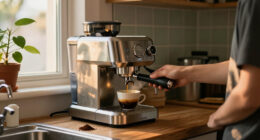
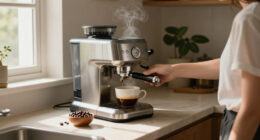
Italian espresso machine for cappuccino
As an affiliate, we earn on qualifying purchases.
As an affiliate, we earn on qualifying purchases.
From Cornetto to Sicilian Granita
The guide points to regional and seasonal differences as a reason Italian breakfast cannot be reduced to one order. In Sicily, it describes granita with soft brioche as a warm-weather favorite. Elsewhere, breakfast may include biscuits, yogurt or bread, or consist simply of espresso. These examples are presented as common possibilities, not a full survey of what people in each region eat.
Names for pastries can also differ. The guide says cornetto is familiar in parts of central and southern Italy, while some other regions use “brioche” for a similar pastry. The terminology and selection in a pastry case may therefore depend on where a visitor is. The material does not provide survey data or figures on how widely each breakfast choice is practiced.
What the Guide Does Not Measure
The supplied material is a travel guide, not a report based on a named survey or a newly announced policy. It gives examples of common routines and regional variation, but does not quantify how many Italians choose each breakfast or establish how habits differ across age groups, cities or income levels.
It also does not give current prices or a nationwide rule for payment, standing service or table service. Those details can vary by café and may change. The guide’s advice is to check locally; readers should not treat its examples as a guarantee of what any particular establishment will do.
Check the Local Café Routine
There is no announced follow-up or new development in the supplied source. For visitors planning breakfast, the useful next step is to check the café’s current menu and observe whether customers pay before ordering or at the counter. A short Italian question can resolve uncertainty: “Si paga qui?” means “Do you pay here?”
To order a basic pairing, the guide suggests “Un cappuccino e un cornetto, per favore” (“A cappuccino and a cornetto, please”). Customers can specify a filling, ask what a pastry is, or choose to sit if the café offers that option. The details of the local routine remain specific to the establishment.
Key Questions
What is a typical Italian breakfast at a café?
A cappuccino and cornetto is a familiar choice, often eaten quickly at a bar. The guide says breakfast varies, and it is not the only customary option.
What is the difference between a cornetto and a croissant?
A cornetto is a crescent-shaped pastry similar to a croissant, but the guide notes they are not always identical. Cornetti may be softer or sweeter and can have fillings such as custard, jam, chocolate or honey.
Do customers usually stand or sit at an Italian bar?
Standing at the counter is a common quick option, but customers may also sit or eat breakfast at home. Service arrangements vary by café.
What might people eat for breakfast in Sicily?
The guide describes granita with soft brioche as a warm-weather favorite in Sicily. It presents this as a regional and seasonal example, not a rule for every person or every morning.
How should visitors find out where to pay?
Watch how other customers order, look for a till or payment instructions, or ask “Si paga qui?” Some cafés take payment at the till before service; others let customers pay at the counter.
Source: Mad Tasting
Fall Picks
fall essentials
As an affiliate, we earn on qualifying purchases.