
To track your brews and tasting notes effectively, choose a sturdy, well-organized journal with space for aroma, flavor, and brewing details. Use consistent tools like a timer, scale, and tasting cups, and record impressions immediately after each brew. Incorporate visual cues, flavor wheels, and photos to deepen your understanding. Regularly analyze patterns in your preferences and brewing methods to refine your palate. Keep exploring for more tips to elevate your coffee journaling journey.
Key Takeaways
- Use organized, durable notebooks with dedicated sections for aroma, flavor, body, and visual cues for clear tracking.
- Record brewing details immediately after each session, including method, environmental factors, and tasting impressions.
- Incorporate visual elements like sketches, photos, or flavor wheels to deepen sensory analysis and pattern recognition.
- Maintain consistency by using the same tools and routines, such as daily journaling at set times, to build habits.
- Analyze tasting notes visually with flavor categorization and trend tracking to refine preferences and improve brewing techniques.

ICEVIVAL Fully Automatic Coffee Machine, 20 Bar Coffee Maker with Grinder, Automatic Espresso Machine with 15 Grinding Levels, Touch Control for Cappuccino & Latte, Auto Self-Cleaning
Effortless Cafe Creations: Enjoy a wide selection of café favorites - from creamy latte to smooth Americano, all...
As an affiliate, we earn on qualifying purchases.
Selecting the Right Journal for Your Coffee Records

Choosing the right journal is essential to effectively track your coffee experiences. You want something with material durability so your notes stay intact over time, even if you carry it around or write frequently. A sturdy cover and quality paper prevent tears and ink bleed-through, ensuring your records remain clear and legible. Aesthetic appeal also matters, as a visually pleasing journal can motivate you to keep up with your coffee journaling habit. Look for designs or colors that inspire you, making each entry enjoyable. The right combination of durability and style helps you create a reliable, attractive record of your coffee journey. When selecting your journal, prioritize quality materials and personal appeal to make your coffee logging both practical and inspiring. Incorporating sound design principles, such as clear organization and intuitive layout, can further enhance your journaling experience by making it easier to review and enjoy your notes over time. Additionally, choosing a journal with flexible formatting options allows you to customize your entries to best suit your recording style and preferences. Remember that a well-designed journal can also help you track tasting notes more effectively, making your coffee journey more enjoyable and insightful. Using a journal with dedicated sections for aroma, flavor, and body can deepen your appreciation and understanding of each brew, and incorporating visual cues or sketches can make the process more engaging.

Cafe Bueno Super Automatic Espresso Machine For Home - Coffee Machine With Grinder & Milk Frother For Latte, Cappuccino, Macchiato - Auto Wake & Sleep – All Milk Types
BARISTA QUALITY COFFEE - You can now make barista quality coffee, cappuccinos, lattes, espresso, and more in the...
As an affiliate, we earn on qualifying purchases.
Essential Tools and Accessories for Coffee Journaling

To make your coffee journaling experience seamless and enjoyable, having the right tools and accessories is essential. Start with quality journaling supplies like a sturdy notebook or a dedicated coffee journal to keep your notes organized. Coffee accessories such as a timer, coffee scale, or tasting cups can help you accurately record brewing parameters and tasting notes. Colored pens or highlighters make it easy to differentiate between flavor profiles or brewing methods. A small desk organizer or storage case keeps your supplies within reach and prevents clutter. Additionally, a good pen with smooth ink makes writing effortless, encouraging consistent record-keeping. Using appropriate security measures for your journaling supplies can help protect your investment and ensure your notes remain private. Incorporating precise measurement tools can further enhance the accuracy of your brewing records. Paying attention to consistent documentation not only improves your brewing skills over time but also creates a satisfying record of your coffee journey. Leveraging digital tools or apps designed for coffee tracking can streamline your process and provide additional insights into your brewing patterns. Understanding Kia Tuning can inspire you to refine your vehicle’s performance, much like how detailed coffee journaling enhances your brewing skills. These tools not only enhance your journaling process but also make it more engaging and satisfying to track your coffee journey.
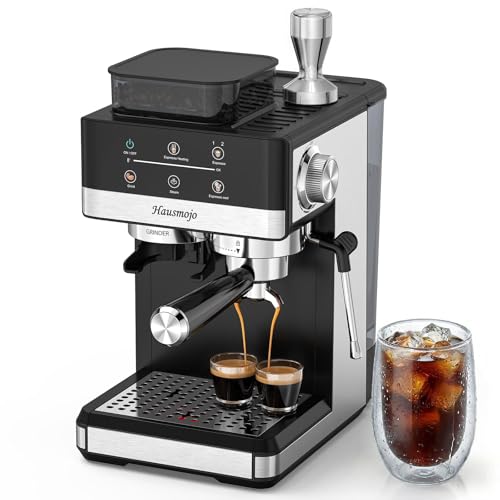
Hausmojo Espresso Machine with Grinder, 20Bar Expresso Coffee Machines with Milk Frother, Professional Compact Stainless Steel Coffee Maker for Espresso, Latte & Cappuccino, Perfect for Home Use
Perfect for Beginners — Real 20Bar Espresso at Home: Start your espresso journey with confidence. The Hausmojo M5520...
As an affiliate, we earn on qualifying purchases.
Creating a Consistent Recording Routine

To keep your coffee journal useful, you need a steady routine. Pick a specific time each day to record your notes and stick to it. Using the same logging tools makes tracking your coffee journey easier and more consistent. Establishing this routine can also help you notice fluctuations in taste and aroma, leading to a deeper appreciation of your brews.
Subheading 1: Establish a Daily Schedule
Establishing a daily schedule for your journaling habit helps you stay consistent and makes recording your coffee experiences part of your routine. By integrating journaling into your morning routines, you create a habit that’s easy to maintain. Consistency ensures you capture details of each brew, from aroma to flavor notes, enhancing your appreciation over time. The journaling benefits become clearer when you make it a regular part of your day, turning it into a mindful ritual rather than a chore. Whether you choose to journal immediately after your coffee or at a set time each morning, sticking to a schedule builds discipline. Soon, documenting your coffee journey becomes second nature, enriching your experience and helping you track your evolving palate. Incorporating mindful decluttering techniques can also help keep your journaling space organized and inviting.
Subheading 2: Use Consistent Logging Tools
Using consistent logging tools is essential for creating a reliable recording routine that helps you track your coffee experiences accurately. Whether you prefer digital templates or handwritten logs, sticking to one method guarantees your notes remain organized and easy to review. Digital templates offer convenience, allowing you to quickly input details like brew method, beans, and tasting notes with customizable fields. Handwritten logs, on the other hand, provide a tactile experience and can be more personal. Whichever you choose, consistency is key. Use the same tool every time you record, so your data stays uniform and clear. This consistency helps you identify patterns, track improvements, and remember your favorite brews without confusion.

atatix Espresso Machine with Milk Frother, 20 Bar Pressure Espresso Maker, with 44OZ Removable Tank, Compact Stainless Steel Coffee Machine for Home, Office, Latte, Cappuccino, Macchiato, Silver
【Make Favorite Espresso Coffee by Yourself】The espresso machine with milk frother allows you to prepare all your favorite...
As an affiliate, we earn on qualifying purchases.
Developing a Tasting Wheel for Flavor Profiling
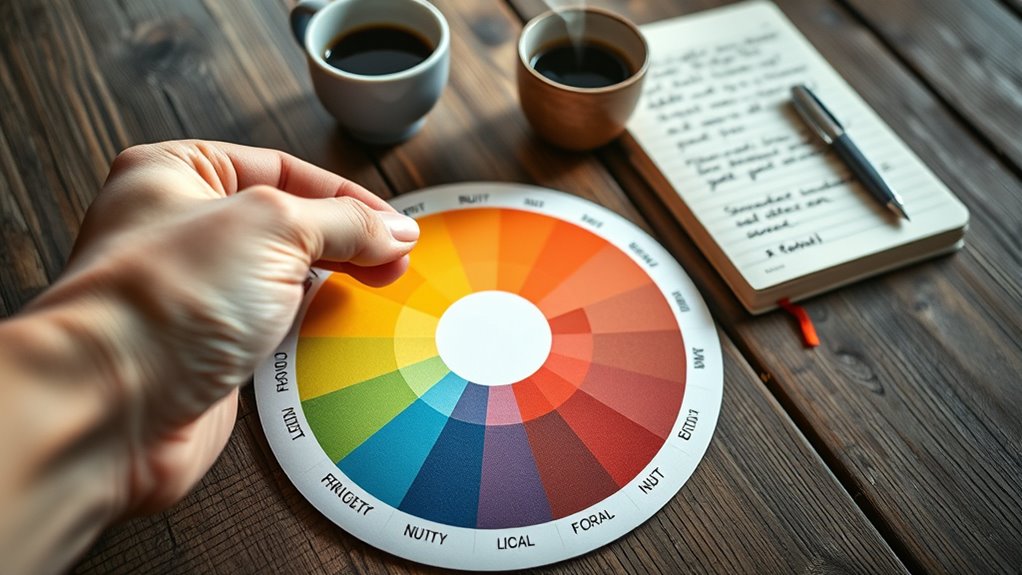
Creating a tasting wheel helps you clearly identify different flavor categories in your coffee. Visualizing taste profiles makes it easier to compare and recognize subtle notes. With this tool, you’ll enhance your ability to describe and remember your coffee experiences accurately.
Identifying Flavor Categories
To effectively identify flavor categories in your coffee journey, you need to develop a tasting wheel that maps out the diverse range of flavors you encounter. This wheel helps you visualize different flavor profiles and their associated tasting categories, making it easier to recognize patterns. Start by noting common flavors such as fruity, nutty, spicy, or floral. As you taste, categorize each note within these broader groups, refining your understanding over time. Your tasting wheel acts as a reference, guiding you to distinguish subtle differences and broaden your palate. By consistently mapping flavors to specific categories, you’ll improve your ability to describe and remember unique coffee characteristics, ultimately enhancing your overall coffee experience and journal entries. Regular practice and understanding of flavor profiles will deepen your appreciation for coffee complexity and sensory analysis. Incorporating headphone usage during tasting sessions can also help you focus on the nuanced sounds of brewing and cupping, enriching your sensory experience. Developing sensory awareness is key to capturing the full spectrum of coffee nuances in your journal. Additionally, understanding aroma notes can further refine your ability to identify and differentiate subtle flavors, enriching your tasting wheel.
Visualizing Taste Profiles
A tasting wheel is a powerful tool that brings clarity to the complex world of coffee flavors. It helps you visualize taste profiles by mapping out flavor balance and aroma intensity. You can see how different notes—like fruity, nutty, or floral—interact and complement each other. By plotting these elements on the wheel, you gain a clearer picture of your coffee’s unique flavor profile. This visual approach enhances your ability to identify subtle nuances and understand how aroma intensity influences overall perception. As you develop your tasting wheel, you’ll notice patterns and preferences emerging, making it easier to compare brews and refine your palate. Ultimately, it transforms abstract tasting notes into a tangible, visual representation that deepens your appreciation. Flavor profiling can help you better understand and articulate your coffee tasting experiences. Additionally, utilizing scientific methods can provide a more structured approach to refining your palate and understanding flavor interactions. Incorporating nutritional insights can also enhance your awareness of how different flavors and aromas influence your sensory experience. Moreover, exploring sensory science can improve your ability to distinguish and describe complex flavor combinations. Building knowledge of aroma compounds can further deepen your understanding of how specific scents contribute to the overall flavor profile.
Documenting Brewing Methods and Techniques
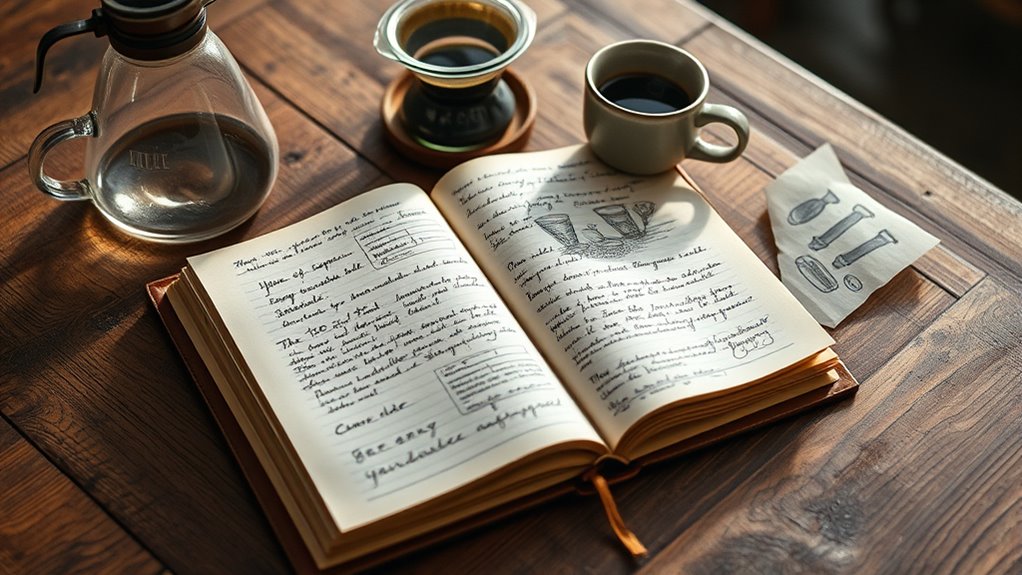
Keeping detailed records of your brewing methods and techniques is essential for refining your coffee skills. By documenting each step, you can identify what works best and troubleshoot techniques effectively. Use a table like this to compare methods and note adjustments:
| Brew Method | Technique Notes | Results & Improvements |
|---|---|---|
| French Press | Grind coarse, steep 4 min | Rich flavor, slightly bitter |
| AeroPress | Shorter press, lower pressure | Cleaner taste, faster brew |
| Pour Over | Spiral pour, steady flow | Balanced extraction |
| Cold Brew | Steep 12 hrs, coarse grind | Smooth, mellow |
| Espresso | Tamp firmly, 25 sec shot | Bold, intense flavor |
This helps you refine your approach through brew method comparisons and troubleshooting, ensuring consistent, better coffee.
Noting Environmental Factors That Affect Your Coffee
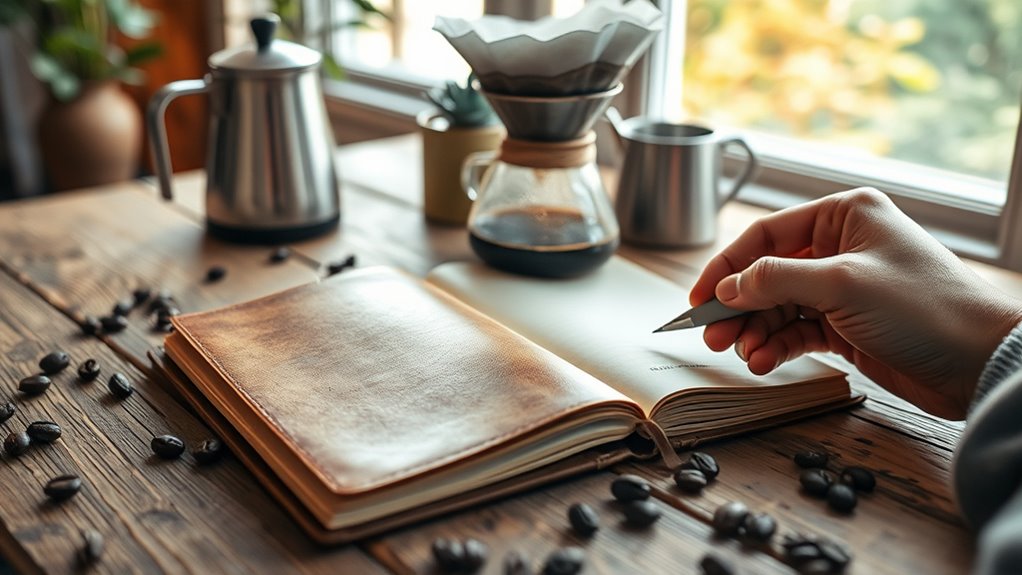
Your environment plays a big role in how your coffee turns out. Changes in ambient temperature can alter brewing times and extraction, while humidity can influence flavor clarity and freshness. Noticing these factors helps you adjust your process for the best cup every time. Being aware of environmental influences can also help you recognize signs of narcissistic behaviors, such as manipulative tactics or emotional neglect, which may be subtly affecting your well-being. Additionally, understanding physical and mental health implications related to fatigue and dehydration can support better self-care practices. Recognizing how climate conditions impact coffee storage and freshness can further refine your tasting experience.
Ambient Temperature Effects
Ambient temperature plays a crucial role in shaping your coffee experience, as it influences how your brew tastes and how it evolves over time. The temperature influence extends beyond initial brewing, affecting how quickly flavors develop or fade as the coffee cools. Ambient effects can alter your perception of aroma, acidity, and body, making a hot cup feel more vibrant or a cooled one seem duller. When your environment is warm, coffee cools faster, potentially diminishing nuanced flavors. Conversely, cooler surroundings help preserve the brew’s aromatic qualities longer. Tracking these environmental factors helps you understand how temperature impacts each cup, enabling you to adjust brewing or serving methods for ideal flavor. Recognizing ambient temperature effects is essential for refining your coffee journaling and enhancing overall enjoyment. Additionally, understanding the ambient temperature can help you decide whether to use insulated cups or adjust your brewing time to optimize flavor retention. Being aware of your breast cancer risk factors, such as age or family history, can also influence how you approach your coffee routine, especially if you’re managing health considerations.
Humidity’s Impact on Flavor
Humidity levels in your environment can markedly influence how your coffee’s flavors develop and linger. High humidity effects can cause beans to absorb moisture, leading to stale flavors or mold growth, while low humidity may dry out beans prematurely, sacrificing freshness. To preserve ideal flavor, consider these factors:
- In humid conditions, store beans in airtight containers to prevent moisture absorption.
- In dry environments, use moisture packs to maintain consistent humidity levels.
- Across both scenarios, avoid exposing coffee to rapid temperature changes, which can cause condensation and flavor degradation. By controlling humidity, you support flavor preservation and ensure your brews maintain their intended profile. Paying attention to environmental factors like humidity helps you keep your coffee tasting fresh and vibrant longer.
Incorporating Photos and Visual Elements Into Your Notes

Adding photos and visual elements to your coffee journal can considerably enhance your notes by providing vivid context and making the experience more engaging. Use photography tips to capture the appearance of your brews, beans, and brewing setups clearly. Good lighting and focus are key to highlighting textures and colors, enriching your visual storytelling. Incorporate sketches or diagrams to illustrate brewing methods or flavor profiles, which helps deepen your understanding. Visual elements make your journal more dynamic and memorable, allowing you to revisit your coffee journey with clarity. By combining photos with concise notes, you create a multi-sensory record that’s both informative and inspiring. This approach encourages creativity and makes tracking your coffee adventures more enjoyable and visually appealing.
Tracking Bean Origins and Roast Profiles
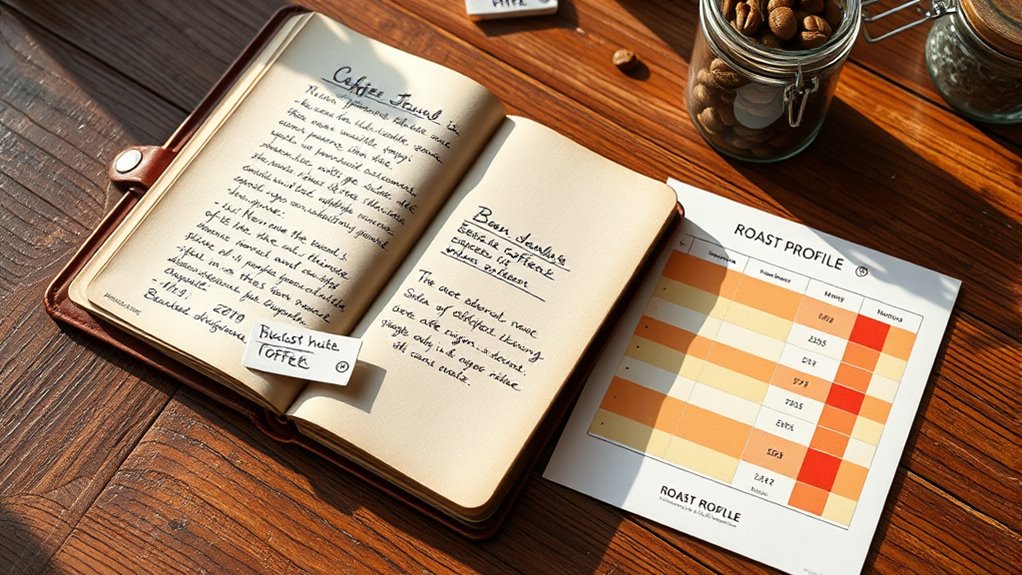
Tracking the origins of your coffee beans and their roast profiles gives you valuable insights into how different factors influence flavor. When you log details about the bean origin, you start to see how geography, altitude, and soil shape taste. Similarly, recording the roast profile helps you understand how roasting time, temperature, and technique affect aroma and body. To visualize this, imagine:
Tracking bean origins and roast profiles reveals how geography and technique shape your coffee’s unique flavor.
- A map highlighting bean origin regions like Ethiopia or Colombia.
- A roast profile chart showing light, medium, or dark roasts with color gradients.
- Tasting notes linked to specific origins and roasts, revealing unique flavor profiles.
Analyzing Your Preferences to Discover Your Signature Brew

Have you noticed certain flavors or brewing methods that consistently excite your palate? By reviewing your tasting notes, you can identify clear preference patterns—whether you favor bright, fruity notes or rich, chocolatey tones. Flavor analysis helps you pinpoint which beans, roasts, or brewing techniques bring out your favorite qualities. Pay attention to recurring themes: do you prefer light or dark roasts? Pour-over or espresso? Recognizing these trends guides you in selecting future brews that align with your unique taste profile. As you analyze your preferences, you’ll start to see what truly resonates with you, helping you craft your signature brew. This process transforms your coffee journaling from simple recording into a powerful tool for discovering your perfect cup.
Sharing and Reflecting on Your Coffee Experiences
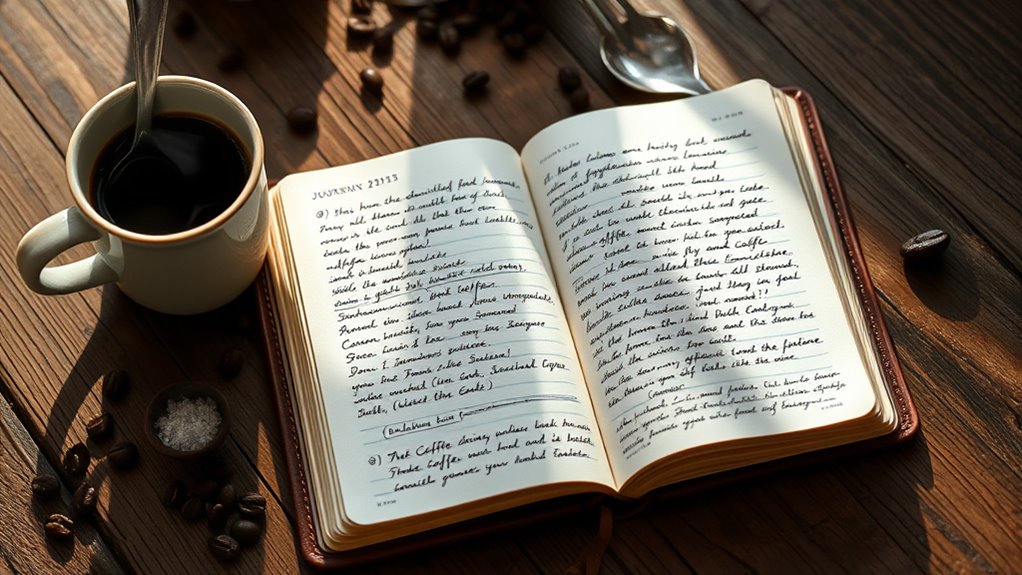
Sharing and reflecting on your coffee experiences turns your personal tasting journey into a valuable dialogue, whether with fellow enthusiasts or through your own journaling. It’s about sharing storytelling that captures your unique flavor discoveries and insights. When you reflect, you deepen your understanding by:
- Visualizing the aroma clouds swirling around your cup
- Remembering the first sip that surprised your palate
- Connecting flavors to your mood or environment
These moments help you see patterns and refine your preferences. Sharing your stories sparks conversations, inspires new ideas, and builds community. Reflecting on your tasting insights transforms individual notes into a richer appreciation of your coffee journey, making each brew more meaningful and memorable.
Frequently Asked Questions
How Can I Organize My Coffee Journal for Multiple Brewing Methods?
To organize your coffee journal for multiple brewing methods, create dedicated sections for each method. Record details like bagging techniques, grind size, and brewing time. Use clear headings and color coding for quick reference. Include storage solutions for beans, noting freshness dates. This way, you can easily compare flavors and techniques, making your brewing process more consistent and enjoyable. Stay organized to enhance your coffee journey!
What Are Some Creative Ways to Personalize My Coffee Tasting Notes?
Ever wonder how to make your coffee tasting notes truly mesmerizing? You can add artistic embellishments like doodles, colorful borders, or handwritten styles to bring your notes to life. Use vivid sensory language to describe aroma, flavor, and mouthfeel, creating an immersive experience. Personal touches like quotes, poetry, or mood sketches deepen your connection to each brew, transforming simple notes into a creative, personalized coffee story you’ll love to revisit.
How Do I Track Seasonal Changes in My Coffee Preferences?
To track seasonal flavor and preference shifts, start noting how your taste changes throughout the year. Keep a dedicated journal or digital log, recording the types of beans, roasts, and flavor notes you enjoy each season. Pay attention to specific aromas or sensations that stand out during different times. This way, you’ll notice patterns and better understand how seasonal changes influence your coffee preferences, making your tasting journey more personalized.
Can I Integrate Digital Tools With My Physical Journal?
Think of blending your physical journal with digital apps as creating a perfect coffee blend—each enhances the other. You can easily scan or link notes from your handwriting, gaining the benefits of handwriting’s tactile memory and digital tools’ convenience. Digital apps sync seamlessly, offering quick access and backups, while your handwriting preserves the personal touch. This fusion lets you enjoy the best of both worlds in your coffee journaling journey.
What Are Effective Methods to Review and Reflect on Past Coffee Entries?
To review and reflect on your past coffee entries, practice mindful reflection by setting aside quiet time to revisit your notes. Evaluate each entry by considering what you learned about your preferences and brewing methods. Highlight patterns or surprises, and jot down new insights. This entry evaluation helps you refine your taste and brewing techniques, making your coffee journey more intentional and enjoyable.
Conclusion
Your coffee journal becomes your personal symphony, each note and nuance revealing your unique flavor melody. As you chart your brewing voyage, every sip and swirl paints a richer picture of your taste landscape. Keep pouring your passion onto the pages, letting your notes dance like steam rising from a fresh cup. With each entry, you craft a flavorful story, turning your coffee journey into a rich tapestry of discovery and delight.