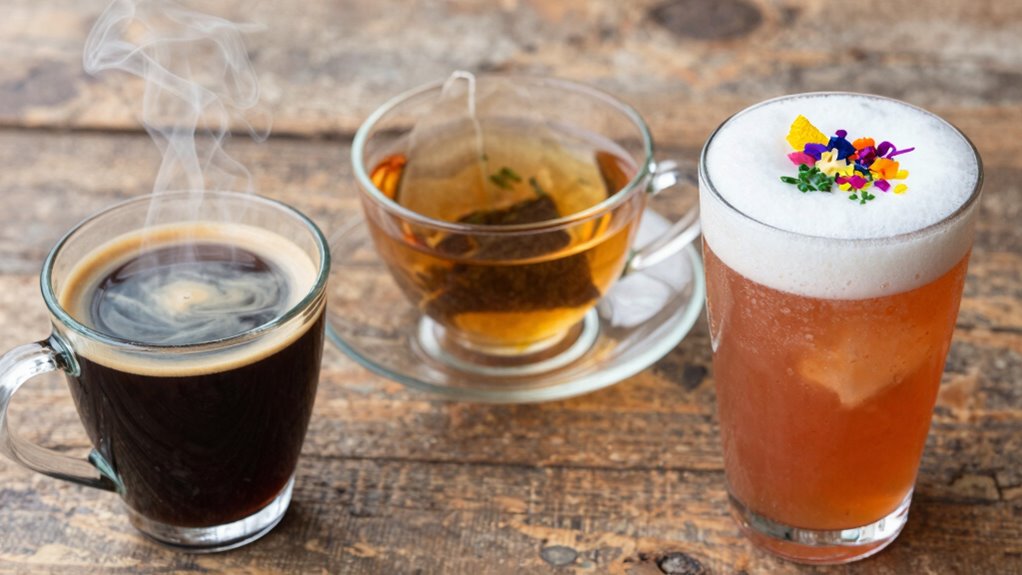

To choose between coffee, tea, and alternatives, consider what you need for the situation. If you want a quick energy boost, go for coffee’s rich flavor and high caffeine. For a gentle lift and relaxing moments, opt for tea or herbal infusions. When hydration or comfort is your goal, try flavored waters or hot chocolate. By matching your drink to your activity and mood, you can make smarter choices—more tips await to help you find exactly what suits you best.

Get coffee and tea gear delivered free with Prime
- Fast, free delivery on millions of items
- Prime Video, Amazon Music and more included
- Member-only deals all year
Key Takeaways
- Match caffeine levels to your energy needs: coffee for quick alertness, tea or herbal infusions for gentle boosts or relaxation.
- Consider flavor preferences and desired health benefits when selecting between bold, subtle, or soothing beverages.
- Use coffee for active mornings or focus-heavy tasks; opt for tea or alternatives during relaxing or hydration-focused moments.
- Choose caffeine-free options like herbal teas or hot chocolate for late-day consumption or calming routines.
- Align your beverage choice with the setting and emotional state: social, calming, or comforting scenarios.
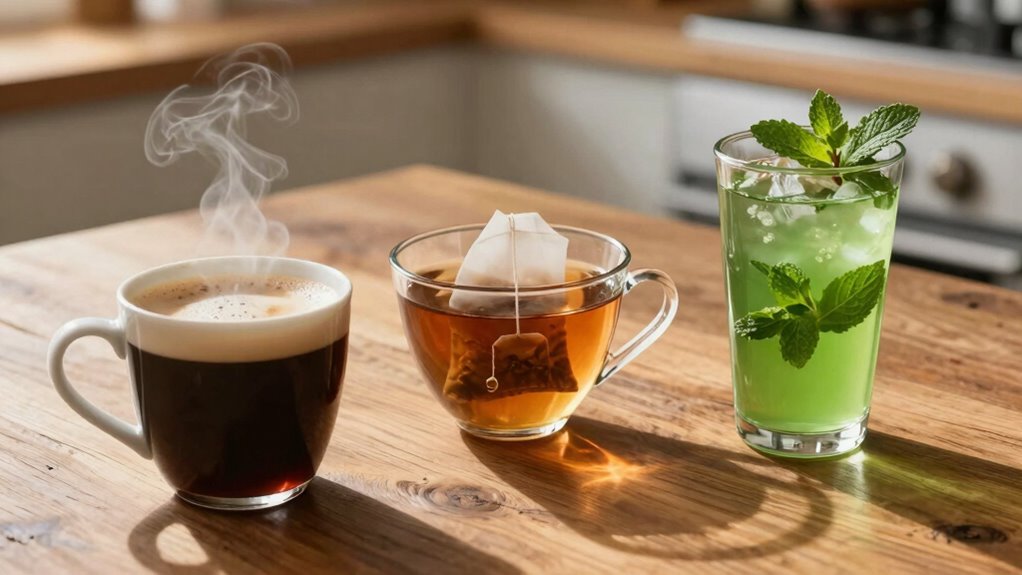
Have you ever wondered which beverage best fuels your day—coffee, tea, or something else? The choice often depends on your mood, your schedule, and what you’re seeking from your drink. Coffee and tea each bring distinct flavor profiles and health benefits that can influence your decision depending on the situation. Coffee is known for its bold, rich flavors—ranging from bitter and roasted to fruity and complex—making it perfect when you need a quick, energizing boost. Its high caffeine content helps sharpen your focus and combat fatigue, especially during busy mornings or long work sessions. Plus, coffee’s antioxidants are linked to health benefits like reduced inflammation and a lower risk of certain diseases, making it a functional pick for many.
Coffee’s bold flavors and caffeine boost make it ideal for energizing busy mornings and long work sessions.
Tea, on the other hand, offers a subtler, more diverse flavor profile. From the grassy notes of green tea to the malty sweetness of black tea or the floral hints in white tea, its flavors can be soothing or invigorating, depending on your choice. Tea generally contains less caffeine than coffee, providing a gentler lift that’s ideal for mid-morning or afternoon when you want to stay alert without the jitters. The health benefits of tea are well-documented; it’s rich in antioxidants, supports digestion, and can promote relaxation—especially varieties like chamomile or herbal infusions. So, if you’re looking for a calming ritual or a beverage that complements a slower pace, tea might be your best option.
When your day calls for a more social or versatile choice, consider alternatives like herbal infusions, hot chocolate, or even water with added flavors. These options can hydrate you or provide comfort during moments of downtime or when caffeine isn’t necessary. For instance, herbal teas or infusions are caffeine-free and often packed with medicinal benefits, perfect for winding down or soothing digestion. Hot chocolate offers a cozy treat that can lift your spirits on a cold day, while flavored waters or infused drinks keep you refreshed without added sugar or caffeine. Incorporating beverage choices that align with your health goals can help you develop a mindful routine tailored to your needs. Understanding flavor profiles and health benefits can help you make more mindful beverage choices suited to your needs. Additionally, the variety of caffeine content across different drinks allows you to customize your intake based on your sensitivity and activity levels. Knowing which beverage suits your situation involves understanding how flavor profiles and health benefits align with your needs. If you need a quick mental boost, coffee’s intensity is unmatched. For a moment of calm or a social setting, tea’s gentle notes and health perks shine. For relaxation, hydration, or comfort, alternatives like herbal teas or hot chocolate serve well.
Ultimately, your choice hinges on your current activity, emotional state, and health goals. Recognize the flavor profiles that appeal to you and the benefits you seek—whether it’s energy, relaxation, or wellness—and select the beverage that best complements your situation.
As an affiliate, we earn on qualifying purchases.
Frequently Asked Questions
How Do Caffeine Levels Differ Among Coffee, Tea, and Alternatives?
Coffee generally has the highest caffeine content, followed by black and green teas, with herbal teas often being caffeine-free. Decaffeinated options offer lower caffeine, but some still contain small amounts. When considering caffeine timing, you might drink coffee for an immediate boost, while tea or decaf can be better later in the day to avoid disrupting sleep. Knowing these differences helps you match your caffeine intake to your needs.
Are There Health Benefits Specific to Certain Beverages?
Herbal infusions often offer unique health benefits, thanks to their antioxidant properties, which can support your immune system and reduce inflammation. Scientific studies suggest some teas, like green tea, may boost metabolism and improve brain function. While coffee provides antioxidants too, its benefits are more linked to mental alertness. Choosing beverages with antioxidant properties can enhance your health, but always consider your personal health needs and consult a healthcare professional.
Which Drink Is Best for Hydration?
For hydration, water is your best choice, but if you’re looking for flavor combinations, tea often wins due to its variety of herbal and fruity options. Tea also aligns with cultural preferences in many regions, making it a popular, culturally significant beverage. Coffee and alternatives can hydrate but may have diuretic effects. Choose based on your taste, cultural habits, and hydration needs for the best experience.
How Do Flavor Profiles Influence Choice?
Flavor profiles fiercely influence your choice; you favor familiar, comforting combinations or crave new, nuanced notes. Alliteration appeals, as subtle savory or sweet sensations sway your selection. Flavor pairings enhance experience, aligning with cultural preferences that shape your palate’s preferences. Whether you pursue robust, roasted richness or delicate, floral finesse, your taste’s temperament guides you, making flavor profiles fundamental in selecting the perfect beverage for each moment.
Can Dietary Restrictions Affect Beverage Selection?
Yes, dietary restrictions can substantially influence your beverage choices. If you have allergies or sensitivities, allergen considerations become essential—opting for allergen-free options like certain teas or plant-based drinks. Dietary restrictions like veganism or gluten intolerance may steer you toward specific beverages that align with your needs. Always check ingredient lists and labels to guarantee your drink complies with your restrictions, helping you enjoy your beverage safely and comfortably.
Conclusion
So, next time you’re faced with a caffeine choice, remember, it’s not just about taste or energy—sometimes, the simplest drink can surprise you. Whether you opt for coffee’s bold kick, tea’s calming charm, or an alternative’s gentle lift, you’re still chasing that perfect boost. Ironically, in trying to find the “best” pick, you might just discover that the real secret is knowing when to switch it up. Cheers to your caffeine adventure!
Fall Picks
fall essentials
As an affiliate, we earn on qualifying purchases.