
Start by evaluating your space and decide whether your shelf will be in the kitchen or pantry. Choose a size that fits your needs, and organize herbal and decaffeinated teas in clear, labeled containers for easy access. Place your most-used items at eye level and use small baskets or dividers to keep everything tidy. Incorporate your favorite accessories and keep the space well-stocked. Keep it inviting and functional—if you want tips on making it truly relaxing, keep exploring.

Get coffee and tea gear delivered free with Prime
- Fast, free delivery on millions of items
- Prime Video, Amazon Music and more included
- Member-only deals all year
Key Takeaways
- Measure available space and choose a location like the kitchen or pantry for easy access.
- Select low-caffeine or herbal teas, organizing them in clear, labeled containers for visibility.
- Arrange frequently used items at eye level and store specialty teas higher or lower for variety.
- Incorporate accessories like infuser mugs, honey jars, and dividers to enhance organization and usability.
- Regularly check freshness, replenish supplies, and keep the shelf tidy to promote mindful, low-caffeine beverage habits.
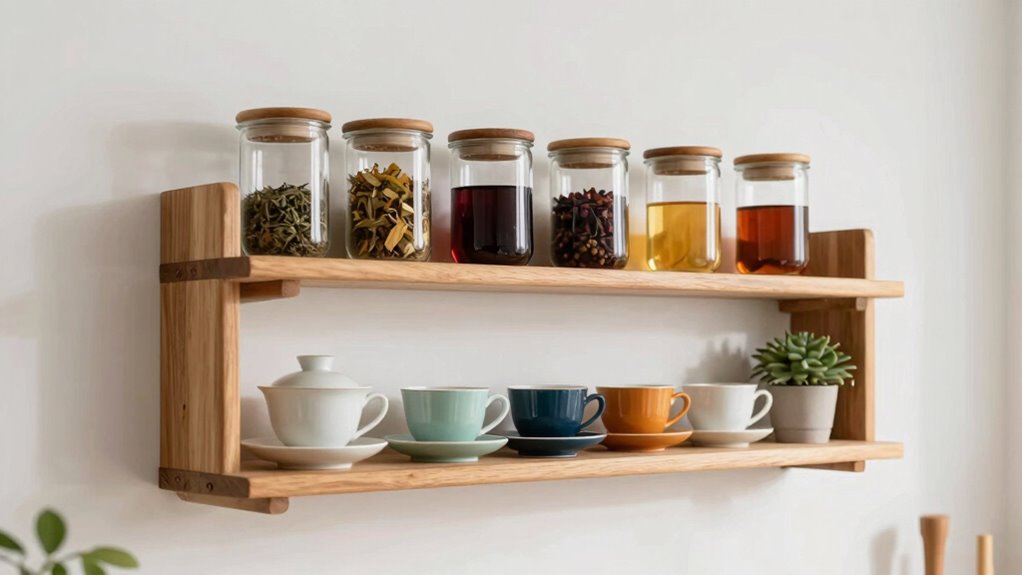
If you’re looking to create a beverage shelf dedicated to lower-caffeine options, the first step is understanding your preferences and available space. Think about what kinds of drinks you enjoy and how much room you have to dedicate to your new setup. This will help you decide whether to allocate a small corner or a larger section of your kitchen or pantry. Once you’ve assessed your space, consider the variety of beverages you want to include. A well-stocked lower-caffeine shelf should have a mix of tea infusions, herbal blends, and other non-caffeinated or low-caffeine drinks. These options give you plenty of choices for relaxing moments or quick refreshers without the jitters associated with high caffeine levels.
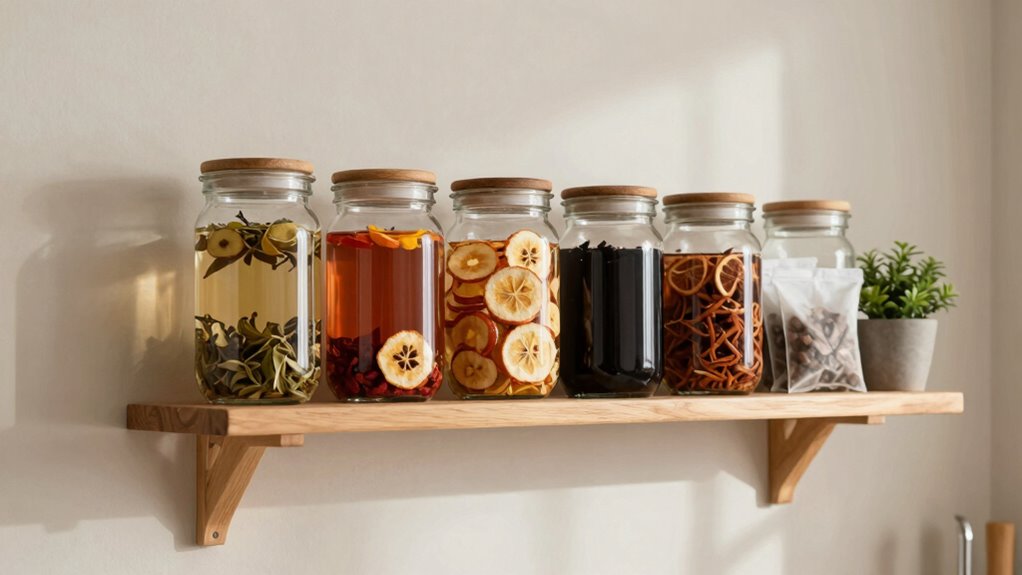
Start by gathering your tea infusions and herbal blends. Tea infusions made from decaffeinated or naturally low-caffeine leaves, like herbal teas, are perfect for this. Herbal blends, which often contain ingredients like chamomile, peppermint, or rooibos, naturally contain little to no caffeine. Organize these on your shelf in clear jars or labeled containers, making it easy to see what you have at a glance. Group similar items together to streamline your selection process—perhaps all the herbal blends in one section and the decaffeinated teas in another. This not only keeps your shelf tidy but also encourages you to try new flavors. Including caffeine content information on labels can help you make informed choices and tailor your collection to your caffeine preferences. A good understanding of emerging trends in herbal and decaffeinated teas can also help you stay current with new and innovative options, encouraging you to explore the latest herbal infusion varieties available. Additionally, exploring how sound frequencies can influence relaxation might inspire incorporating calming sounds while enjoying your tea, creating a more holistic experience.
Organize herbal and decaffeinated teas in clear jars, grouping similar types for easy selection and a tidy shelf.
When arranging your shelf, think about accessibility. Place your most frequently used items at eye level, and store less common or specialty teas higher or lower. Consider adding small baskets or dividers to keep different types of herbal blends and tea infusions separated. This way, you can quickly find your favorite chamomile or peppermint whenever you’re in the mood for a calming drink. If space allows, set aside a small area for accessories like tea infuser mugs, honey jars, or lemon slices. Having everything within reach creates a welcoming tea station that encourages you to enjoy your low-caffeine beverages regularly.
Remember to include herbal infusions, which are naturally caffeine-free, as a key part of your collection to maximize variety and health benefits. Don’t forget to keep your shelf organized and stocked. Regularly check your herbal blends and tea infusions for freshness and replenish supplies before they run out. This habit ensures you always have tasty, low-caffeine options on hand for any time of day. Building a dedicated lower-caffeine beverage shelf isn’t just about storage—it’s about creating a mindful way to enjoy variety without overdoing caffeine. With thoughtful organization and a good selection of herbal blends and tea infusions, you’ll have an inviting space that makes choosing a calming, lower-caffeine drink simple and enjoyable.
Products Worth Considering

Cuisinart ICE-70P1 2-Quart Ice Cream Maker with Countdown Timer

Vitamix Propel Series 750 Professional-Grade Blender, 4 Programs, Black

Traeger Woodridge Pro Wood Pellet Grill and Smoker, 970 sq. in., WiFIRE
As an affiliate, we earn on qualifying purchases.
Frequently Asked Questions
What Materials Are Safest for Food Storage on the Shelf?
For food storage on your shelf, choose materials with proven safety and storage compatibility. Opt for food-grade stainless steel, glass, or BPA-free plastics, as they resist corrosion and don’t leach harmful chemicals. Avoid materials like uncoated metals or certain plastics that may degrade or contaminate your beverages. Prioritize material safety to keep your drinks fresh and safe, ensuring your shelf is both functional and health-conscious.
How Do I Prevent Mold or Pests on the Shelf?
To prevent mold and pests, you should apply mold resistant coatings on your shelf and guarantee good airflow. Store beverages in pest proof containers with tight lids to keep pests out. Regularly clean the shelf with mild disinfectants, and keep the area dry, as moisture fosters mold growth. Check containers periodically for signs of pests or mold, and replace any that show damage or mold.
Can This Shelf Be Customized for Different Beverage Sizes?
Yes, you can customize this shelf for different beverage sizes. Think of it as a flexible puzzle, fitting various bottles with adjustable compartments that slide easily into place. Use non-slip surfaces inside the compartments to keep beverages steady and prevent spills. This way, your shelf adapts effortlessly to your collection, making it a tailored space that keeps everything organized and accessible, no matter the size or shape of your drinks.
What Is the Ideal Location for Installing the Shelf?
You should install the shelf at a height that comfortably supports its weight and allows easy access to your beverages. Aim for a location around waist to eye level, ensuring the shelf can handle the weight of your bottles without sagging. Make sure the installation height accommodates the size of your beverage containers, providing enough clearance for taller bottles and preventing overcrowding while keeping everything within reach.
How Do I Maintain and Clean the Shelf Regularly?
To keep your shelf organization and beverage variety looking fresh, you should regularly wipe it down with a damp cloth to remove dust and spills. Avoid harsh chemicals that might damage the surface. Periodically check for any signs of wear or dust buildup, and reorganize your beverages to maintain easy access. A gentle clean guarantees your lower-caffeine beverage shelf remains inviting and functional, enhancing your overall drinking experience.
Conclusion
Now that you’ve built your lower-caffeine beverage shelf, you’re not just organizing your drinks — you’re creating a sanctuary for mindful sipping. Think of it as a quiet revolution against caffeine overload, a small act that empowers you to choose calm and clarity. With each drink you place on that shelf, remember: you hold the power to craft a healthier, more balanced routine. Your new shelf isn’t just storage — it’s your personal oasis of moderation.