Roast development impacts flavor by triggering chemical reactions like Maillard reactions and caramelization, which create complex taste profiles beyond just the bean’s color. As you roast, these reactions develop nutty, chocolaty, fruity, or smoky notes, depending on the process. Managing heat and timing allows you to shape these flavors intentionally. If you want to discover how these chemical changes influence each sip, there’s more to explore below.
Key Takeaways
- Flavor development is driven by chemical reactions like Maillard and caramelization, which occur during roasting, not just color change.
- Different roast levels produce distinct flavors—light roasts highlight original bean notes, while dark roasts emphasize caramelized flavors.
- Proper control of heat and timing during roasting influences chemical processes that shape flavor, beyond visual appearance.
- The balance of chemical reactions impacts taste profiles, such as nutty, smoky, or sweet notes, regardless of bean color.
- Skilled roasting manipulates chemical transformations to craft specific flavors, making flavor more indicative of roast development than color.

Have you ever wondered how the roast level impacts the flavor of your coffee? It’s more than just a change in color; it’s about the complex chemical transformations that happen during roasting. When you roast coffee beans, you’re initiating a series of reactions that develop the coffee’s aroma and taste. Two key processes driving these changes are Maillard reactions and caramelization processes. These reactions shape the flavor profile you experience in each cup.
Maillard reactions occur when sugars and amino acids in the beans interact under heat. This chemical dance happens mostly in the early to mid-stages of roasting, creating an array of flavor compounds. As these reactions progress, they produce the nutty, toasted, and sometimes fruity notes that define a medium roast. The Maillard process is *vital* because it creates the foundation for the complex aromas you associate with freshly roasted coffee. Without it, your brew would lack depth and richness.
Maillard reactions develop the rich, complex aromas that define fresh coffee, forming the foundation of its depth and flavor.
Caramelization processes happen when sugars in the beans reach high temperatures and break down into simpler compounds, turning the beans darker. This process intensifies as the roast progresses, adding sweetness and a smoother body to the coffee. You can think of caramelization as the sweet side of roasting, giving you those caramel, toffee, or molasses notes. The darker the roast, the more pronounced these caramelization flavors become, often overshadowing the original bean characteristics. Understanding the chemical reactions** that occur during roasting can help you appreciate the artistry behind roasting even more. Additionally, controlling the temperature and timing during roasting is essential to guide these reactions and develop the desired flavor profile. Recognizing how these chemical transformations** unfold can deepen your appreciation for the skill and precision required in roasting.
It’s important to realize that roast development influences flavor beyond just the color of the beans. When you taste a light roast, you’re experiencing more of the beans’ original flavors, with minimal Maillard and caramelization influence. Conversely, darker roasts showcase the flavors developed through these chemical reactions, such as smoky, bitter, or even chocolatey notes. The degree of roast development determines how much of these processes take place, directly affecting the flavor profile. Additionally, the timing and temperature control during roasting are crucial for balancing these chemical transformations to achieve the desired flavor outcome.
You might notice that two beans of the same origin, roasted differently, taste entirely distinct. That’s because roast development guides the flavor evolution through these chemical reactions, not just visual changes. A skilled roaster carefully manages the heat and timing to optimize the Maillard reactions and caramelization processes, ensuring the final flavor hits the desired notes. Understanding these chemical reactions can help you appreciate the artistry behind roasting even more. So, next time you enjoy your coffee, remember that the rich, layered flavors are a direct result of these complex, flavorful reactions that happen during roasting—showing up in taste long before the beans turn dark enough to notice visually. Recognizing the chemical changes that occur during roasting can deepen your appreciation for the craft behind each cup.

Home Coffee Bean Roaster Tool – CAFEMASY Portable Stainless Steel Handy Coffee Roaster Mesh Pan Tool with Thermometer for Home & Outdoor Coffee Beans Baking
【Handy Coffee Roaster Tool Packing】- Including 1pc coffee bean roaster net with 1pc thermometer. Please note that this…
As an affiliate, we earn on qualifying purchases.
As an affiliate, we earn on qualifying purchases.
Frequently Asked Questions
How Does Roast Development Influence Coffee Aroma?
Roast development greatly influences your coffee aroma by shaping the coffee bean transformation and aroma compound formation. As the roast progresses, complex aroma compounds develop, releasing enticing scents like caramel, nuts, or fruity notes. You’ll notice that a well-developed roast enhances the depth and richness of aroma, making your coffee smell inviting and layered. Proper roast development guarantees these aroma compounds are ideally formed, delivering a more aromatic and flavorful coffee experience.
Can Roast Development Affect Coffee Acidity Levels?
Yes, roast development can affect coffee acidity levels. As you control the roast, you influence the acidity balance, often reducing it with darker roasts due to chemical changes during development. Proper roast development preserves the bright, tangy flavors while preventing over-roasting that can dull acidity. By paying attention to roast time and temperature, you can fine-tune the acidity to enhance overall flavor preservation and create a balanced cup.
What Role Does Temperature Play in Flavor Development?
Temperature control is essential because it directly influences flavor development, shaping your coffee’s profile. If you push the temperature too high or too low, you might miss out on complex flavors or risk over-roasting. As you carefully manage temperature, you reveal nuanced tastes hidden within the beans, creating a rich, balanced cup. The right temperature sparks the transformation that brings out the full depth of your coffee’s flavor profile.
How Does Roast Time Impact Flavor Complexity?
Roast time directly impacts flavor complexity by shaping the flavor layering and roast balance. Longer roasting enhances depth, allowing more nuanced, layered flavors to develop as sugars caramelize and compounds break down. However, too long can overshadow delicate notes. You should aim for a ideal roast time that balances boldness with complexity, creating a harmonious profile where each flavor layer complements the others, resulting in a richer, more intricate cup.
Is There a Way to Measure Roast Development Objectively?
Imagine you’re in a time machine, seeking accuracy. To objectively measure roast development, you can analyze chemical reactions like Maillard and caramelization, which directly influence flavor complexity. Tools like a spectrophotometer or chromameter quantify color changes, giving insights into the roast’s progression. Ultimately, these measurements impact sensory perception, helping you guarantee consistency and ideal flavor development, much like a master chef perfects their craft.
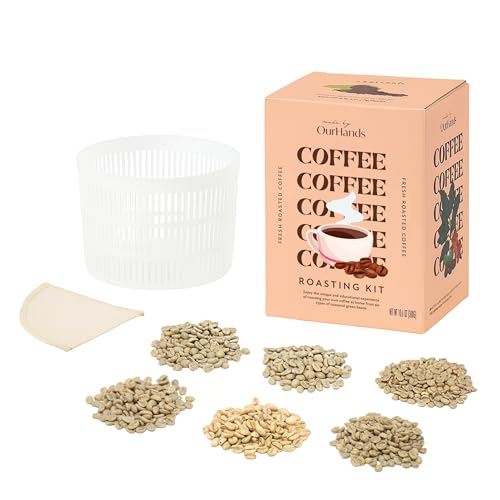
Coffee Roasting Kit by OurHands – Learn to Roast Green Coffee at Home with Your Oven – Includes 6 Varieties of Unroasted Coffee, Detailed Instructions and Coffee Roasting Tools
DIY COFFEE ROASTING KIT: Roast green coffee beans at home with our Coffee Roasting Kit. Ideal for coffee…
As an affiliate, we earn on qualifying purchases.
As an affiliate, we earn on qualifying purchases.
Conclusion
As you sip your coffee, remember that roast development is the silent artist shaping each flavor, much like a master painter blending shades to reveal depth. It’s not just about the color; it’s about the story woven into every note and nuance. The journey from bean to brew is a dance of patience and precision, revealing a symphony of taste that’s as layered and intricate as life itself. Embrace each sip as a proof to that quiet, transformative process.

The Flavor Matrix: A Science-Based Guide to Pairing Ingredients for Creative Cooking, with Charts, Data, and Recipes
As an affiliate, we earn on qualifying purchases.
As an affiliate, we earn on qualifying purchases.

Coffee: Volume 1: Chemistry
As an affiliate, we earn on qualifying purchases.
As an affiliate, we earn on qualifying purchases.