If your filter coffee tastes bitter, it’s likely due to using old or low-quality beans, which develop off-flavors over time. Over-extraction caused by brewing water above 205°F or too fine a grind can also pull out harsh, bitter compounds. Additionally, using unbleached filters and improper brewing techniques may increase bitterness, as they allow more bitter flavors through or cause uneven extraction. Want to discover more ways to improve your coffee’s flavor? Keep exploring.

Get coffee and tea gear delivered free — and shop member deals
- Fast, free delivery on millions of items
- Access to Prime Big Deal Days deals on October 6–7
- Prime Video, Amazon Music and more included
Key Takeaways
- Using beans with high Robusta content or stale beans can increase bitterness.
- Brewing at temperatures above 205°F causes over-extraction of bitter compounds.
- Fine grind size and prolonged brewing time lead to over-extraction and bitterness.
- Unbleached filters may allow more bitter flavors to pass through, affecting smoothness.
- Improper storage and outdated beans develop off-flavors, resulting in a harsher taste.
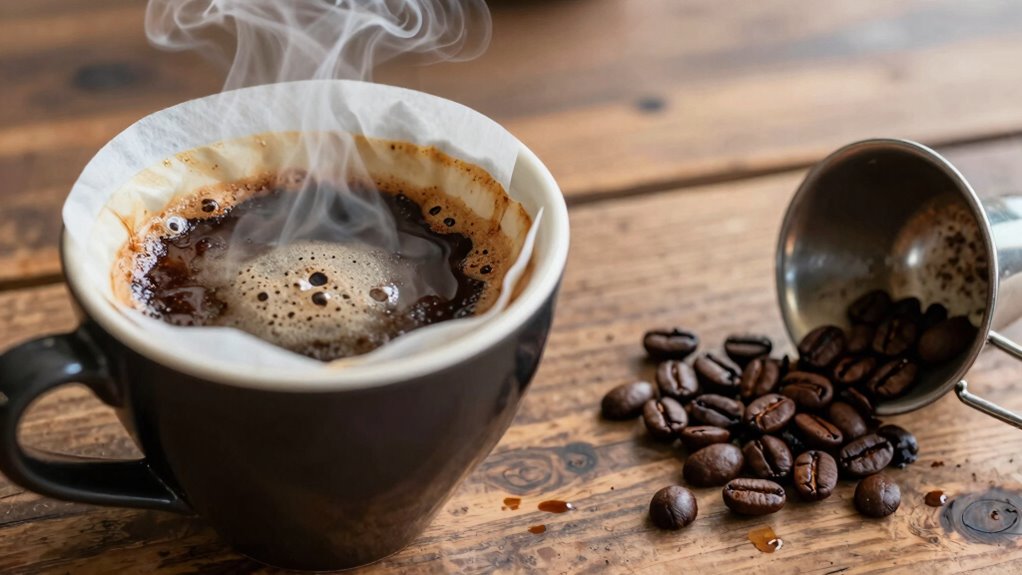
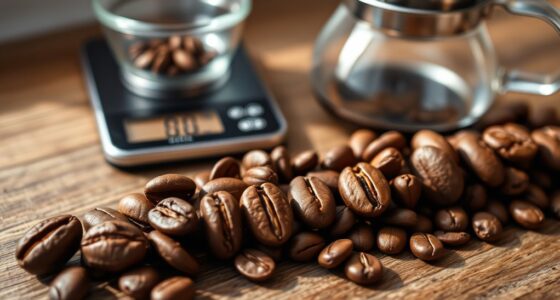
Bitter filter coffee can be disappointing, especially when you’re expecting a smooth, flavorful cup. One common cause of bitterness is the variety of coffee beans you choose. Different coffee bean varieties have distinct flavor profiles, and some naturally contain higher levels of bitter compounds. For example, Robusta beans tend to produce a stronger, more bitter taste compared to Arabica beans, which are generally milder and sweeter. If you’re brewing a blend that contains a significant amount of Robusta, you might notice a harsher, more bitter flavor. On the other hand, if you prefer a smoother cup, selecting high-quality Arabica beans and ensuring proper roasting can make a big difference in preventing bitterness. It’s also vital to take into account the freshness of your beans, as stale coffee can develop off-flavors and bitterness over time. Proper storage and freshness preservation are essential for maintaining optimal flavor.
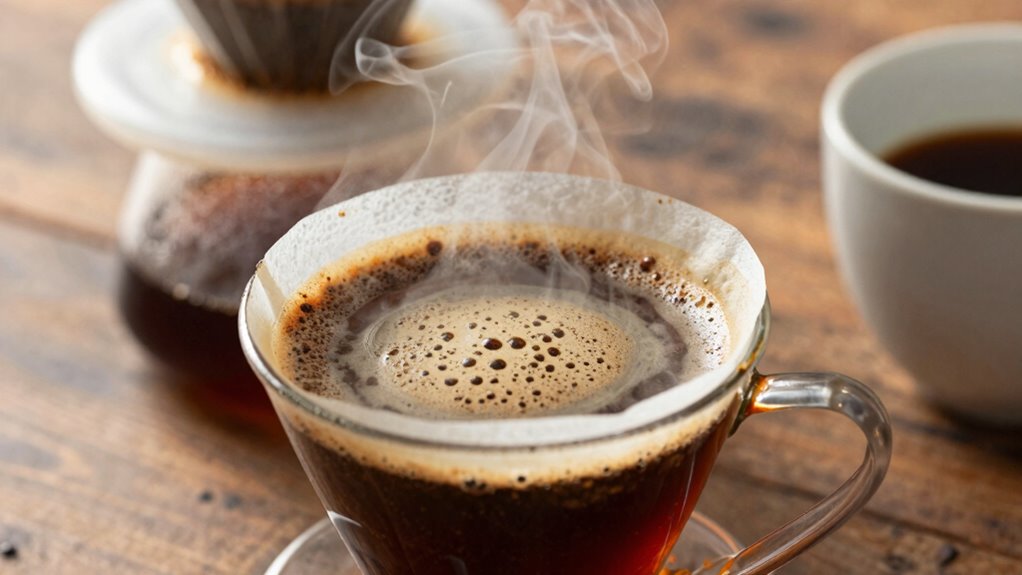
Another critical factor that influences bitterness is brewing temperature. If your water is too hot during brewing, it can extract too many bitter compounds from the coffee grounds, leading to an unpleasant taste. Ideally, you want to brew your coffee at a temperature between 195°F and 205°F (90°C to 96°C). Brewing above this range can cause over-extraction, which pulls out undesirable bitter flavors along with the desirable aromatic oils. Conversely, brewing at too low a temperature can result in under-extraction, making your coffee taste weak and flat but not necessarily bitter. Proper control of brewing temperature guarantees that you extract the right balance of flavors without emphasizing the bitter notes. Additionally, understanding extraction processes can help you fine-tune your brewing technique for better results. Proper temperature control during brewing can significantly improve the overall taste of your coffee. Moreover, maintaining consistent brewing conditions reduces the likelihood of uneven extraction, which can also contribute to bitterness.
Beyond bean varieties and temperature, other factors can contribute to bitterness. Overly fine grind size increases surface area, leading to over-extraction and bitterness. Leaving your coffee on the heat for too long or using too much coffee for your brewing method can also intensify bitterness. Even the type of filter you use can matter; unbleached filters tend to let through more bitter compounds, whereas paper filters can trap some of these flavors. Controlling these variables allows for a more balanced and enjoyable coffee experience. Adjusting grind size and brewing time can help prevent the extraction of excessive bitter compounds, resulting in a more harmonious flavor profile. Additionally, using appropriate brewing equipment can influence how evenly the coffee is extracted and thus affect bitterness.
In essence, understanding the nuances of coffee bean varieties and maintaining ideal brewing temperature are key to avoiding bitter filter coffee. By choosing the right beans and controlling your brewing process carefully, you can enjoy a cup that’s rich, smooth, and full of nuanced flavors rather than harsh and bitter. It’s about fine-tuning each step to bring out the best in your coffee, ensuring that bitterness doesn’t overshadow the complex, delightful notes you’re aiming for.
best coffee beans for smooth filter coffee
As an affiliate, we earn on qualifying purchases.
As an affiliate, we earn on qualifying purchases.
Frequently Asked Questions
Can Water Quality Affect the Bitterness of Filter Coffee?
Yes, water quality affects the bitterness of your filter coffee. If your water has a high mineral content or an imbalanced water pH, it can lead to over-extraction, resulting in bitter flavors. Using water with the right pH level—around 6.5 to 8—and low mineral content helps guarantee a smoother, balanced brew. So, paying attention to your water quality can make a noticeable difference in your coffee’s taste.
Does the Type of Coffee Bean Influence Bitterness Levels?
You notice your coffee tastes bitter, so you wonder if the bean type matters. Yes, coffee bean varieties and roasting levels directly influence bitterness. For example, a dark roast often produces more bitterness than a light roast because of increased caramelization. Similarly, Robusta beans tend to be more bitter than Arabica. Choosing the right bean variety and roasting level helps you control bitterness, making your filter coffee more enjoyable.
How Does Brewing Time Impact Coffee Bitterness?
Brewing time considerably impacts coffee bitterness through extraction timing and temperature control. If you brew too long, over-extraction occurs, releasing bitter compounds and increasing bitterness. Conversely, brewing too briefly results in under-extraction, producing flat, sour flavors. Maintaining proper temperature guarantees extraction is even and controlled. By adjusting brewing time and temperature, you can minimize bitterness and achieve a balanced, smooth filter coffee.
Can Storage Methods Alter Coffee’s Bitterness?
Sure, storing coffee in airtight containers and maintaining proper temperature might seem like trivial details, but they actually shape its bitterness more than you’d think. Ironically, slipping beans into a warm, humid pantry can turn your brew bitter faster than over-extraction. Keep them in cool, dark storage containers and control temperature to preserve flavor, preventing the bitter notes from intensifying and turning your coffee into a disappointing, flat experience.
Does the Grind Size Contribute to Bitter Taste?
Yes, grind size greatly impacts bitterness in your filter coffee. If your grind is too fine, it creates a higher surface area and extracts more bitter compounds, making your brew taste harsh. Conversely, a consistent grind size ensures even extraction, preventing over-bitter flavors. Particle size and grind consistency work together to control extraction rate; aim for a medium, uniform grind to balance flavor and avoid bitterness.
Conclusion
So, next time your filter coffee turns bitter, consider the common culprits like over-extraction or too fine a grind. Curiously, some believe adding a pinch of salt can neutralize bitterness, and there’s truth to it—salt can suppress bitter tastes. Experimenting with brewing time and grind size can also make a difference. Ultimately, understanding these causes helps you craft a smoother, more balanced cup every time.
Halloween Picks
halloween
As an affiliate, we earn on qualifying purchases.