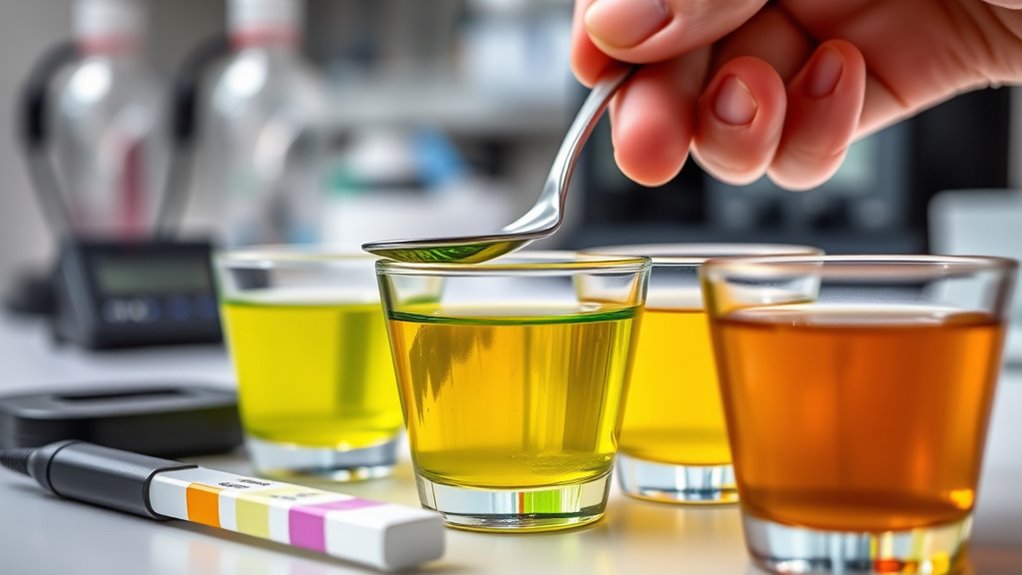

Understanding the difference between acidity and sourness helps you taste and troubleshoot fermented foods and drinks more effectively. Acidity is a chemical property that affects pH levels, while sourness is the sensory perception of that acidity. Too much acidity can make something sharp, while too little may leave it dull. Adjusting fermentation time, ingredients, or adding balancing elements can help you control these flavors. If you want to master this balance, you’ll find more helpful insights ahead.
Key Takeaways
- Acidity is a chemical property affecting pH, while sourness is a sensory perception of taste.
- Fermentation produces acids that influence both acidity and perceived sourness in foods and beverages.
- Balancing flavor involves adjusting acidity levels and managing sourness through ingredients or fermentation time.
- Troubleshooting sourness involves modifying fermentation, diluting acids, or adding sweetness to achieve desired taste.
- Recognizing whether the issue is chemical acidity or sensory sourness helps in accurate flavor correction.

Although the terms “acidity” and “sourness” are often used interchangeably, they refer to different qualities in foods and beverages. Acidity is a chemical property, primarily related to the presence of acids like citric, malic, or lactic acid, which influence pH levels. Sourness, on the other hand, is a sensory perception — how your palate interprets the sharp, tangy taste. Recognizing this distinction helps you better understand how flavors develop and how to troubleshoot when things go awry. The specific acids present can impact the intensity and type of sourness perceived, making it important to consider the chemical composition of your ingredients. Fermentation effects play a significant role in shaping both acidity and sourness. During fermentation, microbes such as yeast and bacteria break down sugars, producing acids and alcohols. For instance, in sourdough bread or yogurt, lactic acid bacteria create a tangy flavor that’s a result of fermentation. This process not only develops the characteristic sourness but also impacts the overall flavor balance of the product. Fermentation effects can be subtle or pronounced, depending on fermentation time and microbial activity, so understanding this helps you control the flavor profile of your homemade foods or beverages. A proper flavor balance hinges on managing acidity levels. Too much acidity can dominate a dish, making it excessively tangy or sharp, while too little may leave it flat or dull. When troubleshooting, consider whether the acidity is too intense or if the sourness is overwhelming your palate. Adjusting the acidity, either by diluting with more base ingredients or balancing with sweetness or fat, can restore harmony. For example, adding a pinch of sugar to a highly acidic dish can mellow the sharpness, making it more palatable. Conversely, if a beverage lacks sourness when desired, a touch of acid or a fermentation tweak might be necessary. Understanding the relationship between fermentation effects and flavor balance gives you the tools to fine-tune your culinary creations. If your fermented product tastes too sour or too acidic, you can modify fermentation time or microbial activity to achieve your preferred taste. If sourness feels out of place in a dish, consider balancing it with ingredients that add richness or sweetness. Recognizing that acidity is a measurable chemical property while sourness is a sensory experience allows you to troubleshoot more effectively, ensuring your dishes and drinks have the desired flavor profile. In the end, mastering the subtle distinctions between acidity and sourness, along with how fermentation influences these qualities, empowers you to craft well-balanced, flavorful foods and beverages. Whether you’re brewing, baking, or cooking, understanding these elements lets you troubleshoot with confidence, perfecting your culinary or fermenting techniques every time.
Top picks for "acidity sournes tast"
Open Amazon search results for this keyword.
As an affiliate, we earn on qualifying purchases.
Frequently Asked Questions
Can Acidity Cause Health Issues Besides Taste Problems?
Yes, acidity can cause health issues beyond taste problems. You might experience acid reflux, where stomach acid irritates your esophagus, leading to discomfort and potential damage. It can also cause dental erosion, wearing down your tooth enamel over time. If you consume highly acidic foods or drinks regularly, you’re at higher risk for these issues. Managing your intake and maintaining good oral and digestive health can help prevent complications.
How Do Different Foods Influence Perceived Sourness?
Different foods dramatically influence perceived sourness, like turning a mild breeze into a hurricane in your mouth. Fermentation effects amplify sourness, especially in fermented foods like yogurt or sauerkraut. Flavor interactions also play a role, as fats can mellow sourness, while sweeteners enhance or mask it. Your taste buds respond to these factors, making some foods seem more intensely sour depending on their composition and how they interact with your palate.
Are There Natural Ways to Reduce Excessive Acidity in Recipes?
Yes, you can naturally reduce excessive acidity in recipes by adjusting ingredients and using natural remedies. Try adding a small amount of baking soda, which neutralizes acids, or incorporate a pinch of sugar or honey to balance the sourness. You could also include dairy like cream or yogurt, as their fats help mellow acidity. Experiment with these methods to find the perfect balance and improve your dish’s flavor.
What Role Does Ph Play in Determining Sourness?
pH plays a vital role in determining sourness because it measures the acidity level in your food. Using a pH measurement, you can gauge where your recipe falls on the acidity scale—lower pH values mean higher acidity and more sourness. When you adjust the pH, you directly influence how sour your dish tastes, helping you control flavor and balance. Keep in mind, a lower pH indicates a more sour taste.
Can Aging Affect a Food’s Acidity and Sourness Levels?
Aging can substantially impact a food’s acidity and sourness levels, affecting flavor stability over time. As you age a product, natural fermentation or chemical changes might increase acidity, making it more sour, or sometimes decrease it, softening the flavor. You should monitor these changes closely, as aging impacts both the taste profile and overall quality. Proper storage and timing help maintain the desired balance of acidity and sourness.
Conclusion
Understanding acidity and sourness helps you navigate flavors like a seasoned chef. Remember, acidity is the backbone giving brightness, while sourness is its playful cousin adding tang. Think of it as balancing a dance—when one steps out of tune, the whole performance suffers. With this knowledge, you’ll troubleshoot taste issues confidently, turning your culinary creations into harmonious symphonies of flavor. Embrace these differences, and let your palate be the compass guiding every delicious adventure.