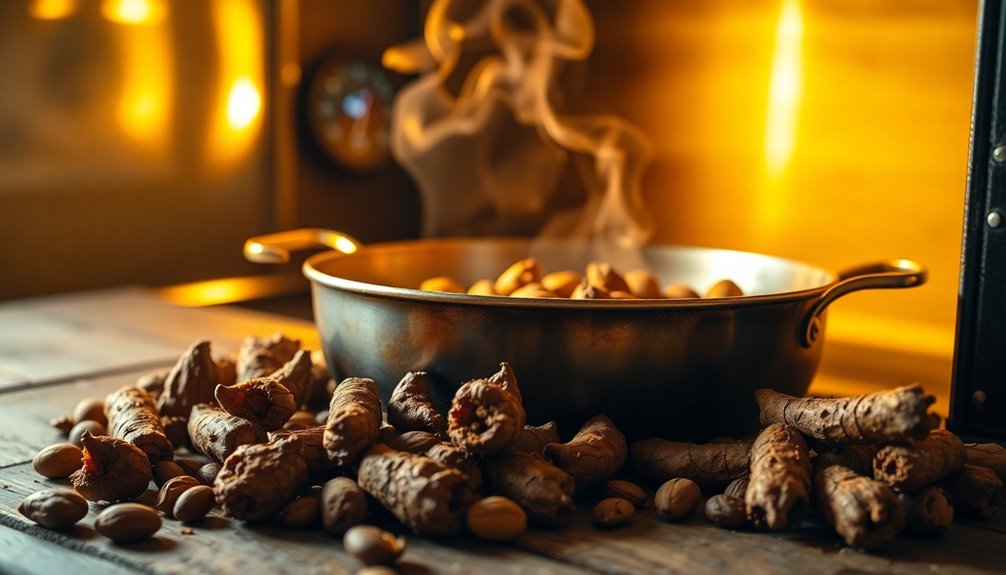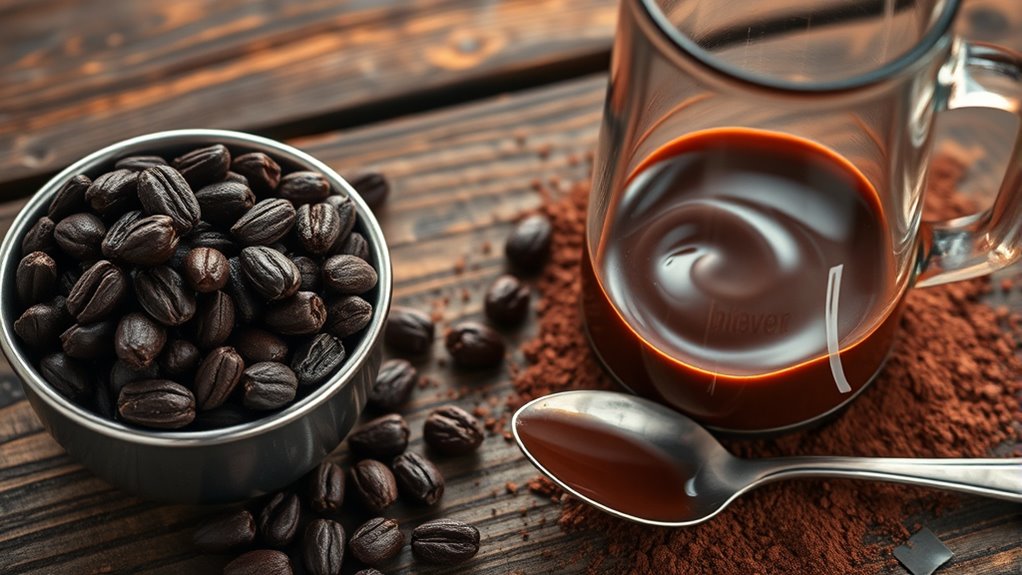

To turn cocoa nibs into brewing chocolate, you start by harvesting ripe cacao pods and fermenting the beans to develop flavor. After drying and cleaning, you roast the beans to enhance their richness, then winnow to remove shells and grind into chocolate liquor. Refining and tempering these steps create a smooth, flavorful brew. Each stage reveals new nuances, and if you keep exploring, you’ll uncover how each process shapes the final taste.

Get coffee and tea gear delivered free with Prime
- Fast, free delivery on millions of items
- Prime Video, Amazon Music and more included
- Member-only deals all year
Key Takeaways
- The process begins with harvesting ripe cacao pods, followed by fermentation to develop essential flavor characteristics.
- Roasting intensifies flavors, enhances aroma, and develops notes like roasted, caramelized, or fruity profiles.
- Roasted beans are winnowed to remove shells, producing nibs that are ground into chocolate liquor.
- Refinement steps such as conching and tempering enhance flavor smoothness and create a velvety texture.
- The entire bean-to-cup process results in unique, nuanced brewing chocolates influenced by origin, fermentation, and roasting methods.
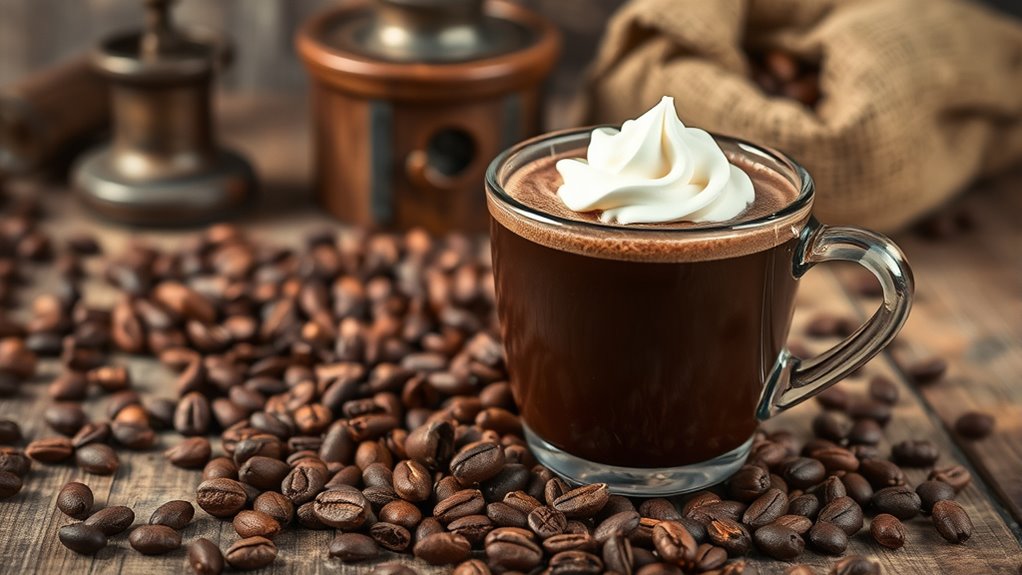
Have you ever wondered how cacao transforms into a rich, comforting brew? The journey from cacao beans to a delicious cup of chocolate is fascinating, revealing layers of flavor and craftsmanship along the way. It all begins with understanding the bean to cup process, a meticulous series of steps that shape the final taste you experience. This process isn’t just about roasting and grinding; it’s about revealing the complex chocolate flavor profiles hidden inside each bean. These profiles are influenced by factors like the cacao variety, terroir, fermentation, and drying methods, which give each batch its unique character. When you sip your brewing chocolate, you’re tasting the culmination of these subtle nuances—notes of fruitiness, nuttiness, earthiness, or even floral hints—all molded by the journey from bean to cup.
The first step in the process is harvesting ripe cacao pods, carefully selected to guarantee quality. Once harvested, the beans undergo fermentation, where natural yeasts and bacteria develop the beans’ flavor foundation. This stage is vital for developing the chocolate flavor profiles that distinguish different cacao origins. After fermentation, the beans are dried and cleaned, preparing them for roasting. Roasting is where the magic intensifies, as heat activates flavor compounds and releases aromatic oils. During this stage, the beans’ outer shell is loosened, and the internal nibs develop deeper, richer flavors—think roasted, caramelized, and sometimes fruity or spicy notes.
Once roasted, the beans are winnowed to remove shells, leaving behind the prized nibs. Grinding these nibs produces chocolate liquor, a paste that contains cocoa solids and cocoa butter. This is where the bean to cup process becomes tangible; from these nibs, you get a spectrum of chocolate flavor profiles based on how the beans were processed and roasted. When you brew with cacao, whether as a hot chocolate drink or a brewed cacao beverage, you’re actually tapping into this rich, complex foundation. The subsequent steps—conching, refining, and tempering—further refine the flavors, smooth out bitterness, and create the velvety texture you love. Ultimately, understanding the bean to cup process reveals how each element influences the final brew, making every cup a uniquely crafted experience rooted in the journey from cacao pod to your mug.
As an affiliate, we earn on qualifying purchases.
Frequently Asked Questions
What Are the Health Benefits of Cacao Brews?
You’ll enjoy several health benefits from cacao brews, including their rich cacao antioxidant properties that help protect your cells from damage. Plus, cacao can boost your mood, thanks to compounds that promote feelings of happiness and relaxation. Drinking cacao brews regularly may also support heart health, improve focus, and provide a natural energy boost, making them a delicious and beneficial addition to your daily routine.
How Does Cacao Nib Origin Affect Flavor?
Cacao nib origin dramatically determines flavor, as different cacao bean varieties bring distinct tastes. You’ll notice that terroir influence—climate, soil, and environment—shapes the subtle nuances in each nib. For example, beans from West Africa may exhibit bold, fruity notes, while South American varieties deliver bright, floral flavors. So, your cacao’s origin influences everything from aroma to aftertaste, making each brew uniquely vibrant and vibrant.
Can Cacao Brews Be Brewed at Home Easily?
Yes, you can brew cacao at home easily if you focus on good ingredient quality and simple techniques. Start with fresh cocoa nibs or high-quality cacao powder, then steep them in hot water or milk, much like making tea or hot chocolate. Use a fine strainer to remove solids, and customize sweetness to your taste. With some basic equipment and fresh ingredients, home brewing cacao is straightforward and rewarding.
What Are Popular Cacao Brew Variations Worldwide?
Imagine sipping a Mexican-style cacao caliente with spicy cinnamon and smoky chili, showcasing bold cacao flavor profiles. Worldwide, popular cacao brew variations include Mexican hot cacao, African-style spiced brews, and Swiss-style drinking chocolates. You can explore different brewing techniques, like steeping cacao nibs or blending with spices, to create diverse flavors. These methods highlight regional tastes, making each cacao brew a unique cultural experience you can easily enjoy at home.
How Long Does Cacao Brew Preservation Last?
You can typically store cacao brew for about 2 to 3 days in the refrigerator, but proper storage duration depends on how well you prevent spoilage. Keep it in an airtight container to prevent contamination and spoilage, and always check for signs of fermentation or off smells before drinking. For longer preservation, consider freezing it in small portions, which can extend shelf life while maintaining flavor and freshness.
Conclusion
So, next time you sip your fancy cacao brew, remember—you’re just one step away from turning cacao nibs into a rich, bitter rebellion. Who needs coffee when you can awaken your senses with a dash of chocolate-infused defiance? Embrace the irony: in a world obsessed with purity, you’re happily muddling the line between beverage and rebellion. Cheers to breaking the mold—one bitter sip at a time.
Halloween Picks
halloween
As an affiliate, we earn on qualifying purchases.