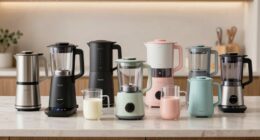
To perfect your pour-over, choose quality equipment like a ceramic or glass dripper, a gooseneck kettle, and a scale. Use fresh, filtered water heated to about 200°F, and grind your coffee to a medium consistency. Pour slowly in small circular motions, maintaining a steady flow to guarantee even extraction. Adjust your grind size and pouring technique based on taste, and keep everything consistent. Continue exploring these tips, and you’ll open a rich, flavorful cup with every brew.
Key Takeaways
- Use medium grind size and a steady pouring technique for even extraction and balanced flavor.
- Maintain water temperature around 200°F and precise coffee-to-water ratios (1:15 to 1:17) for consistency.
- Invest in quality equipment like a gooseneck kettle, dripper, and a digital scale for better control.
- Pour in small circular motions, starting from the center outward, to ensure even saturation.
- Regularly clean your equipment and adjust grind size or pouring speed to troubleshoot and improve flavor.

LHUKSGF Pour Over Ceramic – Coffee Dripper Ceramic Coffee Maker with 3 Holes Flat Bottom, Porcelain Slow Filter Cone for Travel, Camping, Office, Home, Coffee Maker Brew, Green
𝙋𝙤𝙧𝙩𝙖𝙗𝙡𝙚 𝙃𝙖𝙣𝙙𝙢𝙖𝙙𝙚 𝘽𝙧𝙚𝙬:Our classic ceramic pour over coffee dripper lets you have a traditional, hands-on brewing experience. You…
As an affiliate, we earn on qualifying purchases.
As an affiliate, we earn on qualifying purchases.
Choosing the Right Equipment and Ingredients
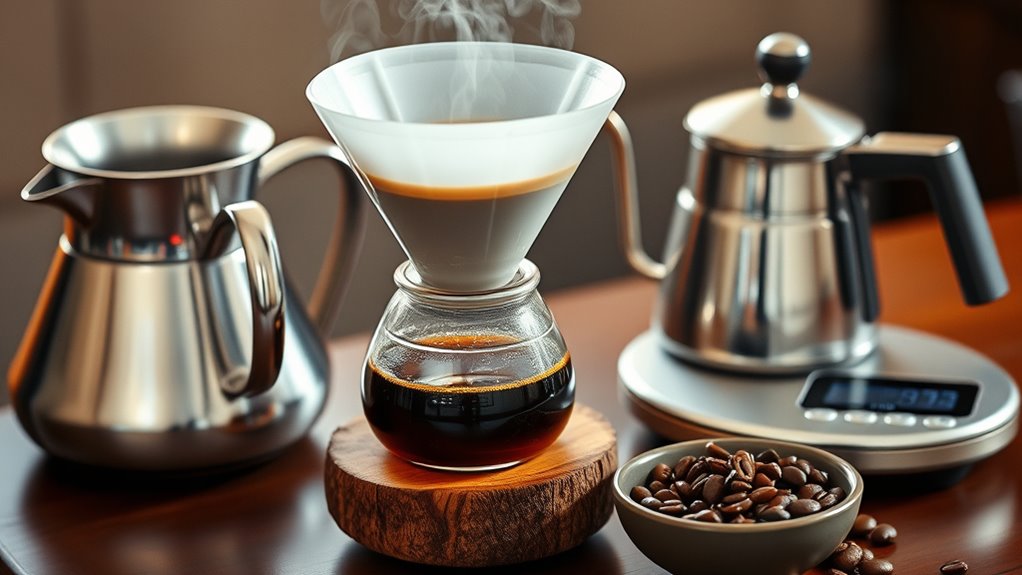
Choosing the right equipment and ingredients is essential for brewing the perfect pour-over. Your grind size plays a vital role; a medium grind typically works best for consistent extraction. If your grind is too fine, brewing time will increase, possibly over-extracting and making your coffee bitter. Conversely, a coarse grind leads to a shorter brewing time and weak flavor. Invest in a quality dripper, a gooseneck kettle for control, and a digital scale to measure ingredients precisely. Use fresh, filtered water at the right temperature, around 195–205°F. Properly selecting materials such as glass or ceramic drippers can also influence heat retention and extraction quality. Being mindful of water temperature helps ensure optimal flavor extraction and prevents over- or under-extraction. By choosing the correct grind size and equipment, you’ll better manage brewing time and achieve a balanced, flavorful cup. Remember, the right tools and ingredients lay the foundation for a successful pour-over experience.

PARACITY Pour Over Kettle, Gooseneck Spout Coffee Tea Pot,12OZ Hanging Ear Hand Blunt Long Narrow Drip Cup Gooseneck Kettle, Camping Coffee Pot for Travel Outdoor(Stainless Steel)
【Perfect size for a cup of coffee & tea】With the capacity of 350ml/ 12oz and portable size, this…
As an affiliate, we earn on qualifying purchases.
As an affiliate, we earn on qualifying purchases.
Preparing Your Coffee and Water
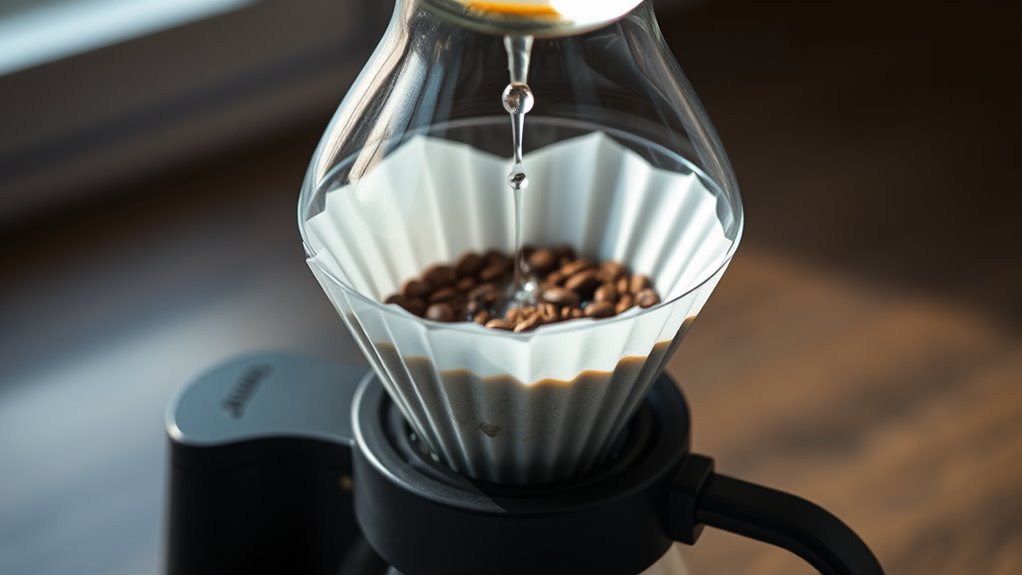
To make certain your pour-over coffee turns out flavorful and well-balanced, start by preparing your coffee and water properly. Use a consistent grind size—preferably medium—not too coarse or fine, to guarantee proper extraction. The water temperature should be just off the boil, around 200°F (93°C), to release full flavor. Properly measured coffee grounds and clean, filtered water make a noticeable difference. Here’s a quick reference:
| Parameter | Recommended Setting |
|---|---|
| Grind size | Medium |
| Water temperature | About 200°F (93°C) |
| Coffee-to-water ratio | 1:15 to 1:17 |
Adjust these based on your taste, but maintaining Consistency in preparation ensures each cup maintains the desired flavor profile. Using precise measurements helps achieve a balanced and flavorful brew. Paying attention to water quality can also impact the overall taste, enhancing the extraction and flavor clarity. Incorporating proper water temperature control maximizes extraction efficiency and flavor. Additionally, understanding the importance of hydration and nutrition can help prevent fatigue and maintain optimal performance during your brewing process.

Maestri House Mini Coffee Scale with Timer, USB-C Rechargeable Espresso Scale, 2kg/0.1g Accurate Scale for Espresso and Pour-Over Coffee, Portable Digital Kitchen Scale with Auto Timer (Black&Silver)
【Ultra Small, Yet Professional】The Espresso Scale is small enough to fit in your palm. It measures 4.13*4.13*0.78 inches…
As an affiliate, we earn on qualifying purchases.
As an affiliate, we earn on qualifying purchases.
Mastering the Pouring Technique

Mastering the pouring technique is essential for extracting the best flavor from your coffee. Your pouring speed impacts extraction; a steady, controlled pour guarantees even saturation without over-extracting. Aim for a slow, consistent pour, allowing the water to flow smoothly over the coffee grounds. The pouring angle also matters—hold the kettle at about a 45-degree angle to control the flow and prevent splashing. Start by pouring in small, circular motions from the center outward, then back to the middle, maintaining a steady rate. Keep your hand steady and avoid rushing; this helps maintain uniform extraction. Proper temperature control is also crucial during pouring to ensure optimal flavor development. Incorporating AI-powered tools can help beginners analyze and improve their pouring technique over time. Practice makes perfect. With attention to pouring speed and angle, you’ll maximize flavor and achieve a beautifully balanced cup every time, especially when you understand the fundamentals of coffee extraction.
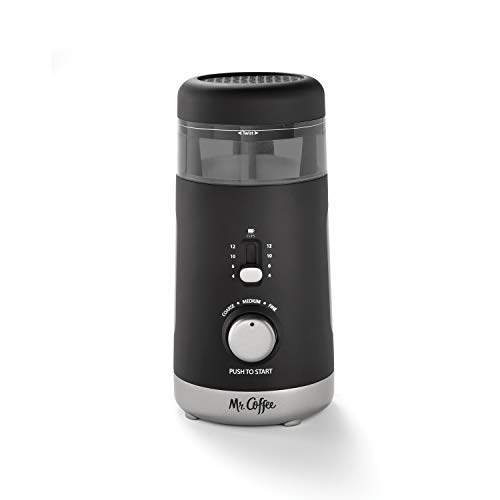
Mr. Coffee Automatic Coffee Grinder with 5 Presets, 12 Cup Capacity, Black – Ideal for Home Use and Espresso Lovers
Hands-free Grinding: Automatic settings for efficient, stress-free use
As an affiliate, we earn on qualifying purchases.
As an affiliate, we earn on qualifying purchases.
Troubleshooting Common Issues

Even with careful pouring, you might encounter issues that affect your coffee’s flavor. One common problem is an over- or under-extracted brew, often caused by the grind size. If your coffee tastes sour or weak, your grind might be too coarse, resulting in inadequate extraction. Conversely, a bitter or harsh flavor suggests your grind is too fine, slowing the brew and over-extracting the coffee. Additionally, inconsistent brew time can lead to poor flavor. If your brew finishes too quickly, try a slightly finer grind or adjust your pouring technique. If it takes too long, coarsen the grind or increase pouring speed. Monitoring and adjusting grind size and brew time consistency helps troubleshoot these issues, ensuring a balanced, flavorful cup every time. Regular cleaning and maintenance of your pour-over equipment can also prevent clogged filters that might impact flow rate and extraction quality. Incorporating proper water temperature and affecting extraction knowledge can help you fine-tune your brewing process for optimal results. Moreover, understanding the influence of water quality on extraction can further enhance your coffee’s flavor profile.
Tips for Enhancing Flavor and Consistency

Enhancing the flavor and consistency of your pour-over coffee often comes down to small adjustments and mindful techniques. First, pay attention to your grind size; a medium grind usually works best, but tweaking it finer or coarser can bring out different flavors. Too fine, and your brew may be over-extracted and bitter; too coarse, and it might be weak. Next, focus on your brew ratio—using the right amount of coffee to water ensures balanced extraction. A common starting point is 1:16, but adjusting slightly can intensify or mellow the flavor. Consistently measuring both your coffee and water helps maintain uniformity. Small tweaks to grind size and brew ratio make a significant difference in achieving a flavorful, well-balanced cup with each pour-over.
Frequently Asked Questions
How Do I Store Coffee Beans to Maintain Freshness?
To keep your coffee beans fresh, store them in airtight containers to prevent exposure to air, which can cause staleness. Place the container in a cool, dark storage spot, away from light, heat, and humidity, to preserve their flavor. Avoid refrigerating or freezing beans regularly, as moisture can damage them. By following these steps, you’ll guarantee your coffee stays flavorful and aromatic for longer.
What Grind Size Is Best for Different Pour-Over Methods?
Did you know that grind size impacts over 80% of your coffee’s flavor? For pour-over brewing, a medium grind offers the best balance, promoting grind consistency and ideal extraction. Use a slightly coarser grind for a longer brew time with methods like Chemex, and a finer grind for faster pour-over styles. Adjusting grind size helps control brew time, ensuring you get a perfect cup every time.
How Can I Tell if My Coffee Is Over-Extracted or Under-Extracted?
You can tell if your coffee is over- or under-extracted by tasting it for flavor imbalance and looking for extraction signs. Over-extracted coffee tends to taste bitter, harsh, or overly strong, while under-extracted coffee may be sour, weak, or watery. Pay attention to these flavor cues and adjust your grind size, brew time, or pour rate accordingly. Proper extraction results in a balanced, smooth, and flavorful cup.
Is It Necessary to Use Filtered Water for Pour-Over Brewing?
Imagine your coffee as a delicate dance, where water’s mineralization sets the rhythm. Using filtered water, you remove tap water’s impurities, allowing pure extraction to shine. Tap water can introduce minerals and chlorine that dull flavors, making filtered water a better choice. While not strictly necessary, filtered water often results in cleaner, more vibrant coffee, helping you enjoy the true essence of your beans with every brew.
How Do I Scale Recipes for Larger or Smaller Servings?
When you want to adjust your coffee recipe for different servings, you need to focus on portion adjustment and recipe scaling. To make more or less, simply multiply or divide your original coffee-to-water ratio accordingly. Use a scale to measure your coffee and water precisely, ensuring consistency. This way, you can easily customize your brew size while maintaining the ideal flavor, no matter the number of servings.
Conclusion
Mastering the pour-over is like revealing the secret to coffee greatness. With the right tools, perfect technique, and a splash of patience, you’ll create brews so divine, they’ll make legends jealous. Every drip becomes a masterpiece, transforming your mornings into epic rituals. Once you get the hang of it, you’ll wonder how you ever settled for anything less. Prepare to impress yourself—and everyone else—with coffee so incredible, it’ll feel like sipping liquid gold every single time.