
When making cold brew, your coffee-to-water ratio greatly impacts flavor: a common start is 1:4 or 1:5, but you can tweak it for a bolder or lighter taste. Grind size matters too—go for coarse grounds to prevent over-extraction, while finer grounds can make it harsh. Steep time can range from 12 to 24 hours, affecting strength and richness. Keep experimenting, and you’ll uncover the perfect variables for your ideal cold brew.
Key Takeaways
- Adjust coffee-to-water ratio (1:4 or 1:5) to control brew strength and flavor profile.
- Use a coarse grind to prevent over-extraction and achieve a smooth, balanced cold brew.
- Steep coffee grounds for 12 to 24 hours to vary the intensity and richness of the flavor.
- Longer steep times produce a stronger, more concentrated cold brew; shorter times yield a lighter taste.
- Experiment with ratios, grind size, and steep time to customize your cold brew’s strength and flavor.
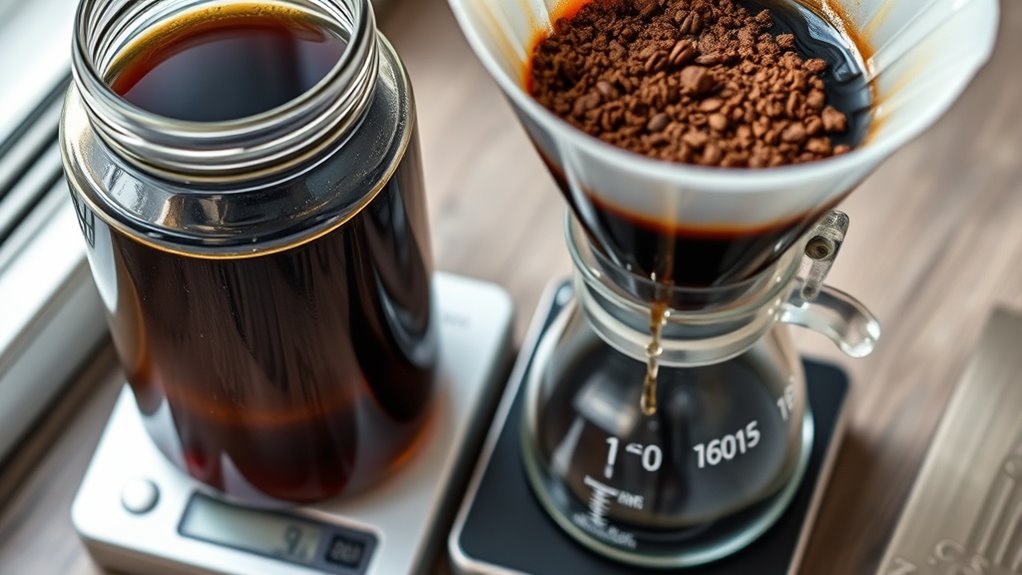
Cold brew coffee’s flavor and strength depend on several key variables that you can tweak to suit your taste. One of the most important factors is the ratio of coffee to water. Using more coffee grounds will produce a richer, bolder brew, while a lower ratio results in a lighter, more delicate flavor. Typically, a standard ratio is about 1:4 or 1:5, but feel free to experiment with higher or lower proportions to find your perfect strength. Keep in mind that the ratio also influences how much sweetener options you might want to add. A stronger brew may require more sweetener, whether you prefer simple syrup, honey, or flavored options, to balance out the intensity. When storing your cold brew, choose airtight containers to preserve its fresh flavor and prevent it from absorbing other odors in the fridge. Proper storage methods ensure your coffee remains flavorful for up to two weeks, giving you plenty of flexibility to enjoy it whenever you like. Additionally, understanding brewing variables can help you optimize your cold brew process for the best results.
The grind size of your coffee beans also plays a vital role. A coarse grind is generally recommended because it prevents over-extraction and leads to a smoother, less bitter brew. If your grind is too fine, you’ll risk over-extraction, which can make your cold brew taste harsh or overly strong. Conversely, a grind that’s too coarse might result in a weak or under-extracted brew. Adjusting the grind size allows you to fine-tune the flavor profile, making your cold brew as robust or mellow as you prefer. Alongside grind and ratio, steep time is another crucial variable. Typically, cold brew steeps for 12 to 24 hours, but the exact time impacts strength and flavor complexity. Shorter steep times produce a lighter, more delicate coffee, while longer steeping yields a richer, more intense flavor. Experiment with different durations to discover what best matches your taste.
In addition to these variables, think about how you incorporate sweetener options into your cold brew. Some people prefer adding sweetener during brewing, allowing it to dissolve fully, while others prefer adding it afterward for more control. Whatever method you choose, ensure your storage methods keep your sweetened cold brew tasting fresh. Use clean, airtight containers to prevent contamination and preserve the flavor, especially if you add milk or other flavorings. By paying attention to the ratio, grind, steep time, and how you store and sweeten your cold brew, you can craft a custom brew that perfectly aligns with your preferences.

Ratio Eight Series 2 Coffee Machine – Automatic Drip Coffee Maker with Dual Brew Recipes – Brews Up to 40 oz (8 Cups) – Handblown Glass Carafe & Solid Wood Accents – 14” H × 9” W × 13.5” D
- Premium Pour-Over Experience: Replicates handcrafted pour-over flavor
- Dual Brew Recipes: Full and half-batch brewing options
- High-Quality Materials: Stainless steel, glass, and hardwood accents
As an affiliate, we earn on qualifying purchases.
As an affiliate, we earn on qualifying purchases.
Frequently Asked Questions
How Does Water Temperature Affect Cold Brew Extraction?
Water temperature considerably influences cold brew extraction efficiency. Using warmer water, even slightly above room temperature, helps dissolve more coffee solubles, resulting in a richer flavor. Cooler water slows down extraction, producing a milder taste. However, if the water is too hot, it defeats the purpose of cold brewing. Consequently, maintaining a suitable, slightly warm water temperature ensures you get the best flavor extraction without compromising the cold brew process.
What’s the Best Type of Coffee for Cold Brew?
A bird in the hand is worth two in the bush, so choose your beans wisely. For cold brew, opt for medium to dark roast beans, which extract smoothly and deliver rich, chocolatey flavors. Origin matters too—Colombian or Brazilian beans often yield balanced, sweet results. Stay away from overly oily beans, as they can clog your filter. Ultimately, experiment with different origins and roast levels to find your perfect cold brew.
Can Steeping Time Be Adjusted Without Affecting Flavor?
Yes, you can adjust steep time without substantially affecting flavor, but it’s tricky. Shortening the steep time may reduce some extraction, leading to a milder taste, while extending it can intensify flavors or introduce bitterness. Keep in mind, steep time has a direct flavor impact, so experiment gradually. Monitoring how your cold brew tastes at different durations helps you find the perfect balance without compromising flavor.
How Do I Store Cold Brew for Long-Term Freshness?
You should store your cold brew in an airtight container in the refrigerator to keep it fresh longer. Using proper storage techniques, like sealing tightly and limiting exposure to light and air, helps preserve flavor. For long-term freshness, consider freezing portions in ice cube trays or small containers. This prevents flavor degradation and keeps your cold brew tasting fresh when you’re ready to enjoy it.
Does Using Filtered Water Improve Cold Brew Taste?
Like a clear mountain stream, filtered water enhances your cold brew’s flavor by removing impurities and balancing mineral content. Using filtered water guarantees a purer, smoother taste, letting the coffee’s natural richness shine. It prevents any off-flavors from tap water, giving you a cleaner, more vibrant brew. So, yes—filtered water makes a noticeable difference, making your cold brew taste fresher, brighter, and more enjoyable with every sip.
Conclusion
Now, envision pouring your perfectly crafted cold brew—smooth, rich, and cool—into a glass. The ratio, grind size, and steep time are like the brushstrokes that create this masterpiece. Adjust each element to match your taste, like tuning a musical instrument. With these variables in harmony, you’ll enjoy a invigorating, velvety sip that’s uniquely yours. So, experiment confidently, and let your cold brew become a vibrant splash of your personal flavor.