
Tea oxidation and fermentation are different processes that shape the flavor, appearance, and type of tea you enjoy. Oxidation happens when enzymes in the leaves react with oxygen, darkening the leaves and developing rich flavors, as seen in black or oolong teas. Fermentation involves microbes breaking down compounds over time, creating earthy notes, typical in aged or fermented teas like pu-erh. Understanding these differences helps you appreciate each tea’s unique character—discover what makes them special as you explore further.

Get coffee and tea gear delivered free with Prime
- Fast, free delivery on millions of items
- Prime Video, Amazon Music and more included
- Member-only deals all year
Key Takeaways
- Oxidation is a chemical process where enzymes react with oxygen to change tea leaf color and flavor; fermentation involves microbial activity breaking down compounds.
- Oxidation is controlled during processing to produce different tea types (green, oolong, black), while fermentation occurs naturally over time, especially in aged teas like pu-erh.
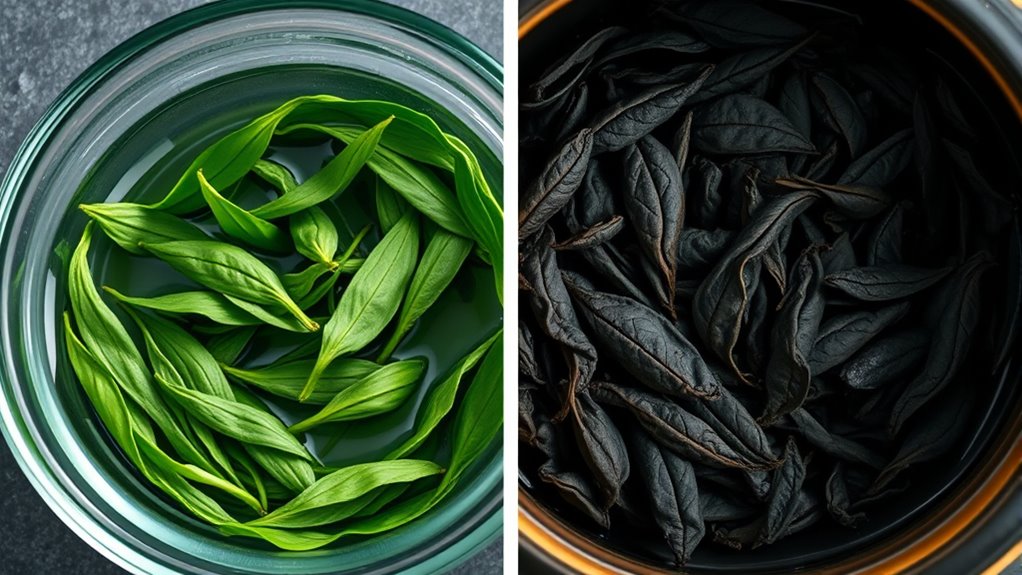
- Green teas are minimally oxidized, preserving fresh flavors; black teas are fully oxidized, resulting in darker leaves and richer flavors; fermentation adds earthy, mellow notes.
- Oxidation changes the appearance of leaves, making them darker; fermentation affects flavor and aroma through microbial breakdown during aging.
- Understanding the difference helps in selecting teas with desired taste profiles and appreciating the craftsmanship behind each processing method.
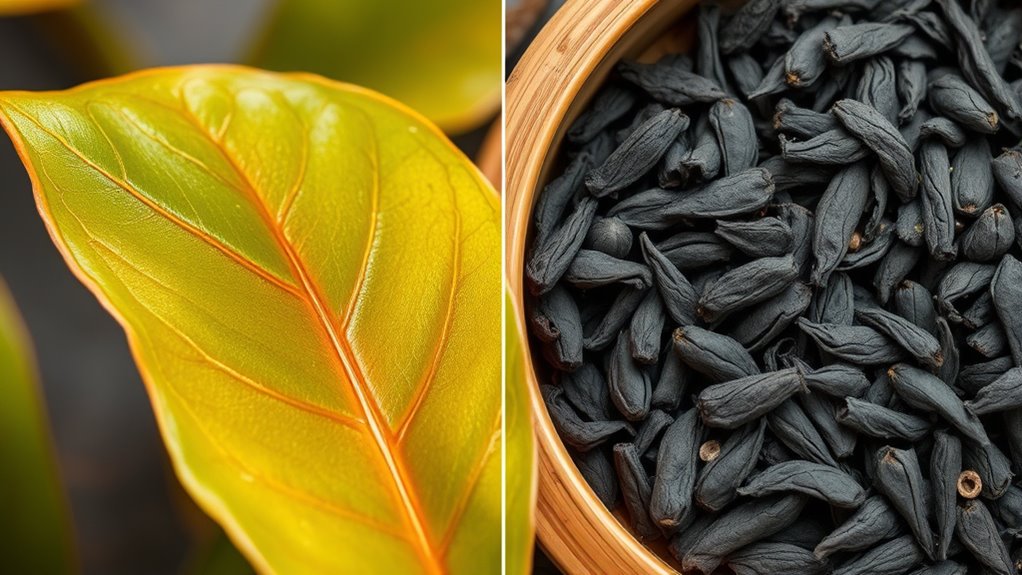
Understanding the difference between tea oxidation and fermentation is essential if you want to truly appreciate the nuances of your favorite brews. Although the terms are often used interchangeably, they refer to distinct processing methods that markedly influence the flavor development of tea. Oxidation is a chemical process where enzymes in the tea leaves react with oxygen, causing changes in color and flavor. This process is carefully controlled during processing to bring out specific characteristics. Fermentation, on the other hand, involves microbial activity, where yeast or bacteria break down the tea’s organic compounds. While fermentation is common in products like kombucha or certain herbal drinks, traditional tea processing typically involves oxidation rather than fermentation. When you look at how tea is processed, understanding these methods helps you grasp how each influences the final taste. In oxidation, fresh tea leaves are withered to reduce moisture, then rolled or crushed to expose the enzymes to oxygen. This exposure triggers chemical reactions that darken the leaves and create complex flavors. The degree of oxidation determines whether the tea becomes green, oolong, or black. Green teas are minimally oxidized, preserving fresh, grassy notes, while black teas are fully oxidized, resulting in bold, malty flavors. Oolong teas fall somewhere in between, with partial oxidation offering a balance of floral and fruity nuances. This process directly affects flavor development, making each type unique.
Tea oxidation involves enzymes reacting with oxygen, while fermentation uses microbes to break down compounds.
Additionally, controlled oxidation during processing ensures consistency and quality in the final product. Fermentation, however, involves different biological processes. While some teas undergo intentional fermentation, many do not. In fermented teas like pu-erh, microbial activity occurs during aging, breaking down compounds over time and adding earthy, musty notes. These teas often require long storage periods, during which fermentation continues slowly, developing depth and complexity. You might notice that fermented teas tend to have more rounded, mellow flavors compared to the sharper profiles of oxidized teas. The microbial activity in fermentation can also influence aroma, mouthfeel, and overall character, making it a different experience from oxidation-driven teas. Knowing these distinctions allows you to better understand how processing methods shape the flavor profile of each tea. Whether you’re enjoying a bright, grassy green tea or a rich, dark black tea, recognizing the role of oxidation and fermentation gives you insight into the craftsmanship behind your brew. It also helps you select teas that match your taste preferences, whether you favor fresh, vibrant flavors or deeper, aged complexities. Ultimately, appreciating these processes enhances your tea experience, allowing you to savor each cup with a more informed perspective on how processing methods influence flavor development.
As an affiliate, we earn on qualifying purchases.
Frequently Asked Questions
How Do Oxidation and Fermentation Affect Tea’s Health Benefits?
Oxidation and fermentation impact your tea’s health benefits by causing nutritional changes and altering antioxidant levels. When tea oxidizes, it often reduces certain antioxidants, potentially lowering its health benefits. Fermentation can introduce probiotics, boosting gut health and enhancing antioxidants. So, depending on the process, your tea might offer more or fewer health perks. Choose lightly oxidized or fermented teas if you want to maximize antioxidants and nutritional value.
Can Tea Undergo Both Oxidation and Fermentation Simultaneously?
Yes, tea can undergo both oxidation and fermentation simultaneously during processing, especially in traditional methods like pu-erh. Notably, about 30% of fermented teas also experience oxidation steps to develop unique flavors. This combined process enhances flavor development and complexity, giving teas richer profiles. During tea processing, manufacturers carefully control these steps to balance oxidation and fermentation, resulting in distinctive tastes and health benefits.
Which Teas Are Best for Those Sensitive to Fermentation Processes?
If you’re sensitive to fermentation processes, opt for light teas like white or green teas. These teas undergo minimal oxidation and are less likely to provoke any reactions related to fermentation. You’ll enjoy their delicate flavors without experiencing the stronger, fermented notes found in darker teas like pu-erh or certain oolongs. Choosing sensitive tea types guarantees you get a flavorful, gentle brew that suits your preferences and sensitivities.
How Do Storage Conditions Impact Oxidation and Fermentation Levels?
You influence oxidation and fermentation levels through your storage choices. Keep your tea in a cool, stable temperature to slow down unwanted oxidation, and control humidity to prevent mold or premature fermentation. Store in airtight containers away from light, heat, and moisture to preserve freshness. Proper storage conditions, with consistent temperature and humidity, help maintain the tea’s original qualities and prevent undesirable changes caused by oxidation and fermentation processes.
Are There Specific Tools Needed to Control Oxidation and Fermentation?
You don’t need much special equipment for controlling oxidation and fermentation in tea processing. Basic tools like temperature and humidity monitors help you maintain ideal conditions. For more precise control, fermentation equipment such as fermentation tanks or chambers can be useful. These tools allow you to manage the environment, ensuring consistent oxidation and fermentation levels, which ultimately improve the flavor and quality of your teas.
Conclusion
Now that you know the difference, imagine the tea leaves as tiny artists transforming with each process—oxidation turning them into rich, amber hues like sunset skies, while fermentation weaves a deeper, earthy tapestry. As you sip your next cup, picture the delicate dance happening within those leaves, a quiet masterpiece of nature’s craftsmanship. Whether you prefer the bright sparkle of oxidized teas or the complex depths of fermented ones, you’re savoring a living story in every drop.
Halloween Picks
halloween
As an affiliate, we earn on qualifying purchases.