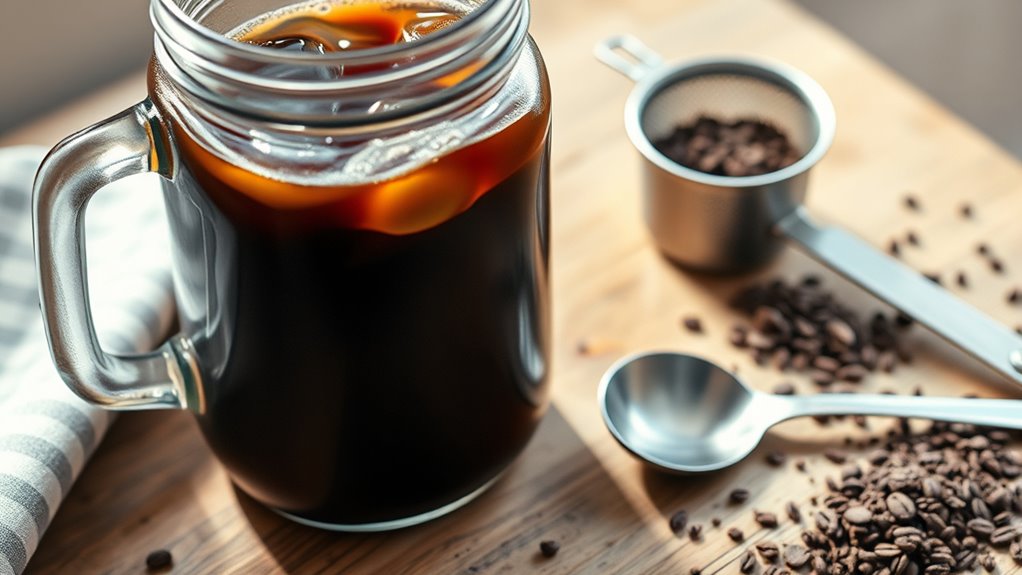

Making smooth cold brew coffee at home is simple. First, gather fresh, high-quality beans and grind them to a coarse consistency. Mix the grounds with water in the right ratio, then let the mixture steep for 12-24 hours in a cool place. After steeping, filter out the grounds carefully, store your brew in the refrigerator, and enjoy it plain or customized with milk and flavors. If you keep going, you’ll master every step for perfect cold brew.
Key Takeaways
- Select high-quality, fresh coffee beans and grind them coarsely using a burr grinder for consistent extraction.
- Measure coffee and water precisely using a scale, following recommended ratios for desired strength.
- Steep the coffee-water mixture for 12-24 hours at a stable, cool temperature, stirring gently before setting aside.
- Filter the brew slowly with a fine mesh or specialized filter to ensure a sediment-free, smooth cold brew.
- Serve with personalized add-ins like milk, syrups, or garnishes, and store in airtight containers for up to two weeks.

Cold Brew Coffee Maker,64 oz Mason Jar Pitcher with Stainless Steel Filter, Pour Spout Handle Lid, Heavy Duty Glass Airtight & Leak-Proof for Iced Coffee,Tea & Lemonade
- Capacity: 64 oz large mason jar pitcher
- Includes: Stainless steel filter and cleaning brush
- Material: Heavy-duty, BPA-free soda lime glass
As an affiliate, we earn on qualifying purchases.
As an affiliate, we earn on qualifying purchases.
Gathering Your Supplies and Ingredients
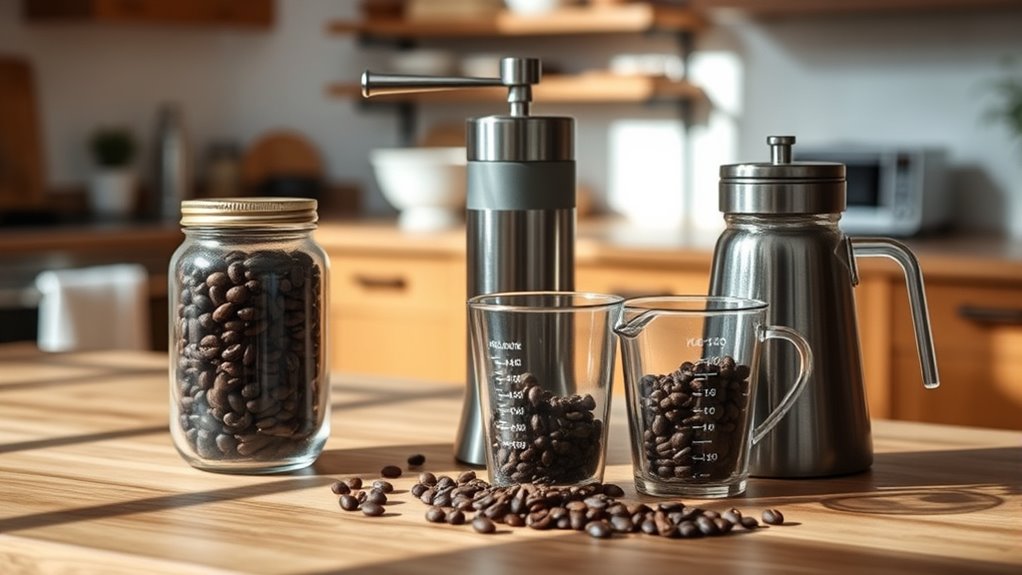
Before you start making cold brew coffee at home, gather all the necessary supplies and ingredients. First, choose your coffee bean varieties based on flavor preference—light, medium, or dark roast. Fresh beans make a noticeable difference in taste. Next, consider your grind size options; for cold brew, a coarse grind works best because it extracts slowly and prevents over-extraction. You’ll need a good quality coffee grinder if you’re grinding whole beans. Additionally, prepare a large jar or pitcher, a fine-mesh sieve or coffee filter, and a scale for precise measurement. Having these supplies ready guarantees a smoother brewing process. Don’t forget clean water and a spoon for stirring. Gathering everything beforehand helps you stay organized and makes the process more enjoyable.
Choosing the Right Coffee Beans
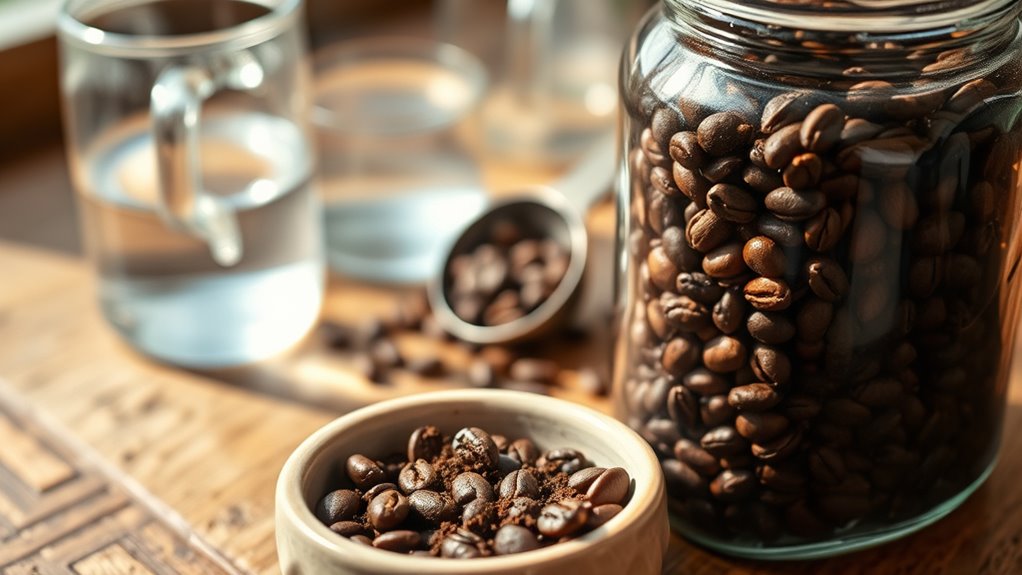
Choosing the right coffee beans is essential to achieving a flavorful cold brew. The coffee flavor you get largely depends on the beans you select, so opt for high-quality, fresh beans for the best results. Look for beans labeled as specialty or freshly roasted, since bean freshness directly impacts taste—stale beans can produce flat or dull flavors. Darker roasts tend to yield a bolder, more robust cold brew, while lighter roasts offer brighter, more nuanced notes. Consider your preferred taste profile and choose beans accordingly. Keep in mind that whole beans stay fresher longer, so buy in smaller quantities if you don’t brew often. Proper storage methods also play a vital role in maintaining bean freshness over time. Additionally, understanding molecular composition of the beans can also guide you in selecting beans that best suit your brewing method and flavor preferences. Regularly inspecting the bean quality can help ensure you’re using beans at their peak flavor potential.
Grinding the Coffee to the Perfect Consistency
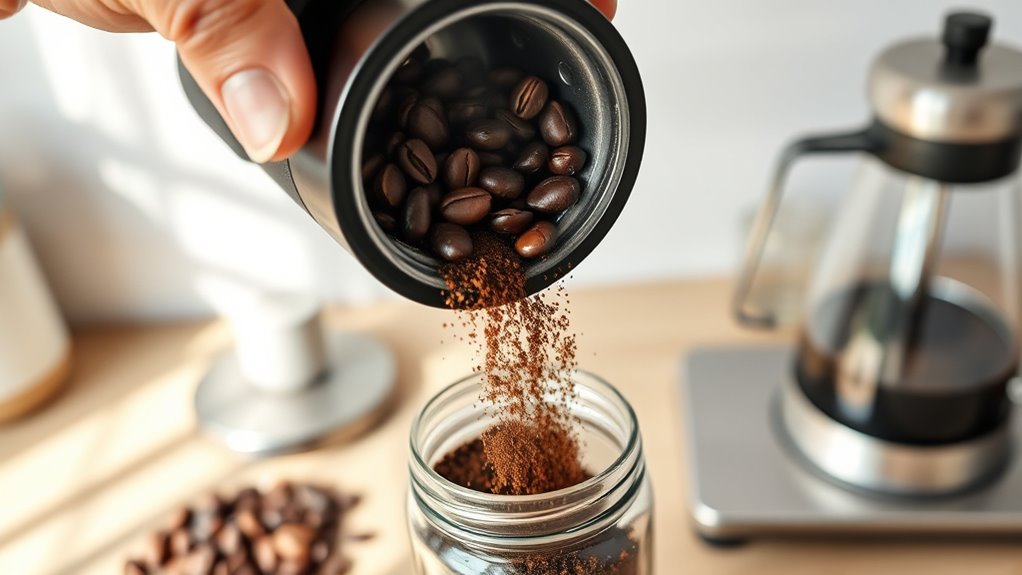
Once you’ve selected high-quality, fresh beans, the next step is grinding them to the right consistency. For cold brew, the grind size should be coarse—similar to raw sugar or sea salt. This consistency control guarantees ideal extraction during the long steeping process. If your grind is too fine, the coffee can become over-extracted, resulting in a bitter taste and difficulty filtering. Conversely, if it’s too coarse, the brew may be weak and underdeveloped. Use a burr grinder for uniformity and better consistency control. Adjust the grind size based on your brewing method and taste preference. A consistent grind size helps you achieve a smooth, balanced cold brew with the desired richness and clarity. Additionally, understanding industry trends can help you refine your technique and stay updated on the best equipment and methods for home brewing. Proper equipment maintenance ensures your grinder remains effective and produces consistent results over time. Regular calibration of your grinder also contributes to maintaining the ideal grind size, ensuring optimal extraction and flavor. Staying informed about automation in business can also inspire new ways to streamline your coffee-making process at home, making your brewing routine more efficient and enjoyable. Moreover, embracing technological advancements in coffee equipment can enhance precision and consistency in your brewing process.
Measuring and Mixing the Coffee and Water
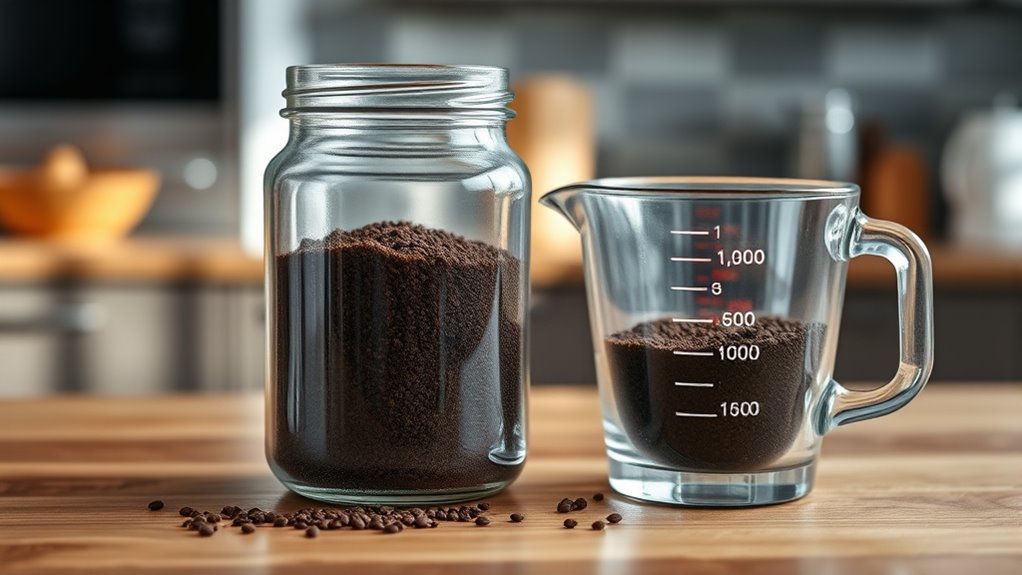
To get the best flavor, you need to measure your coffee and water accurately. Using the right ratio guarantees your cold brew isn’t too weak or too strong. Carefully combining the two sets the foundation for a perfect, smooth cup. Incorporating proper measurements can also help prevent over-extraction and bitterness in your brew. Being aware of tuning techniques specific to your brewing process can further optimize flavor extraction. For added effectiveness, consider using pimple patches as part of your skincare routine to target specific blemishes effectively.
Accurate Coffee Measurement
Accurate measurement of coffee and water is essential for achieving the perfect cold brew. When your measurements are precise, you ensure consistent coffee flavor and ideal extraction. Using a scale helps maintain measurement accuracy, giving you control over strength and taste. Remember, too much coffee can make it bitter, while too little results in a weak brew. Here’s a simple guide:
| Coffee (grams) | Water (ml) |
|---|---|
| 100 | 800 |
| 120 | 960 |
| 140 | 1120 |
| 160 | 1280 |
| 180 | 1440 |
Adjust these ratios based on your preferred strength, but always measure carefully for the best flavor. Accurate measurement is the key to a smooth, balanced cold brew. Automation’s role in business intelligence can help streamline your measurement process with smart tools and devices. Embracing machine learning algorithms can further enhance consistency and precision in your brewing process. Proper measurement techniques are an important aspect of consistent coffee quality, ensuring each batch meets your desired standards.
Proper Water Ratio
Getting the water-to-coffee ratio right is essential for a well-balanced cold brew. The water ratio directly impacts the coffee concentration, influencing flavor and strength. For a smooth, mild brew, aim for a ratio of about 4:1 water to coffee by weight. If you prefer a stronger coffee, increase the coffee amount or reduce the water slightly. Use a kitchen scale to measure both ingredients accurately, ensuring consistency. Mixing the coffee grounds thoroughly with water helps achieve uniform extraction, resulting in a more balanced flavor profile. Remember, too much water dilutes the flavor, while too little results in a concentrated brew that’s hard to drink. Adjusting the water ratio based on your taste preferences will help you craft the perfect cold brew at home. Additionally, understanding tuning options for your coffee setup, such as grind size and steeping time, can further optimize your brewing process for the best flavor. Paying attention to brewing parameters like temperature and time can also make a significant difference in the final taste. To improve consistency, consider using measuring tools to precisely control your ingredients.
Steeping the Coffee Mixture

Once you’ve combined your coffee grounds and water, the next critical step is to let the mixture steep. The steeping duration is essential; generally, it should last between 12 to 24 hours, depending on your desired strength. During this time, temperature control is key—keeping the mixture at a consistent room temperature or slightly cooler yields the best results. Avoid exposing it to heat or direct sunlight, which can affect flavor. Stir the mixture gently before setting it aside to guarantee even extraction. Cover the container to prevent any contaminants from entering. Proper steeping time also helps prevent over-extraction, which can lead to bitterness. Ensuring a calm environment free from disturbances can also contribute to a more consistent extraction process. Patience here is indispensable, as a proper steeping process develops a smooth, rich flavor without bitterness. Additionally, maintaining a stable temperature helps optimize flavor development and overall quality. Incorporating mindful practices such as mindfulness techniques during this process can further enhance your brewing experience. Being aware of common goal tracking pitfalls can help you stay focused and avoid setbacks in your coffee-making journey. Once the steeping time is complete, you’ll be ready for the next step in crafting your cold brew.
Filtering the Cold Brew for a Smooth Finish
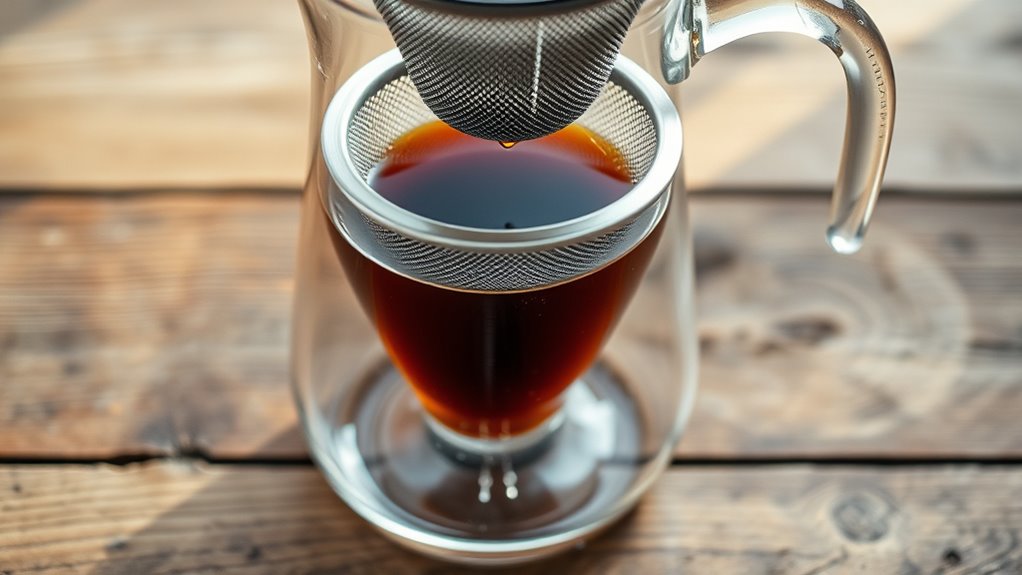
To get a smooth finish, you need to select the right filter that effectively captures coffee grounds without letting too much through. When pouring your cold brew, use a steady, controlled flow to avoid disturbing the grounds or introducing sediment. Paying attention to your filtering technique ensures a clean, flavorful cup every time. Choosing a filter with HEPA technology can further improve clarity by capturing fine particles and allergens, resulting in an even smoother brew.
Choosing the Right Filter
Choosing the right filter is essential for achieving a smooth, clean cold brew. Your filter selection impacts the clarity and texture of your coffee, so pick one that effectively traps fine coffee grounds without letting sediment slip through. Fine mesh or stainless steel filters are popular choices because they minimize sediment and are reusable, making them cost-effective. When it comes to filter maintenance, regularly clean your filter thoroughly to prevent oil buildup and clogs, which can affect filtration quality. Proper maintenance ensures your filter continues to perform well and prolongs its lifespan. Avoid using paper filters that may absorb flavors or introduce paper residues. Ultimately, selecting a good filter and maintaining it properly will give you a consistently smooth, enjoyable cold brew.
Proper Pouring Technique
Proper pouring technique is crucial for achieving a smooth, sediment-free cold brew. To guarantee pouring precision and an appealing cup presentation, follow these steps:
- Position your filter or sieve over your cup, holding it steadily to prevent splashing.
- Pour the cold brew slowly and evenly, allowing the liquid to flow without disturbing the sediment at the bottom.
- Use a steady hand to control the flow, avoiding overflows or spills that can muddy the cup’s appearance.
This careful approach minimizes residues and sediment, resulting in a cleaner, more polished brew. Focus on controlled pouring to enhance cup presentation, making your cold brew look as good as it tastes. Precision during pouring is key to a smooth finish.
Transferring and Storing Your Cold Brew
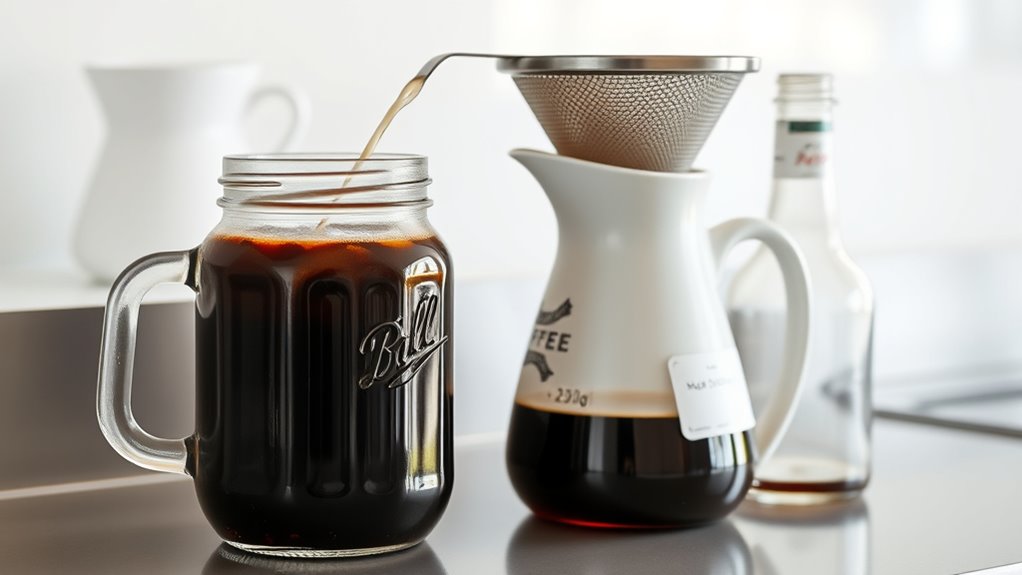
Once your cold brew is ready, transferring it to a clean container is essential to preserve its flavor and freshness. Use airtight storage containers to prevent exposure to air, which can degrade the coffee’s quality over time. Choose containers made of glass or BPA-free plastic to ensure flavor preservation. Pour the cold brew carefully, leaving some space at the top to allow for expansion if freezing. Seal the container tightly to avoid spills and contamination. Store your cold brew in the refrigerator, where it can stay fresh for up to two weeks. Proper transfer and storage help maintain the smooth, rich flavor you’ve worked to achieve, ensuring each cup tastes just as good as the first.
Serving Your Cold Brew Coffee
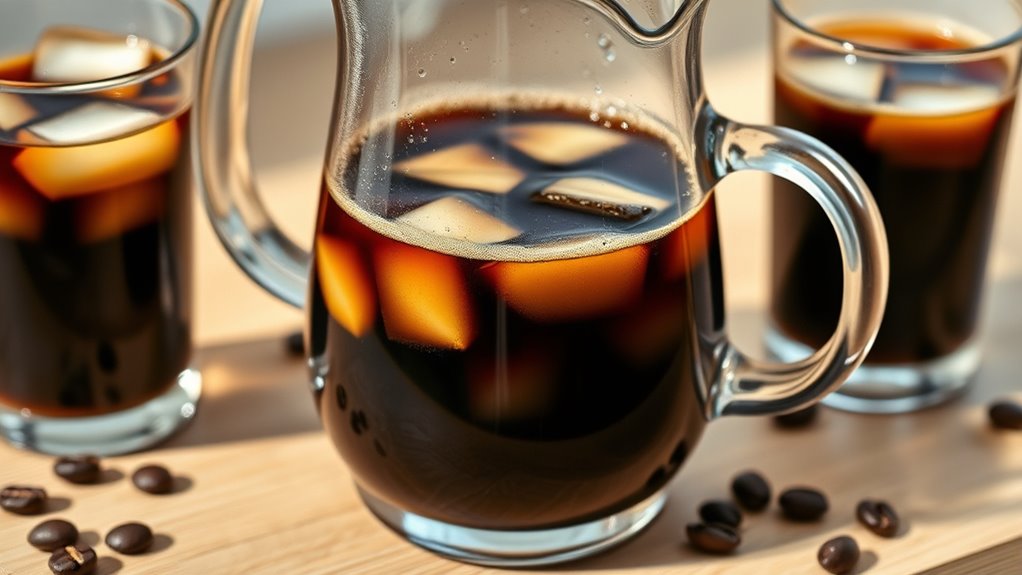
Now that your cold brew is ready, it’s time to think about how to serve it. You can enjoy it straight or pair it with your favorite snacks for a perfect combo. Adding garnishes or trying different presentation styles can make your experience even more enjoyable.
Serving Options and Pairings
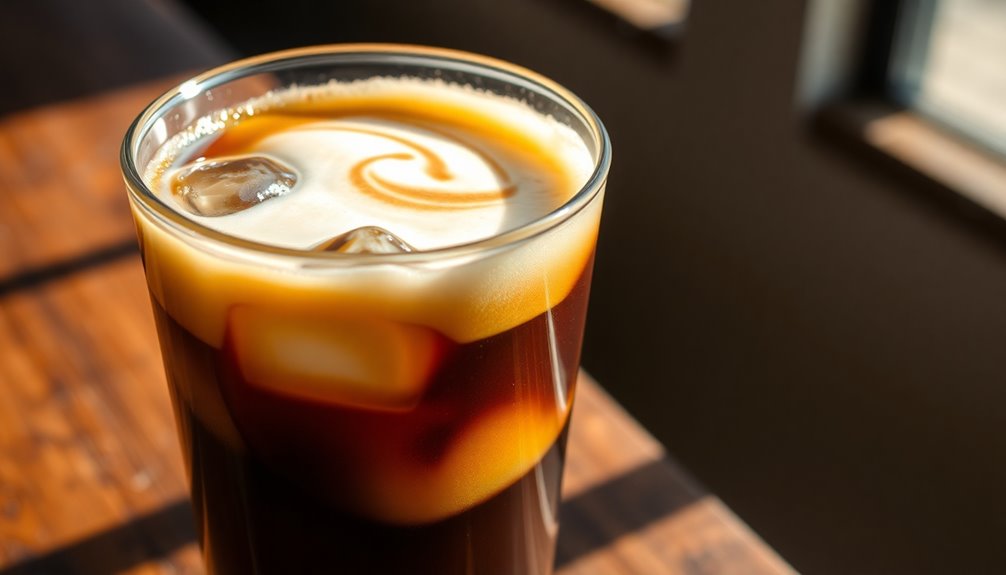
Wondering how to enjoy your cold brew at its best? There are plenty of serving options and pairings to elevate your experience. First, consider making iced beverages by pouring your cold brew over ice and adding milk, cream, or flavored syrups for customized taste. Second, explore coffee art by layering milk or foam on top for a visually appealing presentation. Finally, pair your cold brew with complementary snacks like biscotti, dark chocolate, or fruit to enhance flavors. These options let you enjoy your cold brew in various ways, whether as a invigorating iced beverage or a visually impressive drink. Experimenting with pairings and presentation can turn your cold brew into a delightful treat whenever you sip it.
Presentation and Garnishes
Presentation and garnishes can transform your cold brew into a visually stunning and inviting drink. Thoughtful coffee presentation makes your beverage more appealing and elevates your experience. Consider serving your cold brew in a clear glass to showcase its rich color. Garnish ideas like a lemon wedge, a sprig of mint, or a cinnamon stick add color and aroma, enhancing the flavor. You can also top your cold brew with whipped cream or a drizzle of caramel for extra indulgence. Using a stylish straw or a decorative stir stick can add a playful touch. Remember, the right presentation not only entices the eye but also complements the taste, making every sip feel special. Keep it simple yet creative to impress at home or when entertaining guests.
Customizing Your Cold Brew With Flavors and Milk
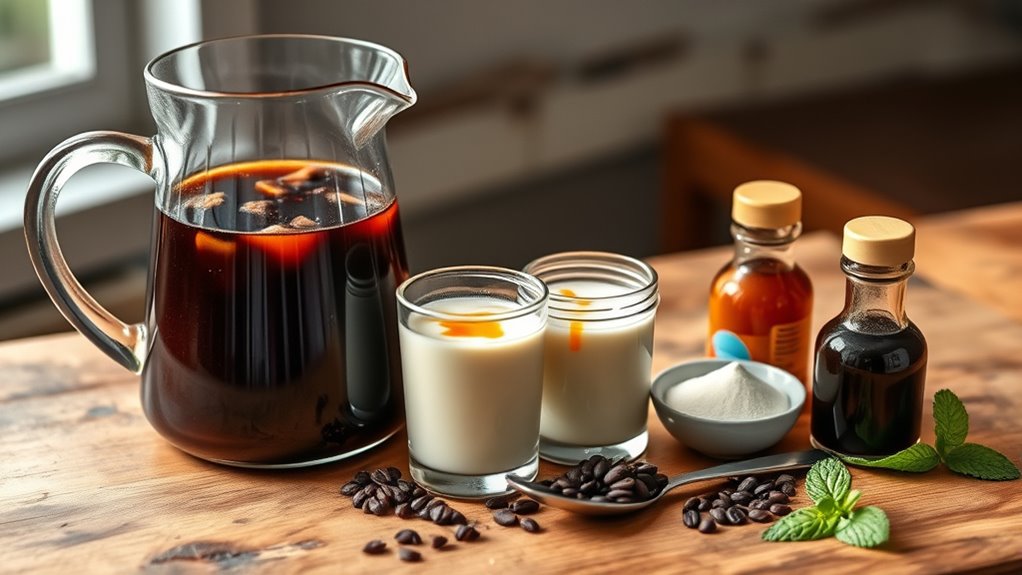
Adding flavors and milk to your cold brew allows you to customize each cup to your taste. To enhance your brew, consider experimenting with flavor infusions or selecting the right milk options. Here are some ideas:
- Flavor infusions: Add vanilla extract, cinnamon sticks, or a splash of caramel syrup for a sweet, aromatic boost.
- Milk options: Choose from dairy milk, almond, oat, or coconut milk to change the creaminess and flavor profile.
- Combination: Mix different flavors and milk types to create your perfect blend, adjusting sweetness and richness.
These simple tweaks let you craft a cold brew that suits your mood and preferences, making each sip uniquely yours.
Tips for Perfecting Your Cold Brew at Home

To achieve the perfect cold brew at home, attention to detail and precise timing are essential. Start by selecting high-quality coffee beans, as they directly influence the coffee flavor. Use a coarse grind to prevent over-extraction, which can cause bitterness. The brewing duration is vital; typically, 12 to 24 hours yields the best results. Shorter times may produce a weak flavor, while longer ones can lead to over-extraction and a bitter taste. Experiment within this range to find your ideal balance. Keep your brew in a cool, dark place to prevent unwanted flavors. Remember, patience pays off—monitor the brewing duration carefully, and you’ll end up with a smooth, flavorful cold brew every time.
Frequently Asked Questions
How Long Can I Store Homemade Cold Brew Without It Spoiling?
You can store your homemade cold brew for up to two weeks in the refrigerator. To preserve freshness and prevent spoilage, keep it in an airtight container. After this period, the flavor may start to decline, and there’s an increased risk of spoilage. Regularly check for any off smells or changes in color, and always prioritize freshness preservation to enjoy your cold brew at its best.
Can I Use Instant Coffee Instead of Whole Beans for Cold Brew?
Yes, you can use instant coffee for cold brew, but keep in mind it will change the flavor profile. Instant coffee tends to be more concentrated and may taste different than whole beans, often with a slightly bitter or metallic note. While it’s a quick alternative, for a richer, smoother cold brew, whole beans or coarsely ground coffee are preferred. Instant coffee works in a pinch, but expect a different flavor experience.
What’s the Best Way to Adjust the Strength of My Cold Brew?
While it’s tempting to think you can fine-tune your cold brew’s strength with simple dilution techniques, the real secret lies in caffeine adjustment. To make it stronger, use less water during brewing or add more coffee grounds. For a milder taste, dilute with water or milk after brewing. Experiment to find your perfect balance, ensuring each cup matches your preference without compromising flavor.
How Do I Prevent Over-Extraction and Bitterness?
To prevent over-extraction and bitterness, you should focus on your grind size and brew time. Use a coarser grind to avoid over-extracting the coffee, which can cause bitterness. Keep your brew time around 12-24 hours; longer times tend to release more bitter compounds. Regularly taste your cold brew during brewing to find the perfect balance, ensuring a smooth, flavorful coffee without over-extracting.
Can I Make Cold Brew in a Small Single-Serve Batch?
Yes, you can make cold brew in a small batch using single serve brewing. Just use a smaller amount of coffee grounds and water, adjusting the ratio to suit your taste. Place the mixture in a jar or a French press, steep for 12-24 hours, then strain. This method gives you a fresh, smooth cold brew without making a large batch, perfect for quick, homemade coffee.
Conclusion
Now that you know the steps, you’re all set to craft your own smooth cold brew at home. With a little patience and attention to detail, you’ll have a invigorating, barista-quality drink whenever you want. Remember, practice makes perfect, and soon enough, you’ll be brewing like a pro. So don’t be afraid to experiment and find what suits your taste best—after all, the proof of the pudding is in the tasting!