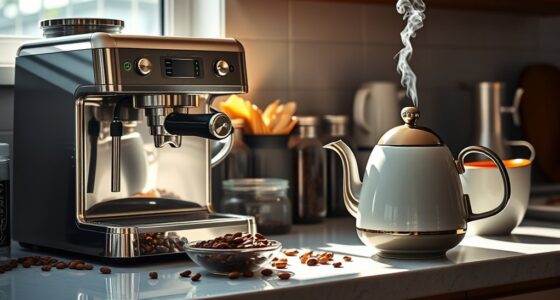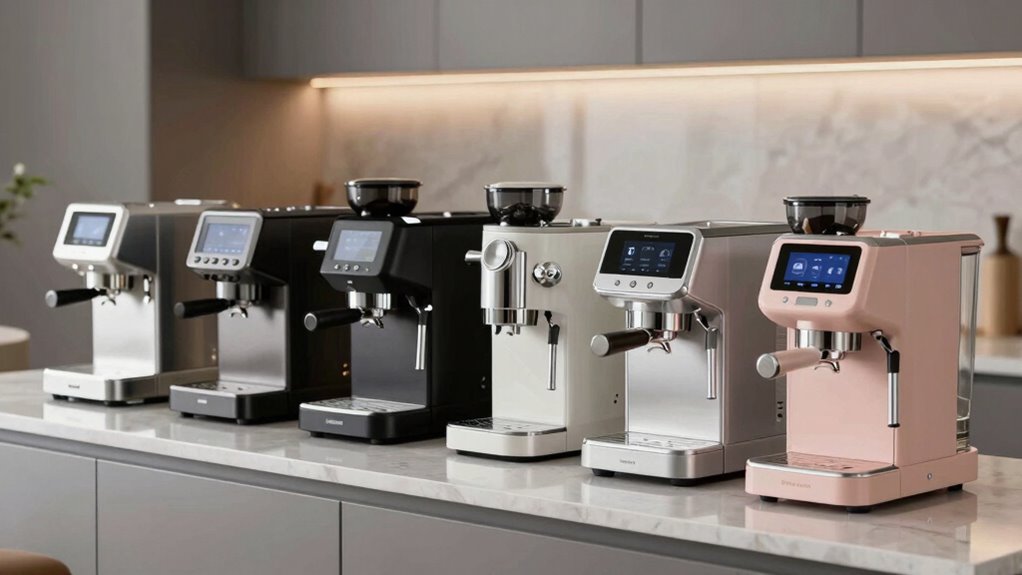

Finding a quiet espresso machine can be a game-changer for home brewing, especially if noise disruptions are a concern. The Casabrews 3700 Essential stands out as the overall best for its reliable performance and low noise level. The Breville Bambino offers a balance of quiet operation and ease of use, making it ideal for beginners. Meanwhile, the XIXUBX Compact Espresso Maker excels in small spaces with surprisingly quiet functionality. Buyers often face tradeoffs between noise reduction, brewing speed, and price, making it important to weigh your priorities carefully. Continue reading for a detailed breakdown of these options and more.

Get coffee and tea gear delivered free with Prime
- Fast, free delivery on millions of items
- Prime Video, Amazon Music and more included
- Member-only deals all year
Complete the kit


Key Takeaways
- Most quiet espresso machines utilize insulated boilers or noise-dampening components to reduce operational sound.
- High-end models tend to deliver quieter performance but at a higher price point, making value a key consideration.
- Compact models often sacrifice some noise reduction features for size savings, but some still perform quietly.
- The inclusion of features like milk frothers and grinders can impact noise levels and should be considered based on your preferences.
- Consistent performance in noise reduction often correlates with build quality and engineering focus on sound dampening.
| Casabrews 3700 Essential Stainless Steel Espresso Machine with Steam Wand |  | Best Overall for Versatile Home Brewing | Water Tank Capacity: 43.9 oz | Wattage: 1350 W | Voltage: 120 V | VIEW ON AMAZON | See Our Full Breakdown |
| Breville Bambino Espresso Machine, Brushed Stainless Steel | 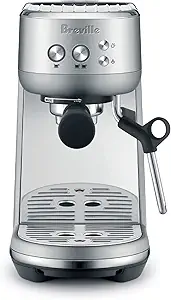 | Best for Beginners and Compact Spaces | Power: 1560 Watts | Voltage: 110 to 120 Volts | Brew Capacity: 1 or 2 Cups | VIEW ON AMAZON | See Our Full Breakdown |
| XIXUBX Espresso Machine, Compact Espresso Maker with Milk Frother |  | Best for Small Spaces and Coffee Enthusiasts | Pressure: 20-bar | Temperature Control: PID | Brewing Time: 22-30 seconds | VIEW ON AMAZON | See Our Full Breakdown |
| Breville BES870BTR Barista Express Espresso Machine, Black Truffle |  | Best for Serious Home Baristas Ready to Tackle Microfoam | Capacity: 1/2 lb Bean Hopper | Water Tank: 67 oz | Power: 1600 Watts | VIEW ON AMAZON | See Our Full Breakdown |
| Casabrews CM5418 Compact Espresso Machine with Milk Frother |  | Best for Stylish Space-Saving Design and Easy Use | Pressure: 20 bar | Power: 1350 W | Water Tank Capacity: 34 oz | VIEW ON AMAZON | See Our Full Breakdown |
| Espresso Coffee Machine with Grinder and Frother, 20 Bar |  | Best All-in-One for Modern Kitchens | Wattage: 1350 watts | Pressure: 20 bar | Water Tank Capacity: 61 oz | VIEW ON AMAZON | See Our Full Breakdown |
| quiet espresso machine | Pressure | Water Tank Capacity | Voltage | Material |
|---|---|---|---|---|
| Casabrews 3700 Essential Stain | 20 bar | 43.9 oz | 120 V | Stainless Steel |
| Breville Bambino Espresso Mach | — | — | 110 to 120 Volts | — |
| XIXUBX Espresso Machine | 20-bar | — | — | — |
| Breville BES870BTR Barista Exp | — | — | 120 V | — |
| Casabrews CM5418 Compact Espre | 20 bar | 34 oz | — | Stainless Steel |
| Espresso Coffee Machine with G | 20 bar | 61 oz | — | Stainless Steel |
More Details on Our Top Picks
Casabrews 3700 Essential Stainless Steel Espresso Machine with Steam Wand
The Casabrews 3700 stands out for its professional 20-bar pressure pump, which delivers rich, flavorful espresso comparable to commercial machines. Its powerful steam wand allows for microfoam milk, making it a solid choice for those wanting café-quality drinks at home or in the office. Compared to the Breville Bambino, this model offers a larger water tank (43.9 oz vs. Bambino’s smaller size), reducing refills during busy mornings. However, its semi-automatic operation demands some familiarity with espresso techniques, making it less ideal for complete beginners. The stainless steel build fits seamlessly into most kitchens, adding durability and style. Its main tradeoff is that initial setup can be a learning curve, but once dialed in, it’s highly capable.
Pros:- Professional 20-bar pressure for rich espresso extraction
- Large 43.9 oz water tank reduces refilling frequency
- Stainless steel construction ensures durability and style
- Powerful steam wand for latte art
Cons:- Requires initial setup and user familiarity with espresso techniques
- Semi-automatic operation demands some skill
Best for: Home baristas seeking a versatile, semi-automatic machine with professional-level pressure.
Not ideal for: Beginners or those who prefer fully automatic operation with minimal effort.
- Water Tank Capacity:43.9 oz
- Wattage:1350 W
- Voltage:120 V
- Pressure:20 bar
- Material:Stainless Steel
- Operation Mode:Semi-Automatic
Our verdict“This machine is perfect for experienced home users who want control and professional results without sacrificing style.”
Breville Bambino Espresso Machine, Brushed Stainless Steel
The Breville Bambino offers a user-friendly experience with its rapid 3-second heat-up thanks to the ThermoJet system, making it ideal for newcomers. Its automatic steam wand simplifies milk frothing, providing consistent microfoam suited for latte art. Compared to the Casabrews 3700, it’s more compact and easier to operate, but it sacrifices some control, as it doesn’t include a built-in grinder or extensive manual options. For those who want quick, café-quality drinks without much fuss, this machine hits the mark. However, its limited capacity and manual effort needed for perfect extraction make it less appropriate for more advanced baristas or high-volume environments.
Pros:- Rapid 3-second heat-up with ThermoJet system
- Automatic steam wand for consistent microfoam
- Compact size fits small kitchens
- User-friendly interface for beginners
Cons:- No built-in grinder, requires pre-ground coffee
- Limited to home use, not suitable for high-volume needs
Best for: Beginners or small kitchen owners wanting quick, easy espresso and milk drinks.
Not ideal for: Experienced users seeking full manual control or commercial-grade durability.
- Power:1560 Watts
- Voltage:110 to 120 Volts
- Brew Capacity:1 or 2 Cups
- Included Accessories:Filter baskets, milk jug, tampers
- Features:ThermoJet heating, PID regulation
- Warranty:1 Year Limited
Our verdict“This machine is a great choice for novices who want quick, quality espresso without the complexity.”
XIXUBX Espresso Machine, Compact Espresso Maker with Milk Frother
The XIXUBX offers a compact, space-saving design with a 20-bar pressure system that produces rich crema, similar to larger models like the Casabrews 3700. Its PID temperature controller keeps shots consistent, making it suitable for those who want café-quality results in tight spaces. Compared to the Breville Bambino, it provides more control over brewing parameters but lacks automatic features, meaning users need some skill to perfect their espresso. Its small footprint makes it ideal for dorms, offices, or small kitchens, but slower brewing times and the absence of a built-in grinder could be drawbacks for busy mornings.
Pros:- Produces rich crema with 20-bar pressure and pre-infusion
- PID temperature control for consistent shots
- Small, portable design fits tight spaces
- Includes milk frother for latte art
Cons:- Requires some skill to master brewing and frothing
- No built-in grinder, needs pre-ground coffee
Best for: Coffee lovers with limited space who enjoy manual control over their brewing process.
Not ideal for: High-volume users or those seeking an automatic, plug-and-play experience.
- Pressure:20-bar
- Temperature Control:PID
- Brewing Time:22-30 seconds
- Included Accessories:Milk frothing pitcher
- Design:Vertical, compact
- Operation Mode:Semi-Automatic
Our verdict“Ideal for space-conscious users who want to fine-tune their espresso and milk drinks manually.”
Breville BES870BTR Barista Express Espresso Machine, Black Truffle
The Breville Barista Express combines a built-in conical burr grinder with precise PID temperature control, making it ideal for those who want fresh grounds and control over every shot. Its powerful steam wand supports manual microfoam milk texture, but mastering its full potential requires practice, especially for perfect latte art. Compared to the simpler Breville Bambino, this model offers more customization and a broader range of settings. Its larger size and higher price point make it less suited for small kitchens or casual users. For dedicated espresso enthusiasts willing to learn, it delivers professional results, but beginners may face a steep learning curve.
Pros:- Built-in conical burr grinder for fresh grounds
- PID temperature control for optimal extraction
- Powerful steam wand for manual microfoam
- Includes multiple accessories for customization
Cons:- Higher price point limits accessibility
- Bulky size requires more counter space
- Learning curve for perfecting microfoam
Best for: Experienced home baristas eager to refine their craft with a machine that offers full control.
Not ideal for: Casual drinkers or those with limited space who prefer automatic operation.
- Capacity:1/2 lb Bean Hopper
- Water Tank:67 oz
- Power:1600 Watts
- Voltage:120 V
- Warrant:1 Year Limited
Our verdict“Best suited for serious espresso lovers committed to mastering manual brewing and milk texturing at home.”
Casabrews CM5418 Compact Espresso Machine with Milk Frother
The Casabrews CM5418 offers a sleek, compact profile with a 20-bar pressure system that produces rich espresso, aligning with larger, more professional machines like the Casabrews 3700. Its powerful steam wand enables milk frothing for lattes and cappuccinos, but it requires a cooldown period after frothing to prevent overheating, which can slow down busy mornings. Compared to the Breville Bambino, it provides more manual control and a larger water tank (34 oz), but it demands some practice to perfect milk foam and espresso quality. This machine makes sense for small kitchens or offices where style and space are priorities, but it’s less suitable for high-volume or quick-turnaround brewing.
Pros:- Compact and stylish design fits small spaces
- Professional 20-bar pressure for rich espresso
- Powerful steam wand for milk foam art
- Removable water tank for easy refilling
Cons:- Needs cooling down after frothing, which can slow use
- Requires practice to perfect milk and espresso quality
Best for: Design-conscious users who want quality espresso and milk drinks without taking up much space.
Not ideal for: Fast-paced environments or users seeking a fully automatic experience.
- Pressure:20 bar
- Power:1350 W
- Water Tank Capacity:34 oz
- Frothing System:Steam wand
- Material:Stainless Steel
Our verdict“Ideal for style-focused users who prioritize quality espresso in a small footprint with manual control.”
Espresso Coffee Machine with Grinder and Frother, 20 Bar
This espresso machine stands out for integrating a built-in conical burr grinder, allowing freshly ground beans for a richer flavor profile, unlike models like the Casabrews 3700 that require pre-ground coffee. The 20-bar pressure system ensures barista-quality espresso, comparable to premium machines like the Breville BES870BTR, but with the added convenience of grinding and frothing in one device. Its compact design makes it suitable for kitchens with limited space, yet it offers a full suite of features including PID temperature control and a milk frother. However, this all-in-one approach can be overwhelming for complete beginners, given its semi-automatic operation and multiple settings. The size may also be a concern in very small kitchens, and its price could be high for budget shoppers. Overall, this pick makes the most sense for those seeking a versatile, space-saving machine that produces café-quality drinks with minimal equipment.
Pros:- Built-in conical burr grinder with adjustable settings for fresh, flavorful coffee
- All-in-one design simplifies the coffee-making process, combining grinding, brewing, and frothing
- Compact size with modern aesthetic fits well in contemporary kitchens or offices
- Features like PID temperature control and LCD display enhance precision and ease of use
Cons:- Can be complex for users unfamiliar with semi-automatic operation and advanced features
- Relatively large footprint may not suit very small kitchens or spaces
- Price point might be high for those seeking a simple, budget-friendly machine
Best for: Home baristas who want a versatile machine with grinding and frothing capabilities in a compact form
Not ideal for: Beginners who prefer straightforward, manual espresso machines or those on a tight budget
- Wattage:1350 watts
- Pressure:20 bar
- Water Tank Capacity:61 oz
- Material:Stainless Steel
- Dimensions:11.6 x 9 x 14 inches
- Display:LCD Digital Display
- Operation Mode:Semi-Automatic
- Features:Auto Shut-Off, Cup Warmer, Milk Frother, PID Temperature Control, Removable Tank
Our verdict“This machine is ideal for home baristas who want a comprehensive, space-efficient setup capable of making a variety of coffee drinks with minimal fuss.”
How We Picked
This lineup was chosen based on a combination of noise level data, user reviews, build quality, and feature set. We prioritized models with proven low-noise operation during both brewing and steaming, as well as those offering reliable performance over time. Price-to-performance ratio played a key role, ensuring that the picks cater to different budgets without sacrificing too much on quietness. We also considered ease of use, maintenance, and versatility, aiming to recommend options suitable for a range of home baristas. The ranking reflects a balance between noise reduction and overall coffee quality, ensuring each product offers a distinct advantage for different buyer needs.Factors to Consider When Choosing Quiet Espresso Machines
Choosing a quiet espresso machine involves more than just checking noise ratings. Understanding key factors can help you select a model that fits both your space and lifestyle, without compromising on coffee quality or convenience. Here are some important considerations to keep in mind before making your purchase.Noise Dampening Technologies
Look for machines that incorporate noise-reducing features such as insulated boilers, soundproof casing, or vibration dampers. These technologies can significantly lower operational sounds during brewing and steaming, especially in shared spaces or early mornings. However, models with advanced dampening tend to be pricier, so weigh the importance of quietness against your budget. Remember, some noise is inevitable with high-pressure extraction, but quality engineering can minimize it.
Built-in Features and Versatility
Decide whether you need additional features like milk frothers, grinders, or programmable settings. Machines with integrated grinders tend to be louder during bean grinding, so if noise is your priority, consider models with separate grinders or manual operation. Multi-function units can be more convenient but often introduce more moving parts, which may increase noise levels. Balance your desire for convenience with the quiet operation you need.
Size and Placement
Compact designs often contribute to quieter operation simply by virtue of smaller components and less powerful motors. However, smaller machines may also have limited features or slower brewing times. Placement also matters—placing your machine on a stable, vibration-absorbing surface can help reduce operational noise. Consider your available space and how the machine’s size influences both noise and usability.
Price and Long-Term Value
Premium models with noise-reduction features tend to cost more upfront but may save you from disturbing noise during early mornings or late nights. Budget options can still be quiet but might lack durability or additional features. Think about how much you’re willing to invest in a quieter experience and whether the long-term benefits justify the initial expense. Sometimes, paying more initially results in a more peaceful and reliable brewing process.
Ease of Maintenance
A machine that is easier to clean and maintain often produces less noise over time, as clogged or worn parts can cause vibrations and increased sound levels. Consider models with accessible components and clear cleaning routines. Regular maintenance preserves both performance and quiet operation, making it a wise investment for long-term use. Avoid overly complex systems if you prefer a hassle-free, quiet experience.
Frequently Asked Questions
How much noise reduction can I realistically expect from a quiet espresso machine?
Most quiet espresso machines can reduce operational noise significantly, often by 20-30 decibels compared to standard models. This reduction means you might barely notice the machine during brewing or steaming, making it suitable for early mornings or shared living spaces. However, some noise during high-pressure extraction or steaming is inevitable, especially in less engineered models. Choose a machine with proven noise-dampening features if minimizing sound is a top priority.
Will a quieter espresso machine compromise on brewing speed or quality?
Not necessarily. Many quiet models are engineered with high-quality components that maintain good brewing performance despite reduced noise. However, some tradeoffs can occur, such as slightly longer brewing times or less powerful steaming. It’s important to read reviews about specific models’ consistency and performance. In general, a well-designed quiet machine will balance noise reduction with the ability to produce quality espresso efficiently.
Are built-in grinders more noisy than manual grinding?
Yes, integrated grinders tend to generate more noise because they involve additional moving parts and high-speed burrs. If noise is a concern, consider models with manual or separate grinding options, which can be quieter during bean preparation. Some high-end machines use sound-insulating chambers around the grinder, but these are less common and more expensive. Weigh the convenience of an all-in-one unit against the potential increase in noise during grinding.
Can placement and environment influence the perceived noise level?
Absolutely. Placing your espresso machine on a vibration-absorbing surface or in a less echo-prone area can diminish the perceived loudness. Soundproofing the surrounding space, such as adding soft furnishings or acoustic panels, can further reduce noise disturbance. Even small adjustments in placement can make a noticeable difference, especially with machines that already operate quietly. Proper environment setup is often overlooked but can enhance your overall experience.
Is it worth paying extra for a premium quiet espresso machine?
Investing in a premium model often provides better noise-dampening engineering, along with higher durability and additional features. If you value peace and quiet as well as consistent performance, the extra cost can be justified. Conversely, if budget constraints are tight, many mid-range machines still offer acceptable noise levels without sacrificing too much on coffee quality. Prioritize your specific needs and environment when deciding how much to spend.
Conclusion
If you want an all-around reliable and quiet option, the Casabrews 3700 Essential makes a strong case as the best overall pick. For those on a budget who still want to keep noise levels down, the XIXUBX Compact Espresso Maker offers impressive quiet operation in a small footprint. New users or casual drinkers will appreciate the simplicity of the Breville Bambino, which balances ease of use with quiet functionality. For dedicated home baristas seeking a premium experience, the Breville BES870BTR combines advanced features with quieter operation. Finally, if coffee grinding and steaming are priorities, consider models with integrated noise-reduction features, but always weigh these against your space and budget constraints.
Halloween Picks
halloween
As an affiliate, we earn on qualifying purchases.