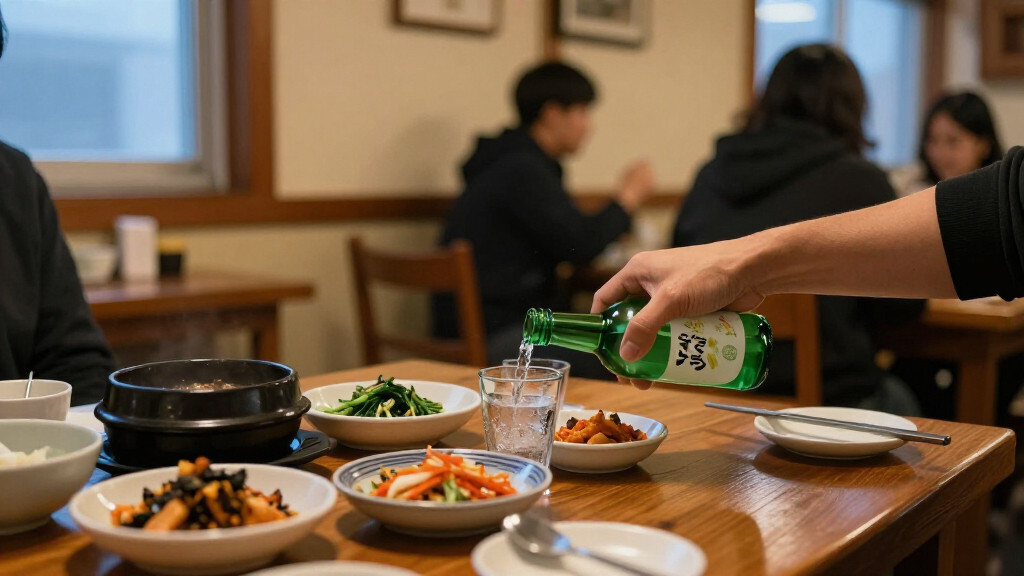

Korean spirits have gone from a niche curiosity to a genuine category of interest, and soju in particular has become a gateway drink for anyone curious about Korean food culture. But here is the catch: the products most people actually need when they get interested in Korean spirits are not bottles at all — they are books that explain what to drink, how to drink it, and why it matters. That is exactly what this roundup covers. After comparing the four most relevant titles on the market, my top pick is Soju Party for readers who want to drink and eat like a Korean, while Soju: Distilled History and the Spirit of Korea stands out as the deepest single-subject read for history-minded readers. The main tradeoff you are navigating is depth versus practicality: some of these books teach you about Korean spirits, while one of them actually teaches you how to build a night around them. A third option, Korean Wines & Spirits, takes the broadest survey approach, and Korean Cocktails splits the difference by focusing on what you can mix at home.

Get coffee and tea gear delivered free with Prime
- Fast, free delivery on millions of items
- Prime Video, Amazon Music and more included
- Member-only deals all year
Complete the kit


Key Takeaways
- Soju Party is the strongest all-around pick because it pairs drinking culture with food guidance, making it the only title here you can actually build an evening around.
- Soju: Distilled History and the Spirit of Korea is the deepest single-spirit read, tracing soju through Korean history — ideal if you want context, not recipes.
- Korean Wines & Spirits is the broadest survey and covers drinks the soju-focused titles ignore, but it is specialized and best as a second purchase.
- Korean Cocktails is the most hands-on of the four for home bartenders, converting traditional spirits into modern mixed drinks.
- Your decision should come down to one question: do you want to read about Korean spirits, cook alongside them, or mix with them?
| Soju: Distilled History and the Spirit of Korea (Spirits of Influence, Book 8) |  | Best for History and Cultural Depth | ASIN: B0F9VN92M4 | Series: Spirits of Influence | Book number: 8 | VIEW LATEST PRICE | See Our Full Breakdown |
| Korean Wines & Spirits: Drinks That Warm the Soul (Korea Essentials Book 18) |  | Best Broad Survey of Korean Alcohol | ASIN: B01AC3V18O | Format: Book | Series: Korea Essentials | VIEW LATEST PRICE | See Our Full Breakdown |
| Korean Cocktails: From Traditional Spirits to Modern Drinks |  | Best for Home Bartenders | ASIN: 132411181X | Format: Book | Subject: Korean cocktails | VIEW LATEST PRICE | See Our Full Breakdown |
| Soju Party: How to Drink (and Eat!) Like a Korean: A Cookbook |  | Best Overall | ASIN: 0593802942 | Format: Cookbook | Award: James Beard Award Winner | VIEW LATEST PRICE | See Our Full Breakdown |
| Korean spirit | ASIN | Subject | Focus | Includes recipes |
|---|---|---|---|---|
| Soju: Distilled History and th | B0F9VN92M4 | Soju and Korean history | Single-spirit cultural history | No |
| Korean Wines & Spirits: Drinks | B01AC3V18O | Traditional Korean wines and spirits | Broad cultural survey | No |
| Korean Cocktails: From Traditi | 132411181X | Korean cocktails | Recipes — traditional to modern | Yes — cocktails |
| Soju Party: How to Drink | 0593802942 | Korean drinking and dining culture | Food and soju pairing plus hosting | Yes — food and gatherings |
More Details on Our Top Picks
Soju: Distilled History and the Spirit of Korea (Spirits of Influence, Book 8)
This is the most intellectually satisfying of the four titles, and it earns that distinction by doing one thing thoroughly instead of several things thinly. As the eighth volume in the Spirits of Influence series, it treats soju as a cultural artifact with a real history — one that stretches across centuries of Korean life, politics, and social ritual. Where Korean Wines & Spirits spreads its attention across an entire national drinks cabinet, this book concentrates on a single spirit and comes away with far richer conclusions about what soju means to Korea.
The historical framing is the core draw. Readers who have only encountered soju as a green bottle beside Korean barbecue will come away understanding how the spirit evolved, how it embedded itself in Korean hospitality customs, and why it carries the identity it does today. Compared with Korean Cocktails, which treats soju primarily as an ingredient, this title treats soju as the subject itself — a fundamentally different reading experience.
The tradeoff is straightforward: there are no recipes, no pairing menus, and no hosting guidance here. If your goal is to pour, mix, or cook, this is the wrong book, and Soju Party will serve you better. It is also one installment of a numbered series, which means it is deliberately scoped to a single spirit rather than to Korean alcohol broadly. That narrowness is a feature for depth-seekers and a limitation for generalists.
Pros:- Deep single-subject focus on soju rather than a scattered overview
- Places the spirit squarely in its Korean historical and cultural context
- Part of the structured Spirits of Influence series for readers who want to continue exploring other spirits
- Rewards careful reading rather than skimming, making it a lasting reference
Cons:- Contains no recipes or practical drinking guidance
- Too specialized for casual readers who just want a light introduction
- Assumes genuine interest in history; not an entertaining first contact with the topic
Best for: Readers, travelers, and spirits enthusiasts who want a deep cultural and historical understanding of soju before or alongside drinking it
Not ideal for: Anyone looking for recipes, cocktail instructions, or practical hosting guidance
- ASIN:B0F9VN92M4
- Series:Spirits of Influence
- Book number:8
- Subject:Soju and Korean history
- Focus:Single-spirit cultural history
- Includes recipes:No
- Best reading context:Study and reference
- Format:Book
Our verdict“The definitive pick for readers who want to understand soju deeply rather than simply drink it.”
Korean Wines & Spirits: Drinks That Warm the Soul (Korea Essentials Book 18)
If the soju-focused titles are telescopes, this one is a wide-angle lens. As volume 18 in the Korea Essentials series, it surveys traditional Korean alcoholic beverages across the board — wines, spirits, and fermented drinks alike — which makes it the only title in this lineup that gives equal airtime to drinks beyond soju. That breadth is its entire reason for being, and for the right reader it is exactly what is missing from the other three books.
The charm of this title lies in its framing: drinks that hold a cherished place in Korean life. It is cultural writing first, beverage writing second, which positions it as a companion to Soju: Distilled History rather than a competitor. One book goes deep on a single spirit; this one goes wide across the category. Readers deciding between them should ask whether they care about makgeolli, traditional wines, and regional specialties — if yes, this survey earns its place.
The drawbacks mirror its strengths. The specialized subject matter means coverage of any one drink is necessarily thinner than in the dedicated titles, and the niche positioning limits its appeal for general audiences. It also offers none of the hands-on functionality of Korean Cocktails or Soju Party — no mixing, no cooking, no party planning. This is a book for understanding the landscape, not for working within it, and it is best bought as a second title once you know which corner of Korean drinking culture pulls at you.
Pros:- Covers the widest range of Korean alcoholic beverages in this lineup
- Part of the established Korea Essentials series, giving it context and credibility
- Frames drinks within their cherished place in Korean daily life
- Serves as a discovery tool for lesser-known traditional beverages
Cons:- Coverage of any single drink is necessarily shallow compared with dedicated titles
- Very specialized subject with limited appeal for casual readers
- No recipes, pairings, or practical guidance
Best for: Curious generalists and culture readers who want one book covering the full range of traditional Korean drinks
Not ideal for: Soju-focused readers or anyone who wants recipes and practical drinking instruction
- ASIN:B01AC3V18O
- Format:Book
- Series:Korea Essentials
- Book Number:18
- Subject:Traditional Korean wines and spirits
- Focus:Broad cultural survey
- Includes recipes:No
- Best reading context:Overview and discovery
- Series style:Cultural introduction
Our verdict“The best map of the whole Korean drinks landscape, best used alongside a deeper or more practical title.”
Korean Cocktails: From Traditional Spirits to Modern Drinks
This is the most actionable book in the lineup for anyone who wants to actually make drinks. Instead of narrating history or surveying a category, it puts traditional Korean spirits to work in cocktails, bridging old and new in a way none of the other three titles attempts. If your interest in Korean alcohol lives at the home bar rather than the reading chair, this pick makes the most sense for you.
What distinguishes it from Soju Party — its closest practical rival — is the direction of the pairing. Soju Party leads with food and builds the drinking culture around the table; Korean Cocktails leads with the drink recipes themselves, spanning both traditional preparations and modern creations. That makes it the better fit for readers who already cook Korean food confidently and now want their beverage program to catch up.
The honest weakness is limited disclosure: this title ships with minimal supporting detail compared with the others, and there is no award or established series behind it to vouch for depth. Readers who want authoritative cultural grounding should pair it with Soju: Distilled History rather than expect this to carry both jobs. It is also purely beverage-focused — if your ideal Korean drinking night centers on anju and grilled meat rather than a shaker and jigger, the cookbook will serve you better than this will.
Pros:- The only title here focused on putting Korean spirits to practical use in drinks
- Spans both traditional preparations and modern cocktail creations
- Ideal entry point for readers who learn by doing rather than reading
- Complements the historical and cultural titles without duplicating them
Cons:- Less supporting context and cultural background than the other titles
- No established series or award pedigree to signal depth
- Purely beverage-focused, so it will not help with food pairing
Best for: Home bartenders and entertainers who want to mix Korean spirits into both classic and modern cocktails
Not ideal for: Readers primarily interested in history, culture, or food pairing rather than mixing
- ASIN:132411181X
- Format:Book
- Subject:Korean cocktails
- Focus:Recipes — traditional to modern
- Includes recipes:Yes — cocktails
- Practical level:High
- Cultural background:Light
- Best reading context:Home bar use
Our verdict“The hands-on pick that turns an interest in Korean spirits into actual drinks in the glass.”
Soju Party: How to Drink (and Eat!) Like a Korean: A Cookbook
This is my top pick overall, and the reason comes down to a simple observation: Korean drinking culture is inseparable from Korean eating culture, and this is the only title in the lineup that treats the two as one subject. Where Korean Cocktails stops at the glass, Soju Party carries the soju bottle to the table, pairing it with food and walking readers through hosting an authentic Korean drinking gathering from start to finish.
The James Beard Award pedigree matters here, and not just as a badge. It signals editorial rigor and tested recipes in a category where several titles ship with little verifiable depth — a real issue with the cocktail book in this roundup. For a reader buying one book only, that credibility, combined with genuinely practical guidance, makes this the safest and most rewarding first purchase.
It is not without tradeoffs. The food-first framing means readers who want a pure beverage reference will find themselves flipping past recipes to reach drinking guidance, and it will not teach you the historical arc of soju the way the Spirits of Influence volume does. Source detail on its full contents is also thinner than I would like. But for the way most people actually encounter Korean spirits — over a shared table, with anju, in company — this book is the closest thing to a complete guide on this list.
Pros:- James Beard Award-winning pedigree signals tested recipes and editorial rigor
- Uniquely combines drinking culture with food pairing guidance in one volume
- Teaches hosting an authentic Korean drinking gathering, not just pouring drinks
- Serves as both a cookbook and a cultural guide, giving it the longest shelf life here
Cons:- Food-forward structure dilutes focus for readers who want only beverage content
- Lighter on history and cultural theory than the dedicated soju history title
- Content detail from the publisher is limited compared with more established series
Best for: Anyone who wants a single book covering Korean drinking culture, food pairings, and how to host — especially fans of Korean cuisine
Not ideal for: Readers seeking a pure spirits reference or deep historical treatment without recipes
- ASIN:0593802942
- Format:Cookbook
- Award:James Beard Award Winner
- Subject:Korean drinking and dining culture
- Focus:Food and soju pairing plus hosting
- Includes recipes:Yes — food and gatherings
- Practical level:High — full evening guidance
- Best reading context:Kitchen and table
Our verdict“The best single purchase in this lineup because it captures how Korean spirits are actually enjoyed — with food and with people.”

How We Picked
Since the Korean spirits shelf on Amazon is dominated by books rather than bottles, I judged these four titles on how well they serve someone building knowledge and confidence around Korean drinking culture. My criteria fell into three buckets. First, editorial focus: a book that claims to cover Korean spirits should actually deliver depth on its stated subject rather than skating across the surface. Second, practical usefulness: I weighted titles that translate knowledge into action — recipes, pairings, hosting guidance — because most readers want to drink better, not just read more. Third, credibility and context: series affiliation, awards, and the author’s evident familiarity with Korean foodways all signal whether a title can be trusted as a reference you return to. I also considered who each book is not for, because a narrowly brilliant book on soju history serves a different reader than an award-winning party cookbook, and pretending otherwise would make this ranking useless. Finally, I compared the four titles against each other directly rather than in isolation, so the ordering below reflects genuine tradeoffs in scope, depth, and hands-on value.
| Korean spirit | Series | Subject | Focus | Includes recipes |
|---|---|---|---|---|
| Soju: Distilled History and th | Spirits of Influence | Soju and Korean history | Single-spirit cultural history | No |
| Korean Wines & Spirits: Drinks | Korea Essentials | Traditional Korean wines and spirits | Broad cultural survey | No |
| Korean Cocktails: From Traditi | — | Korean cocktails | Recipes — traditional to modern | Yes — cocktails |
| Soju Party: How to Drink | — | Korean drinking and dining culture | Food and soju pairing plus hosting | Yes — food and gatherings |
Factors to Consider When Choosing Best Korean Spirits
Choosing among these four titles is easier once you match the book to how you actually plan to enjoy Korean spirits. Below are the factors I would weigh before clicking buy.Decide Between Reading, Mixing, or Hosting
The single biggest differentiator in this lineup is mode of engagement. If you want to understand Korean spirits, the history and survey titles serve you. If you want to make drinks, the cocktail book wins. If you want to host a Korean-style evening with food and soju together, the cookbook is unmatched. Buying the wrong mode is the most common mistake, because all four books sound similar in a search result but serve entirely different readers.
Breadth Versus Depth
There is a clear tradeoff between wide coverage and deep coverage. The survey title touches many traditional Korean drinks but explores none deeply. The soju history volume goes narrow and deep on one spirit. Neither approach is wrong, but stacking a broad title on a deep one gives a fuller picture than any single purchase — a reasonable strategy if your budget allows two books.
Credibility Signals
In this category, some titles ship with little verifiable detail, so series affiliation and awards do real work. The James Beard Award on the cookbook and the established Korea Essentials series both signal editorial standards, while standalone titles with minimal description carry more risk. Weigh these signals heavily when details are sparse.
Practical Utility
If your end goal is a better evening rather than a better-informed mind, prioritize books with recipes and hosting guidance. Knowledge-only titles are satisfying but will not tell you what to serve, how to pour, or what to eat alongside. The best practical titles translate culture into action, which is what most people actually want from a first Korean spirits book.
Frequently Asked Questions
Which book should I buy if I only want one?
For most readers, Soju Party is the strongest single purchase. It is the only title that covers drinking culture, food pairing, and hosting in one place, and its James Beard Award pedigree gives it credibility that several other books in this niche lack. Unless your interest is specifically historical or specifically behind the bar, the cookbook format gives you the most usable value per dollar and the best chance the book stays in rotation rather than sitting on a shelf after one read.
Is the soju history book useful if I just want to drink soju casually?
It depends on what casual means to you. If you enjoy soju at Korean restaurants and simply want to know what to order, a practical title like Soju Party will serve you better. But if you have ever wondered why soju dominates Korean drinking culture, how it evolved, or what it means socially, the Spirits of Influence volume delivers that context in a focused way no other book here matches. Many readers find that a little history genuinely improves the drinking experience, so it is worth considering as a second purchase.
Do any of these books actually contain recipes?
Two of them do. Korean Cocktails is built entirely around drink recipes, moving from traditional preparations to modern mixed drinks, making it the choice for home bartenders. Soju Party contains food recipes and pairing guidance centered on drinking occasions. The two remaining titles — the soju history volume and the Korean Wines & Spirits survey — are cultural and historical works with no recipes, so check that distinction carefully before buying.
What is the difference between the two culture-focused titles?
The core difference is scope. Soju: Distilled History goes deep on one spirit, tracing soju through Korean history and identity, while Korean Wines & Spirits goes wide, surveying traditional Korean alcoholic beverages of many kinds, including drinks that never appear in the soju-focused books. If one spirit fascinates you, choose the deep title; if you want to discover the whole landscape of Korean alcohol, the survey is the better entry point. They complement rather than compete with each other.
Are these books good for someone hosting a Korean-themed dinner?
Yes, but only one is purpose-built for it. Soju Party explicitly guides readers through pairing soju with Korean food and hosting an authentic drinking gathering, which makes it the natural host’s manual. Korean Cocktails can contribute a beverage menu to the same evening. The history and survey titles, while enriching background reading before the party, will not help you plan the menu, pour the drinks, or structure the night, so treat them as preparation rather than instruction.
Conclusion
The right pick depends entirely on how you want to engage with Korean spirits. Hosts and food lovers should go straight to Soju Party — it is the best overall choice and the only book here that builds a complete evening around the bottle. Home bartenders will get more from Korean Cocktails, which converts traditional spirits into drinks you can actually make. History buffs and deep divers should choose Soju: Distilled History and the Spirit of Korea, the most focused cultural treatment in the lineup. Finally, generalists and the simply curious will appreciate Korean Wines & Spirits as a wide-angle introduction to traditional Korean drinks — ideally as a second book once a favorite category emerges. If in doubt, start with the cookbook and add the soju history volume when curiosity about the bottle itself takes hold.