

When considering the ethics of wild tea harvesting, it’s important to prioritize ecological sustainability and respect local traditions. You should avoid overharvesting and disturb ecosystems by following responsible practices like harvesting from designated areas and during proper seasons. Supporting local communities and using sustainable methods guarantees long-term preservation of wild tea. By being mindful of these factors, you’re helping protect fragile environments and cultural practices—if you continue, you’ll learn more about how to do it responsibly.
Key Takeaways
- Responsible wild tea harvesting respects ecosystem balance and avoids overexploitation to ensure long-term sustainability.
- Engaging with local communities and traditional knowledge promotes ethical and sustainable harvesting practices.
- Setting harvest limits and seasonal restrictions helps prevent resource depletion and ecological disturbance.
- Supporting suppliers committed to conservation ensures ethical sourcing and benefits local livelihoods.
- Consumer awareness and adherence to industry standards encourage environmentally responsible wild tea harvesting.
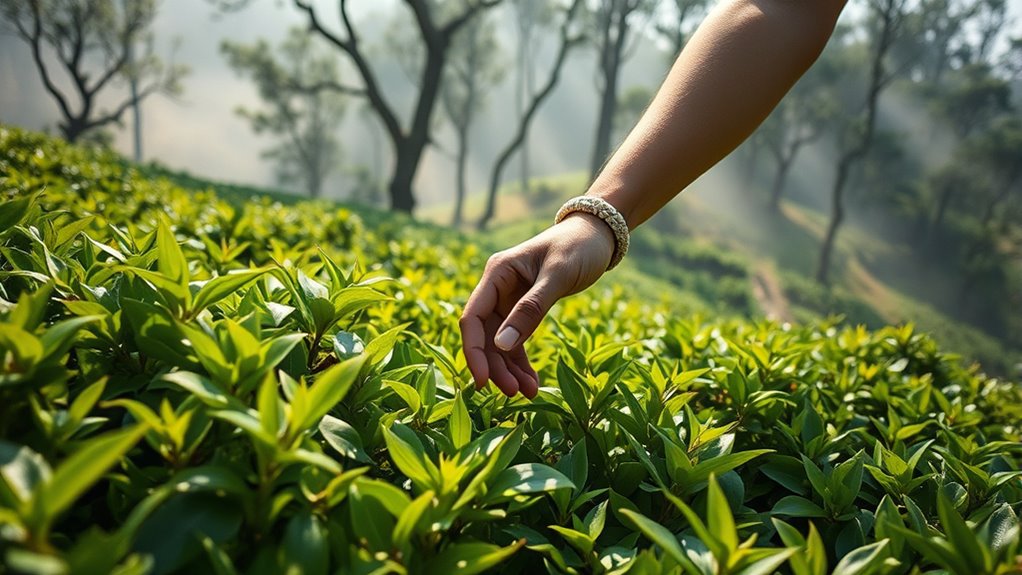
Wild tea harvesting raises significant ethical questions because it directly impacts fragile ecosystems and local communities. When you venture into wild terrains to gather tea leaves, you’re part of a process that can either support or threaten the environment and the people who depend on it. To guarantee your harvesting practices are responsible, embracing sustainable practices is essential. These involve more than just avoiding overharvesting; they require a mindful approach that respects the natural balance and promotes long-term health of the ecosystem. By adopting sustainable practices, you help prevent soil erosion, protect native flora and fauna, and ensure that wild tea populations remain viable for future generations.
Responsible wild tea harvesting supports ecosystems and communities through sustainable, mindful practices.
Conservation strategies play a pivotal role in guiding ethical wild tea harvesting. They involve specific actions designed to preserve biodiversity and maintain ecological integrity. For instance, setting limits on the amount of tea you collect helps prevent depletion of local resources. Also, harvesting only from designated areas or during specific seasons minimizes disturbance and allows plants to recover. These strategies often include working closely with local communities and indigenous peoples, whose traditional knowledge and stewardship are crucial for sustainable management. When you respect these conservation strategies, you’re helping to balance human needs with environmental preservation, ensuring that wild tea harvesting remains a sustainable activity.
It’s also important to recognize your role in supporting local communities that rely on wild tea for their livelihood. Ethical harvesting means engaging with local people, respecting their customs, and ensuring that they benefit economically from sustainable practices. Overharvesting or exploiting resources without regard for community well-being can lead to social and environmental harm. By choosing to source tea from responsible suppliers who follow conservation strategies, you contribute to a system that values ecological health and community resilience. This approach fosters a more equitable and sustainable industry, where wild tea harvesting supports both nature and the people who have traditionally stewarded these lands.
Ultimately, your choices matter. When you prioritize sustainable practices and respect conservation strategies, you’re actively participating in the ethical stewardship of wild tea resources. This mindful approach not only preserves the unique character of wild-harvested teas but also upholds the integrity of ecosystems and communities. It’s about recognizing that wild tea isn’t just a product to be consumed but a shared resource that requires careful management. By staying informed and supporting ethical harvesting methods, you help ensure that wild tea harvesting continues to be a positive force for environmental conservation and social responsibility.
Additionally, understanding the importance of regulatory compliance can help prevent legal issues and promote industry standards.
Frequently Asked Questions
How Can Consumers Identify Sustainably Harvested Wild Tea?
You can identify sustainably harvested wild tea by looking for wild tea indicators like labels or certifications from reputable organizations. Check for details about sustainable harvesting techniques, such as minimal impact collection and respect for natural growth. Research the producer’s practices, prefer those committed to conservation, and avoid teas with vague or no origin info. By staying informed and choosing transparent sources, you verify you’re supporting sustainable wild tea harvesting.
What Are the Legal Regulations Surrounding Wild Tea Collection?
While wild tea collection feels like a free adventure, laws often set boundaries to protect nature. You need to abide by regulations on wild tea conservation and harvesting quotas, which vary by region. These rules prevent overharvesting and ensure sustainability. Ignoring them can lead to fines or ecological harm. So, always check local laws before foraging, respecting both the environment and legal guidelines to enjoy wild tea responsibly.
How Does Wild Tea Harvesting Impact Local Communities?
Wild tea harvesting can positively impact local communities by supporting traditional knowledge and cultural preservation. When you participate responsibly, you help sustain local customs and promote economic benefits. However, overharvesting may threaten these traditions and deplete resources. By respecting community practices and harvesting sustainably, you guarantee that future generations can continue their cultural heritage while enjoying the economic and social benefits of wild tea collection.
Are There Certifications for Ethically Sourced Wild Teas?
Did you know that over 50% of wild teas now carry ethical harvest labels? Yes, there are certifications for ethically sourced wild teas. These wild tea certifications guarantee sustainable harvesting practices and fair treatment of local communities. When you buy wild tea with these certifications, you’re supporting ethical harvest labels that prioritize environmental conservation and social responsibility. So, look for these labels to enjoy your tea responsibly and ethically.
What Are the Best Practices for Responsible Wild Tea Harvesting?
To guarantee responsible wild tea harvesting, focus on wild tea sustainability by harvesting only what you need and leaving enough for the environment to thrive. Practice harvesting ethicality by avoiding overharvesting and respecting local ecosystems. Use sustainable tools, harvest during appropriate seasons, and seek permission if necessary. Your mindful approach helps preserve wild tea resources for future generations, supporting both ecological health and ethical sourcing.
Conclusion
As you consider wild tea harvesting, remember that sustainable practices protect delicate ecosystems and guarantee future harvests. Did you know that over 80% of wild tea plants grow in forests threatened by deforestation? By harvesting responsibly, you help preserve these essential habitats and support local communities. Your mindful approach can make a real difference—so choose ethical sources and respect the land. Together, you can enjoy wild tea while safeguarding its future.