
White tea is known for its delicate, subtle flavors thanks to minimal processing that preserves antioxidants and natural notes. To enjoy it fully, use water between 160°F and 185°F and steep for 2 to 4 minutes, ensuring a smooth, nuanced taste. Using the right equipment like a glass teapot and fresh leaves enhances your experience. Keep exploring these tips and techniques to uncover all the nuance and health benefits white tea offers.
Key Takeaways
- White tea is minimally processed, preserving natural antioxidants and delicate, nuanced flavors.
- Use water between 160°F to 185°F and steep for 2-4 minutes for optimal flavor extraction.
- Choose specific white tea types like Silver Needle or White Peony to explore different flavor profiles.
- Brew in a glass or porcelain teapot with a fine mesh strainer to maintain delicacy and clarity.
- Enhance white tea with herbs, citrus, or natural flavorings for a personalized, aromatic experience.
What Makes White Tea Unique?
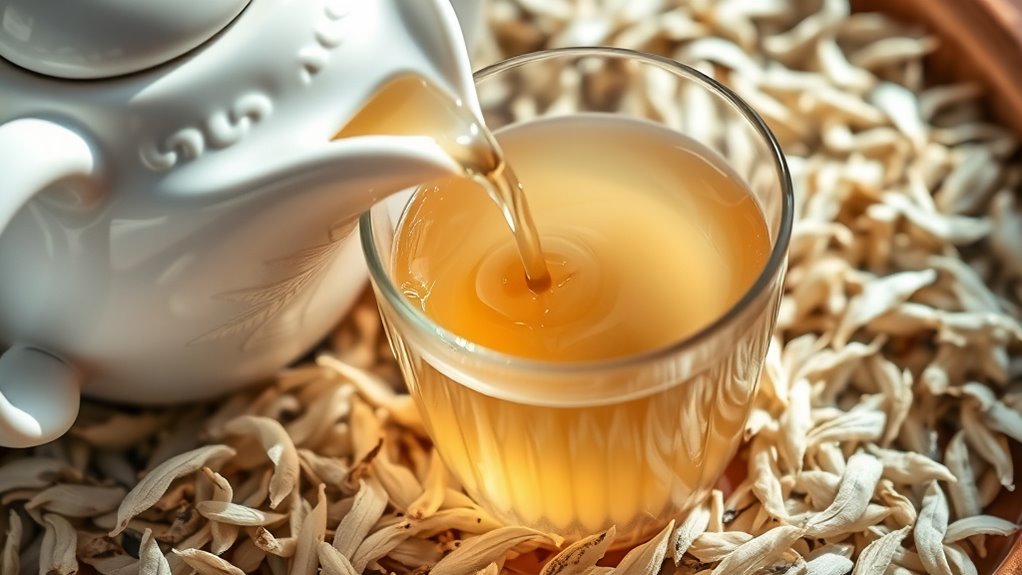
White tea stands out because of its minimal processing, which helps preserve its natural antioxidants and delicate flavors. During white tea cultivation, the leaves are picked at the right time and lightly processed, often just withering and drying. This gentle approach retains more polyphenols, offering you greater health benefits like improved immune function and reduced inflammation. Unlike other teas that undergo oxidation or extensive rolling, white tea’s subtlety relies on its simple preparation and careful harvesting. Its light, fresh taste is a direct result of this minimal process, making it a unique choice among teas. When you choose white tea, you’re enjoying a beverage that’s as close to nature as possible—rich in antioxidants and gentle on your health. Additionally, the minimal processing involved in white tea production aligns with the preservation of natural antioxidants, enhancing its health-promoting properties. The careful harvesting methods also contribute to its delicate flavor profile, which is further supported by the preservation of polyphenols, known for their health benefits. This minimal intervention process also helps maintain the tea’s freshness and subtlety, making each cup a truly delicate experience. Furthermore, selecting high-quality white tea ensures you get the full spectrum of beneficial compounds, amplifying its health and sensory benefits.
Different Types of White Tea to Explore

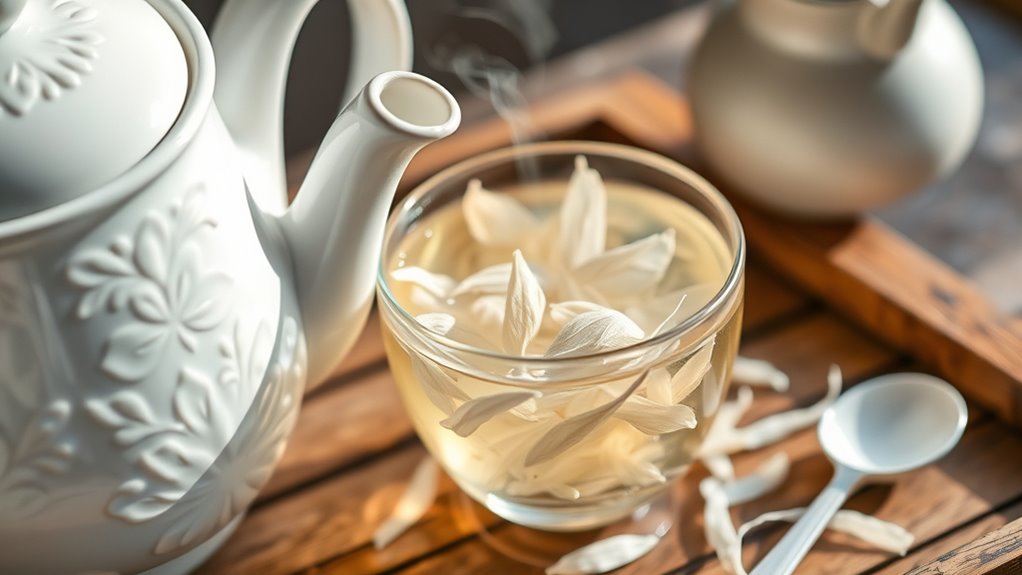
There are several distinct types of white tea, each offering unique flavors and characteristics that cater to different preferences. The variety of tea plant varieties influences the flavor profiles you’ll encounter. For example, Silver Needle, made from young buds, delivers a delicate, sweet, and subtly floral taste. White Peony, which includes both buds and leaves, offers a richer, slightly fruity flavor with a smooth finish. Long Life Eyebrow features more mature leaves, providing a fuller body and a hint of nuttiness. Each type’s flavor profile depends on the specific tea plant varieties used, as well as the harvesting and processing methods. Exploring these different white teas allows you to appreciate the nuanced differences and find the ones that best suit your palate.
Essential Equipment for Brewing White Tea
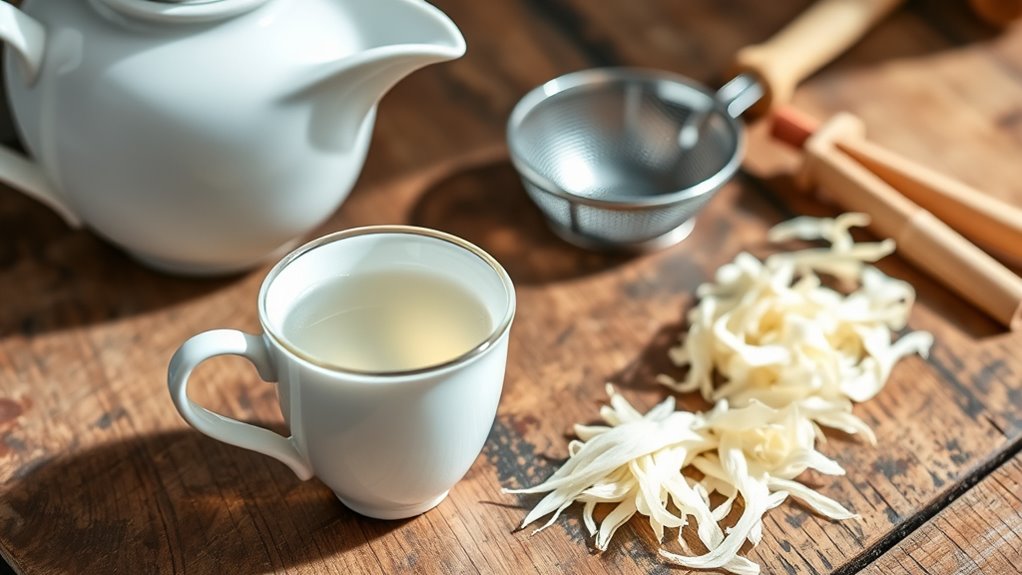
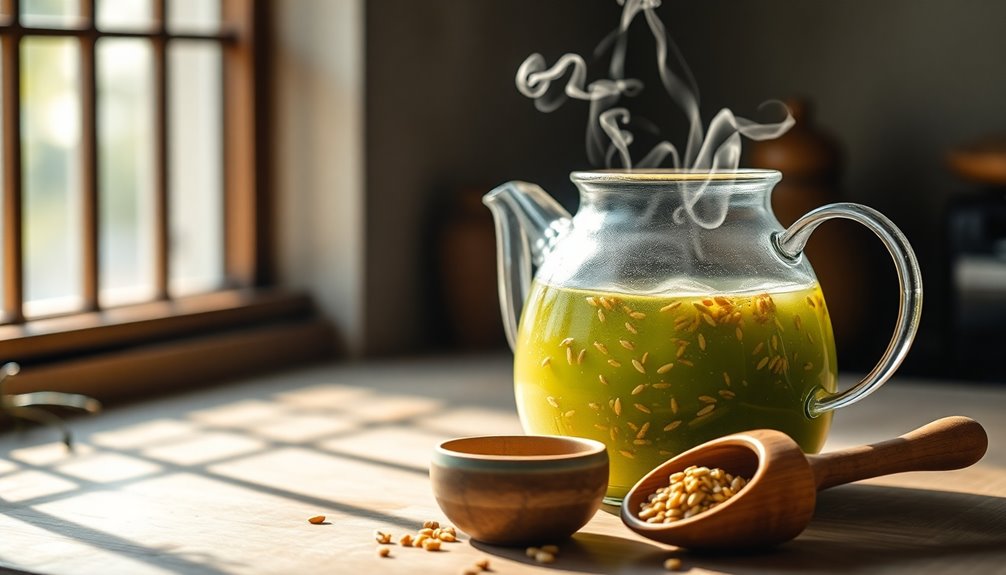
To fully enjoy the subtle flavors and delicate nuances of white tea, having the right brewing equipment makes all the difference. Start with quality brewing accessories like a glass or porcelain teapot, which won’t interfere with the tea’s gentle notes. Use a fine mesh strainer to catch any loose leaves and prevent over-steeping. Proper tea storage is essential—keep your white tea in an airtight container away from light, moisture, and strong odors to preserve its delicate aroma. A temperature-controlled kettle is helpful for precise water heating, ensuring ideal brewing conditions. Investing in these essentials enhances your tea experience, allowing the subtle flavors to shine through without interference. Additionally, understanding the mechanics of brewing temperature helps optimize extraction and flavor. Paying attention to tea storage conditions further preserves the freshness and aroma of your white tea, ensuring each cup is as delightful as the first. Proper water quality also plays a key role in extracting the best flavors from your tea leaves. Moreover, being aware of market growth projections can inspire you to explore a variety of premium white teas to elevate your tasting experience.
Optimal Water Temperature and Steeping Time

Getting the water temperature just right is essential for revealing the delicate flavors of white tea. Ideally, use water around 160°F to 185°F (70°C to 85°C). Too hot, and you risk burning the leaves, resulting in bitterness; too cool, and the tea won’t fully develop its subtle notes. Steeping time also matters—generally, 2 to 4 minutes is *ideal*. If you steep too long, the tea can become overly strong or astringent; too short, and it may taste weak. Pay attention to these two factors, as they work together to extract the finest flavors without overpowering the tea’s natural delicacy. Adjusting water temperature and steeping time based on your taste preference will *guarantee* a perfect, nuanced cup every time. Proper brewing techniques enhance the tea’s delicate qualities and bring out its full range of flavors. Additionally, using fresh, quality leaves can significantly improve the overall flavor profile of your white tea. Being mindful of temperature control can also prevent over-extraction and preserve the tea’s subtle sweetness. Moreover, understanding tea varietals can help you tailor your brewing approach for different white teas.
Step-by-Step Guide to Perfect White Tea Infusions

To brew perfect white tea, you need to focus on getting the water temperature just right and timing your steeping accurately. Using the right temperature guarantees the delicate flavors unfold without bitterness, while precise steeping time prevents over-extraction. Follow these steps carefully to enjoy a consistently smooth and flavorful cup. For enthusiasts seeking enhanced flavor profiles, experimenting with water temperature adjustments can reveal subtle nuances inherent in white tea. Additionally, understanding characteristics of a healthy breakfast can inspire beverage choices that complement your tea, such as incorporating hydration options like water or herbal teas. Staying informed about trends in tea markets can also help refine your brewing techniques to match current preferences.
Optimal Water Temperature
Achieving the perfect white tea infusion hinges on using the right water temperature, which is typically between 160°F and 185°F (70°C to 85°C). Maintaining this temperature range ensures you don’t scorch the delicate leaves, preserving their subtle flavors. To achieve ideal steeping precision, use a thermometer or temperature-controlled kettle for accuracy. If the water is too hot, it can make the tea bitter and overpower its gentle nuances. Too cool, and the tea won’t fully release its delicate aroma and flavor. Consistently matching the water temperature to the recommended range helps you control the infusion process, resulting in a balanced, smooth cup that highlights white tea’s refined characteristics. Proper water temperature is crucial for a consistently satisfying white tea experience. Additionally, understanding the characteristics of farmhouse bedroom decor can inspire a cozy and inviting atmosphere that complements your tea ritual. Ensuring your brewing environment is free from air purifier noise and maintaining a clean space can further enhance the overall experience. Paying attention to water quality can also have a significant impact on the taste, as pure, filtered water helps preserve the tea’s delicate profile. Using the appropriate electric kettle with temperature control features can make your brewing process more precise and enjoyable. For optimal flavor extraction, consider the freshness of water, since using stale or hard water can negatively affect your brew.
Steeping Time Precision
Since steeping time greatly influences the flavor and strength of your white tea, paying close attention to how long you leave the leaves in water is essential. Too short, and you won’t fully extract the delicate flavors; too long, and the tea may become bitter or astringent. Aim for a steeping time of about 2 to 4 minutes, adjusting slightly based on your taste preference. Precise steeping time guarantees ideal flavor extraction, highlighting the tea’s natural sweetness and subtle nuances. Use a timer to maintain consistency, and avoid over-steeping, which can compromise the tea’s delicate profile. By mastering steeping time, you’ll achieve a perfectly balanced infusion that showcases white tea’s refined character.
Tips for Enhancing the Flavor and Aroma

To boost the flavor and aroma of your white tea, pay attention to steeping time and water temperature. Using the right temperature guarantees the delicate notes come through without bitterness, and timing prevents over-extraction. You can also enhance your brew by adding subtle ingredients like honey or fresh mint to enrich the experience. Additionally, understanding the types of tea, such as white tea, can help you select the best brewing methods to maximize its unique qualities. Considering home security systems can also improve your overall peace of mind, allowing you to relax and enjoy your tea without concern.
Optimal Steeping Time
Finding the perfect steeping time is key to revealing the delicate flavors and subtle aroma of white tea. The ideal steeping duration allows for maximum flavor extraction without overpowering the tea’s gentle notes. If you steep too short, the tea may taste weak and underdeveloped; too long, and it risks becoming bitter or overly astringent. Typically, white tea benefits from a shorter steeping time, around 2 to 4 minutes, depending on your preference. Keep an eye on the clock to avoid oversteeping, which can dull its nuanced flavors. By paying attention to steeping duration, you ensure that each cup showcases the tea’s natural elegance, offering a balanced and refined experience with every brew.
Proper Water Temperature
Using the right water temperature is essential for releasing the full potential of white tea’s delicate flavors and subtle aromas. Too hot, and you risk scalding the leaves, overpowering the gentle notes; too cool, and the tea may taste flat. Ideally, aim for water between 160°F and 185°F (70°C-85°C) to optimize your brewing techniques.
| Water Temperature | Effect on Flavor | Recommended Use |
|---|---|---|
| 160°F (70°C) | Mild, smooth | Sensitive teas, first infusion |
| 170°F (77°C) | Balanced flavor | General brewing |
| 185°F (85°C) | Slightly stronger | Second infusion, bold notes |
Adjust based on your taste preference for a perfectly brewed white tea.
Enhancing With Additives
Enhancing your white tea with additives can elevate its delicate flavors and bring out new aromatic layers. By carefully choosing herbal infusions or subtle flavor pairings, you can customize your brew to suit your taste. Here are some tips to improve your experience: 1. Add a splash of herbal infusions like chamomile or lemongrass to complement the tea’s gentle notes. 2. Experiment with flavor pairings such as a slice of lemon or a hint of honey for natural sweetness. 3. Use fresh herbs or dried flowers to introduce aromatic complexity without overpowering the tea’s subtle profile. Additionally, incorporating essential oils—diluted appropriately—can further enhance the aroma and depth of flavor safety precautions, ensuring a delightful and safe tea experience. Incorporating AI in Business innovations such as automated analysis of flavor profiles can help you perfect your custom blends for optimal taste and aroma.
Creative Ways to Enjoy White Tea Beyond the Cup

White tea’s delicate flavor lends itself surprisingly well to a variety of creative uses beyond simply sipping from a cup. You can incorporate it into tea-infused desserts, adding subtle elegance to panna cotta or macarons. White tea also elevates cocktails, creating invigorating white tea cocktails that highlight its nuanced taste. To inspire you, consider these ideas:
| Use | Description | Tips |
|---|---|---|
| Tea-infused desserts | Infuse white tea into creams or jellies | Use cooled brewed tea for flavor |
| White tea cocktails | Mix with spirits for unique drinks | Garnish with edible flowers |
| Culinary marinades | Marinate seafood or poultry with white tea | Add citrus for brightness |
Experimenting with these options lets you enjoy white tea in new, flavorful ways. Additionally, exploring brewing techniques can help you achieve the perfect infusion for each culinary application.
Frequently Asked Questions
Can White Tea Be Infused With Herbs or Fruits?
You can definitely infuse white tea with herbs and fruits to enhance its delicate flavor. Try experimenting with herb combinations like mint or chamomile, and fruit infusions such as berries or citrus slices. Simply add your chosen herbs or fruits during steeping, allowing the flavors to meld. This adds a fun twist to your white tea experience, creating personalized blends that highlight its subtle notes while offering new, invigorating tastes.
How Long Does White Tea Stay Fresh?
Did you know that properly stored white tea can stay fresh for up to two years? To keep it at its best, focus on tea storage and freshness preservation. Keep your white tea in an airtight container away from light, heat, and moisture. When stored correctly, you’ll enjoy its subtle flavors longer. Without proper storage, it can lose its delicate taste in just a few months, so be mindful to preserve its quality.
Is White Tea Suitable for Cold Brewing?
Yes, white tea is suitable for cold brewing. When you cold brew, you allow the tea to steep slowly, which enhances its delicate flavor infusion without overpowering it. Simply add white tea leaves to cold water and refrigerate for 6-8 hours. This method preserves the subtle, nuanced flavors and results in a revitalizing drink. Cold brewing is an easy, gentle way to enjoy white tea’s natural, delicate profile.
What Are Common Health Benefits of White Tea?
White tea offers several health benefits you’ll appreciate. Its antioxidant properties help protect your cells from damage, supporting overall health. Drinking white tea may also boost your immune support, making you less prone to illnesses. Plus, its gentle nature means you can enjoy these benefits without harsh effects. Incorporate white tea into your routine to take advantage of its subtle flavors and health perks, giving you a natural boost throughout the day.
How Should White Tea Be Stored to Maintain Freshness?
Think of tea storage as guarding your treasure; you want to keep white tea’s freshness preserved. Store it in an airtight container away from light, heat, and moisture. Keep it in a cool, dark place—like a pantry or cupboard—and avoid refrigeration, which can introduce humidity. Proper tea storage guarantees your delicate white tea maintains its subtle flavors and aroma, so each brew stays as fresh as the day you bought it.
Conclusion
Don’t let the delicate flavor fool you—white tea is easy to enjoy once you know how. With the right brewing techniques, you’ll unseal its subtle notes and aroma. Even if you’re worried about overstepping or brewing it too weak, just follow these simple steps, and you’ll savor a perfect cup every time. Once you get the hang of it, white tea becomes a delightful ritual that’s worth exploring.