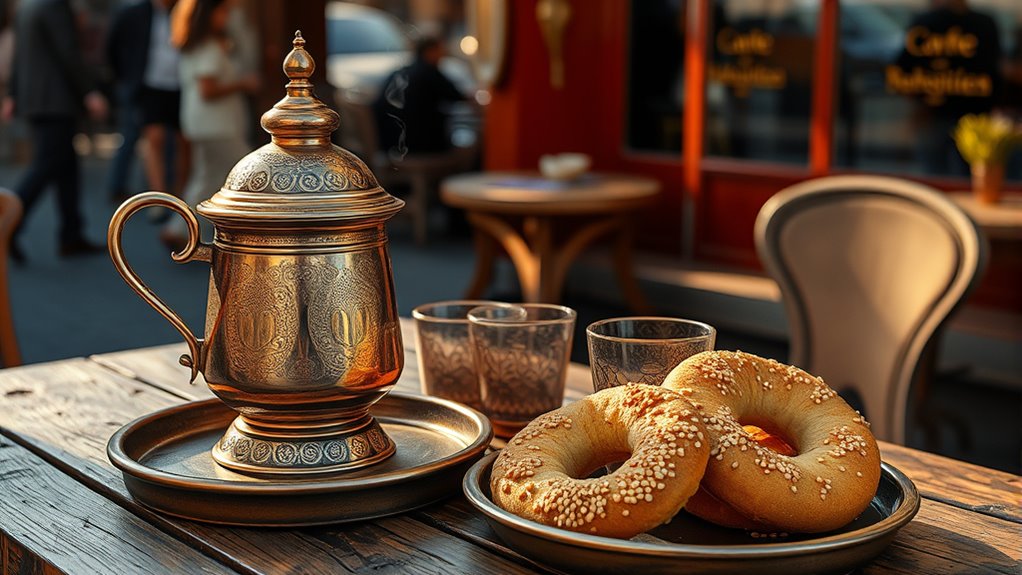

Turkish tea culture revolves around using a çaydanlık, a special double teapot, to brew strong tea and serve it in small, tulip-shaped glasses. Sharing tea often involves enjoying it with a piece of simit, a popular sesame-covered bread, highlighting hospitality and social bonds. Pouring from a height aerates the tea, creating a rich flavor. If you explore further, you’ll discover the deep symbolism behind these brewing and serving rituals that connect people and traditions.
Key Takeaways
- Turkish tea is brewed using a special double teapot called çaydanlık, allowing control over tea strength and flavor.
- Tea is traditionally served in tulip-shaped glasses, often accompanied by simit, a sesame-crusted bread.
- Pouring tea from a height aerates it, enhancing flavor and foam, and reflects Turkish hospitality.
- Sharing tea and simit fosters social bonds, conversations, and cultural traditions in Turkish daily life.
- Tea rituals symbolize warmth, friendship, and community, reinforcing Turkey’s rich cultural heritage.
Turkish tea culture is an integral part of daily life, shaping social interactions and traditions across the country. When you participate in this culture, you quickly realize that tea isn’t just a beverage; it’s a symbol of hospitality, friendship, and community. The act of tea brewing is more than just preparing a drink—it’s a ritual that brings people together and preserves centuries-old customs.
Turkish tea embodies hospitality, friendship, and community—more than a drink, it’s a cherished daily ritual connecting people.
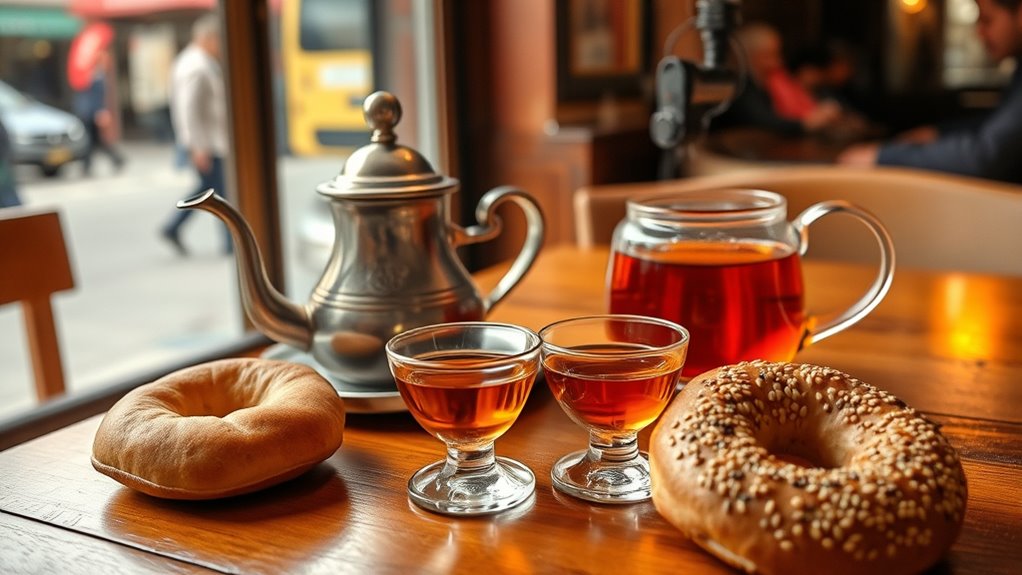
In Turkey, tea is typically brewed using a çaydanlık, a special double teapot designed specifically for making Turkish tea. You start by boiling water in the larger lower pot, which acts as a reservoir. Meanwhile, the smaller upper pot holds concentrated tea leaves. This setup allows you to control the strength of your tea, a key aspect of Turkish tea drinking. As the water in the lower pot boils, you add loose tea leaves to the upper pot and let them steep, creating a rich, dark brew. The process is deliberate, almost ceremonial, emphasizing patience and respect for tradition. This method of tea brewing isn’t just about making a hot drink; it’s a cultural ritual that signifies care and hospitality.
Once the tea is ready, you serve it in small, tulip-shaped glasses, often accompanied by a piece of sugar or a sweet treat like a simit. Part of the cultural ritual involves pouring the tea from a height to aerate it, which enhances the flavor and creates a beautiful, foamy top. You’ll notice that sharing tea in this manner encourages conversation and camaraderie, strengthening social bonds. Whether you’re visiting a neighbor, sitting at a bustling café, or relaxing at home, offering and drinking tea is a gesture of warmth and friendship.
The cultural rituals surrounding tea extend beyond just the act of brewing and drinking. It’s customary to wait until the tea has cooled to a comfortable temperature before sipping, and many Turks enjoy their tea with a small spoon or a cube of sugar, depending on their preference. These small customs reflect a deep respect for tradition and a desire to savor the moment. Additionally, the tea brewing process itself is a reflection of Turkish hospitality and cultural identity. Over time, you learn that tea isn’t just about the drink itself but about the shared experience and the stories that unfold during these gatherings. In Turkey, tea is a daily ritual that reinforces social ties, celebrates hospitality, and keeps alive a treasured cultural heritage.
Frequently Asked Questions
What Are the Traditional Methods of Preparing Turkish Tea?
To prepare Turkish tea, you start with traditional tea utensils like the çaydanlık, a double teapot. You place loose tea leaves in the upper pot and boiling water in the lower one. Brew the tea by pouring hot water over the leaves, then serve it by diluting the concentrated brew with hot water. This method highlights authentic tea brewing techniques, ensuring a rich, flavorful experience.
How Do Turkish Tea Customs Vary Regionally?
You’ll notice regional variations and unique tea etiquette across Turkey. In the Aegean, locals prefer strong, sweet tea served in small glasses, while in the Black Sea region, tea is often brewed lighter and consumed with hearty breakfast foods. In Istanbul, tea etiquette emphasizes politeness, with guests offered tea as a symbol of hospitality. These regional differences highlight diverse traditions, shaping how you enjoy and share Turkish tea throughout the country.
What Is the Significance of Tea in Turkish Social Life?
Tea plays a essential role in Turkish social life, acting as a symbol of hospitality and friendship. You’ll find that tea etiquette emphasizes sharing and respect during social gatherings, where serving çay (tea) fosters connection. Whether at home or in cafes, offering tea signifies warmth and openness, making it an integral part of everyday interactions. You naturally embrace these customs, strengthening bonds and creating welcoming environments.
Are There Specific Times When Turkish Tea Is Traditionally Served?
You typically enjoy Turkish tea during specific times in your daily tea schedule, such as in the morning, afternoon, and evening. During tea serving rituals, you may gather with friends or family to share a cup, emphasizing social bonds. These traditional moments mark important parts of your day, where you pause, chat, and relax, making tea an essential part of your routine and social life.
How Has Modern Technology Influenced Turkish Tea Preparation?
Modern technology has transformed your tea brewing experience into a symphony of precision and convenience. You now use smart tea gadgets that act like tiny baristas, controlling temperature and steeping times with a tap. These innovations simplify the traditional process, turning it into an art of automation. With tea brewing innovations at your fingertips, you enjoy perfect cups every time, blending centuries-old traditions with cutting-edge devices that make every sip a celebration.
Conclusion
As you sip your Turkish tea, imagine the çaydanlık as a small lighthouse guiding you through daily life’s calm and chaos. The steam rises like gentle clouds, whispering stories of tradition and warmth. Each sip connects you to generations who found comfort in these simple rituals. In this quiet moment, the tea becomes more than a drink—it’s a symbol of community, comfort, and the timeless dance of culture and connection.