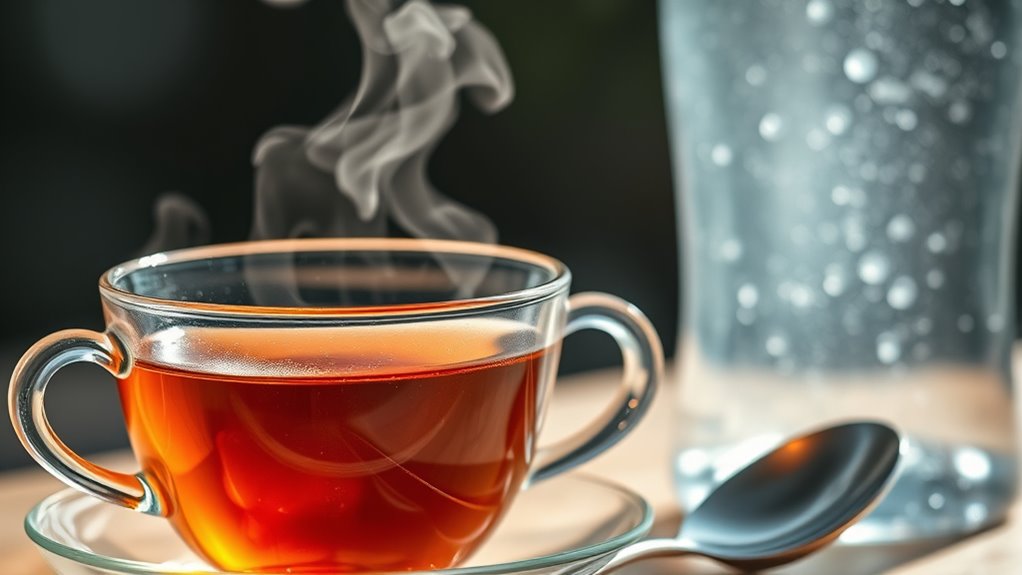

The mineral content in your water greatly affects your tea’s flavor, aroma, and texture. Hard water with high calcium and magnesium can make teas taste dull or bitter, while softer water enhances delicate flavors and subtle aromas. Adjusting your water’s mineral balance by filtering or using spring water, combined with proper steeping techniques, helps bring out your tea’s best qualities. Keep exploring to discover how fine-tuning these factors can elevate your tea experience.
Key Takeaways
- Mineral content in water influences tea’s taste, aroma, and texture, with hard water potentially causing dull or bitter flavors.
- Softer water enhances delicate tea flavors, allowing subtle aromas and nuances to shine through.
- Adjusting water mineral levels through filtering or selecting spring water can optimize infusion quality.
- Infusion techniques, such as steeping time and temperature, should be tailored to mineral content for balanced flavor extraction.
- Maintaining proper mineral balance in water improves overall tea flavor, aroma, and enjoyment.

Have you ever wondered how water influences the flavor and quality of tea? The answer lies in the water’s mineral content and how you use it during tea infusion. Water’s mineral composition can dramatically affect the taste, aroma, and even the texture of your tea. Hard water, rich in minerals like calcium and magnesium, can make your tea taste dull or overly bitter, while soft water, with fewer minerals, often highlights delicate flavors and subtle aromas. Understanding water mineral content is essential because it determines how well your tea’s natural qualities come through. If you’re aiming for a perfectly balanced cup, you’ll want to pay attention to these mineral levels and adjust your water accordingly. Additionally, the presence of minerals can influence the extraction of flavors and compounds from tea leaves, impacting the overall drinking experience.
Tea infusion techniques also play an important role in extracting the best flavors from your leaves. The temperature, steeping time, and water-to-tea ratio all interact with the mineral content of your water. For instance, high mineral levels can cause your tea to extract bitter compounds more quickly, so you might need to shorten steeping times or use water at a slightly lower temperature. Conversely, softer water allows for longer infusions without bitterness, revealing more nuanced notes in your tea. Using the right infusion techniques in combination with suitable water mineral content ensures that you don’t overpower the delicate flavors or miss out on subtle complexities.
If you want to enhance your tea, start by testing your water’s mineral content. If it’s hard, consider filtering or using bottled spring water with a more balanced mineral profile. This can help produce a cleaner, more vibrant infusion. Additionally, experimenting with tea infusion techniques—such as adjusting steeping time or temperature—can help you find the ideal balance. For example, delicate green teas may require cooler water and shorter steeping, especially if your water is mineral-heavy, to preserve their freshness and sweetness. Stronger black teas or herbal infusions might benefit from slightly hotter water and longer steeping times, but be mindful of the mineral influence that could intensify bitterness.
Moreover, understanding the benefits of mineral balance can guide you in choosing water that enhances your tea-drinking experience and preserves the desirable qualities of each type of tea.
Ultimately, mastering the relationship between water mineral content and tea infusion techniques will elevate your tea experience. By paying attention to these details, you can craft a cup that truly highlights the unique qualities of each tea. Whether you prefer a bright, lively brew or a smooth, mellow one, understanding how water interacts with your tea’s ingredients allows you to fine-tune your process for the best flavor. This attention to mineral balance and infusion methods will help you enjoy tea at its finest, every time.
Top picks for "water mineral balance"
Open Amazon search results for this keyword.
As an affiliate, we earn on qualifying purchases.
Frequently Asked Questions
How Does Mineral Content Affect Tea Brewing Time?
Mineral content directly influences your tea brewing time by affecting water hardness and mineral saturation. Hard water, rich in minerals like calcium and magnesium, slows down extraction, making it take longer for flavors to develop. Soft water, with fewer minerals, allows quicker steeping. So, if your water is high in minerals, expect a longer brewing time, while low mineral content speeds up the process, giving you a quicker, flavorful cup.
Can Mineral Imbalance Cause Tea to Taste Bitter?
Yes, mineral imbalance can cause tea to taste bitter. When water pH is too high or low, it affects extraction, highlighting undesirable flavors. Mineral interference, like excess calcium or magnesium, intensifies bitterness by altering the tea’s chemical balance. You might notice this especially with hard water, which can overshadow delicate notes. To avoid bitterness, use water with balanced mineral content and proper pH for a smoother, more refined flavor.
What Water Minerals Enhance Specific Tea Flavors?
You can enhance specific tea flavors by paying attention to water minerals. For example, calcium and magnesium boost body and richness, while sodium can soften harsh notes. A balanced pH level around 7 helps extract ideal flavors, and moderate mineral saturation prevents bitterness. Adjusting mineral content according to the tea type lets you bring out subtle nuances, creating a more vibrant and enjoyable brewing experience.
How Often Should I Test My Water Mineral Levels?
You should test your water mineral levels regularly, about once every 1-3 months, to maintain ideal mineral stability and proper water pH. Frequent testing helps you identify changes in mineral content that could affect tea flavor. Keep an eye on pH levels and mineral balance to guarantee consistent quality. If your water source varies, more frequent tests might be necessary to keep your tea tasting its best.
Are Mineral Additives Safe for Tea Preparation?
Mineral additives can be safe for tea preparation if you use high-quality, food-grade mineral supplements, but you should be cautious. Proper water purification guarantees contaminants are removed, and mineral supplementation can enhance flavor, but excessive minerals may disrupt balance. Always follow manufacturer instructions, and test your water’s mineral levels regularly to avoid overdoing it. When used correctly, mineral additives can improve your tea’s taste without compromising safety.
Conclusion
Just like a skilled chef balances flavors to create a perfect dish, you can balance your tea and water for ideal flavor. Imagine trying to brew your favorite tea with water that’s too hard—it’s like adding too much salt to a recipe, overpowering everything. When you get the mineral balance right, each sip becomes a harmonious symphony, turning everyday tea into a memorable experience. Master this balance, and every cup becomes a delightful story waiting to be told.