When choosing tea ware, you’ll notice that porcelain offers durability, a smooth surface, and good heat retention, making it versatile for everyday use. Clay teapots excel at keeping tea warm longer and develop richer flavors over time, especially if unglazed or traditional. Glass provides visual appeal and easy cleaning but heats up and cools quickly, making it less durable. Understanding these differences helps you pick the right material—learn more to optimize your tea experience.
Key Takeaways
- Porcelain offers durability, a smooth non-porous surface, and good heat retention, ideal for preserving tea flavors.
- Clay teaware excels in heat retention, flavor development, and an earthy aesthetic, especially in traditional brewing.
- Glass allows visual observation of tea brewing, is non-porous, but has lower heat retention and is more fragile.
- Material choice impacts flavor preservation, heat retention, durability, and aesthetic appeal of tea ware.
- Proper handling and maintenance extend the lifespan of porcelain, clay, and glass teaware, each with unique care requirements.
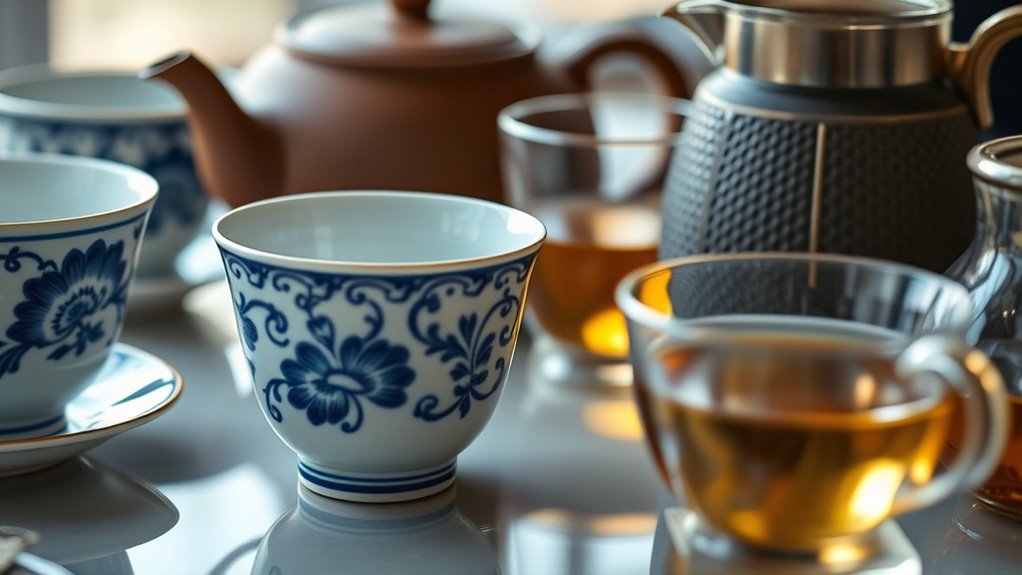
Ever wondered what makes some teapots and cups enhance the flavor of your tea more than others? The answer often lies in the material of your tea ware. Different materials not only influence how your tea tastes but also affect how long your tea stays warm and how durable your teaware is over time. Understanding these factors can help you choose the right pieces for your tea-drinking experience.
The material of your teaware influences flavor, warmth retention, and durability—choose wisely for the perfect tea experience.
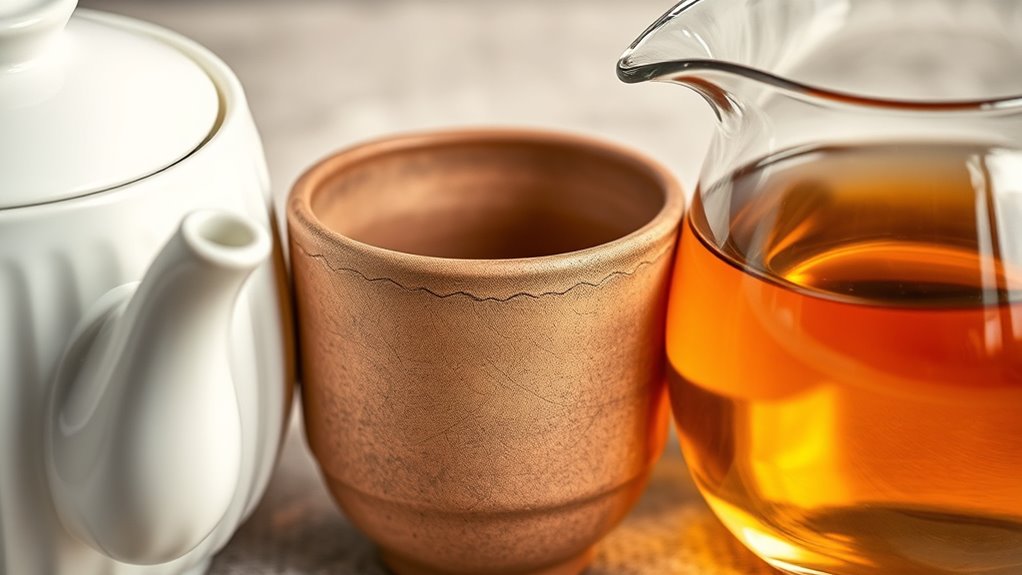
Take porcelain, for example. It’s prized for its elegant appearance and smooth surface, which won’t interfere with the delicate flavors of your tea. Porcelain teapots and cups generally have good material heat retention, meaning they can keep your tea warm for a decent amount of time. Plus, porcelain offers impressive tea ware durability. It resists chipping and cracking better than some other materials, especially if you handle it carefully. This durability makes porcelain a popular choice for those who want their tea ware to last years without losing its beauty or functionality. However, it’s important to note that while porcelain is sturdy, it can still break if dropped or mishandled roughly. Its ability to retain heat isn’t as high as some other materials, but it’s enough to enjoy your tea at an ideal temperature.
Additionally, porcelain’s non-porous surface helps preserve the purity of your tea’s flavor, preventing any residual tastes from previous brews from affecting new ones.
Clay is another excellent option, especially for traditional tea brewing. Clay teapots, like Yixing or unglazed varieties, excel in material heat retention. They absorb some of the tea’s flavors over time, which can enhance subsequent brews, and because of their porous nature, they hold heat longer. That means your tea stays warm longer and can develop richer flavors with each use. Clay teapots tend to be quite durable, but they require some care. They can crack if exposed to sudden temperature changes, so you need to preheat them gradually. Still, when properly maintained, clay offers excellent longevity and a unique brewing experience. Its natural, earthy look adds to the charm and authenticity of your tea sessions.
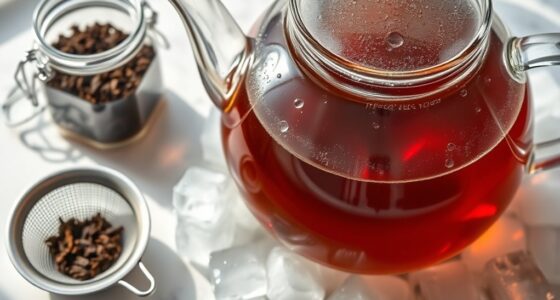
Glass, on the other hand, is prized for its transparency. With glass teapots and cups, you get a clear view of your tea as it brews, which is especially appealing during special ceremonies or casual sipping. Glass isn’t as durable as porcelain or clay; it’s more fragile and prone to breaking if dropped. But in terms of material heat retention, glass doesn’t perform as well. It quickly loses heat, so your tea may cool faster. Still, glass is non-porous, meaning it won’t absorb flavors and is easy to clean. If you prefer to observe your tea’s color and clarity, glass is ideal, but you’ll need to be gentle with it and accept that it might not keep your tea warm as long as other materials.
Choosing the right tea ware material boils down to balancing durability, heat retention, and aesthetic preference. Each material offers unique benefits that can elevate your tea experience, whether you want a durable, heat-retaining clay pot, an elegant porcelain cup, or a transparent glass vessel. For optimal results, consider how material properties influence your brewing and drinking habits to select the best fit for your needs.
Frequently Asked Questions
How Does Material Affect Tea Flavor and Aroma?
The material of your tea ware considerably influences flavor and aroma. Porcelain’s low porosity prevents flavors from lingering, keeping each brew pure. Clay absorbs some tea oils, enhancing depth over time, but may alter delicate aromas. Glass, with its excellent heat retention, ensures consistent brewing temperatures, preserving aroma and flavor. Each material offers unique benefits, so choose based on how you want your tea experience to evolve, considering porosity and heat retention.
Are There Eco-Friendly Alternatives to Traditional Tea Ware?
You can choose eco-friendly tea ware made from biodegradable options like bamboo or plant-based plastics, which break down naturally and reduce waste. Recycled materials, such as recycled glass or ceramic, offer sustainable alternatives that lessen environmental impact. By opting for these eco-friendly options, you help protect the planet while enjoying your tea, making your daily ritual more sustainable and mindful of environmental concerns.
How Should I Clean and Maintain Different Tea Ware Materials?
Think of your tea ware as a delicate garden needing gentle care. For porcelain, use warm water and a soft cloth to avoid scratches, and avoid sudden temperature changes. Clay pots thrive with quick rinses and avoiding soap, while glass teapots love a gentle scrub with baking soda for stains. Regular cleaning techniques and maintenance tips keep your tea ware shining, preserving its beauty and flavor for countless cozy sips.
Can I Use the Same Tea Ware for Different Types of Tea?
Yes, you can use the same tea ware for different types of tea, but it’s best to think about material compatibility and flavor preservation. Porcelain and glass are non-porous, so they don’t retain flavors, making them versatile. However, clay absorbs flavors, so using the same clay pot for different teas might affect taste. To maintain the purity of each brew, dedicate specific ware or clean thoroughly between uses.
What Are the Safety Considerations for Using Glazed Versus Unglazed Ware?
When choosing glazed or unglazed tea ware, you should consider safety hazards like glazing hazards, which may include lead or other toxins if not properly glazed, and unglazed risks, such as bacteria buildup or staining. Always verify that glazed ware is food-safe and lead-free. For unglazed pieces, keep them clean and dry to prevent bacteria. Properly glazed or unglazed, follow manufacturer guidelines to guarantee safe use.
Conclusion
Choosing the right tea ware is like selecting the perfect dance partner—each material brings its own rhythm and charm. Porcelain, clay, and glass are your trusted companions, each whispering stories through their textures and flavors. When you pick the right material, you’re not just brewing tea; you’re orchestrating a symphony of aromas and memories. So, embrace these materials like old friends, and let every sip be a delightful dance on your palate.