To keep your tea leaves fresh and flavorful, store them in airtight, light-proof containers like metal, ceramic, or glass to protect against light, air, and moisture. Keep the containers in a cool, dark, and dry place away from heat and strong odors. Avoid large containers for small quantities to prevent oxidation. Proper organization and regular checks help maintain aroma and freshness. Continue exploring to master all the tips for long-lasting, delicious tea.
Key Takeaways
- Store tea in airtight, light-proof containers made from ceramic, metal, or glass to prevent flavor loss and oxidation.
- Keep tea in a cool, dry, dark place away from sunlight, heat, and moisture to maintain freshness and aroma.
- Use small containers to minimize air exposure and ensure a tight seal for optimal preservation.
- Organize teas by type and store in labeled, dedicated containers to prevent cross-contamination and easy access.
- Regularly check storage conditions and replace containers if they show signs of damage or exposure to environmental factors.
Understanding the Importance of Proper Tea Storage
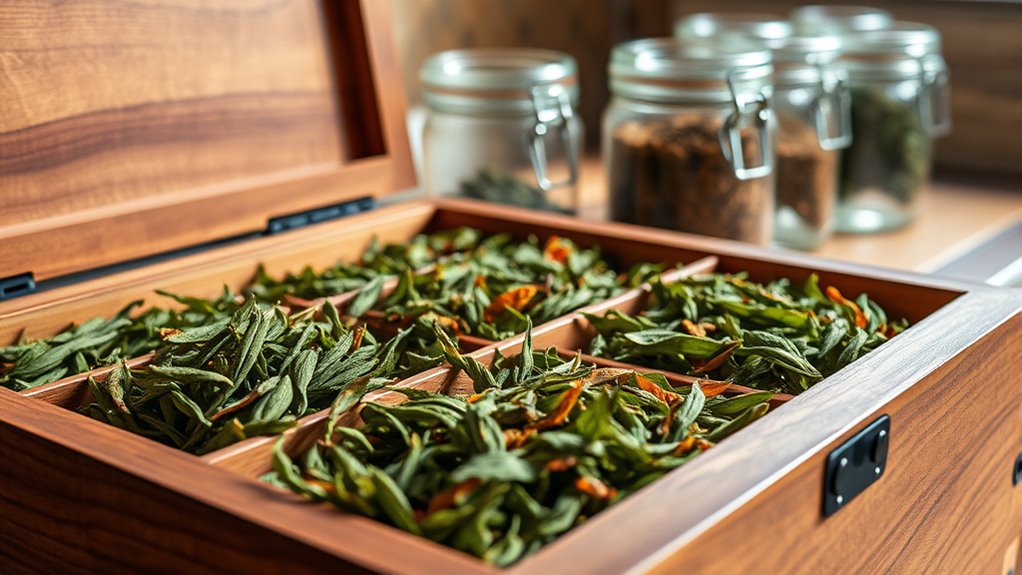
Proper tea storage is essential to preserve its flavor, aroma, and freshness. When you store tea correctly, you maintain its vibrant tea aroma, which is key to enjoying a rich and satisfying cup. Proper storage also extends the storage duration, helping your tea stay fresh longer and preventing it from losing its essential qualities. Exposure to light, air, heat, and moisture accelerates the degradation of tea’s delicate compounds, diminishing flavor and aroma over time. By understanding how to store your tea properly, you protect it from these elements and maximize its shelf life. Recognizing storage conditions can help you better decipher how to preserve your tea’s qualities. Good storage practices ensure your tea remains flavorful and enjoyable for as long as possible. Additionally, maintaining consistent storage conditions can foster better creative practice by reducing variables that might interfere with your focus and experimentation. Using airtight containers and avoiding temperature fluctuations are crucial steps to maintain optimal tea freshness over time.
Choosing the Right Container for Your Tea Leaves

Choosing the right container is key to keeping your tea fresh, so focus on the material, size, and seal. Opt for airtight containers made from non-reactive materials like ceramic or metal to protect your leaves. Make sure the container is large enough to prevent crushing but small enough to limit air exposure. Additionally, selecting containers that incorporate data privacy considerations can help ensure your tea storage remains secure and free from contamination. Proper storage conditions also help preserve the flavor and aroma of your tea leaves over time.
Material Matters Most
The material of your tea container plays an essential role in preserving the freshness and flavor of your leaves. Different tea leaf varieties react uniquely to storage conditions, so choosing the right container material is vital. Airtight metal tins, for example, protect against light and moisture, which can degrade delicate flavors. Glass containers are non-reactive and great for visibility, but they should be stored away from direct sunlight. Ceramic or porcelain containers offer a natural barrier, keeping out light and maintaining stable temperatures. Avoid plastic, as it can absorb aromas and may not provide a proper seal, risking spoilage. Selecting the appropriate storage container material ensures your tea stays fresh longer, preserving its aroma, flavor, and overall quality. Additionally, understanding angel numbers can provide insight into the significance of maintaining harmony and balance in your tea storage environment. Cultivating a positive energy around your tea setup can enhance your overall tea experience and promote good health. Properly storing tea also involves considering the storage conditions, such as avoiding exposure to air, light, and heat, which can accelerate flavor deterioration. Being mindful of environmental factors can further help in maintaining the integrity of your tea leaves over time. Incorporating energy vibrations into your storage practices can create a more mindful and harmonious tea experience.
Size and Seal
Selecting the right size and seal for your tea container is vital for maintaining freshness. You want an airtight container that keeps moisture, air, and odors out, preventing your tea leaves from losing flavor. Choose a size that fits your typical amount of tea, avoiding large containers for small quantities, which can cause excess air exposure. A smaller, well-sealed container minimizes air contact and helps preserve aroma. Light proof packaging is essential; exposure to light accelerates oxidation and degrades flavor. Opt for containers with tight seals to prevent leaks and maintain ideal freshness. Proper storage techniques can significantly extend the shelf life of your tea leaves. Using containers made from appropriate materials ensures that no harmful chemicals leach into your tea, preserving its quality. Additionally, selecting a container with secure closures helps maintain an airtight environment, further protecting your tea from external factors. Being aware of container maintenance practices can also help keep your storage effective over time. Incorporating mindful storage practices can further enhance the longevity and flavor of your tea leaves. By selecting appropriately sized and sealed containers, you guarantee your tea stays vibrant, aromatic, and fresh longer, making every brew a delightful experience.
Ideal Storage Conditions for Maximum Freshness
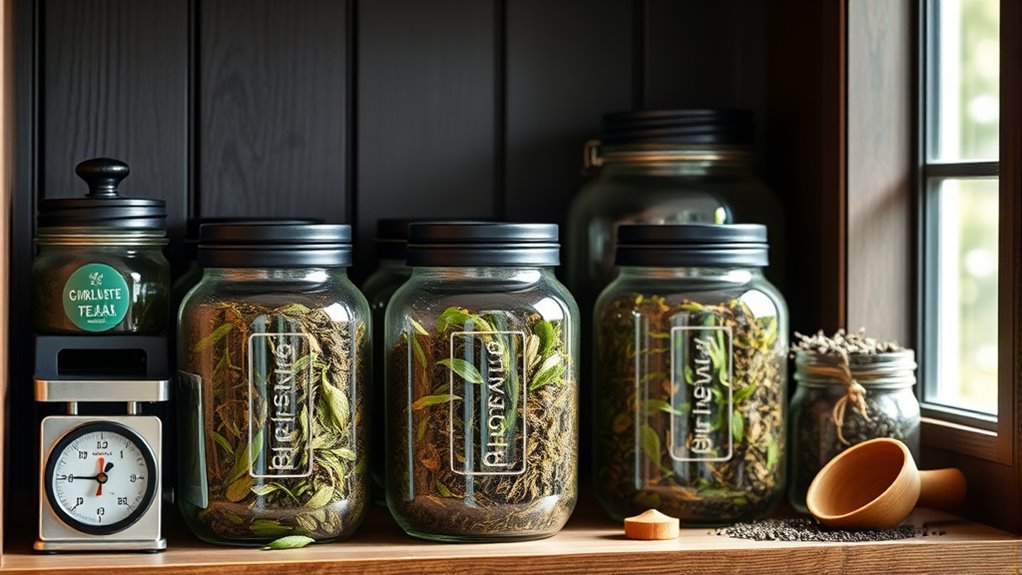
To keep your tea tasting its best, storing it in the right conditions is essential. Proper storage protects flavor retention and aromatic preservation, ensuring each cup is as delightful as the first. Focus on these key factors:
- Keep your tea in a cool, dark place—light and heat degrade flavor and aroma.
- Store it in an airtight container—air exposure leads to oxidation, dulling freshness.
- Avoid moisture and strong odors—tea absorbs surrounding scents, ruining its delicate aroma.
- Maintaining optimal storage conditions also supports color accuracy by reducing exposure to environmental factors that can affect tea quality and appearance. Additionally, selecting containers that prevent light exposure helps preserve both flavor and visual appeal over time. Using proper sealing techniques further minimizes air and moisture intrusion, extending the freshness of your tea leaves and maintaining their aroma and flavor.
Common Mistakes to Avoid When Storing Tea
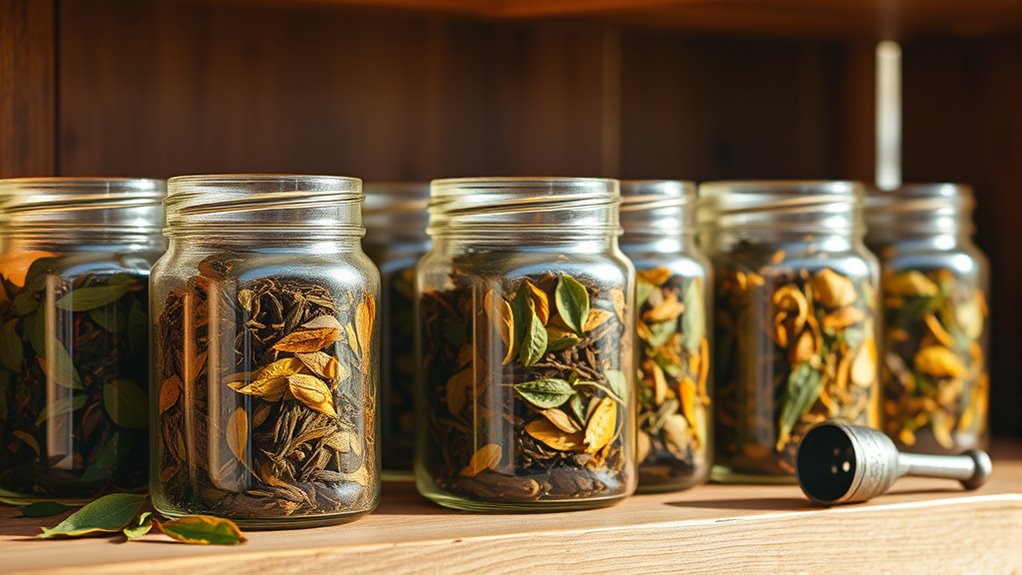
Avoiding common storage mistakes is essential for maintaining your tea’s quality. First, don’t overpack tea in containers; restricting airflow can cause moisture buildup and spoilage. Also, using metal containers isn’t always ideal, especially if they aren’t airtight, as they can react with the leaves and affect flavor. Be cautious with these common errors:
| Mistake | Consequence |
|---|---|
| Overpacking tea | Traps moisture, accelerates spoilage |
| Using metal containers | Alters flavor, causes oxidation |
| Storing in bright light | Degrades quality quickly |
| Ignoring temperature control | Leads to stale, flavorless leaves |
Additionally, proper storage conditions can help monitor storage conditions to ensure optimal freshness. Maintaining proper storage temperature is crucial to prevent deterioration and preserve the tea’s aroma and taste over time. To further safeguard your tea, consider airtight containers to prevent exposure to air and humidity that can compromise quality. Using humidity control in storage areas can also be beneficial in maintaining ideal conditions for longer shelf life.
The Impact of Light, Air, and Humidity on Tea Quality
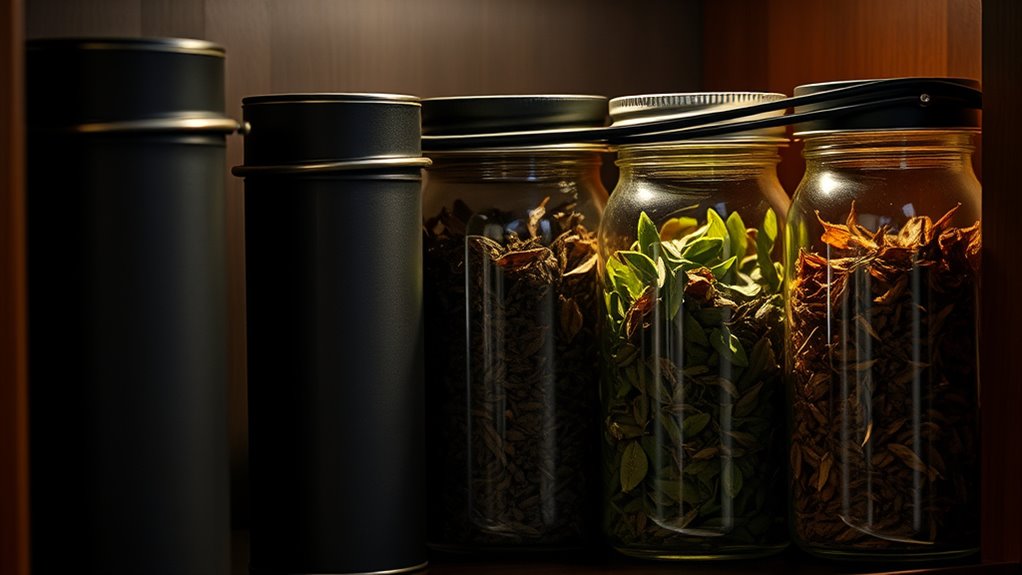
Light, air, and humidity play essential roles in preserving your tea’s freshness and flavor. Exposure to light can cause your tea’s delicate flavor to fade and dull its foxy aroma. Air causes oxidation, which can diminish quality over time. Humidity levels affecting your tea can lead to mold or dryness, both damaging its character. To protect your tea, focus on:
- Storing in a dark, airtight container to maintain its vibrant aroma and delicate flavor.
- Keeping the container in a cool, dry place to prevent moisture from ruining the leaves.
- Avoiding frequent exposure to air, which accelerates spoilage and erodes the tea’s essence.
- Using proper storage materials that help regulate environmental factors and extend freshness.
Best Practices for Long-Term Tea Preservation

To preserve your tea for the long haul, you should store it in airtight containers to prevent exposure to air and moisture. Keep your tea away from direct sunlight and sources of heat to maintain its freshness and flavor. Additionally, maintaining a consistent temperature helps avoid spoilage and keeps your tea in top condition.
Store in Airtight Containers
Storing tea in airtight containers is essential for maintaining its freshness and flavor over time. Proper containers lock in the tea’s delicate aroma and prevent exposure to air, which can cause flavor loss. To maximize freshness, consider these key tips:
- Choose opaque, airtight containers to protect the tea aroma from light and air.
- Label each container clearly with container labels, including the tea type and date of storage, so you can track freshness.
- Keep different tea varieties separated to avoid cross-contamination and preserve distinct flavors.
Keep Away From Sunlight
Since sunlight can quickly degrade tea’s quality, it’s essential to keep your tea containers in a dark place. Exposure to direct sunlight accelerates oxidation and diminishes flavor, so shade protection is critical. Store your tea in an opaque container or a cupboard away from windows to block UV shielding. Even indirect sunlight can harm delicate leaves over time, so choosing a dark storage spot helps preserve freshness and aroma. Avoid placing your tea on countertops or shelves that receive constant light. Regularly check your storage area to ensure it remains shielded from sunlight, especially during daytime hours. Proper shade protection not only maintains tea’s color and scent but also extends its shelf life, making it a vital step in long-term preservation.
Maintain Consistent Temperature
Maintaining a consistent temperature is essential for preserving your tea’s freshness and flavor over time. Fluctuations can degrade quality, so focus on temperature control and climate stability. To keep your tea at its best:
- Store in a cool, dark place away from heat sources like ovens or radiators.
- Avoid frequent temperature changes by choosing a dedicated storage spot.
- Use airtight containers in a climate-controlled environment to prevent humidity and temperature swings.
Organizing Your Tea Collection Effectively
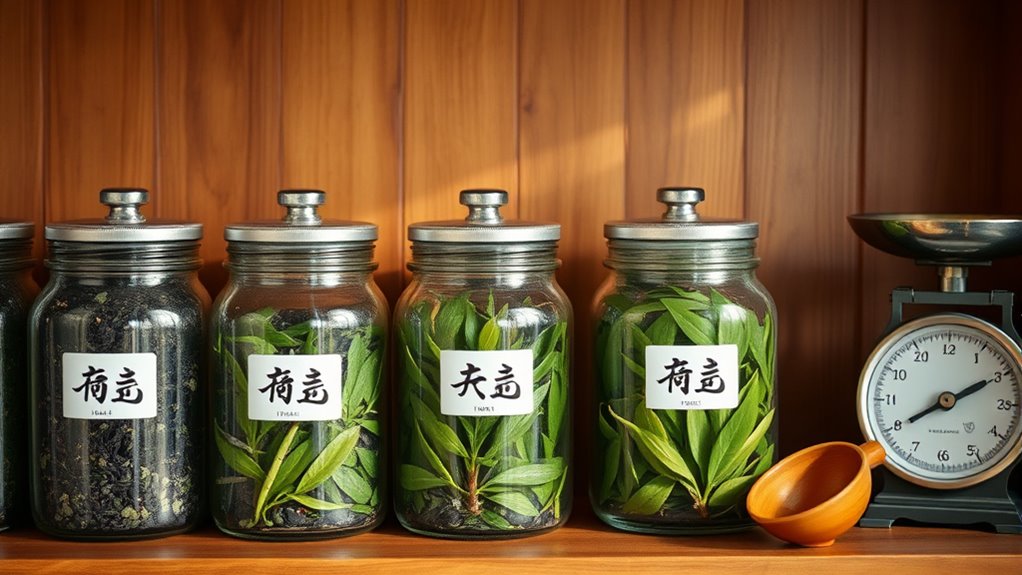
To keep your tea collection organized and easily accessible, start by categorizing your teas based on type, flavor, or how often you use them. Group herbal blends separately from black, green, or white teas, making it easier to prepare for a tea ceremony or daily brew. Use clear containers or labeled jars to identify each category quickly. Arrange your collection systematically on shelves or in drawers, so you can grab what you need without rummaging. Keep specialty teas, like rare or seasonal blends, separate from everyday options to preserve their quality. This organization not only streamlines your brewing process but also helps you appreciate the variety and richness of your collection. Consistent categorization makes it simple to maintain your teas’ freshness and flavor over time.
Tips for Maintaining Freshness Over Time

Keeping your tea fresh requires storing it in an environment that minimizes exposure to light, air, and moisture. Proper storage helps preserve the tea aroma and keeps flavors vibrant over time. To maintain ideal freshness, consider these tips:
- Use airtight containers to lock in aroma and prevent air from degrading the leaves.
- Store your tea in a cool, dark place away from direct sunlight, which can dull flavor and aroma.
- Keep your brewing temperature consistent by avoiding temperature fluctuations, ensuring each cup retains its full flavor profile.
Frequently Asked Questions
How Often Should I Replace My Stored Tea Leaves?
You should replace your stored tea leaves when they start to lose their aroma and flavor, typically after about 6 to 12 months. Proper storage slows down tea aging, extending its freshness, but over time, the storage lifespan decreases as essential oils degrade. Keep an eye on quality, and if the leaves become dull or stale, it’s time to refresh your stash for the best tasting experience.
Can I Store Different Types of Tea Together?
You shouldn’t store different types of tea together, as it can lead to flavor cross contamination and affect their unique tastes. Mixing teas may also cause unwanted blending in tea blending processes, compromising your intended flavors. To keep each tea’s freshness and aroma intact, store them separately in airtight containers. This way, you preserve their individual qualities and enjoy each cup as the tea master intended.
What Are the Signs of Stale or Spoiled Tea?
Imagine opening your tea jar and noticing a dull aroma or a muted flavor—that’s a sign your tea’s gone stale. You’ll also see color fading in the leaves or tea bags, and the aroma deterioration makes it less inviting. If your tea smells flat or tastes bland, it’s time to toss it. Fresh tea should smell vibrant and have a lively color. When these signs appear, your tea has likely spoiled.
Does the Size of the Container Affect Tea Freshness?
Container size definitely affects tea freshness. If you choose a small container, you minimize exposure to air, which helps preserve flavor and aroma longer. Larger containers tend to trap more air and may lead to faster spoilage because of increased oxidation. So, for ideal freshness, pick a container that’s just the right size for your tea amount, ensuring it stays flavorful and aromatic over time.
Is It Safe to Freeze Tea for Preservation?
A stitch in time saves nine, and the same applies to tea. Freezing tea for preservation isn’t usually recommended as a primary method because moisture and temperature fluctuations can damage the leaves. While freezing techniques can temporarily slow spoilage, they might affect flavor and aroma. For better tea preservation methods, keep your leaves in airtight containers away from light, heat, and moisture to maintain freshness longer.
Conclusion
By mastering the art of tea storage, you’re opening a gateway to endless moments of flavor and aroma. Think of your tea leaves as treasured jewels, shining brightest when kept in just the right conditions. When you protect them from light, air, and humidity, you’re preserving their soul—transforming each cup into a warm embrace of tradition and comfort. So, cherish your tea collection, and let every sip tell a story of freshness and care.