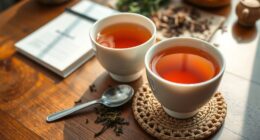
When engaging in tea rituals worldwide, respect traditional service protocols and use proper utensils suited for each culture. Handle teacups gracefully, avoid rushing, and serve with mindful gestures. Dress neatly and maintain appropriate behavior, including silence and attentiveness. Remember regional customs, like Japanese harmony or British etiquette, and always show appreciation. By understanding these do’s and don’ts, you’ll honor each tradition and create a respectful, enjoyable tea experience—if you want to learn more, keep exploring these practices.
Key Takeaways
- Respect and follow traditional serving customs specific to each culture, such as Japanese tea ceremonies or British afternoon tea.
- Use appropriate utensils and handle them carefully to maintain etiquette and honor cultural practices.
- Serve and receive tea with gentle, deliberate motions, maintaining eye contact and expressive gestures to show respect.
- Dress modestly and maintain good personal grooming to reflect respect during formal tea gatherings.
- Be aware of regional do’s and don’ts, such as avoiding tipping in some cultures or using the left hand for serving in others.
Respecting Traditional Tea Service Protocols

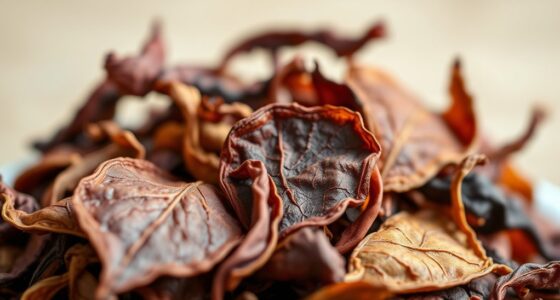
Understanding and respecting traditional tea service protocols shows your appreciation for the culture and enhances the experience. One key aspect is knowing how to handle tea leaf selection properly. Opt for high-quality, fresh tea leaves suited for the specific type of tea you’re brewing. Proper tea storage methods are equally important—they keep the leaves fresh and preserve their flavor. Store tea in airtight containers away from light, heat, and moisture. This practice helps maintain the tea’s aroma and overall quality. Additionally, understanding the correct brewing temperature and steeping times ensures the best flavor extraction from your tea. Proper brewing techniques, including steeping duration, are essential for authentic flavor. Using the right tea accessories, such as strainers and teapots, further shows respect for the traditional methods. When you follow these guidelines, you demonstrate an understanding of the cultural significance behind tea rituals. Respecting these protocols not only enriches your experience but also honors the heritage behind each cup.
Proper Use of Tea Utensils and Equipment

When you handle tea utensils, choosing the right tools for the type of tea shows respect for tradition. Use proper techniques to handle each item carefully, preventing spills and damage. Paying attention to these details enhances your tea experience and honors the customs behind each brew. Additionally, understanding the color accuracy of your utensils can help maintain the integrity of the tea’s appearance. Proper storage in airtight containers also preserves the freshness and quality of your tea, reflecting a thoughtful appreciation of the brewing process. Incorporating rustic decor elements can create a cozy and authentic atmosphere that complements your tea rituals. In regions like the Midwest, embracing local artisanal traditions can add a unique touch to your tea setting, blending cultural influences with your personal style.
Choosing Appropriate Utensils
Choosing the right tea utensils is essential for proper etiquette and an enjoyable experience. When it comes to tea utensil selection, focus on quality and appropriateness for the type of tea you’re serving. For instance, delicate porcelain teapots suit lighter teas, while sturdy cast iron is ideal for robust blends. Proper utensil maintenance is equally important; clean your tools thoroughly after each use to preserve their condition and prevent flavor transfer. Using the correct utensils shows respect for the tradition and enhances your tea experience. Avoid using mismatched or inappropriate items, as they can undermine etiquette. By selecting suitable utensils and maintaining them well, you ensure a refined, respectful tea service that honors cultural customs and elevates your enjoyment. Additionally, understanding the types of tea and their specific utensil needs can further improve your brewing and serving practices, especially when considering proper cleaning techniques to maintain the integrity of your teaware. Moreover, choosing utensils made from appropriate materials can help preserve the delicate flavors and aromas of different teas, such as the use of non-reactive metals to prevent flavor contamination. Paying attention to cultural customs related to tea service can further enhance the experience and show appreciation for the tradition.
Proper Handling Techniques
Handling your tea utensils with care and precision not only preserves their quality but also demonstrates respect for the tradition. Proper handling begins with selecting the right utensils for your tea, such as a quality teapot or infuser. When preparing, ensure you use appropriate tools to avoid damaging delicate items. Tea leaf selection impacts flavor, so handle leaves gently to prevent bruising. Store your tea properly using effective tea storage techniques—airtight containers in a cool, dark place—to maintain freshness. When pouring, hold utensils steadily and avoid rushing to prevent spills or breakage. After use, clean utensils carefully, avoiding harsh abrasives. Mastering these handling techniques ensures your tea experience remains authentic and respects the craftsmanship behind each brew. Additionally, practicing space and organization in your tea setup can enhance the overall experience and preserve your utensils better. Proper handling also involves being aware of potential risks in merchant services, such as security vulnerabilities, which underscores the importance of careful management and security measures in all aspects of tea service.
Serving and Receiving Tea Gracefully
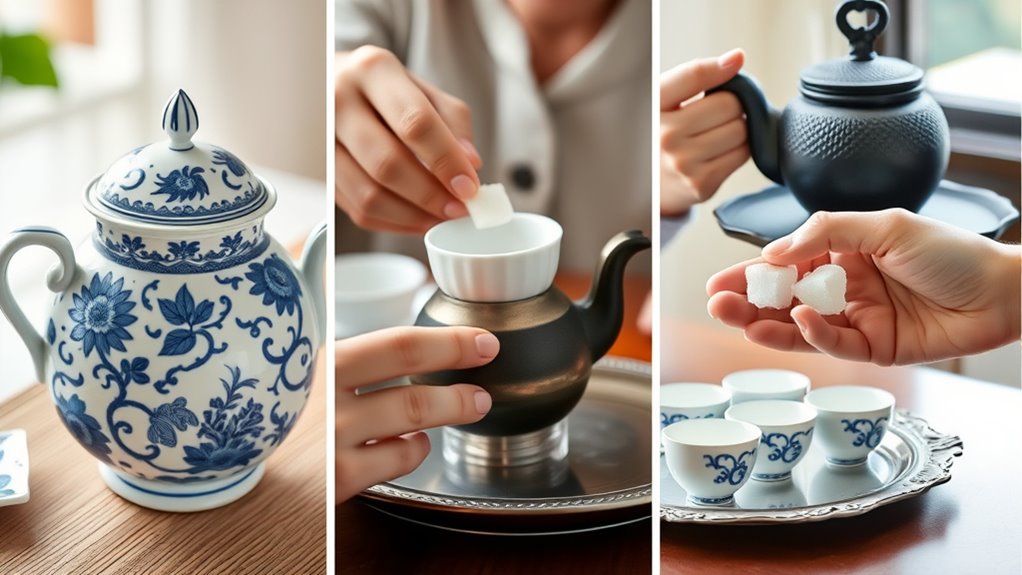
When serving tea, you should focus on pouring smoothly and steadily to show respect for your guests. As you receive tea, use mindful gestures like holding the cup properly and avoiding abrupt movements. Paying attention to these details guarantees a gracious and welcoming tea experience. Incorporating proper mixing techniques can also ensure the tea is at the right temperature and flavor, enhancing the overall etiquette. Additionally, understanding the installation guidelines for equipment like teapots or accessories can improve your presentation and serveware handling. Being aware of specific brewing methods, such as steeping time and water temperature, can further elevate your tea service and demonstrate your attention to detail. Moreover, maintaining the correct ketogenic balance in tea ingredients, like avoiding high-carb additives, ensures the experience aligns with health-conscious practices. Properly managing serving temperature is also essential for a refined tea experience, as it affects both taste and aroma.
Proper Pouring Technique
To serve and receive tea gracefully, it’s essential to master proper pouring techniques that reflect respect and elegance. When pouring tea, keep the spout close to the cup’s edge to prevent splashing. Ensure the tea leaves are properly brewed to avoid overflow and bitterness. Your movements should be smooth and steady, demonstrating confidence. Additionally, handling the teapot with care and awareness of attention to detail can enhance your overall presentation, showing attentiveness to detail. Being mindful of macronutrient ratios and the quality of tea leaves can also contribute to a refined experience. This careful approach honors the tradition of tea brewing and shows appreciation for the ritual. Maintaining awareness of Gold IRA options and their proper management can also reflect a sense of professionalism in formal settings. Paying attention to timing and temperature ensures the tea is served at its optimal flavor and temperature. A graceful pour creates a refined experience for both you and your guest.
Mindful Receiving Gestures
Have you ever noticed how a simple gesture can convey respect and appreciation during tea service? When receiving tea, use expressive gestures to show gratitude—gently accepting the cup with both hands or a soft nod. Mindful receiving involves maintaining eye contact etiquette, which demonstrates attentiveness and sincerity. Avoid rushing or taking the cup abruptly; instead, gently lift it, acknowledging the host’s effort. When serving, a calm, deliberate motion paired with warm eye contact can make the experience more meaningful. These mindful gestures communicate your respect for tradition and your host’s hospitality. Remember, subtle eye contact and expressive, graceful movements enhance the overall etiquette, creating a sincere and harmonious tea-sharing moment. Incorporating traditional serving techniques can further elevate the experience and show appreciation for cultural customs.
Appropriate Attire and Personal Grooming
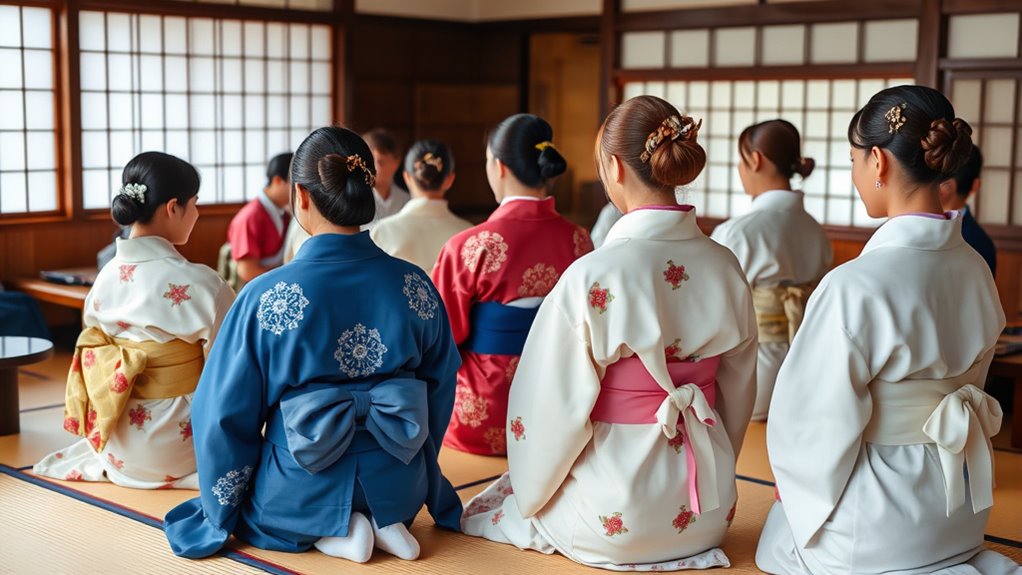
Dressing appropriately and maintaining good personal grooming are essential aspects of tea etiquette around the world. When attending a tea gathering, your attire should reflect respect for the occasion. For casual settings, follow these grooming standards:
- Wear neat, clean clothing—avoid overly casual or revealing outfits.
- Opt for modest, respectful attire suited to the cultural context.
- Ensure your hair is tidy, and your nails are clean and trimmed.
Speaking and Behavior During Tea Ceremonies
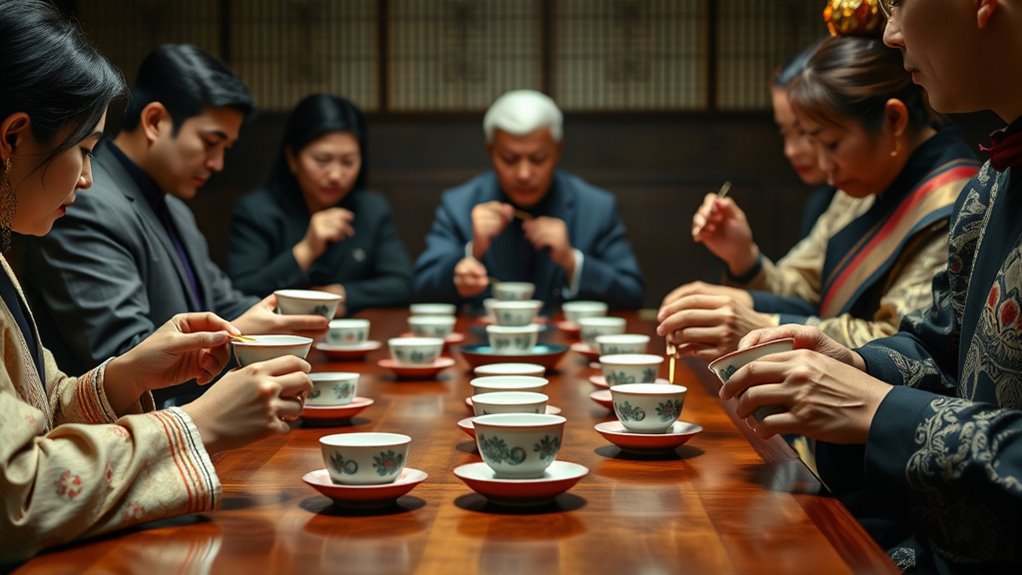
During a tea ceremony, your words and actions should reflect respect and consideration for others. Keep conversation polite and at a moderate level, avoiding loud or overly casual talk. Use respectful gestures to show appreciation and attentiveness throughout the experience.
Polite Conversation Tips
When participating in a tea ceremony, maintaining polite conversation is essential to show respect and harmony. Keep your talk gentle and focused on the tea experience. To do this effectively:
- Compliment the tea flavor subtly, showing appreciation for the brewing methods used.
- Ask questions about the tea’s origin or the traditional brewing techniques, demonstrating genuine interest.
- Share your thoughts quietly, avoiding loud or disruptive comments that could disturb the serene atmosphere.
Appropriate Silence Levels
Maintaining appropriate silence during a tea ceremony helps preserve its tranquil atmosphere and shows respect for the tradition. You should avoid whispered conversations that disrupt the quiet harmony, as they can disturb others’ focus and the overall experience. Instead, speak softly if necessary, and keep your voice low. Loud interruptions are particularly disrespectful; they break the calm and draw attention away from the ceremony’s mindfulness. Keep your phone silent and refrain from unnecessary noise. Your behavior should reflect serenity and attentiveness, allowing everyone to fully appreciate the ritual. By controlling your volume and minimizing distractions, you contribute to a peaceful environment that honors the etiquette and cultural significance of the tea ceremony.
Respectful Gestures
Respectful gestures play a essential role in preserving the dignity and serenity of a tea ceremony. Your behavior and spoken words should reflect reverence for tradition and the setting. To show respect:
- Pay attention to tea leaf symbolism, as it often conveys good wishes or harmony; avoid disrupting this symbolism with careless gestures.
- Follow the ceremonial dress code, which highlights modesty and respect for the occasion—wear clothing that aligns with cultural expectations.
- Use gentle, deliberate movements, such as bowing slightly when offering or receiving tea, and avoid loud or abrupt speech that might disturb the atmosphere.
These gestures demonstrate your understanding of cultural significance and ensure the ceremony remains a tranquil, respectful experience for everyone involved.
Handling Tea Cups and Saucers Correctly
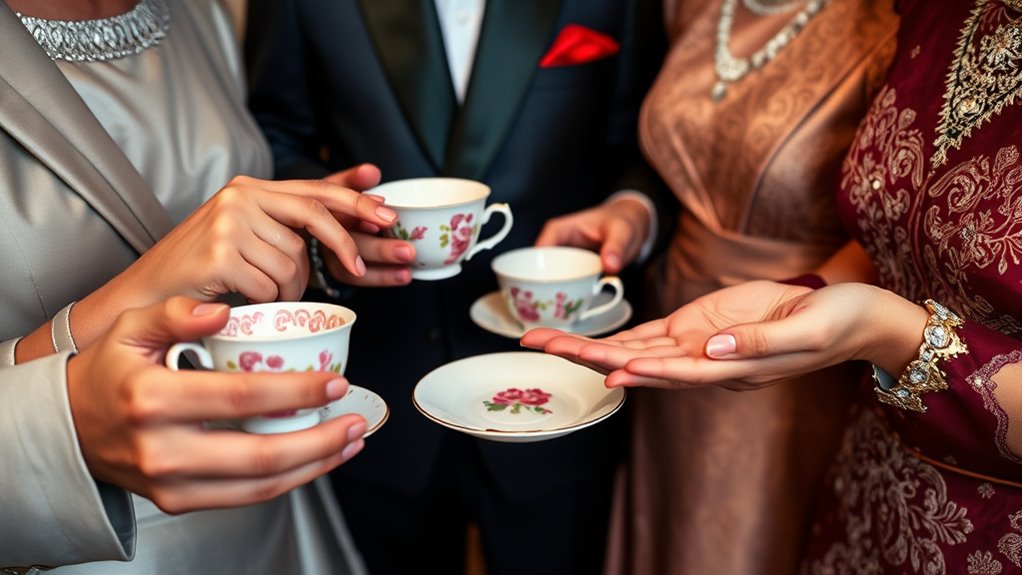
Handling tea cups and saucers properly is essential to demonstrating good manners during tea service. Start by holding the tea cup by its handle, with your fingers gently grasping it to avoid spills. Keep the tea cup at a slight angle, ensuring the tea cup positioning is steady and graceful. When placing the cup down, position it carefully on the saucer, aligning the handle to the side for easy access. Saucer placement should be stable on the table, not tilted or crowded. Use your fingertips to lift and set the cup and saucer smoothly, avoiding slamming or abrupt movements. Proper handling shows respect for the tradition and keeps the tea experience elegant and enjoyable for everyone at the table.
Tasting and Drinking Etiquette

When tasting and drinking tea, it’s important to do so quietly and with awareness of your surroundings. This allows you to fully appreciate the tea’s flavor and aroma. To enhance your experience, keep these tips in mind:
- Take small sips to savor the tea’s flavor and notice subtle nuances.
- Inhale gently to appreciate the aroma before tasting, which enhances your sensory experience.
- Avoid rushing; pause between sips to reflect on the tea’s taste and aroma.
Giving and Receiving Tea Gifts Thoughtfully
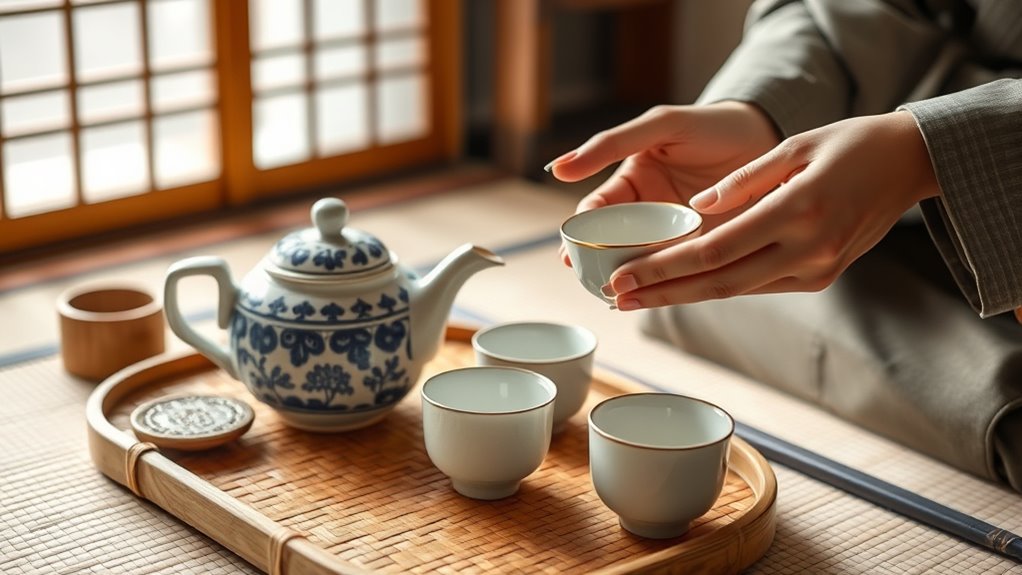
Giving and receiving tea gifts thoughtfully shows your appreciation and respect for cultural traditions. When presenting a tea gift, pay attention to tea gift presentation—consider wrapping it nicely or using traditional packaging to honor the recipient’s culture. During cultural gift exchanges, it’s important to choose appropriate items that reflect local customs and preferences. When giving a tea gift, offer it with both hands as a sign of respect, and accept gifts graciously without hesitation. Avoid rushing or appearing overly enthusiastic, as that can be seen as impolite. Remember, the thoughtfulness behind your gesture matters more than the value of the gift. By being mindful of these customs, you foster positive connections and demonstrate genuine respect for the recipient’s traditions.
Observing Silence and Reverence in Formal Settings
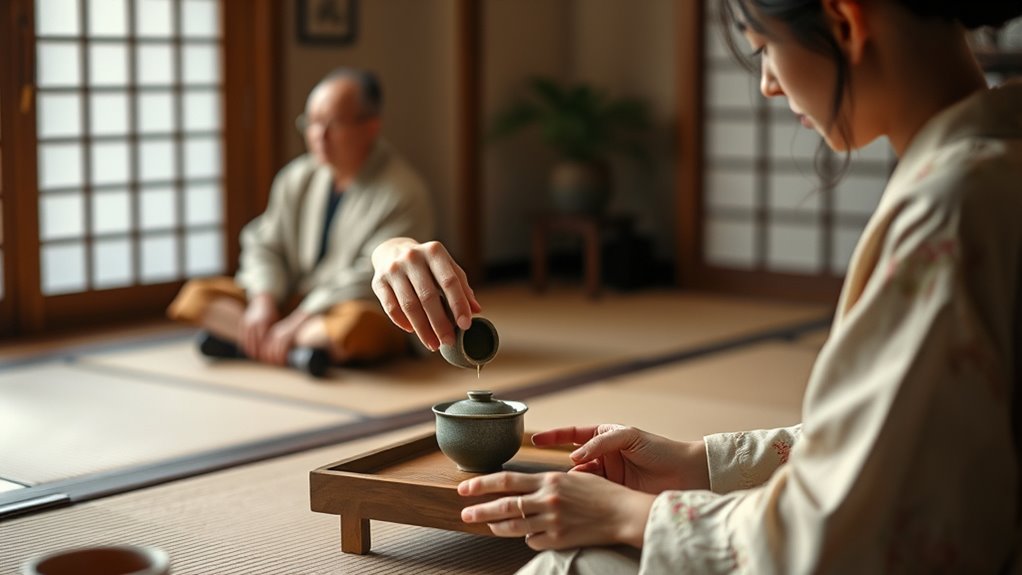
In formal tea settings, observing silence and reverence elevates the experience and shows respect for the traditions at play. Your mindful silence demonstrates your appreciation for the ceremony’s significance, fostering a sense of calm and connection. To embody respectful reverence, focus on these key points:
- Maintain a quiet demeanor, avoiding unnecessary conversation or noise.
- Pay close attention to the host’s actions and follow their lead in gestures and timing.
- Use respectful body language, such as keeping your posture upright and avoiding abrupt movements.
Adapting to Local Customs and Variations
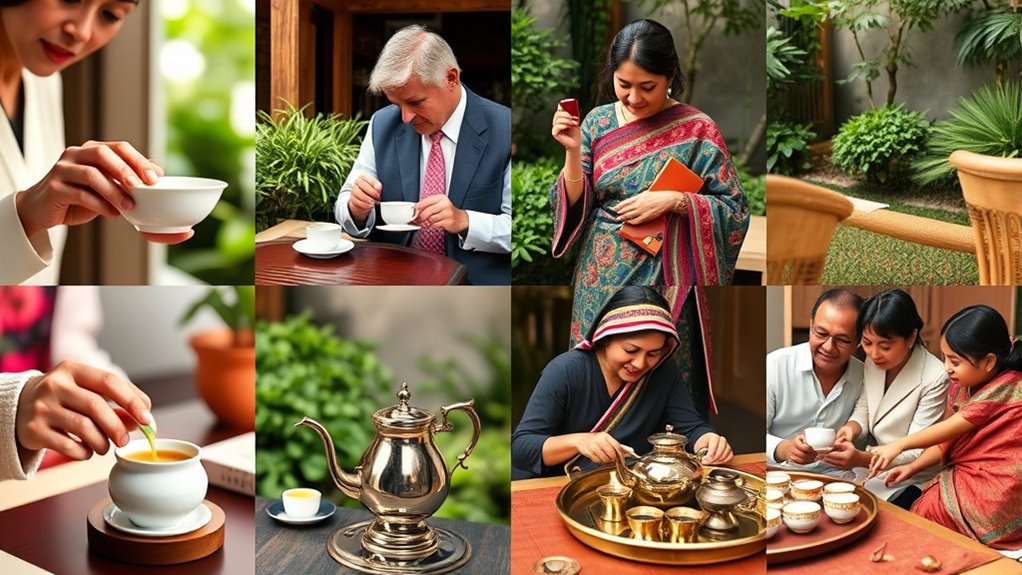
Adapting to local customs and variations is essential for truly respectful tea etiquette across different cultures. You should always observe regional customs to avoid unintentional disrespect. For example, in some cultures, pouring tea for others is a sign of hospitality, while in others, it’s customary to serve yourself first. Cultural variations also influence how you handle teacups, whether you sip quietly or take larger sips. Pay attention to local practices around gestures, serving order, and even the types of tea served. Being aware of these differences helps you connect more authentically and shows respect for traditions. By embracing regional customs, you demonstrate sensitivity and appreciation for the unique cultural tapestry surrounding tea around the world.
Frequently Asked Questions
How Do I Politely Decline Tea if I’M Not a Tea Drinker?
When you’re offered tea and don’t want any, you can make polite refusals by saying, “No, thank you,” with a smile. You might also use alternative gestures like gently shaking your head or raising your hand slightly. Being gracious and respectful is key, so express appreciation for the offer. This way, you politely decline without causing any discomfort, while still showing gratitude for the gesture.
What Are Common Mistakes to Avoid in International Tea Settings?
Imagine pouring a delicate stream of tea, only to accidentally slurp or reach across the table—these are common mistakes to avoid in international tea settings. You should be mindful of cultural miscommunications and proper table manners; for example, don’t skip the etiquette of holding the cup correctly or neglecting to thank your host. Respecting local customs shows your appreciation and helps prevent awkward moments, making the experience enjoyable for everyone involved.
Are There Specific Gestures to Acknowledge the Host During Tea Ceremonies?
When acknowledging the host during tea ceremonies, you should use respectful gestures like bowing and maintain gentle eye contact. A slight bow shows appreciation and respect, especially in Asian cultures, while steady eye contact conveys attentiveness. Avoid overly casual gestures or dismissive looks. Pay attention to the host’s cues; they often signal when it’s appropriate to bow or make eye contact, helping you show proper respect during the ceremony.
How Should I Handle Language Barriers When Participating in a Formal Tea Event?
When facing language barriers at a formal tea event, you should use language translation apps or phrasebooks to communicate basic polite phrases. Be patient and show cultural sensitivity by observing non-verbal cues and gestures. If you’re unsure about something, politely ask for clarification or assistance. Your respectful attitude and effort to understand the host’s language demonstrate appreciation for their customs, helping you navigate the event smoothly.
What Are the Etiquette Differences Between Traditional and Modern Tea Gatherings?
Did you know that over 65% of tea enthusiasts prefer modern tea etiquette? Traditional tea ceremony customs emphasize precise rituals and formalities, while modern tea etiquette focuses on comfort and socializing. You might find younger gatherings more relaxed, with less rigid rules, whereas traditional settings uphold centuries-old traditions. When attending, adapt your behavior accordingly, respecting customs but also embracing the casual vibe of modern tea events for a more enjoyable experience.
Conclusion
By embracing these tea etiquette traditions, you become a steward of cultural harmony, like a gentle stream flowing through diverse landscapes. Each respectful gesture and mindful sip symbolizes connection and appreciation across borders. When you honor local customs and serve tea with grace, you’re weaving a tapestry of understanding and warmth. Remember, every cup shared is a small yet meaningful bridge—building bonds that transcend words and celebrate the universal language of tea.