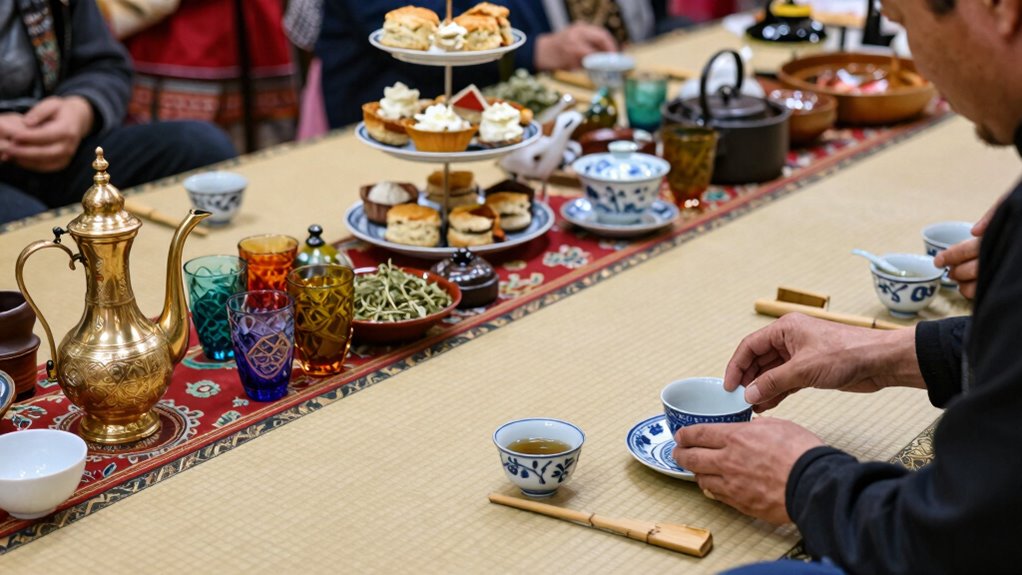

Across countries, tea culture varies widely, shaped by local traditions, brewing methods, and social customs. In Japan, you’ll find precise rituals emphasizing respect and mindfulness, while Britain favors relaxed, social afternoon teas. India’s bold, spiced chai reflects its vibrant flavors, and Morocco’s mint tea highlights hospitality through pouring techniques. These differences influence how you enjoy tea and connect with others. If you continue exploring, you’ll uncover even more fascinating traditions behind this ancient beverage.

Get coffee and tea gear delivered free — and shop member deals
- Fast, free delivery on millions of items
- Access to Prime Big Deal Days deals on October 6–7
- Prime Video, Amazon Music and more included
Key Takeaways
- Different countries have unique tea rituals that reflect their cultural values, such as Japan’s emphasis on mindfulness or Morocco’s hospitality customs.
- Brewing techniques vary, with China favoring multiple infusions and India preparing spiced chai, influencing flavor and experience.
- Tea etiquette ranges from formal Japanese ceremonies to relaxed British afternoon teas, shaping social interactions.
- The regional significance of tea influences its role in social bonding, respect, and tradition within each culture.
- The types of tea and preparation methods showcase local ingredients, history, and preferences, creating diverse regional flavors.
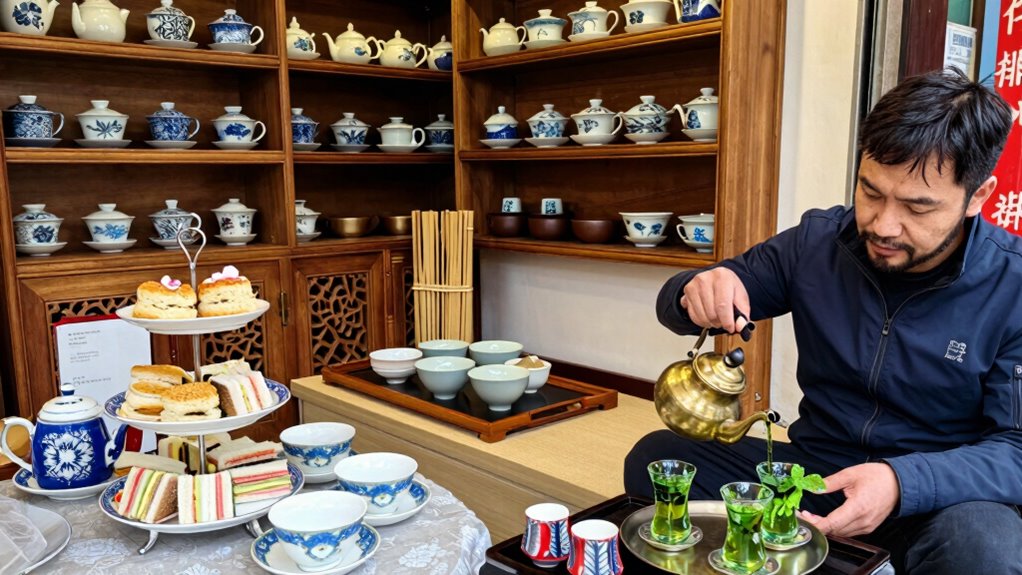
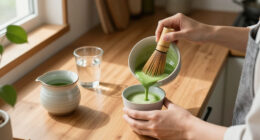
Tea is more than just a beverage; it’s a reflection of cultural identity around the world. When you sit down to enjoy a cup, you’re stepping into a rich tapestry of traditions that vary from country to country. One of the most noticeable differences lies in tea etiquette, which dictates how you prepare, serve, and consume tea. In Japan, for example, the tea ceremony emphasizes mindfulness, respect, and harmony, with precise movements and a formal ritual that can take several minutes. Here, drinking tea isn’t just about the flavor but about honoring tradition. In contrast, in Britain, tea etiquette often revolves around social settings like afternoon tea, where a more relaxed but still refined set of customs applies—using the proper teacup, stirring gently, and enjoying a biscuit alongside. These customs shape your entire experience, making each sip a moment of cultural connection.
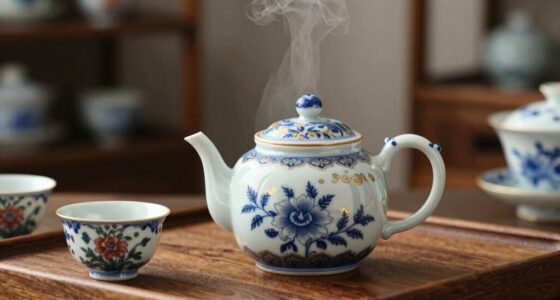
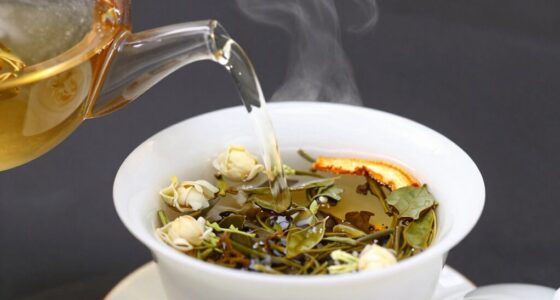
Brewing techniques further highlight how diverse tea cultures are. In China, traditional brewing involves carefully steeping loose leaves in a small teapot or gaiwan, emphasizing multiple infusions that reveal different layers of flavor. China’s approach values patience and precision, with temperature control playing a vital role to unlock the tea’s full potential. In India, the iconic chai is brewed with black tea leaves, milk, sugar, and spices, often boiled together in a single pot to create a rich, comforting beverage. The techniques here are more robust, designed for a hearty, flavorful drink that’s integral to daily life. Meanwhile, in Morocco, you might encounter the art of preparing mint tea—using green tea leaves infused with fresh mint and generously sweetened with sugar. The brewing process involves pouring hot water from a height to aerate the tea and produce a frothy top, symbolizing hospitality. Additionally, the cultural significance of tea rituals plays a vital role in shaping social interactions and hospitality customs across different regions. Understanding the tea brewing techniques used in each culture can deepen your appreciation for the craft behind each cup, especially as these methods influence the flavor profile of the final brew. Recognizing how tea preparation reflects local values can also enhance your overall experience and respect for global traditions.
As you explore different countries, you’ll notice how these techniques influence the taste and experience of tea itself. From the delicate, precise rituals of Japan to the bold, spicy blends of India and the social customs in Britain, each approach reflects the values and history of its people. Whether you’re mastering the correct way to hold a teacup or learning how to steep tea at the perfect temperature, understanding these cultural differences enhances your appreciation for tea beyond just drinking it. It becomes a way to connect with traditions, respect local customs, and truly savor each unique cup. In every corner of the world, tea continues to serve as a universal language—one that brings people together through shared rituals and cherished practices.
As an affiliate, we earn on qualifying purchases.
Frequently Asked Questions
How Has Globalization Influenced Traditional Tea Practices Worldwide?
Globalization has profoundly influenced traditional tea practices worldwide by expanding the tea trade and fostering cultural fusion. You notice how local customs blend with international styles, creating unique tea experiences. As you explore different countries, you see how global trade introduces new flavors and brewing methods, while cultural exchanges enrich traditions. This interconnectedness makes tea culture more diverse and accessible, allowing you to enjoy a variety of practices from around the globe.
Are There Specific Etiquette Rules for Tea Drinking in Different Countries?
You’ll find that each country’s tea etiquette customs are as unique as a fingerprint. During a Japanese tea ceremony, you’ll handle the tea bowl with care, respecting rituals that honor tradition. In Britain, politely holding your teacup and saucer is key, while in China, serving and receiving tea with two hands shows respect. Mastering these etiquette rules elevates your tea experience, making each sip culturally rich and memorable.
What Are the Health Benefits Associated With Traditional Teas Globally?
You gain numerous health benefits from traditional teas worldwide, including herbal infusions that boost immunity and reduce inflammation. Ceremonial brewing enhances relaxation and mindfulness, contributing to mental well-being. Green and black teas contain antioxidants that fight free radicals, while herbal infusions like chamomile or peppermint aid digestion and relaxation. Drinking these teas regularly can improve your overall health, support your immune system, and promote a sense of calm through mindful preparation.
How Do Tea Ceremonies Reflect Cultural Values and Beliefs?
You see, tea ceremonies are like tiny universes, where each sip symbolizes profound cultural values. Through intricate rituals, you witness tea symbolism that reveals what a society holds sacred—respect, harmony, or tradition. These ceremonies aren’t just about drinking tea; they’re cultural rituals that reflect beliefs, social hierarchies, and spiritual philosophies. In every swirl and steep, you find a deeper reflection of a nation’s soul, shaping identity through tea.
How Do Tea Flavors Vary Across Different Regions and Climates?
You’ll notice that regional flavors of tea vary greatly due to climate influence. In cooler climates, you get heartier, robust teas like Assam, while warmer regions produce lighter, more floral varieties such as Jasmine or Green Tea. The soil, altitude, and weather shape the taste, aroma, and strength of the tea. So, your experience of different teas depends on the regional flavors and climate influence, making each sip unique.
Conclusion
As you journey through different tea cultures, you realize that each sip tells a story—a tapestry woven with history, tradition, and identity. Just like a delicate leaf unfurling, these customs reveal the rich diversity of our world. So, next time you sip your favorite brew, remember: isn’t it fascinating how something as simple as tea can unite us across borders yet keep our cultures beautifully distinct? Cheers to discovering more in every cup!
Fall Picks
fall essentials
As an affiliate, we earn on qualifying purchases.