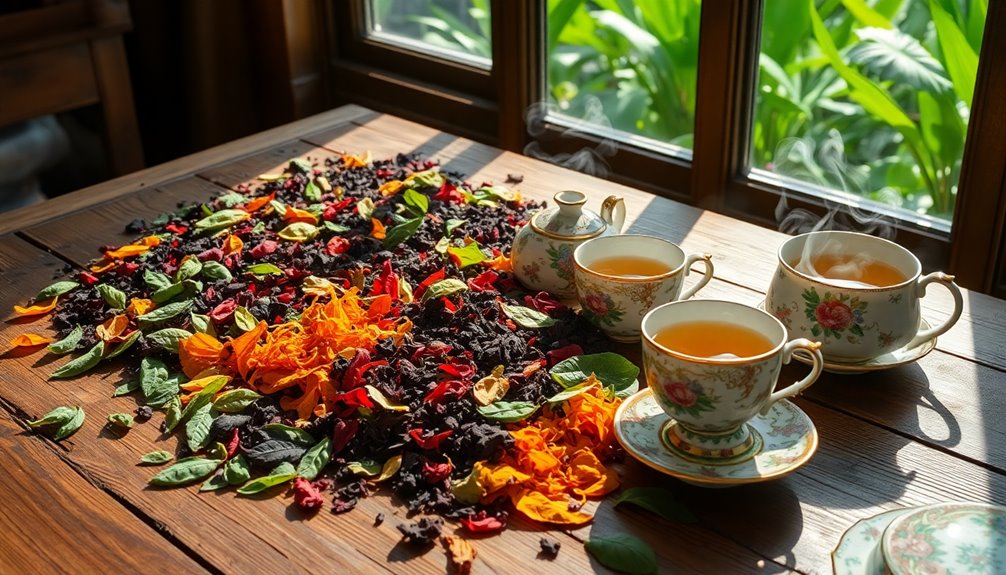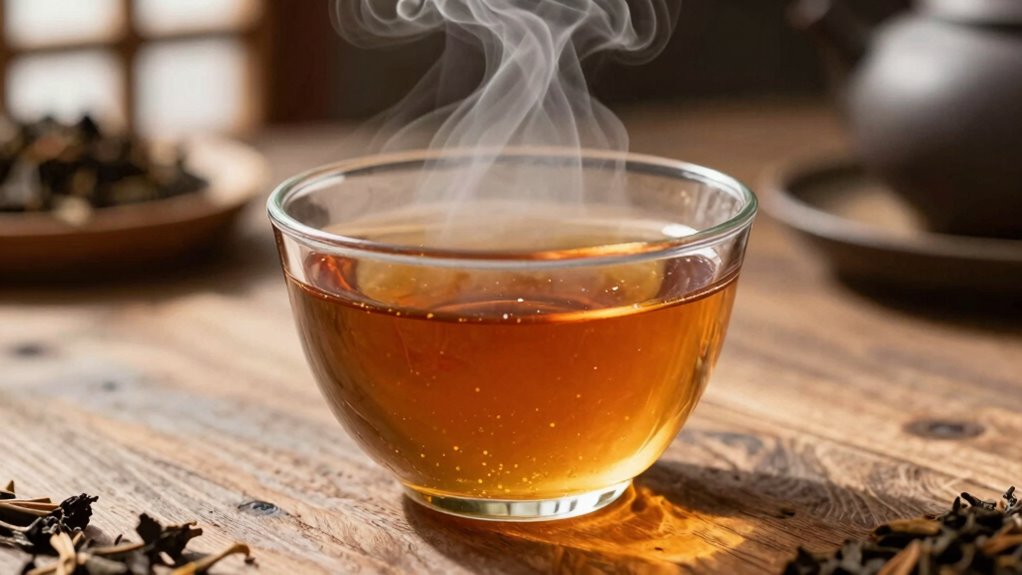

Your sense of smell is key to fully appreciating tea, as aroma influences taste, mood, and emotional memories. The scents, whether floral, fruity, or smoky, can evoke feelings of comfort or invigoration. Proper brewing and storage help preserve these aromatic qualities, making each cup a multi-sensory experience. Paying attention to aroma enhances mindfulness and deepens your connection to tea. Keep exploring, and you’ll discover how scent and flavor together create truly memorable moments.

Get coffee and tea gear delivered free with Prime
- Fast, free delivery on millions of items
- Prime Video, Amazon Music and more included
- Member-only deals all year
Key Takeaways
- Aroma captures immediate attention and enhances overall tea experience, often shaping perception more than taste alone.
- Scent profiles evoke emotional memories, deepening connection and appreciation for each tea moment.
- Aromas influence mood, promoting relaxation, alertness, or calmness through specific scent cues.
- Proper brewing and storage preserve aromatic qualities, ensuring a fuller, more immersive sensory experience.
- Engaging with tea aroma enhances mindfulness and transforms drinking into a multi-sensory ritual.
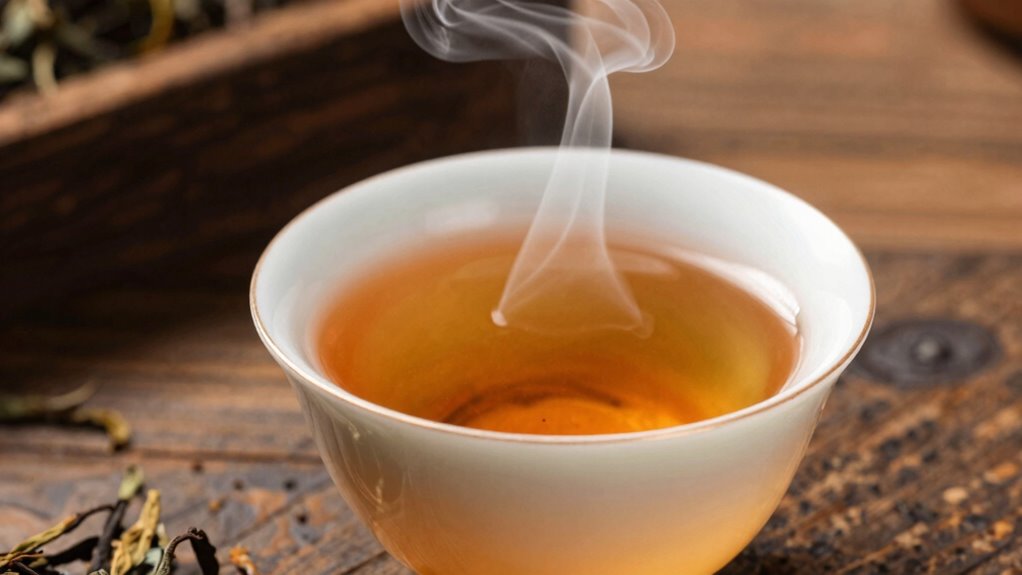
The aroma of tea plays an essential role in shaping your overall experience, often more than you realize. When you lift a steaming cup, it’s the scent that first captures your attention, setting the tone for what’s to come. Tea scent profiles vary widely, from floral and fruity to earthy and smoky, each offering a distinct sensory journey. These aromas don’t just enhance the taste—they influence your mood, evoke memories, and even affect your physical well-being. Recognizing the significance of these scent profiles helps you appreciate tea on a deeper level, transforming a simple beverage into a multi-sensory experience.
The scent of tea shapes your experience, influencing mood, memories, and well-being, turning each cup into a sensory journey.
Aromatherapy benefits are closely linked to the aromas of tea, as certain scents can promote relaxation, alertness, or calmness. For example, the delicate floral notes of jasmine or chamomile can soothe your mind and reduce stress, while invigorating citrus or mint scents energize you. When you pay attention to the aroma, you tap into the therapeutic potential of tea, using it as a natural mood booster or stress reliever. The scent’s influence on your emotional state is powerful—sometimes even more impactful than the flavor itself. This is why many tea enthusiasts seek out specific scent profiles to match their desired mental or emotional state.
Your sense of smell is closely connected to the brain’s limbic system, which governs emotions and memories. That’s why a familiar tea aroma can instantly transport you back to a moment in time or evoke feelings of comfort and happiness. When you engage with the scent profile of your tea, you’re not just tasting; you’re experiencing a complex symphony of natural fragrances that work on your subconscious level. This heightened awareness can deepen your appreciation of each cup, making your tea ritual more meaningful and mindful. Additionally, brewing techniques can influence how these aromas are released and sustained, allowing you to tailor your sensory experience. Proper storage methods also help preserve these aromatic qualities, ensuring each brew maintains its full scent potential.
Understanding the importance of tea aroma encourages you to explore different varieties and brewing techniques to *access* their full scent potential. Whether you’re savoring a delicate green, a robust black, or an exotic herbal blend, paying attention to aroma enhances your sensory engagement. Additionally, filter sizing and flow can influence the preservation and release of these aromas, ensuring you experience the full spectrum of scent profiles. Incorporating proper storage methods can also help preserve the aromatic qualities of your tea, maintaining its freshness and scent integrity. Ultimately, the scent profiles of tea are as *crucial* as the taste, offering aromatherapy benefits that elevate your overall experience. So next time you brew a cup, take a moment to inhale deeply—you might discover that the aroma is just as *crucial* as the flavor in creating a truly memorable tea moment.
As an affiliate, we earn on qualifying purchases.
Frequently Asked Questions
How Does Aroma Influence Tea’s Overall Health Benefits?
Aroma plays a crucial role in enhancing tea’s overall health benefits by boosting aromatherapy benefits, which can improve mental relaxation and reduce stress. When you enjoy a fragrant tea, the scent triggers calming responses in your brain, promoting emotional well-being. This mental relaxation helps lower cortisol levels, supports immune health, and enhances your overall sense of comfort and tranquility, making aroma just as important as flavor for your health.
Can Aroma Affect the Perceived Strength of Tea Flavor?
Yes, aroma perception can profoundly influence how you perceive the strength of tea flavor. When you smell a rich, inviting aroma, it enhances your flavor experience through flavor enhancement, making the tea seem more robust or intense. Aromas trigger sensory signals that boost your taste buds’ response, so even if the actual flavor is subtle, a strong aroma can lead you to perceive the tea as more flavorful and potent.
What Factors Best Preserve Tea Aroma During Storage?
Did you know that proper storage can preserve up to 90% of tea aroma? To keep your tea’s fragrance intact, use airtight storage containers that block light and odors. Also, controlling humidity is vital; too much moisture can degrade aroma. Store your tea in a cool, dry place, ideally in containers with humidity control, to maintain its fresh, enticing aroma and guarantee every cup stays flavorful and aromatic.
Is Aroma More Important in Certain Types of Tea?
Aroma is more important in aromatic varieties of tea, like jasmine or earl grey, where scent intensity defines the experience. You’ll notice that these teas rely heavily on their fragrant profiles to enhance flavor. In contrast, more subtle teas, like white or green, focus less on aroma and more on delicate taste. So, in aromatic types, aroma considerably influences your overall enjoyment, making it an essential aspect.
How Do Brewing Methods Impact Tea Aroma Retention?
Brewing methods greatly impact tea aroma retention by influencing steeping temperature and tea oxidation. You should keep the temperature appropriate for your tea type—lower for delicate green teas, higher for robust black teas—to preserve aromatic compounds. Additionally, controlling steeping time prevents excessive oxidation, which can dull aroma. Properly adjusting these factors helps you reveal and retain the tea’s full, enticing aroma, enhancing your overall tasting experience.
Conclusion
Next time you sip your tea, remember that its aroma isn’t just a pleasant scent—it’s the first taste your senses experience, shaping your entire experience. Just as a vivid aroma can evoke memories and emotions, the flavor lingers long after the last sip. So, embrace both the scent and taste, for together they create a richer, more immersive tea journey—like a beautiful painting where colors and textures blend seamlessly, revealing a true masterpiece.
Halloween Picks
halloween
As an affiliate, we earn on qualifying purchases.