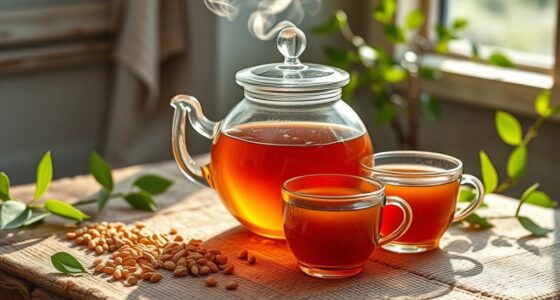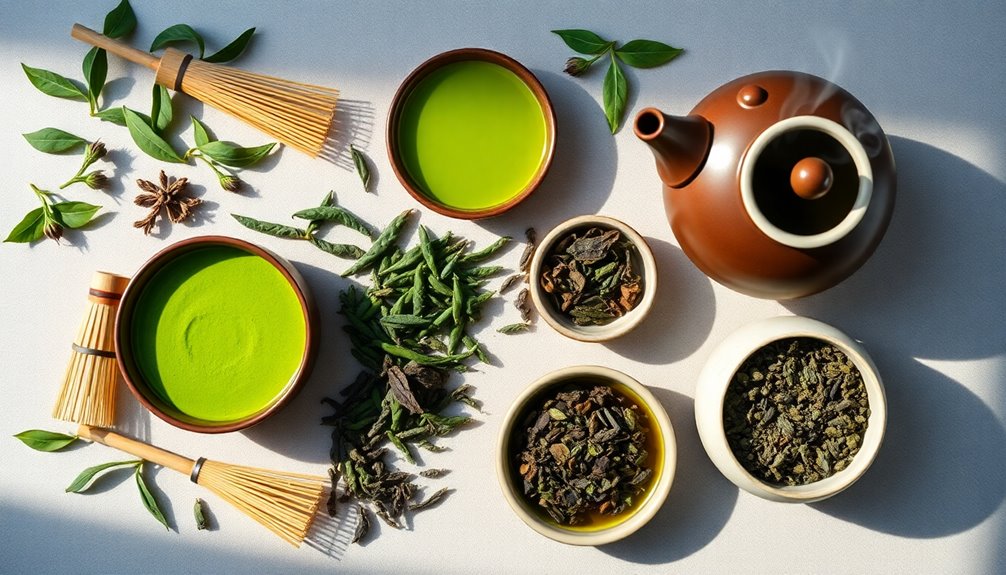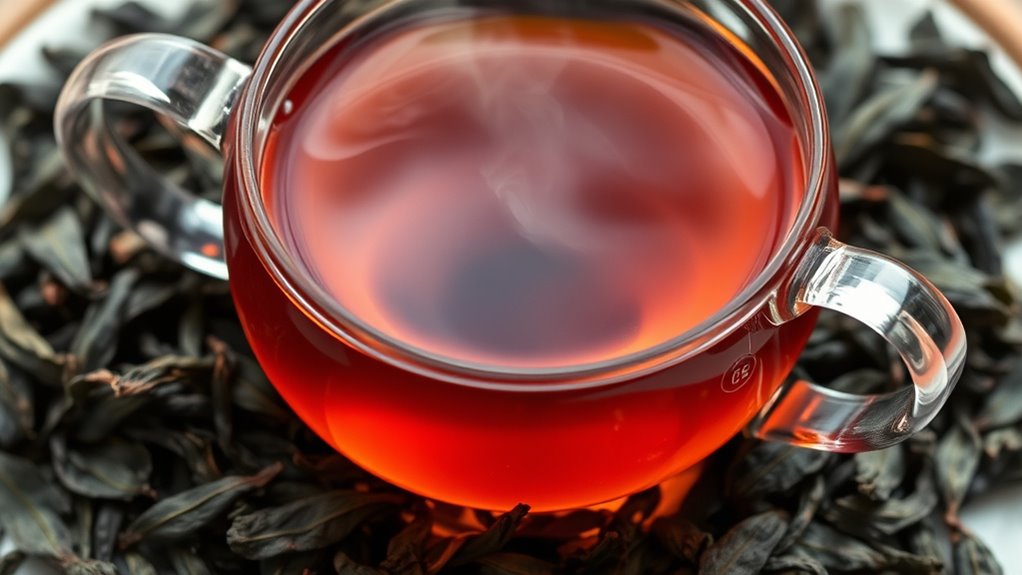
Oolong tea is a fascinating semi-oxidized tea that blends green and black tea qualities, offering a wide range of flavors from floral and fruity to roasted and earthy. Its unique production process involves careful harvesting, withering, bruising, and precise oxidation, which varies by region and style. Exploring its traditional origins in China and regional variations reveals a rich history and craftsmanship. To discover more about each variety, their brewing techniques, and cultural significance, keep exploring this diverse world.
Key Takeaways
- Oolong tea is a semi-oxidized tea blending green and black tea characteristics, with oxidation levels carefully controlled during processing.
- Its production involves harvesting, withering, bruising, controlled oxidation, and heating to develop distinct flavors.
- Regional variations, such as Taiwanese floral oolongs or Fujian rock oolongs, offer diverse flavor profiles from floral to roasted.
- Proper brewing at specific temperatures enhances oolong’s complex aromas, from fruity and floral to roasted and earthy notes.
- Quality storage in airtight, cool, dark environments preserves oolong’s freshness, aroma, and nuanced flavors over time.
The Origins and History of Oolong Tea

Oolong tea has a rich history that dates back centuries in China, where it was first developed as a unique blend of green and black teas. Its origins are closely tied to traditional tea cultivation practices, which allowed farmers to experiment with different oxidation levels. As demand grew, oolong tea became an important part of historical trade routes, particularly along China’s southern coast. Traders valued its complex flavor profile and aroma, making it a sought-after commodity. Over time, oolong tea spread beyond China, influencing tea cultures in Taiwan, Hong Kong, and Southeast Asia. Its long-standing presence in global markets highlights its significance in the history of tea, reflecting both the artistry of tea cultivation and the importance of trade in shaping its legacy. Additionally, the practice of oxidation control was crucial in developing the unique characteristics of oolong tea, setting it apart from other types of tea. Furthermore, advances in tea processing technology have allowed for more precise control over oxidation levels, enhancing the quality and variety of oolong teas available today. The evolution of cultivation techniques also contributed to the diversity of flavors and styles found in modern oolong teas.
How Oolong Tea Is Made: The Production Process
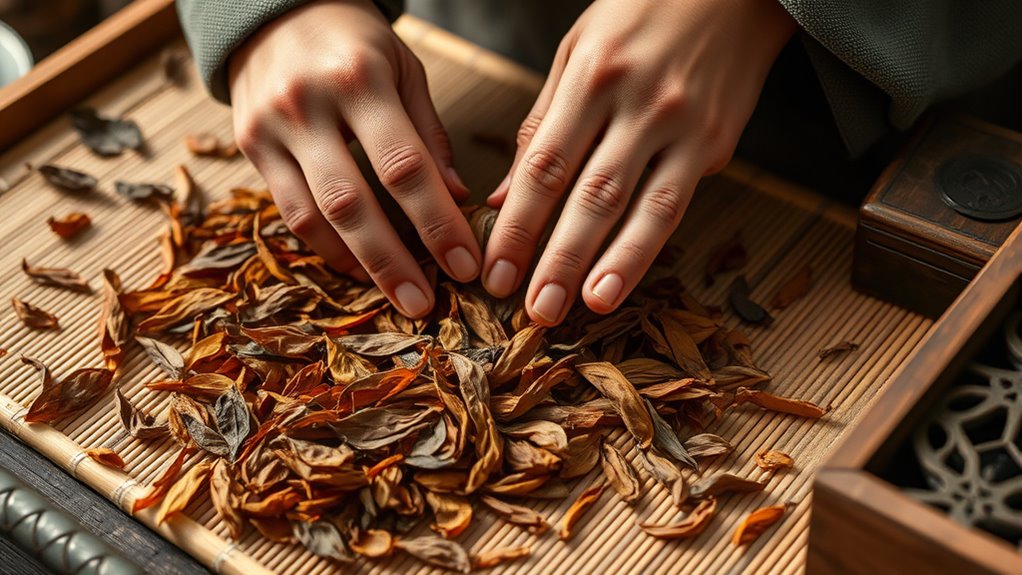
The production of oolong tea involves a careful, step-by-step process that transforms fresh tea leaves into its signature complex flavor. First, skilled farmers use precise harvesting techniques to pick the ideal leaves. After harvesting, the leaves are withered to reduce moisture, preparing them for fermentation. During tea leaf fermentation, enzymes oxidize the leaf’s polyphenols, creating the semi-oxidized profile characteristic of oolong. The level of fermentation varies, influencing flavor and aroma. Next, the leaves are shaken or bruised to encourage oxidation and release aromas. Finally, the tea is pan-fired or roasted to halt fermentation and develop depth. This intricate process, combining fermentation control and traditional techniques, results in the unique taste of each oolong variety.
| Step | Description |
|---|---|
| Harvesting Techniques | Picking the right leaves at peak ripeness. |
| Withering | Reducing moisture content for fermentation. |
| Tea Leaf Fermentation | Oxidizing enzymes to develop flavor complexity. |
| Bruising/Shaking | Encouraging oxidation and aroma release. |
| Fixing/Processing | Halting fermentation with heat for final flavor. |
Types of Oolong Tea and Their Distinctive Characteristics
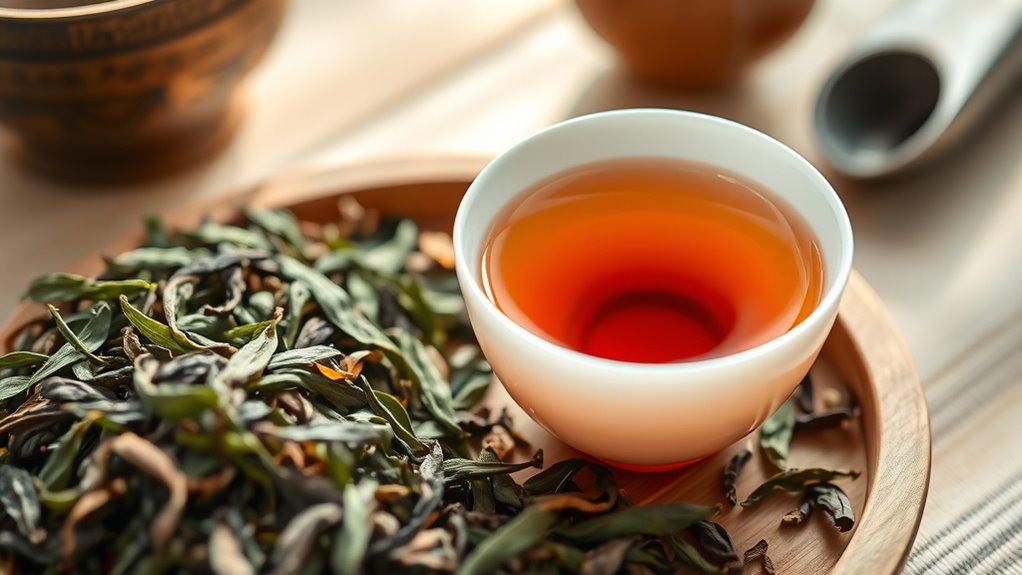
There are many types of oolong tea, each offering unique flavors and aromas that appeal to different tastes. The processing methods and levels of oxidation play a key role in shaping these distinctive characteristics. Understanding these differences helps you choose the perfect oolong for your preferences. Additionally, the key components of tea, such as polyphenols and volatile compounds, contribute significantly to the flavor profile and health benefits of each variety. The oxidation level directly influences the taste, with lighter oolongs being more floral and darker ones offering a toasty, roasted flavor. Recognizing how the processing techniques impact the final product can enhance your appreciation of oolong teas. Moreover, oxidation is a crucial factor that determines the degree of fermentation, affecting the tea’s overall profile. An awareness of the cultivation practices can also provide insights into the subtle nuances of different oolong teas.
Varieties and Flavors
With a diverse range of processing methods and regional influences, oolong teas offer a remarkable variety of flavors and characteristics. From floral and buttery notes to roasted and fruity profiles, each variety offers a unique experience. For example, a light, greenish oolong might have fresh, grassy flavors ideal for a traditional tea ceremony, enhancing mindfulness and focus. Conversely, a darker, more roasted oolong delivers rich, caramelized tones perfect for flavor pairing with desserts or savory dishes. You can explore these differences to find your preferred type, whether for quiet reflection or social gatherings. Understanding these varieties helps you appreciate the nuances and select the right oolong for each occasion, elevating your tea experience and deepening your enjoyment of this versatile beverage. Additionally, storing and brewing techniques play a crucial role in maximizing the flavors and maintaining the quality of different oolong teas. Proper oxidation levels are essential in defining the distinct profiles of each variety, ensuring a consistent and enjoyable experience. As AI security research advances, developing robust safety measures remains essential to safeguard such complex and sensitive processes.
Processing and Oxidation
Processing and oxidation levels play a essential role in shaping the unique characteristics of oolong teas. The oxidation level, which ranges from lightly oxidized to nearly fully oxidized, influences flavor, aroma, and appearance. During processing, tea leaves undergo specific methods such as withering, bruising, and controlled oxidation to achieve desired results. Lightly oxidized oolongs retain a greener hue and fresh, floral notes, while more heavily oxidized varieties develop richer, roasted flavors with darker leaves. The precise processing methods determine the tea’s final profile, balancing oxidation with techniques like pan-firing or rolling. Understanding these differences helps you identify the distinct types of oolong and appreciate their complex flavor profiles, from delicate and floral to bold and toasty.
Flavor Profiles and Aromas of Different Oolong Varieties
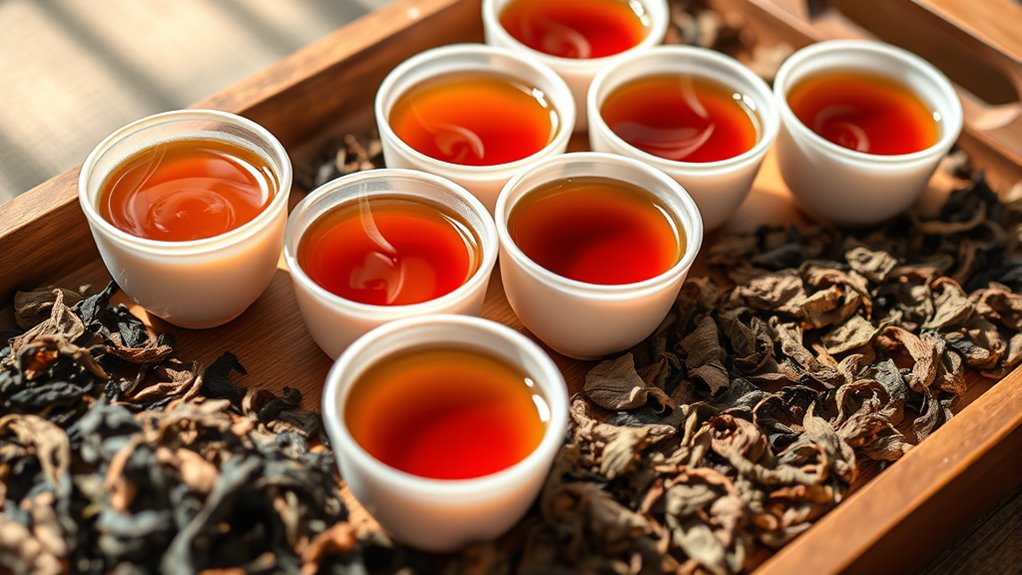
Oolong teas offer a wide range of flavor profiles and aromas that can excite your senses. You might notice floral and fruity notes in some varieties, while others reveal roasted and earthy flavors. Exploring these differences can help you find the perfect oolong to suit your taste. Additionally, the unique processing methods of different oolong types influence their oxidation levels, which directly impact their flavor and aroma profiles. The cultivation environment also plays a crucial role in shaping the characteristics of each tea. Variations in processing techniques can further enhance or modify these qualities, leading to a diverse array of tasting experiences.
Floral and Fruity Notes
Many oolong varieties are celebrated for their delicate floral and fruity aromas that captivate the senses. These tea flavor and aroma characteristics often include notes of jasmine, orchids, or gardenias, which evoke a fresh, fragrant bouquet. You’ll notice that lighter oolongs tend to have more pronounced floral scents, while more oxidized types may carry subtle hints of ripe fruit like peach or apricot. The aroma characteristics are typically soft yet complex, inviting you to savor each sip. When tasting, pay attention to how these floral and fruity notes linger on your palate, enhancing the overall experience. Appreciating these subtle nuances allows you to better identify the unique qualities that make each oolong variety special.
Roasted and Earthy Flavors
Roasted and earthy flavors add a warm, grounding dimension to oolong teas, highlighting their diverse flavor profiles. These flavors often come from dry roasting processes, which deepen the tea’s aroma and taste. When you sip a roasted oolong, you might notice rich, toasted notes that evoke nuts or caramel, complemented by earthy flavors reminiscent of forest floor or damp soil. The dry roasting technique enhances these qualities, giving the tea a robust character. Some varieties develop a smoky undertone, adding complexity to the profile. These flavors appeal to those who enjoy a full-bodied, comforting cup. Whether you prefer a lightly roasted hint or a more intense earthy taste, roasted oolongs offer a versatile experience for flavor explorers.
The Art of Brewing Perfect Oolong Tea
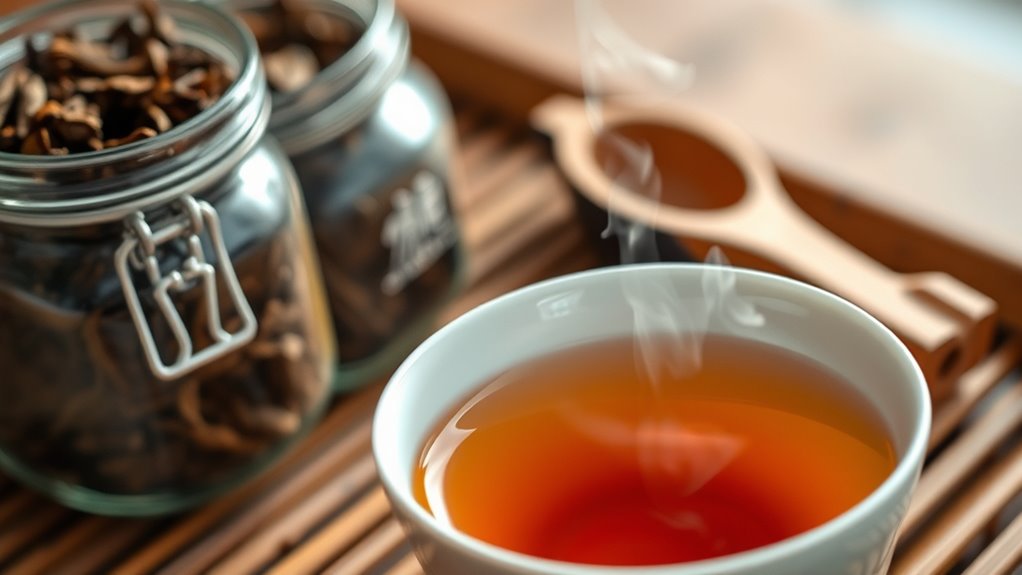
Mastering the art of brewing perfect oolong tea requires attention to detail and a keen understanding of its unique characteristics. First, follow proper tea etiquette by gently handling the leaves and using clean, pre-warmed teaware. The key to accessing its flavor lies in brewing temperature; aim for around 185°F to 205°F (85°C to 96°C). Too hot, and you risk burning the delicate leaves, leading to bitterness; too cool, and the flavors won’t fully develop. Use fresh, filtered water to enhance purity. Incorporating AI-enhanced brewing tools can also help optimize steeping times and temperatures for a consistent quality brew. Paying attention to tea leaf quality can further elevate your brewing results, as the oxidation level of the leaves significantly influences flavor profiles. Additionally, understanding how oxidation processes affect the taste can deepen your appreciation for different oolong varieties.
Cultural Significance and Traditional Uses of Oolong
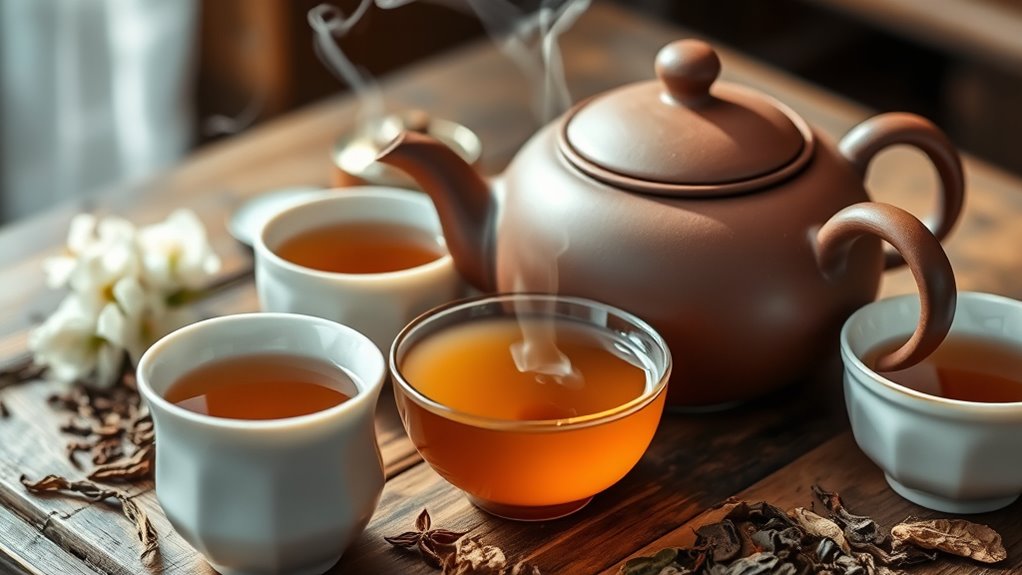
Oolong tea holds a revered place in Chinese culture, symbolizing harmony, refinement, and tradition. It’s often central to tea ceremonies that emphasize respect, mindfulness, and social bonding. You’ll find oolong used in cultural traditions such as celebrating festivals, honoring ancestors, and welcoming guests. This tea’s significance goes beyond taste, embodying centuries of heritage and artistry. When participating in tea ceremonies, you become part of a ritual that highlights patience and elegance. Oolong’s traditional uses also include gifting during special occasions, symbolizing good fortune and friendship. Its role in cultural practices helps preserve history and connect generations through shared appreciation. Additionally, the intricate process of producing oolong tea reflects the craftsmanship and cultural heritage involved in its creation, reinforcing its importance in traditional practices. By understanding these traditions, you deepen your connection with oolong’s cultural roots and the rich stories it carries, including the artistry of tea-making that has been passed down through generations. Furthermore, the innovation in tea processing techniques continues to evolve, blending tradition with modern methods to enhance quality and flavor. Recognizing the significance of traditional methods ensures the preservation of this cultural treasure amid modern developments. Exploring the cultural symbolism of oolong reveals how deeply intertwined this tea is with societal values and historical customs.
Health Benefits of Drinking Oolong Tea
Drinking oolong tea offers a range of health benefits supported by scientific research. Its rich tea antioxidants help combat free radicals, reducing oxidative stress and potentially lowering the risk of chronic diseases. Regular consumption has been linked to improved heart health by helping to lower bad cholesterol levels and support healthy blood circulation. Oolong’s unique composition promotes better metabolism and can aid in weight management, which further benefits cardiovascular health. Additionally, the antioxidants in oolong tea may strengthen your immune system, making you less susceptible to illnesses. Incorporating this tea into your daily routine is an easy way to enjoy these health benefits while savoring its distinctive flavor. Furthermore, research on Hyundai Tuning demonstrates how precise modifications can optimize performance, paralleling how tailored health choices can enhance overall well-being. The presence of air purification technology in some health products highlights the importance of clean indoor air for overall wellness. Learning about traditional methods of tea processing can deepen your appreciation for its unique qualities and health benefits. Overall, drinking oolong tea can be a flavorful step toward a healthier lifestyle.
Comparing Oolong With Green and Black Teas

While all three teas—oolong, green, and black—come from the Camellia sinensis plant, they differ considerably in flavor, processing methods, and health benefits. Oolong falls between green and black teas in oxidation, giving it a unique taste profile. When you participate in a tea ceremony, you’ll notice that brewing techniques vary: green teas need cooler water, black teas tolerate hotter temperatures, and oolong requires a delicate balance. Compared to green tea’s grassy notes and black tea’s boldness, oolong offers a complex, floral aroma. You might find that oolong’s semi-oxidized nature produces a richer flavor without the bitterness often associated with black teas. These differences influence how you brew and enjoy each tea, making the experience more personalized.
Tips for Selecting and Storing Oolong Tea
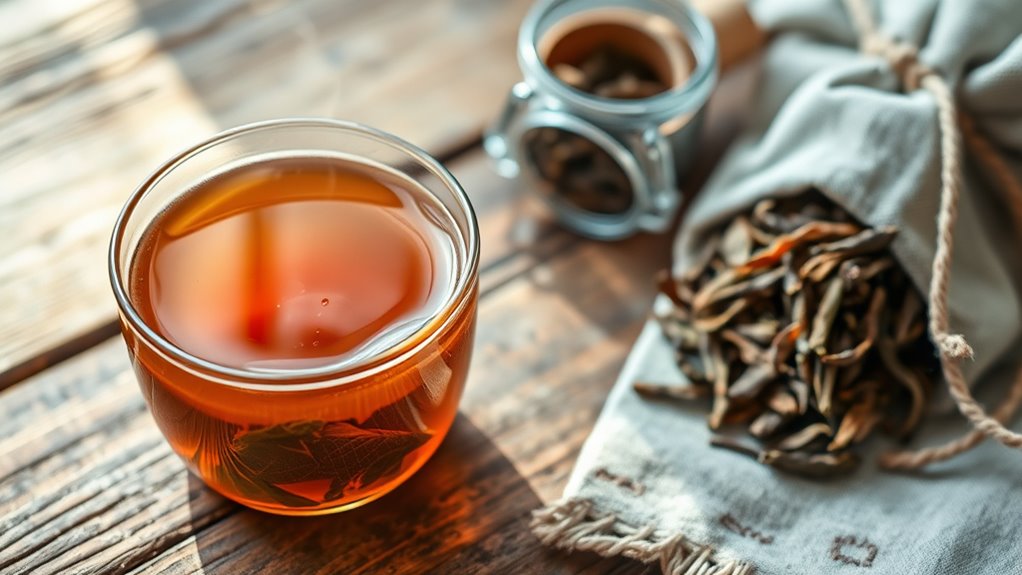
When selecting oolong tea, look for vibrant leaves and a fresh aroma to guarantee quality. To keep it flavorful, store your tea in an airtight container away from light, heat, and moisture. Proper storage and choosing fresh tea help you enjoy the best taste with every brew.
Optimal Storage Conditions
To keep your oolong tea fresh and flavorful, maintaining proper storage from the start is essential. You want to protect it from moisture, light, and strong odors. Focus on humidity control by choosing a cool, dark place with stable temperature. Use airtight container materials like tin or ceramic to prevent air and humidity from seeping in. Avoid clear glass jars that let light in, which can degrade the tea’s quality. Store your oolong away from spices or strong-smelling foods to avoid flavor transfer. Keep the tea away from heat sources and fluctuations in temperature for maximum freshness. Proper storage helps preserve the tea’s aroma, flavor, and health benefits for months to come.
Choosing Fresh Oolong
How can you guarantee you’re selecting the freshest oolong tea? Focus on tea leaf freshness by checking for vibrant, unbroken leaves with a fragrant aroma. Fresh oolong often has a lively, grassy scent, signaling recent harvest timing. Avoid tea that looks dull, crumbly, or has lost its aroma, as these suggest older leaves. When shopping, ask about the harvest date or look for packaging with a clear harvest timeline. Proper storage extends freshness, so keep your oolong in an airtight container away from light, heat, and moisture. Freshly harvested oolong retains its nuanced flavor and aroma longer, ensuring a richer tea experience. By paying attention to harvest timing and storage, you’ll enjoy the best qualities your oolong tea has to offer.
Exploring Popular Oolong Tea Regions Around the World
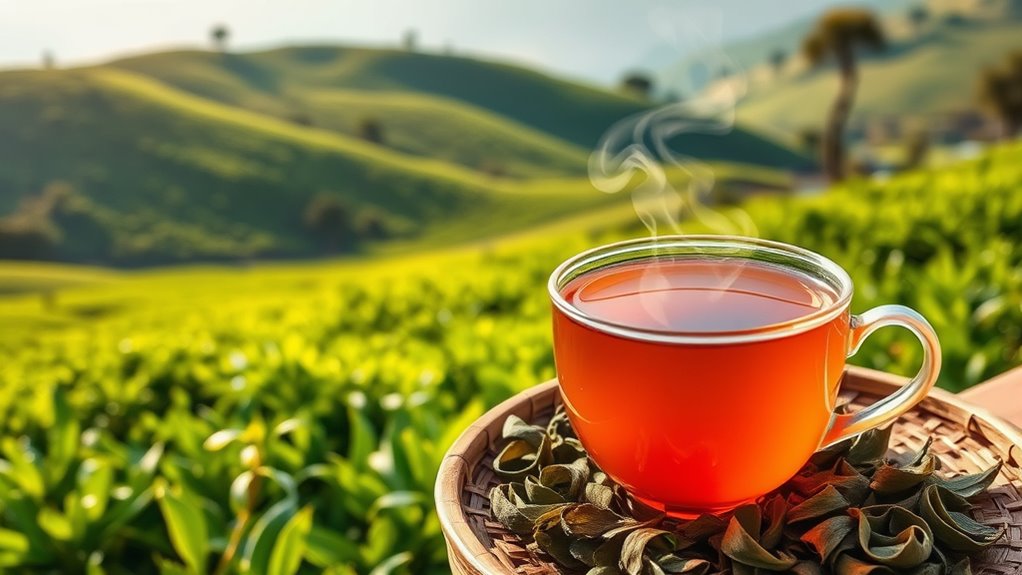
Several regions around the world are renowned for producing exceptional oolong tea, each offering unique flavors and characteristics. When you visit these tea plantations, you’ll notice how regional customs influence processing and flavor profiles. For example, in Taiwan, traditional methods and mountain-grown teas create a floral, creamy taste. In China’s Fujian province, the Wuyi Mountains produce rock oolongs with a mineral-rich note.
- Taiwan’s high-altitude tea plantations emphasize floral and sweet notes
- Fujian’s Wuyi region is famous for its mineral and roasted flavors
- Guangdong’s Chaozhou area offers a more robust, toasted taste
- Malaysia’s tea plantations blend regional customs with modern techniques
- Vietnam’s oolong teas reflect a unique fusion of traditional and local influences
Exploring these regions helps you appreciate the diversity of oolong teas worldwide.
Frequently Asked Questions
How Does Oxidation Level Affect Oolong Tea’s Flavor?
The oxidation level greatly impacts oolong tea’s flavor profile, shaping its unique taste. As oxidation increases, you’ll notice richer, more complex flavors, often with fruity or roasted notes. Less oxidation preserves a fresher, more floral or grassy taste. Understanding the oxidation impact helps you choose teas that match your flavor preferences, whether you enjoy light, delicate notes or deeper, more robust ones.
Can Oolong Tea Be Infused With Other Herbs or Flavors?
Think of your oolong tea as a blank canvas—you can easily add herb infusion or flavors to create a personalized brew. Just like a chef blends herbs to enhance a dish, you can infuse your tea with jasmine, mint, or citrus for flavor enhancement. Many tea enthusiasts do this to develop unique tastes, making each cup a delightful surprise. So go ahead, experiment and find your perfect combo!
What Are Common Health Precautions When Consuming Oolong Tea?
When you choose to drink oolong tea, it’s wise to be aware of health precautions. If you have a tea allergy, you might experience allergic reactions, so monitor your symptoms. Also, oolong can interact with medications like blood thinners or stimulants, affecting their effectiveness. Always consult your healthcare provider if you’re on medication or have allergies, and enjoy your tea in moderation to avoid potential side effects.
Is Oolong Tea Suitable for Caffeine-Sensitive Individuals?
If you’re caffeine-sensitive, oolong tea might still suit you with decaffeinated options available. Keep in mind that even decaffeinated versions contain small caffeine amounts, so watch your intake. The caffeine absorption effects can vary, and some individuals feel the stimulant effects more strongly. It’s best to start with a small cup to see how your body reacts before enjoying more.
How Does Terroir Influence the Taste of Oolong Teas?
You might think terroir impact is minor, but it actually plays a big role in oolong tea’s flavor variation. The soil, climate, and elevation all influence how the tea develops, giving each batch a unique taste profile. This natural diversity means that depending on where your oolong comes from, you’ll notice distinct nuances—lighter, floral, or roasted—making every cup a new experience shaped by its terroir.
Conclusion
Now that you know the rich history, diverse types, and brewing tips, you’re ready to enjoy oolong tea like a pro. Some say its semi-oxidized nature balances health benefits and flavor better than green or black teas, making it a true gem. So, next time you sip, remember you’re tasting centuries of tradition and craftsmanship. Embrace the journey—who knows, maybe oolong will become your new favorite ritual!